


Review: THE WRONG THEY KNEW, Chickenshed Theatre
Chickenshed's Spring show gives much food for thought between the songs
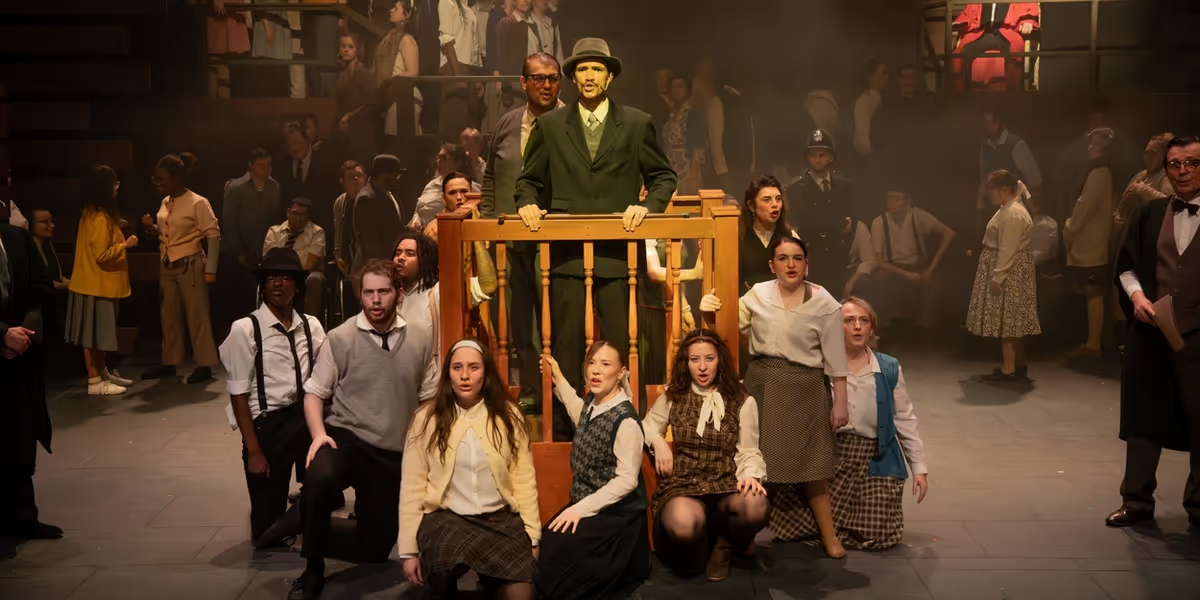
 In the programme, Chickenshed locate this new Spring production within their strand of inclusive Issue-Based Theatre, which had me thinking if non-Issue-Based Theatre was really a thing. Probably not, I concluded, as where is the jeopardy and the joy if there is no issue on which an audience can bite?
Pondering further on the Tube home, I delved a little deeper and wondered why so few evenings are quite so issues-led (for good or ill) as are so many at the end of the Piccadilly Line. Of course, Chickenshed’s inclusive casts confront your eyes with what it is to live in a 21st century city, but it’s also the frantic energy, the blazing commitment and the naive absence of cynicism that animates the stories. These young people have something to say and the talent to say it, so they force issues, raw in tooth-and-claw, to vault the fourth wall - if you’re discomfited by that, you’re getting it.
That led me to a different reading of The Wrong They Knew than I or, perhaps, the company, expected.
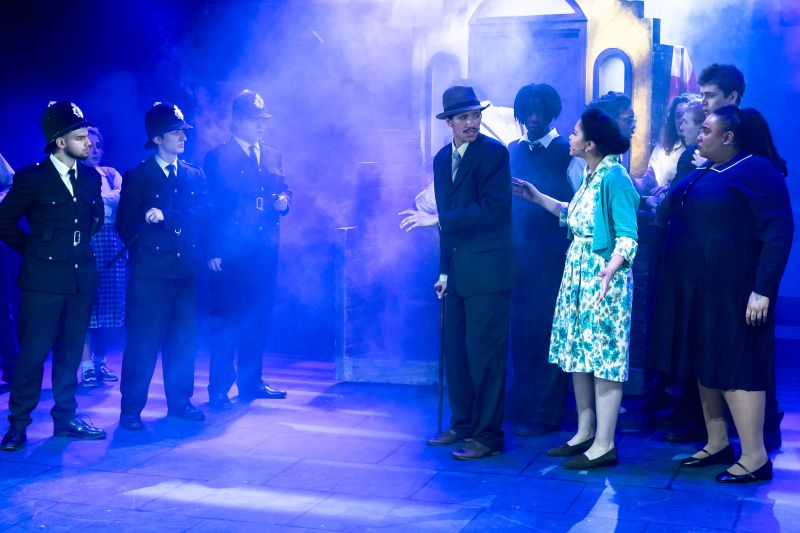
We open on a man in the dock, which reminded me of the scene in Orson Welles’ 1962 film adaptation of Franz Kafka’s The Trial, masses looking on. Deliberate or not in that instance, the show takes inspiration from a range of listed sources, including To Kill A Mockingbird, Cry, The Beloved Country, Twelve Angry Men and I Know Why The Caged Bird Sings. Others too, notably Colin MacInnes’s Absolute Beginners, but bear those first four in mind.
After a bit of contextualising Windrush video, we’re soon pitched into a thinly disguised Notting Hill in the late 50s, as racists flex their muscles in the classrooms and on the streets, and new arrivals from the Caribbean work and live in a London slowly recovering from war, slowly becoming multicultural. A West Indian man is falsely accused of attempted murder and tensions threaten to boil over, but the wider community’s desire for peaceful celebration of diversity finds a vehicle in the nascent Carnival. Not everyone lives happily ever after, but a new route out of conflict has been plotted, if not yet constructed. For a long time, that worked, imperfectly, but each year was usually better than the previous one.
The Chickenshed formula delivers its flooding of the stage with all manner of humanity, drawn from the students and staff, and they sing an extraordinarily eclectic score (by Phil Haines and Cara McInanny) drawing on calypso, reggae, grime, swing, pop, rock and, in a terrifying, spinetingling first act closer, a nursery rhyme. I liked the callback to Rodgers and Hammerstein’s “You've Got to Be Carefully Taught” from South Pacific with “Get ‘em Young” and a jaunty “Legal Aid”, a rare song in the musical theatre canon that names lawyers as heroes. Later in the run, I would expect the cast to relax a little, as some lyrics were lost in the speed of the singing/rapping - okay at a gig, not as okay if the words are an important part of the narrative development.
In a truly ensemble work like this, it’s hardly fitting to name individuals, but Shiloh Maersk brings a sad pathos to the innocent man accused, Jimmy Adamou carries a ferocious threat as the virulent racist and violent thug, Rob Awol and Tilly Morton catches the right mix of fear and foolishness as the girl in that To Kill A Mockingbird inspired triangle of accusations.
Which takes me back to my personal reading and those inspirations. All four are American and set in the Jim Crow South, a political/judicial system and culture that never obtained in the UK. That jars a little in the courtroom scenes and others, as American racism’s specificity butts up against its British variant, with its roots in Oswald Mosley’s Blackshirts and then in the National Front of the 1970s and their precursors.
But what if the UK had had its homegrown Jim Crow laws? What would London have looked like in 1958? I suspect, pretty much along the lines we see on stage.
Read as a science fiction style alternative history, the impact of the show is chilling, because, woven into these imagined British Jim Crow derived power relations, we hear the language and ideas of present day politicians. And not just those once merely raving, isolated on the lunatic fringe, but those in prominent positions in parties riding high in opinion polls. In what may well be a five (or more) party general election under a first past the post system, that’s a shocking prospectus if projected into a legislative chamber and unrestricted executive. It’s a thought that this musical brought home to me more than any production I’ve seen in the last year or more.
And if that’s not Issues-Based Theatre, I don’t know what is.
The Wrong They Knew at Chickenshed Theatre until 28 March
Photo images: Chickenshed Theatre
See more BroadwayWorld in Google
Our stories show up more often in Top Stories and Google’s AI answers.
Breaking Broadway alerts by text
Get the biggest stories sent straight to your phone.
Sign up for all the news on the Fall season, discounts & more...
.jpg?format=auto&width=300)




Reader Reviews
To post a comment, you must register and login.