


Review: THE LAND OF THE LIVING, starring Juliet Stevenson
David Lan’s new play is directed by Stephen Daldry
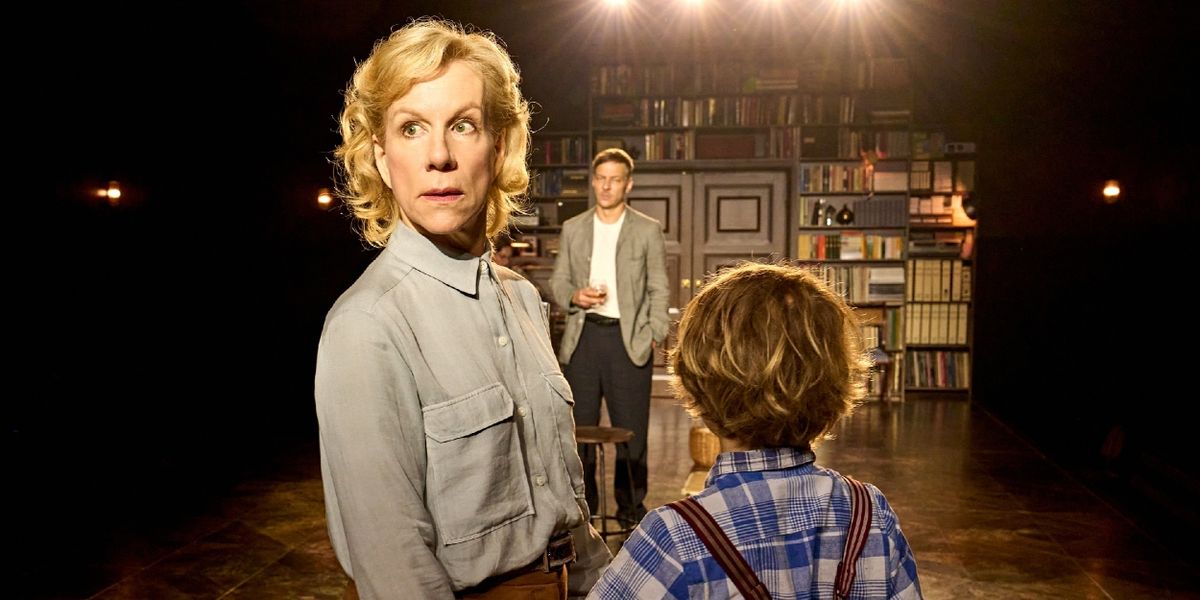
 "Was what I did 'wrong'?" In 1945 Germany, Ruth is part of a UN relief programme which is seeking to reunite displaced people with their families - she’s passionate about the work, and is certain that what she’s doing is for the best. But in London 45 years later, she’s not so sure.
Perhaps understandably, most plays or films that explore the human cost of the Second World War tend to focus on the Holocaust and initiatives like the Kindertransport, so it’s refreshing to learn something about a lesser-known relief effort: the UNRRA. Although at times some of the details feel a bit fantastical both in terms of horror and resolution, this fictional depiction of the programme is rooted in fact - and informed by extensive interviews with Gitta Sereny, a journalist and historian who did actually work for the UNRRA after the war.
A play that explores the plight of displaced people (particularly children) and the terror of conflict could not be more relevant at this moment, as Palestine and Sudan continue to be pummelled by armed forces - seemingly with impunity. Granted, theatrical productions such as this are more than likely preaching to the converted, but that doesn’t mean that it’s not important to tell these stories; finding historical parallels can help to shape debates, and experiencing them up close could even open someone’s eyes.
‘Experience’ probably is the right word, especially if you are sat down in the pit. Miriam Buether’s set design (almost certainly the best I’ve seen all year) has the auditorium set up in the traverse, with a home library at one end and a kitchen at the other - plus a section of a forest on an upper level, and signs welcoming you to the American Sector on the way in. There are so many fine details in this design that you could get lost in them.
It even extends to the setup for the very front row, which uses a selection of random chairs and benches rather than the standard theatre seats in the rest of the auditorium - but don’t worry, no audience participation is required, you just might need to move slightly for a member of the cast to reach something in one of the filing cabinets along the edges. A practical tip: allow some extra time to find your seat in the pit, as the row labelling is rather muddled due to the reconfiguration of the space.
%20in%20The%20Land%20of%20the%20Living%20at%20the%20National%20Theatre_%20(c)%20Manuel%20Harlan%20113.jpg?format=auto&width=1400)
The structure of the play itself has action moving fluidly between 1990 and 1945, as a grown-up Thomas seeks some sort of closure with the events of his youth. It’s quite a canny setup, as it allows Juliet Stevenson’s Ruth to both narrate and participate in the different timezones; not much change in physicality or appearance is required, with Stevenson demonstrating the switch to 20-year-old Ruth by simply raising the pitch of her voice (and occasionally pulling on some uniform). A subtle but clever move.
For the most part, both young and adult Thomas are passengers in this journey, but the performances from Artie Wilkinson-Hunt and Tom Wlaschiha are incredible nonetheless. The former is full of energy and rage, but is very affecting when he starts to let his guard down; the latter’s turn is understated, demonstrating Thomas’ maturity, but also hinting at internalised emotions at times. The gravitas provided by Stevenson’s casting definitely enhances the production as a whole, as she manages to make the unbelievable believable.
This is not a play about straightforward solutions; it’s all about the shades of grey that emerge when you try to consider moral justice. David Lan’s piece doesn’t come to a particular conclusion, instead it lets the audience make up their own mind - or at least gets them to think about it. The final image of Thomas and Ruth finding solace in his playing the piano is very moving, and also suggests that there isn’t always one single right answer.
On the whole, this timely production reminds us of the human side of war, and highlights the subjectivity of morality in highly pressurised situations. Gripping, poignant and, at times, chilling - put it on your ‘must watch’ list.
The Land of the Living is at The National Theatre (Dorfman) until 5 April
Photo credit: Manuel Harlan






Reader Reviews
To post a comment, you must register and login.