


Review: CROCODILE FEVER, Arcola Theatre
This dark Northern Irish comedy makes its London premiere
 Content warning: references to violence
During the interval at Crocodile Fever’s London premiere, we’re all rushed out of the Arcola auditorium a little quicker than we would be normally. This is because the set needs to be doused in blood in preparation for the Tarantino-esque revenge fantasy in the second act, where two sisters deal with the aftermath of hacking off the legs of their abusive father.
How did we get here? Fianna (writer Meghan Tyler) opens the play by appearing uninvited at the house of her estranged sister Alannah (Rachael Rooney), who’s never fully made her peace with the fire that killed their mother, or the 11 years she’s since spent caring for their father.
Add in the simmering threat of sectarian violence in Northern Ireland – Fianna is implied to have been involved with the IRA – and the bloodied chainsaw at the start of Act Two feels inevitable. Yet in some ways, the highly stylised violence is the least interesting thing Crocodile Fever has to offer.
%20Ikin%20Yum.jpg?format=auto&width=1400)
Photo credit: Ikin Yum
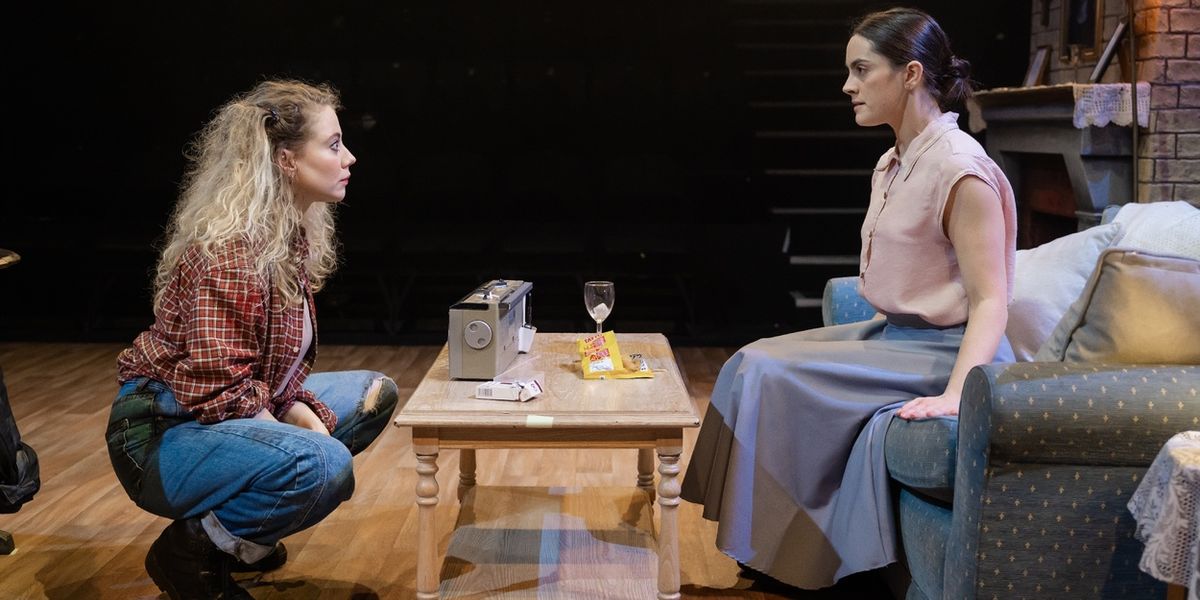
Tyler’s writing is at its sharpest when it slows down, and allows the dynamic between the two sisters to breathe. Rooney brings precision to her every movement as Alannah, a fastidious people-pleaser, compulsively cleaning and muttering “this is not the way we do things around here”.
The heart of this show is the ebb and flow between her and her wisecracking sister, as they oscillate between urging each other closer to violence on account of their shared trauma, and sharing sentimental glimpses of their former bond.
Just as the script shines in its more understated moments, Merve Yörük’s set is also keenly observed, a picture-perfect vision of 1980s domesticity about to be shattered. The traverse staging – unusual for this venue – seems to make the audience feel as shut off from the outside world as Alannah does. In this claustrophobic environment, every crumple of a crisp packet or lime sliced with a kitchen knife comes to possess morbid significance.
%20Ikin%20Yum.jpg?format=auto&width=1400)
Photo credit: Ikin Yum
Amid this atmosphere of anxiety, the climax needs to feel earned, the end point of thoughtful structuring and careful dripfeeding of information. Tyler doesn’t always quite get this pacing right, and the play loses some momentum in its second act, after the murder but before all the chickens have come to roost.
The introduction of Stephen Kennedy as Fianna and Alannah's father – an unseen character up until shortly before his death – also feels awkwardly done, a way to speed the revenge plot along rather than say anything new about our protagonists.
There’s also the matter of the play’s title. According to a folktale, those who harm others are reincarnated into crocodiles and then skinned by their community. This metaphor about generational trauma and cyclical violence is sparingly and deftly employed, until a literal crocodile arrives to deliver some final revelations.
Visually impressive and confronting though puppet designer Rachael Canning’s work is, this kind of deus ex machina is a little too neat, explaining aspects of the family dynamic and history that could have remained ambiguous.
This hardly matters, though, as Tyler and Rooney’s chemistry remains intact even during this brush with magical realism. A convincing central relationship can save a play with an imperfect narrative, and on this occasion, the play has been saved.
Crocodile Fever plays at the Arcola Theatre until 22 November
Photo credits: Ikin Yum





Reader Reviews
To post a comment, you must register and login.