
Interview: 'A Bolt of Lightning Runs Through You': Artistic Director Christine Jones on THEATRE FOR ONE's Singular Intimacy and Raw Impact
Theatre For One opens this month at the Barbican Centre as part of their Scene Change season
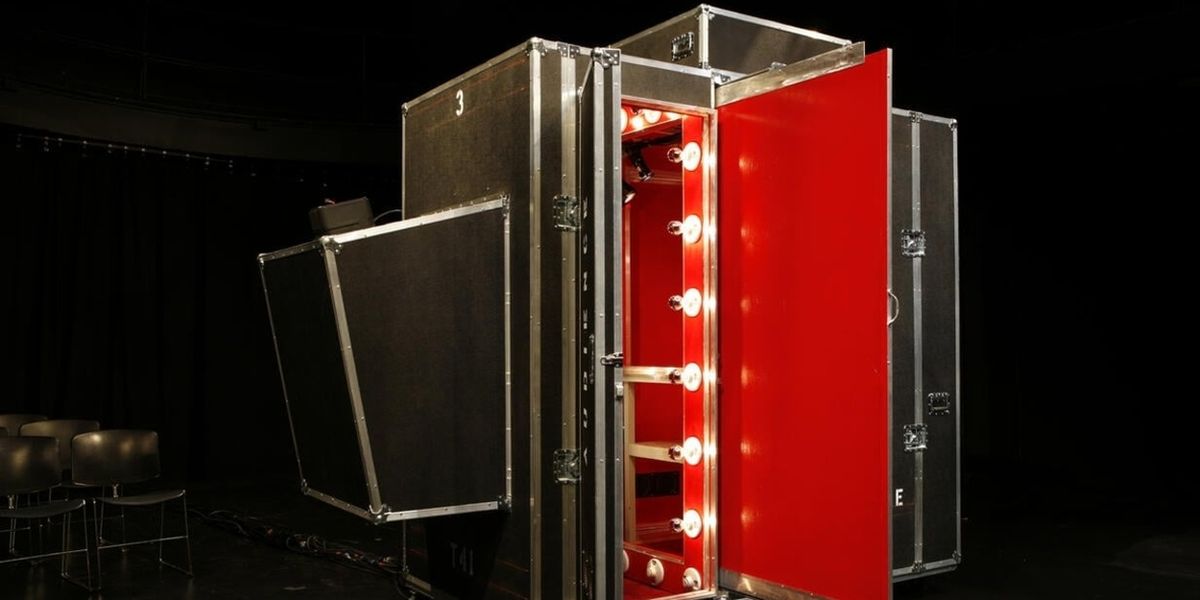
Imagine a space where the boundary between the stage and the stalls simply evaporates. Co-produced by Landmark Productions and Octopus Theatricals, Theatre For One appears at the Barbican Centre this month as part of their Scene Change season. It offers a singular, electrifying encounter that demolishes the fourth wall, leaving only you and a solo performer within a custom-built, intimate booth.
By distilling the dramatic arts into their purest form, this singular installation creates a shared heartbeat between stranger and artist, making every whispered word and fleeting glance feel like a private revelation meant for your ears only.
We spoke to Christine Jones, artistic director of Landmark Productions, about Theatre For One's history and what each audience member can expect.
The concept of Theatre For One is an intriguing one. How did you arrive at this form of individual theatre? Did you see similar examples elsewhere that inspired you?
I attended a wedding in 2002 at which a magician performed a magic effect as part of the ceremony. At the reception afterwards, he performed a one-on-one magic trick for me, and I literally burst into tears, moved by how affecting it was to experience a private performance. I began to wonder how I could harness that degree of intimacy and thought about peep show booths and confessionals, and then had the idea of creating a Theatre for One. Have you ever been at the theatre and had the experience of an actor looking right at you from the stage and feeling a bolt of lightning run through you? That is the feeling I am after.
We crave being seen, both audience and performer. When two people are present for each other and in that presence exchange the gift of a performance along with the gift of attention, magic happens.
Theatre For One showcases an enticing range of Irish writers. How hard was it to choose which ones to go with and which scenes to enact?
For each iteration of Theatre for One, we collaborate with our presenter to identify which writers we will reach out to. The work being presented at the Barbican is a collection of pieces that were commissioned over three seasons at The Cork Midsummer Festival. Anne Clarke of Landmark Productions was instrumental in selecting Irish writers, some of whom I knew, and others whom I did not.
In our second season there, we issued an open call for emerging writers and received over 500 submissions, including the one by Joy Nesbitt, which will be performed in this iteration. Six pieces were chosen, and the writers were mentored by the seasoned writers from our first season. We aim to be alive and responsive to the community and the location for each new residency.
What do you hope audience members take away from going to Theatre For One?
The hope is that for some moments, time is suspended, a story is absorbed, and one is left with a feeling of completeness that they both received a gift from the many people who made that moment possible, and also returned the gift of their full attention. I have been influenced by Lewis Hyde's book The Gift, which illuminates the circular patterns of gifts being exchanged and the bonds that are created with this genuine currency.
If they come back again, can they ask for something different to what they saw before?
After experiencing it once, audiences often return to Theatre for One, and get back in line. Our house managers strive for a returning guest to see a new piece. Some make an effort to see all of the work, which requires their personal investment in standing in line. As is often the case, their investment has a meaningful impact on the interaction they have with the performer who has investend meaingful time in preparing to perform.
How do you go about selecting actors for Theatre For One? Did you look out for particular skills or experience?
We look for good humans who are empathetic and ready to take on the emotional labour of being acutely present for each new person who enters the booth. Our actors are electrified by the intimacy and the improvisation that is inevitable with each new human they encounter, but it also takes additional energy to receive that much undivided attention. We often invite the writer to write with a particular actor in mind. Sometimes the piece is a gift to the performer. We appreciate the connections that artists have to their collaborators and love to provide opportunities for people to work with people they love.
The Manikins: a work in progress and Undersigned have shown that there is a market for long-form theatre centred on one person. Is that something you would consider doing with Theatre For One?
It would be a dream come true to create longer-form work. As always, it would require a specific production model that we have not employed. We have rely on our collaborations with arts institutions to provide residencies for us and have relished opportunities to be in public spaces where we sometimes encounter audience members who have never seen a play and find themselves in line and having a unique experience.
What does the future hold for Theatre For One?
We have been producing Theatre for One for over 20 years now, and I believe that at the end of each presentation, we never know where we will be next. Theatre for One is made by many, and is a fully operational performing arts space. It is not inexpensive to present, and so there are times we are dormant waiting for our next opportunity.
Wonderfully, they have continued to arise across these two decades, and hopefully they will continue to arise. I would like to believe that as the world becomes more digital and artificial, the power of a live gaze, in a present performance, will remain essential.
Theatre For One is at the Barbican Centre from 12-22 March.