


Review: AFTER MISS JULIE, Park Theatre
Patrick Marber's relocating of Strindberg's masterpiece to a hopeful country with its first Labour government, is as powerful as ever
 War is over. The Labour Party has won a historic majority and will form a government anchored by socialist principles (fancy that), the NHS about to be born - and financed. The world was turning upside down and, so too, was the humble kitchen of the not so humble manor house of a peer who took the new government’s whip. New was sliding past old, but the friction so caused sent sparks flying - one was always going to ignite.
The heat inside came not from the Aga, but from the triangle first introduced by August Strindberg in 1888 and thrillingly updated by Patrick Marber in 1995. In the perfect setting of Park 90, horribly intimate, highly intense, director, Dadiow Lin, traps us with the three flawed people as they try to navigate through the night to the bright dawn promised to a tired country. Strindberg being Strindberg, they don’t make it.
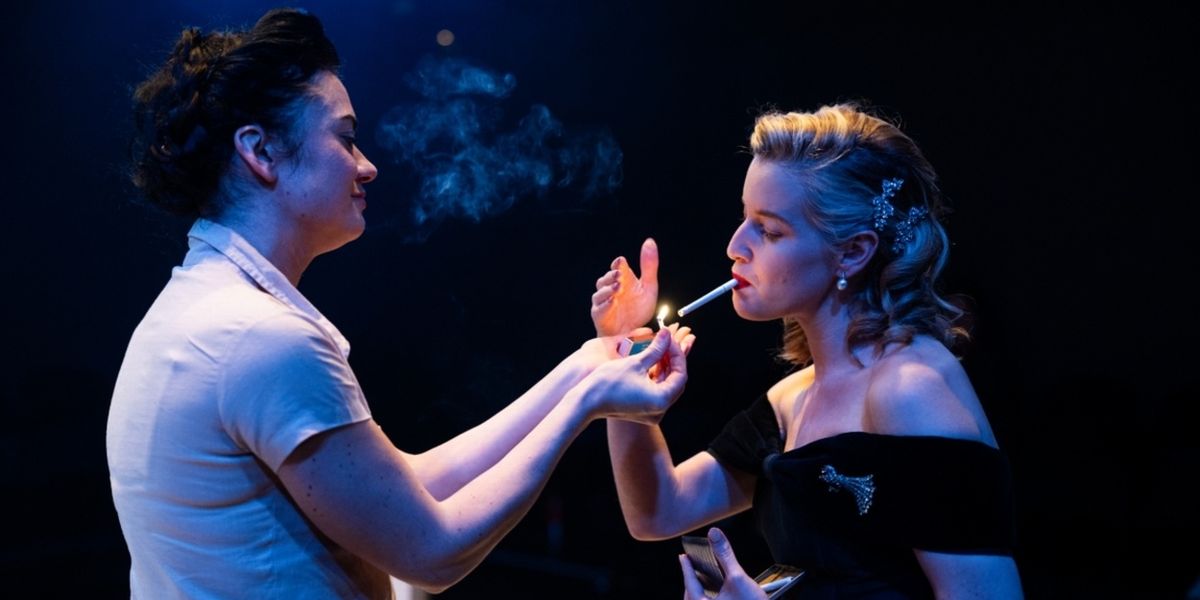
We meet Christine first, the churchgoing maidservant, all Scottish Presbyterian common sense and hard work, not exactly happy with her lot but not so dissatisfied as to seek its destruction. She smokes cigarettes to stay awake and that’s never a good sign.
John, chauffeur and right-hand man to his Lordship, an ex-soldier who saw how a battlefield could flatten old hierarchies, is keener on tearing the whole thing down. An autodidact, he knows he wants more and can have more, as stable lads squire debutants in the celebratory barn dance outside. At 30, he knows that his master has been good to him - he was something of the missing son, if never the heir - but it’s time to strike out now. He’s sorta going to marry Christine, a prospect she is more committed to than him, but, suddenly, a riper fruit appears for him to taste. He bites
Miss Julie, only heir to the estate, is on the rebound having been jilted and, a little drunk, arrives in the kitchen to tease John and indulge in the transgressive fun for which nights like this provide licence. She flirts fearlessly, asserts her seductive sexual power and underlines that class still matters more than gender in this space, Clement Attlee or not.
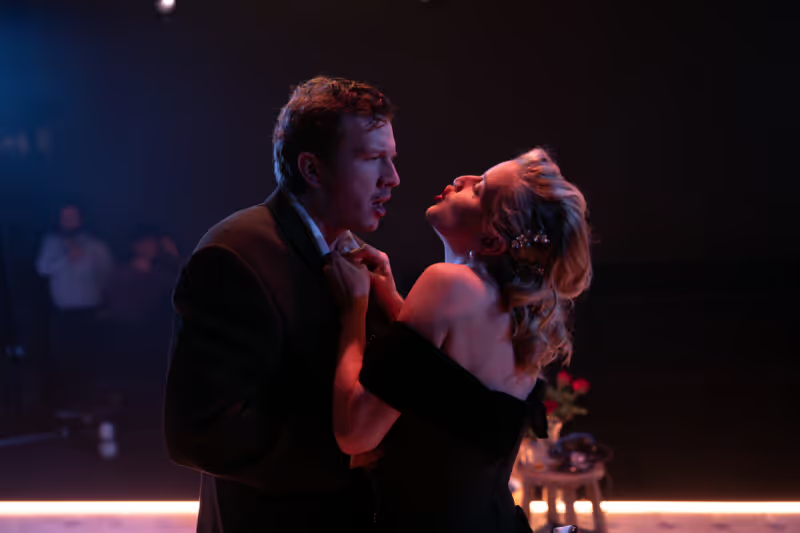
Liz Francis grows into the role, her Miss Julie initially little more than an ingénue and you wonder how John squares his self-regard as a man of this new world with a silly girl’s attention. But Francis slowly changes as she realises that her hold over the ambitious man runs all the way back to their childhood games in the orchard. She also sees how she can play into her own need to be punished to assuage her guilt over the kowtowing she has received since those days - forbidden sex and BDSM role-playing her weapon of choice.This changing dynamic is done with sly and not so sly looks, encroachments on personal space and what’s not said as much as what is. In a house of these dimensions and staged in the round, any missteps from the cast can be fatal - but there aren’t any.
Tom Varey is no sex god Heathcliff, but an unattractive personality, a snob (as Julie observes), the kind of man who, born a generation later, would be a grifter on the make in the East End, a Pinky at the racetrack. He fails to carry off the work uniform and the demob suit Miss Julie insists on his wearing in yet another power move: ha can’t even cosplay the alpha male. Playing it this way works, as there really shouldn’t be anything like a conventional romance between the two - far better to keep it as a dysfunctional lust / fetishised low self-esteem nexus that meets in a mutually catastrophic asymptote.
Charlene Boyd has the thankless task of delivering the voice of reasonable decency as Christine, who wants a quiet conventional life with a front step to sweep clean every morning and three children to admire. Boyd finds the tragedy in the collateral damage attendant on swimming too close to the sharks she serves. Not that she is meek, twice slapping the hideous John and forgoing the Ten Commandants when opportunity knocks.
Miss Julie is a genuinely great play that has spawned many versions - and I haven’t seen a bad one. Marber’s reimagining may be the best of them all, its psychosexual dynamics teetering on a 70 minutes long tightrope. Perhaps its only flaw is that it opens a portal to the dark heart of so much politics, personal and social, but offers little in the way of solutions. Strindberg might reply that we’ve had nearly 140 years to find them, and the fact that we haven’t, suggests that there isn’t one.
After Miss Julie at Park Theatre until 28 February
Photo images: Teddy Cavendish
Sign up for all the news on the Summer season, discounts & more...







Reader Reviews
To post a comment, you must register and login.