Guest Blog: 'It Feels Like a Moment of Taking Power Back': Deaf Writer Eloise Pennycott on Politics, Dystopia and Metatheatre in Her Play BARRIER(S)
How dystopian drama and super-contextual details can make political theatre more emotionally accessible for marginalised audiences and theatremakers.
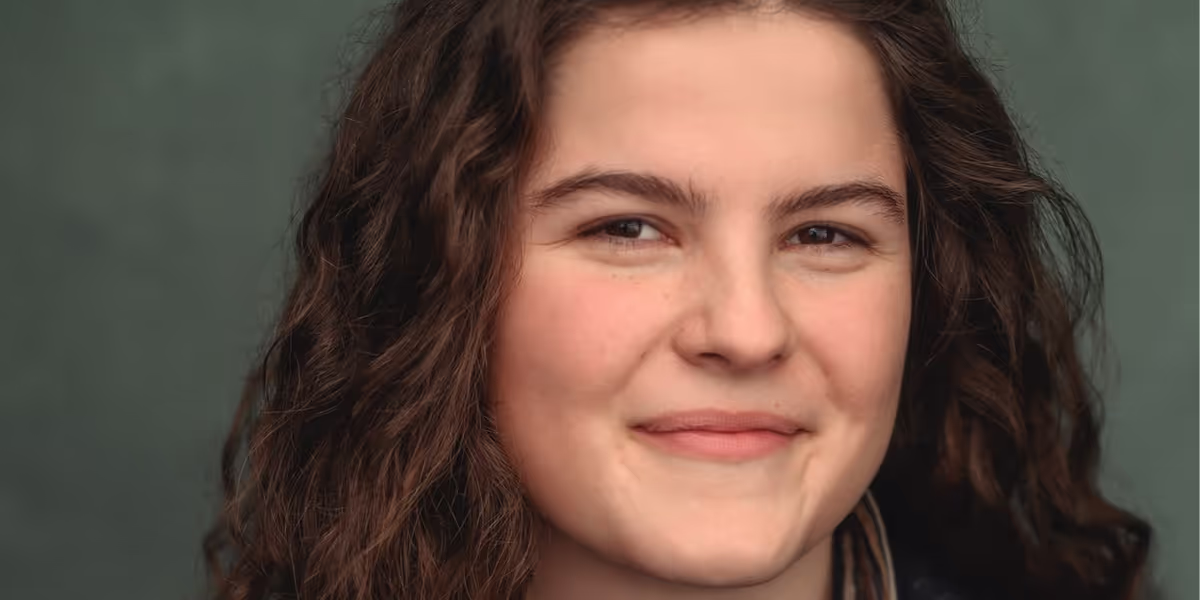
As a deaf twenty-year-old whose main aim is to find the happy in every corner of life, I often struggle to engage with politics – especially those concerning disability rights. When I was a young teen I was much more actively engaged, speaking in parliament, contributing to campaigns, very much considering a career in that direction. I tired of that quite quickly, but have since found my political spark reignited, using theatre writing as an outlet instead. My love story Barrier(s) is the latest outcome, and I am very excited to see it off on tour.
With political fiction, current affairs have to be distilled into some sort of personal narrative, with fictional characters navigating the hardships rather than us in the real world. With political theatre, an audience gets to consider their place in the real world in real-time comparison to the characters’ stories being played out on stage. Comedy, dystopia, and tragic romance can all give us a foot in the door to considering situations that, without the overlay of genre, might be difficult to approach. As a playwright, these genres can offer a toolkit to strike while the iron is hot, without burning your audience.
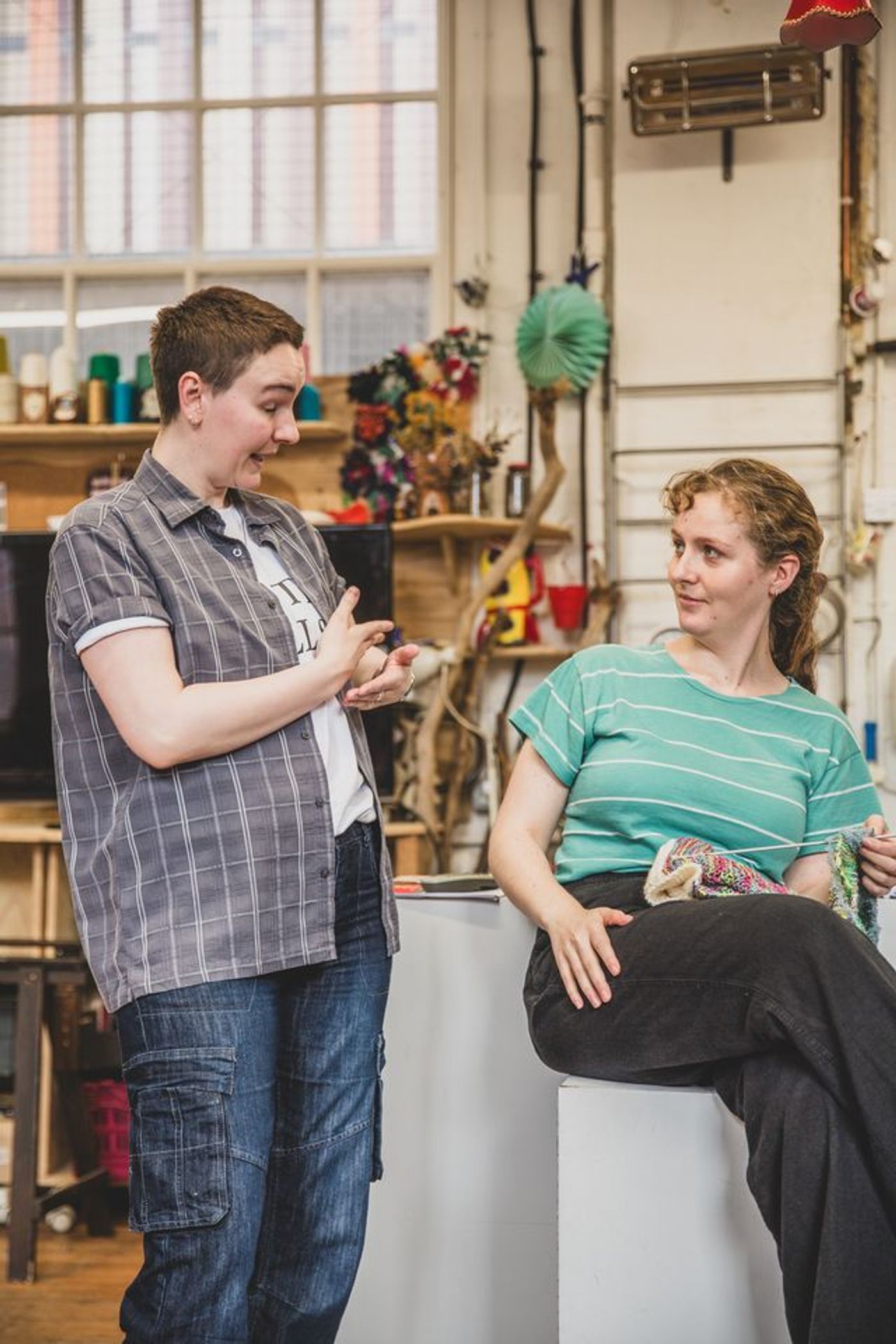
Photo Credit: Becky Bailey Photography
Barrier(s) is now in its second iteration. In its first, a shorter version presented at The National Theatre in 2022, the dystopian element was a world in which sign language becomes illegal about halfway through the play. When offered the opportunity to develop the play further into a full-length commission with Deafinitely Theatre, the dystopia of the sign language banned world felt disingenuous in comparison to real world issues faced by deaf and disabled people in the political climate today.
This second iteration of Barrier(s) has been developed with the benefit of three weeks of research and development over the course of about fifteen months. During these months, we have witnessed confusion and worry over Personal Independence Payment benefit reforms; another delay to the BSL GCSE campaign; fear about closures of deaf schools like Hamilton Lodge; and the ongoing post-Covid recovery strategy and reorganisation of the NHS.
It was whilst in the second R&D for Barrier(s), during a day plotting out the structure with my dramaturg, that figures were released outlining how much the government was spending on investigating PIP fraud. In any other room, I don’t think I could have looked at or worked through this report. Perhaps it is that my so called “snowflake” generation simply haven’t been afforded the right tools to parse politics in an emotionally safe way, but by being in that blank, creatively open rehearsal room at the Old Diorama Arts Centre, I was able to work through the worst case scenario ramifications of that particular report not for me or my deaf and disabled friends, but for a fictional character whose story and world I was writing.
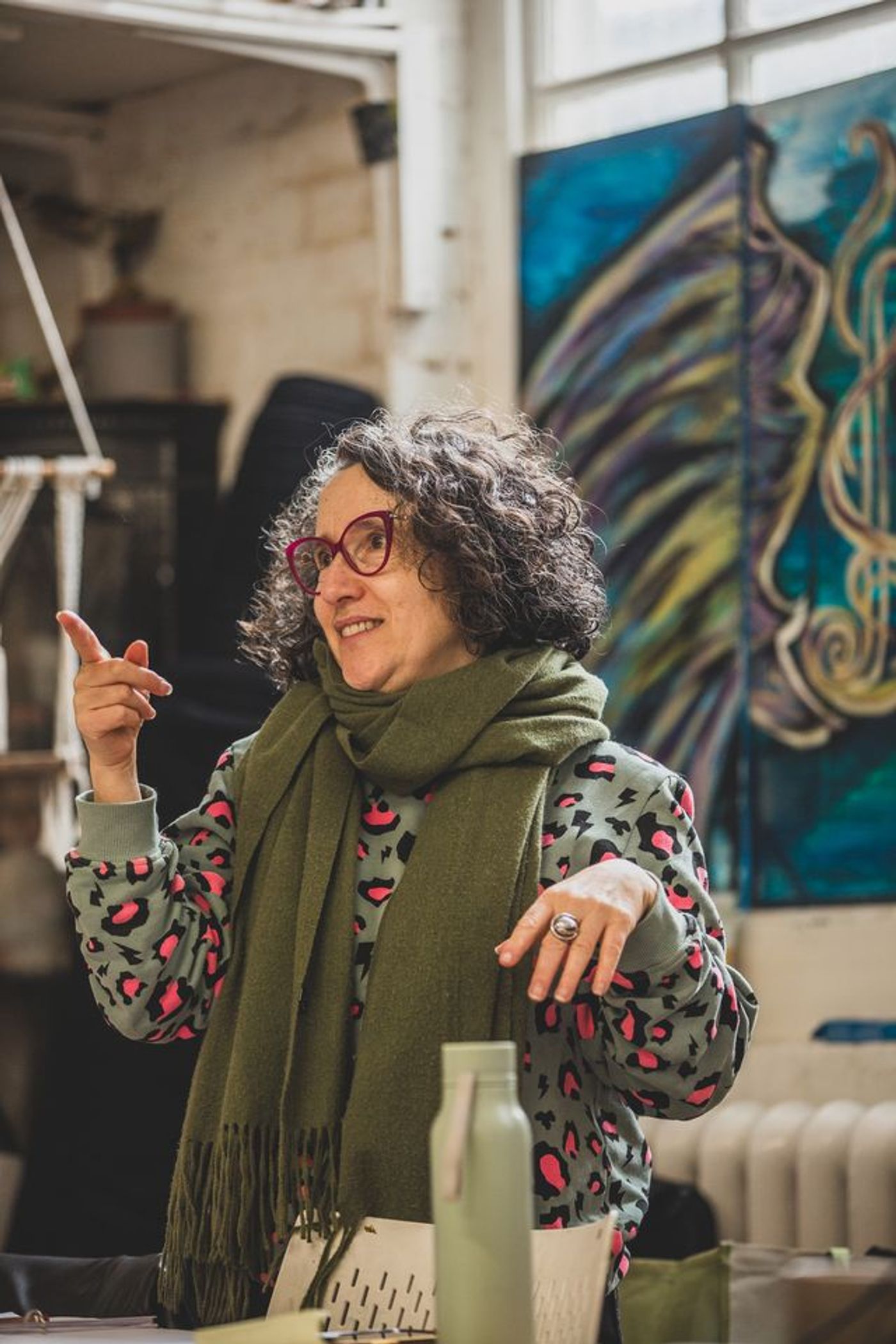
Photo Credit: Becky Bailey Photography
The creativity and control over fictional dystopia can, I believe, give power to those from marginalised or oppressed communities. Fiction gives a safe space to prod at and inspect the worst-case scenario, knowing that you can effectively end the play and draw the curtains at any time.
In addition to dystopia, carefully chosen super-contextual details also bring me a lot of comfort whilst writing and watching a play like Barrier(s) develop. One of my favourite parts of this production is the casting of phenomenal deaf performer Em Prendergast as our hearing love interest Alana. In a play about a world becoming increasingly stacked against deaf people, Em plays the well-intentioned but ignorant hearing person.
It has been such a comfort, actually, to watch them share their perspectives in the rehearsal room and reflect back in their performance experiences that they might have received from non-deaf people like Alana in their own life. It feels like a moment of taking power back, to see them step into those shoes. It is also just satisfying to be able to, with a company like Deafinitely Theatre, challenge the assumption that deaf actors must always play deaf characters, when some could pass as hearing.
As seems to be a recurring device in my work thus far, metatheatric elements are a key tool in Barrier(s). Metatheatre is essential for political narratives – if political theatre is not self-aware, how can it grow and stay relevant week to week from rehearsal room to stage? Because political theatre must often reach a point of melodrama to be provocative, moments of metatheatre in my opinion remind the audience that you are not trying to mess with their emotions without just cause.
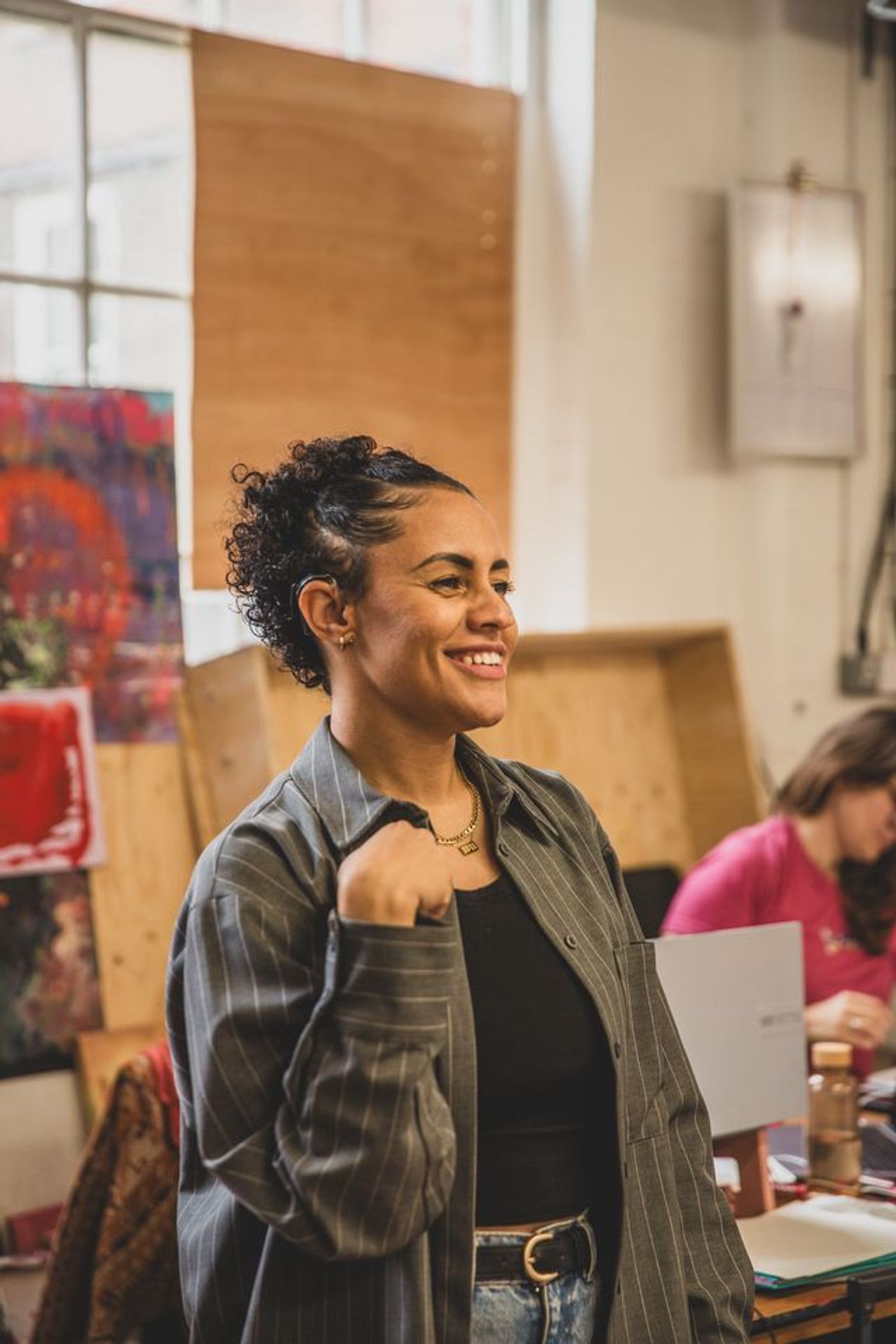
Photo Credit: Becky Bailey Photography
There is comfort that comes from breaks to the fourth wall, rather than leaving an audience to sit and stew in dystopian tragedy. Everyone in this theatre, actors and audience and technical crew, are all aware that this is a play, and will all sit through it together to consider current politics in a distanced, supportive environment.
It is not my opinion that all theatre should be politically motivated or provocative, but I do consider theatre to be one of the best tools available for dissecting difficult topics collaboratively, effectively. I have certainly been given the space whilst commissioned on Barrier(s) to consider my position as a disabled person in the world around me, and hope that audiences watching it may be afforded that emotional room too.
Barrier(s) is at The Rep, Birmingham until 25 October, HOME, Manchester from 6 - 8 November and Camden People’s Theatre, London from 11 - 29 November