


Interview: Emily Michiko Jensen of MADAMA BUTTERFLY at Opera San Jose
The Japanese American soprano makes her debut in the title role of the Puccini classic November 16th to 30th
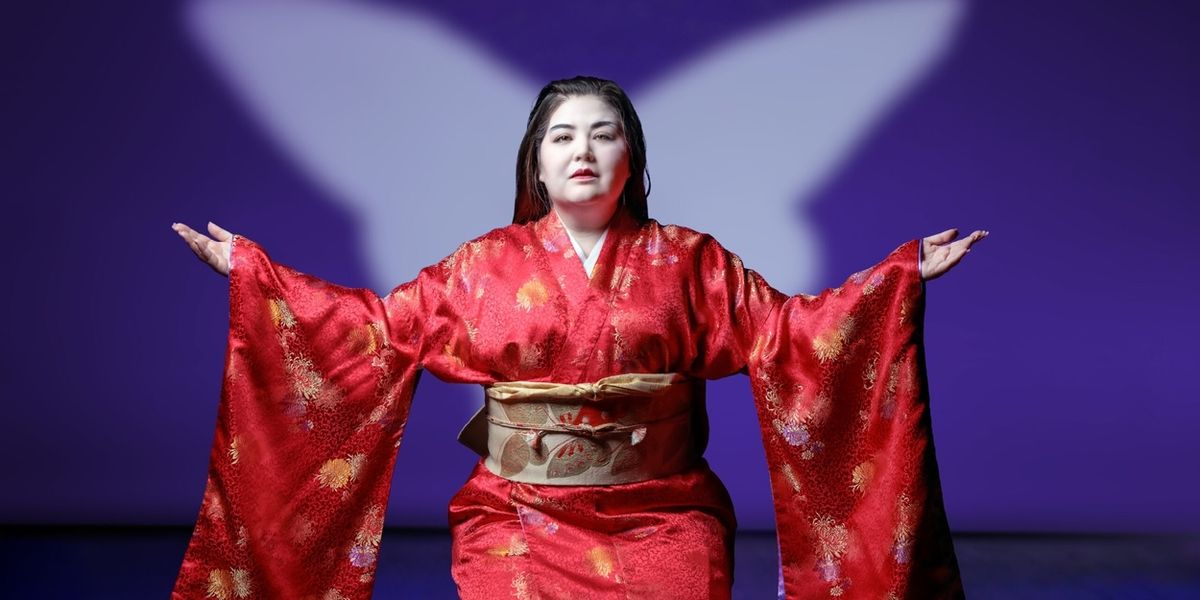
Making one’s role debut as Cio-Cio San in Puccini’s tragically romantic Madama Butterfly would be a rite of passage for any up-and-coming dramatic soprano, but it’s a little more complicated if, like Emily Michiko Jensen, you happen to be of Japanese heritage. While it is justly one of the most famous roles in the entire canon, requiring dramatic intensity and gorgeous vocalizing in equal measure, it also carries with it over a century of baggage from past productions that have often portrayed Butterfly as a stereotypically submissive Asian girl.
Well, Jensen is having none of that. She’s been working intensively with her director, Michelle Cuizon (who is also Asian), to craft a portrait of a young woman who is strong and steadfast in her love, and determined to make the best life she can for her young son. Yes, her Cio-Cio San still meets a tragic end (this is, after all, grand opera), but she is no one’s fool. And – she still gets to sing some of the most achingly beautiful music ever composed, so Jensen was not about to pass up an opportunity to sing the role just because of other people’s misguided notions of what it means to be Japanese.
I spoke with her over the phone last week just as she was heading into tech rehearsals. We talked about her ideas for playing the character and how they were informed by an opportunity to cover the role two years ago at Boston Lyric Opera where she engaged in deep conversations with the soprano playing the role there. I also learned about Jensen’s path to discovering her love for opera and the critical part her parents played in that, even though neither one is an opera singer. And she gave shout-outs to a couple of other sopranos whom she sees as role models, plus to Opera San José for giving her the luxury of playing both Cio-Cio San in Madama Butterfly and Fiordiligi in Così Fan Tutte – two very different roles in two very different operas – in quick succession.
When I asked Jensen about her own favorite moments in Madama Butterfly, I was surprised that she didn’t focus on the opera’s most famous arias, such as “Un bel dì, vedremo,” that are most sopranos’ bread and butter. Instead, she chose to talk about specific sequences that really help her delineate character and tell the story. She struck me as one smart cookie, a woman well on her way to a significant career who also understands that opera is about playing the long game. She knows it will take many more years of performing and studying to reach the full height of her powers, and she’s fine with that. The following conversation has been condensed and edited for clarity.
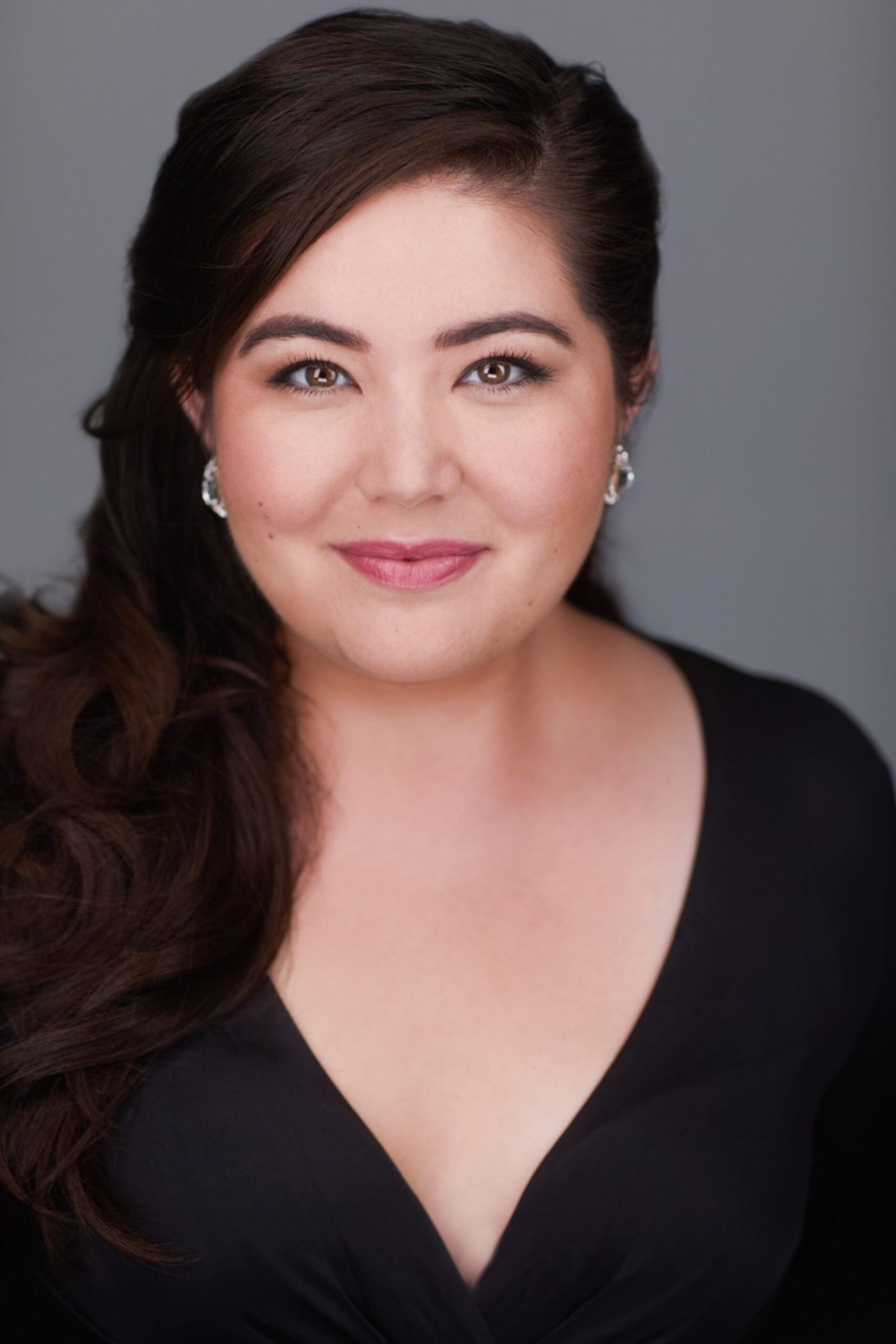
(photo courtesy of Opera San José)
Is Cio-Cio San a role you’d always longed to play?
Well, it’s funny because my introduction to opera was actually as a supernumerary for Butterfly at San Diego Opera when I was eight years old. I guess they wanted more villagers and family members in the show, and so in a very strange way Butterfly was my introduction to this world I knew nothing about. And I’m half-Japanese, so it was something to see that the woman singing Cio-Cio San (the name of the soprano is escaping me) was Japanese. I was like “Oh, this is an interesting story,” even through at eight years old of course I didn’t quite understand everything. As I began to get into music and singing, it was one of the roles I had hoped to sing someday but was a little nervous about, just because of how she has been portrayed in the past. So there was definitely some hope to sing her, but equally some apprehension.
Cio-Cio San has often been portrayed as this fragile girl who is completely delusional and has no agency, but I’d like to believe she’s much more complicated than that. How do you see her?
I see her as someone who is very strong, in that every action she takes, every decision she makes, is made through love. In Act I, maybe that’s viewed a little more naïvely, but she believes with her whole heart that this marriage is for love and also a better future. In Act II, it’s been three years and he [Pinkerton, her American husband] has not come back, and everyone around her is seeing a different picture than she is, but she is steadfast in her love and in her commitment to staying faithful to him. In Act III, the world around her crumbles with the news that Pinkerton has moved on and married an American, but her decision at the end, I believe, is still made with love. She releases herself from the situation so that there’s nothing tying her child back to her so that the child has no choice but to move forward to continue the dreams she had for the both of them. So sure, she might be seen as a little naïve, but I think she still holds onto whatever agency she does have access to. Which I think is really beautiful – and painful! [laughs]
But that’s grand opera. It’s almost always painful!
Absolutely, yeah.
What is your own personal favorite moment in Madama Butterfly?
The first one that comes to mind is a musical moment that I’m actually not singing at all, the intermezzo at the start of Act III. It still holds onto Butterfly’s hope, and there is that joy that was there in Act I and the certainty that she holds onto in Act II, and it feeds beautifully into the dream sequence, fueling into this heartbreaking Act III coming up. The way it’s orchestrated is so stunning and so beautiful, and I think it’s almost cinematic, so regardless of how it’s staged you cannot help but be moved by that music.
The second is different pieces of Act II, where at the beginning it’s Butterfly and Suzuki [her maid] kind of going at each other. They’ve spent time together away from community, they’ve created their own family unit and you see this tension between the two of them. They’re not pretending to be of different status from one another. They’re very honestly arguing in a way that’s refreshing and authentic, and I really appreciate the way our director, Michelle Cuizon, has allowed us to flesh out those characters. Suzuki’s like “I don’t think he’s coming back,” and finding all these different ways to try to get that message across to Butterfly. The two of them are in very different realities, but they’re able to speak without pomp and circumstance, there isn’t anything else getting in the way of this conversation.
I really love that that brings the humanity to Butterfly, rather than this stereotypical idea of how we think a Japanese woman might respond, and I really appreciate getting that opportunity to experiment with what makes the most sense in the scene, musically and dramatically. It allows her room to play, and it helps us stay so present in the scenes so that we don’t accidentally foreshadow anything. As Butterfly, I get to stay in my hopeful space, or in my “I’m upset with Suzuki for saying something against Pinkerton” place. I’m allowed to feel that rage, I’m allowed to process every decision Butterfly’s making, so that’s really fun to navigate.
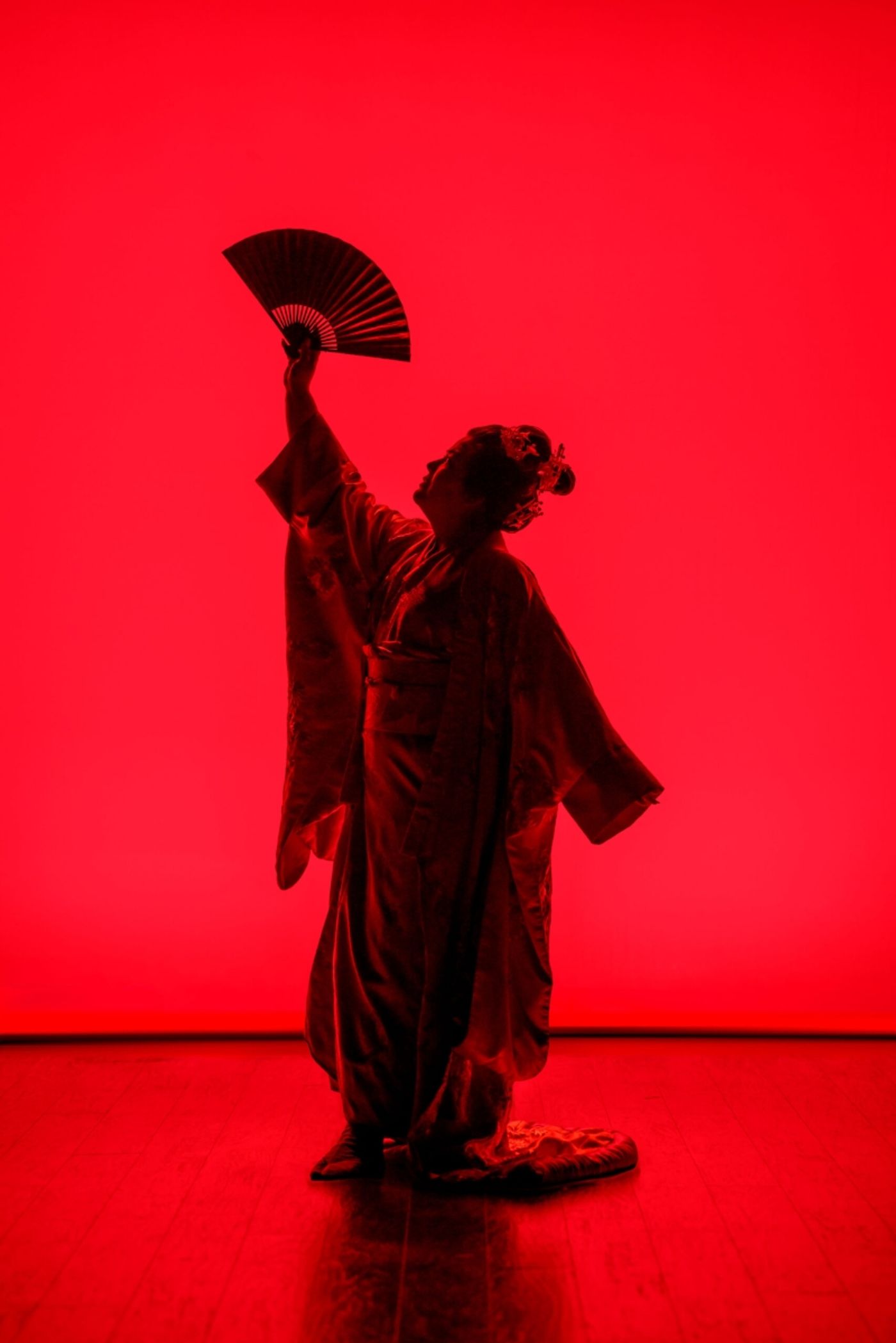
Puccini's Madama Butterfly at Opera San José
(photo by Chris Hardy)
This is your role debut, but you covered Cio-Cio San a couple of seasons ago at Boston Lyric Opera. Did that allow you to come to this production with the added benefit of already having thought a lot about your character and her motivations?
Totally! I am really grateful for that opportunity to cover the role in Boston. I mean, I was a super when I was a child and then I was a chorister in Butterfly, but as a chorus member or a super you’re not present for the entire rehearsal process. So getting to sit in and watch everything with that Butterfly, Karen Chia-Ling Ho, who had sung it at many places as well, and to get to watch her work… She’s so generous with her time and with her advice and continues to be. I’ve gotten to ask her things like “How do you navigate a show this painful, a rehearsal process with such heavy content? How do you keep whatever joy you’re feeling earnest and honest in Act I?” What I appreciated with her was taking every scene, one moment at a time, and then seeing how the production builds around that.
It was such an incredible experience and that was fall of 2023, so I am so grateful to have had these two years in between to just let the role marinate a little bit – vocally, emotionally, mentally. I feel a lot more grounded in my decisions, and OSJ offers a very luxurious rehearsal period so that we can actually take each moment scene by scene and piece them together.
You’re an Artist in Residence at Opera San José this year. What do want out of that experience?
When OSJ first reached out, they asked about my interest in Fiordiligi in Così Fan Tutte and Butterly. I immediately wrote “Yes, please. Both!” Because both had been dream roles I had hoped to sing one day, and hope to return to again. I find that there are times where singers of Asian descent might only be considered for certain roles, depending on our ethnicity, and what I appreciated from OSJ was I felt that they were seeing me as a whole artist - that yes, I am half-Japanese and proud of that, but I also sing other things that don’t require that.
That was such an incredible gift to receive from OSJ, to come here and be a part of those productions. They are very different roles and very different stories - one’s chaotically comedic and one is not, but they both require such focused pacing. With Cosi and especially rehearsing Butterfly now as we go into tech week, it has been such a great process of putting things onto their feet. You know, there’s only so much studying you can do behind the scenes, only so much preparation I can do with my coaches and my voice teacher, so getting to put it all – the beautiful amalgamation of everything we had hoped for - onto the stage has been a joy.
It's also been a wonderful learning experience in adjusting and making changes in real time. If something is not working dramatically or vocally, I feel so grateful to be able to try some things out, and I hope to be able to continue that into my career of singing all different types of roles. It’s been such a luxury to work on two role debuts with this company and having five chances to share them with audiences. For Cosi, I felt like every performance I was learning something new – either about myself or like a new way to handle a scene change. Or my colleagues shared a line differently than what we did before, and how that changed the scene in a really thoughtful and lovely way. I’m excited to see how that works for Butterfly as well.
Let’s talk about your background. Where did you grow up?
Born and raised in San Diego, California so I’m very happy to be back in the state of California.
What was your path to finding a career in opera?
After being a super at San Diego Opera, I joined the San Diego Children’s Chorus, and through that organization graduated to the children’s chorus at San Diego Opera for a couple of productions. During my time as a children’s chorus member, one of their choral directors had encouraged me to start taking voice lessons and then it was like from one person to the next - that teacher encouraged me to start working with a coach, and the coach introduced me to Interlaken Arts Academy and so I joined them for a summer session, really just because I love to sing. But while I was there, my teachers were saying, “Hey, you can pursue this for college.”
I think at the time I was a junior [in high school] and we were starting to get pressure from teachers and our academic counselor saying “Okay, you oughta start looking at what your credits are going toward.” So I thought “Well, music is something I love, and I’m interested in languages and travel.” It just encompassed everything I really enjoy so I headed off to Eastman School of Music for my Bachelor's in Music and then New England Conservatory for my Masters and graduate diploma.
I was at Indiana University right at the start of the pandemic, fall of 2019 through spring of 2020, and then started some young artists programs, so I didn’t fully finish my performance diploma there, but I very much enjoyed my time there. We like to joke that the only reason we have winter clothing is that I keep going to school in the coldest places in the country! [laughs] I’m currently based in Chicago, with my husband who’s also an opera singer.
Was classical music a part of your family’s culture?
Classical music was definitely a part of our lives. My mother was very encouraging for taking music lessons, so my sister and I started piano when we were each about five years old. My dad was also a super for San Diego Opera and he eventually introduced us to being supers, so we got to see shows in that regard, and then got to watch other productions from the house.
My mom still sings with local choruses and was a member of the San Diego Master Chorale for many seasons. They’re both educators, my dad a retired high school chemistry teacher and my mother a retired linguistics professor, teaching Japanese. So in college, any time I thought “Vocally I’m not ready to do a singing program this summer,” she was like “Okay, that’s fine. We’ll work on our languages.” I really appreciated their support throughout the entire process, but also their guidance and encouragement that there’s always something to learn.
That’s really interesting because I’ve talked to a number of opera singers and they often seem to be the unicorns in their families. Their parents were like “What exactly is this opera thing that you want to do?!”
[laughs] Right! I think they were a little surprised at how immediately I was so excited to pursue singing in college, kind of like “Well, you’re a junior. Give it some time to figure out what does that mean.” It was definitely a learning process for all of us, because my parents were like “Okay, you’ve sent in applications for college, but what do you mean you need to create an audition tape? What is going on?!” You know?
I think they really liked that Eastman is connected to the University of Rochester as well, in case I was inspired to pursue another degree or another focus. And I was thinking “I’m pretty sure it’s just Music for me, but I do appreciate that there’s a connection there – if needed.” [laughs] But they were very on board and supportive throughout, which I am very lucky for.
Do you have any role models for the kind of career you’d like to have?
I really, really love the career of Virginia Zeani. I love the rep that she sang, and her voice was incredible, and the way she talked about singing is so beautiful and so encouraging, too. She is such a great example of not just a long-term career, but understanding your instrument and singing, and navigating a career where you’re traveling, you’re in different places, and how do you keep your vocal health and things organized and all that. I really love her work.
And I’m really inspired by Ailyn Pérez. I’ve never met her, but I’ve seen her sing at Lyric Opera of Chicago, and I love the range of the repertoire she performs, and her life traveling. It encompasses all of the joys of this career that I hope to one day also participate in. On social media she’s so gracious and generous with her advice to singers who reach out to her.
One of the wonderful things about a career in opera is its potential longevity. Many of the best roles are ones you won’t be ready for until your voice has fully matured years down the line. Can you name any that you already have your eye on for later in your career?
Ooh, yeah. Well, it’s funny because for a long time I felt that way about Butterfly, because it’s such a long night, there’s such vocal and emotional demands of the role. And now I’m like “Okay, we’ve reached Butterfly. So what’s next?” [laughs] I would really love to sing Marguerite in Faust. I just love that orchestration; it is so rich. I would love to try some Wagner way down the line, and sing other roles where it’s not just pacing but the orchestration and vocal demands. I’m excited to see how and if my voice develops into that. I am in no rush.
I like that you stipulate if your voice develops in that way. Because you don’t know for sure, right?
A maybe and a hope, sure, but when I was in my undergrad at Eastman, my teacher there was Rita Shane and she was so wonderful, not just with teaching technique and voice and everything, but also in helping manage expectations. She talked a lot about being a soprano. When she was pursuing a career it was very, very different from now, and she has since passed, but I hold on so dearly to the lessons that she shared, because it helps pace expectations for myself.
I know that as a soprano I’ll be told “no” a lot of times, and in terms of rejection of course there are times it can be hard. But Miss Shane did such a beautiful job of saying “That’s a part of the process. And great - now you have time to work on the next thing, focus on the next aria, research the next role.” That helped my parents as well, how they thought about the process. And I think because of that I have no problem waiting. I’m happy to see how things develop, in whichever direction. I’m very, very grateful for the team that I have helping me prepare for these things.
I was fascinated to discover that you have sung both Mimi and Musetta in different productions La Boheme. In real life, are you more of a Mimi or a Musetta?
Ooh, I would say Mimi, but Musetta is very, very fun because she’s so opposite of who I am. I mean, not that I’m Mimi and dying from tuberculosis [laughs], but Musetta is so fiery and so everything-is-at-the-surface. Certainly, my husband and I are both kind of introverted at home, so Musetta is just so opposite of who I am, who we are as a couple. I really enjoyed singing Musetta, but my heart is with Mimi. I love that, depending on the vision and the casting, I am open to both.
(Header photo of Emily Michiko Jensen as Cio-Cio San by Chris Hardy)
---
Opera San José’s production of Madama Butterfly will be performed in Italian with English and Spanish supertitles, November 16 – 30, 2025 at the California Theatre, 345 South First Street, San José, CA. For tickets and additional information, visit operasj.org or call (408)-437-4450.

|
Julius Caesar Marin Shakespeare Company (8/14-9/13) |

|
Pickleball Hillbarn Theatre (8/20-9/13) |

|
Pearl Louise’s Lovin Jaleal The Marsh (8/14-8/16) |

|
Fences by August Wilson Santa Cruz Shakespeare (7/28-8/28) |
|
Good Night, Oscar Hillbarn Theatre (3/04-3/28) |

|
Based on a Totally True Story City Lights Theater Company (1/21-2/14) |

|
Merola Grand Finale War Memorial Opera House (8/15-8/15) |
|
The Phantom of the Opera San Jose Center for the Performing Arts (10/07-10/18) |

|
Natacha Ruck’s Death & Dad Jokes The Marsh Berkeley (8/20-8/23) |

|
Ride the Cyclone City Lights Theater Company (7/16-8/23) |