


Review: San Diego Symphony Performs Mahler's Seventh Symphony at Jacobs Music Center
More Than a Little Night Music
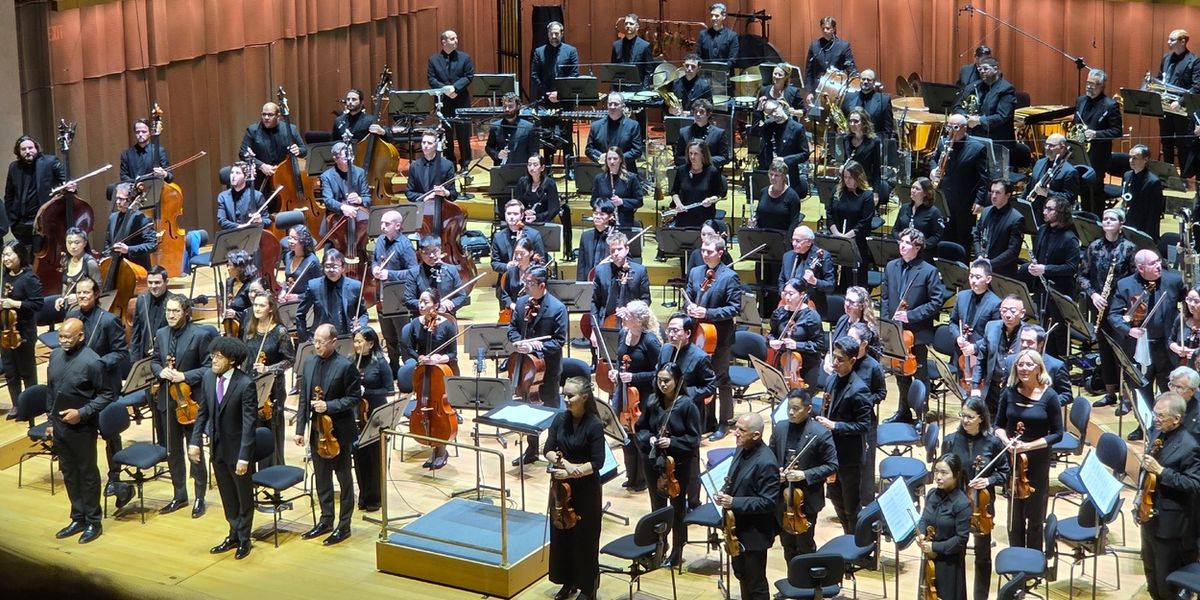
Jahja Ling led the San Diego Symphony’s first performance of Mahler’s seventh symphony in 2014, more than a century after the orchestra was founded. He called it “the most modern of all Mahler symphonies.”
Many critics have made similar judgements, the more conservative among them meant it as a pejorative, others as a compliment. Schoenberg and Berg admired the score. But the respected classical music site Bachtrack said, “Maestro Ling deserves kudos for being brave enough to program it.”
The confused reaction to the seventh is one of the reasons it has always been the least performed of Mahler’s nine completed symphonies. Conservative listeners complain it lacks the composer’s usual use of classical forms and developments, others that its movements seem structurally unrelated and unexpected key changes hurt the music’s flow.
It doesn't help that a typical performance runs for 80 minutes and calls for more than 100 musicians and several instruments seldom used by symphony orchestras including cow bells.
In the Orchestra’s second take on the work, Conductor Rafael Payare physically mirrored my own reactions with acrobatics that may make him a favorite in any Olympic event for conductor-podium gymnastics.
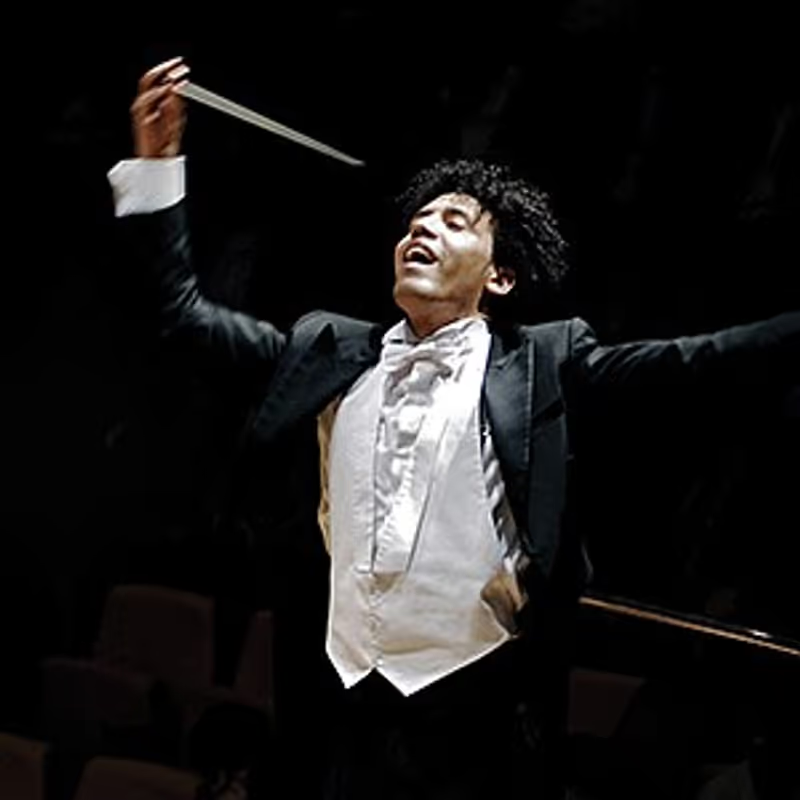
The orchestra responded with skillful conviction when he lunged rapidly to balance on the tip of his left foot while thrusting hands to the heavens to urge thrilling brass-topped crescendos or dropped nearly to his knees as his hand coaxed piano strings to pianissimo.
Though tempted, being too close to the balcony railing, I chose not to join in.
Payare’s conducting reminds me more and more of Leonard Bernstein’s. Lenny was a showman, but I never doubted the sincerity of his emotional movements and facial expressions. Nor do I doubt that his passionate style brought out the best in his musicians. Payare does the same as conductor of both the San Diego and Montreal Symphonies.
Mahler’s Seventh Symphony – The only Work on the Program
Mahler fimished the second and fourth movements of his seventh (marked Nachtmusik I and Nachtmusik II) soon after completing the sixth but struggled before finally adding the first, third and final fifth movements.
Bernstein pointed out that “Nachtmusik” is usually translated as “nocturne” or “serenade,” but Mahler went well beyond the Nachtmusik of Mozart’s popular serenade. The nights described in the first four movements of Mahler’s seventh vary wildly and weirdly. He described the opening 20-minute movement as the “power of darkness . . . a violent, stubborn, brutal and tyrannical force,” and the completed work as a “progression from night to day.”
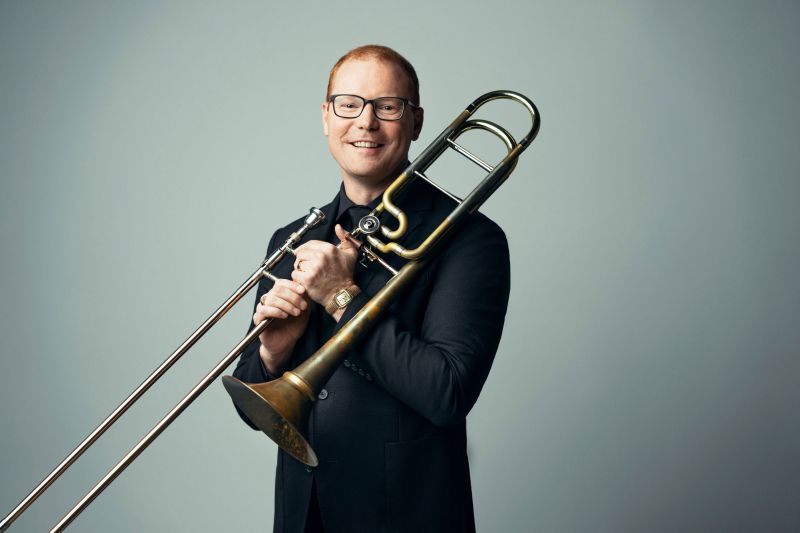
The introduction of the first theme, a slightly off kilter summons to the terrors of a dark night, is written for tenor horn, but was delivered with a beautiful clear tone by Principal Trombone Kyle Covington on a closer to flugelhorn-sounding euphonium. The brief theme repeats insistently in various guises throughout the 20 minutes of the first movement.
Brass-heavy scoring dominates, but Mahler interrupts “brutal and tyrannical force” with unexpected transitions to a serenade of romantic strings that remind us of star-filled skies and warm breezes. Mahler’s unexpected changes in mood and keys were unusual for the early 20th Century, and for him. Early critics and audiences were puzzled.
The second movement suggests a mysterious dark night on torch-lit streets and in haunted forests filled with the twittering of angry birds. Again keys slip from minor to major or the reverse as moods change from threatening to optimistic or the reverse.
The third movement is the eeriest. Mahler marks it Schattenhaft (“Shadowy”). Witches brew, plot and sweep across the sky, ghosts float below. The movement often reminds me of the sarcasms of mid-century Shostakovich.
The second Nachtmusik is the closest to a conventional nocturnal serenade, serene even when a solo horn has the spotlight. It features brief moments for mandolin, guitar and two harps. In the only balance flaw of the evening, the plucked instruments, especially the guitar and mandolin, were at times barely audible
As the fourth movement closes with quiet optimism, we know dawn has arrived, and indeed, in the finale the sun bursts through a troubled night with stirring brass and pounding drums. Almost as long as the first movement, the fifth proceeds with few reminders of the stramge eerie night, and the symphony ends as the orchestra rises to an exhilarating C Major triumph with sunlit blazing brass.
The resulting ovation was not the usual hesitant, “Is anyone standing to applaud yet?” Instead, nearly everyone was already on their feet cheering and applauding the instant Payare turned to face them.
Mahler’s seventh isn’t so difficult to love after all.
More than 100 musicians were on stage acting as one under Maestro Payare. I was struck, not for the first time, by the mix of men, women, ethnicities, social backgrounds and faiths in today’s orchestras. It is a compelling example of why working together produces amazing results. Too bad so many in our world seem to disagree.
Prefer BroadwayWorld in Google Search?
Add us as a preferred source so our stories show up more often in Top Stories and Google’s AI answers — for you.
Sign up for all the news on the Fall season, discounts & more...

|
BEGIN AGAIN The Old Globe (9/06-10/11) |
|
Good Night, Oscar North Coast Repertory (9/16-10/18) |

|
Ripcord The Roustabouts Theatre Co. (10/08-11/01) |

|
Always...Patsy Cline Mosaic Theatricals (7/16-8/01) |

|
Odds Are Mosaic Theatricals (10/02-10/18) |

|
Back To The Garden The Golden Age of Vinyl Poway Center for The Performing Arts (5/15-5/16) |

|
Curious George and the Golden Meatball Poway Center for The Performing Arts (1/16-1/16) |

|
MJ Live Michael Jackson Tribute Concert Poway Center for The Performing Arts (4/03-4/03) |

|
Charlie and the Chocolate Factory Casa del Prado Theatre (10/23-11/08) |

|
ei8ht the Musical JCompany Youth Theater (11/29-12/06) |

Reader Reviews
To post a comment, you must register and login.