


Review: A BEAUTIFUL NOISE: THE NEIL DIAMOND MUSICAL at ASU Gammage
The production runs through February 1st at ASU Gammage in Tempe, AZ.
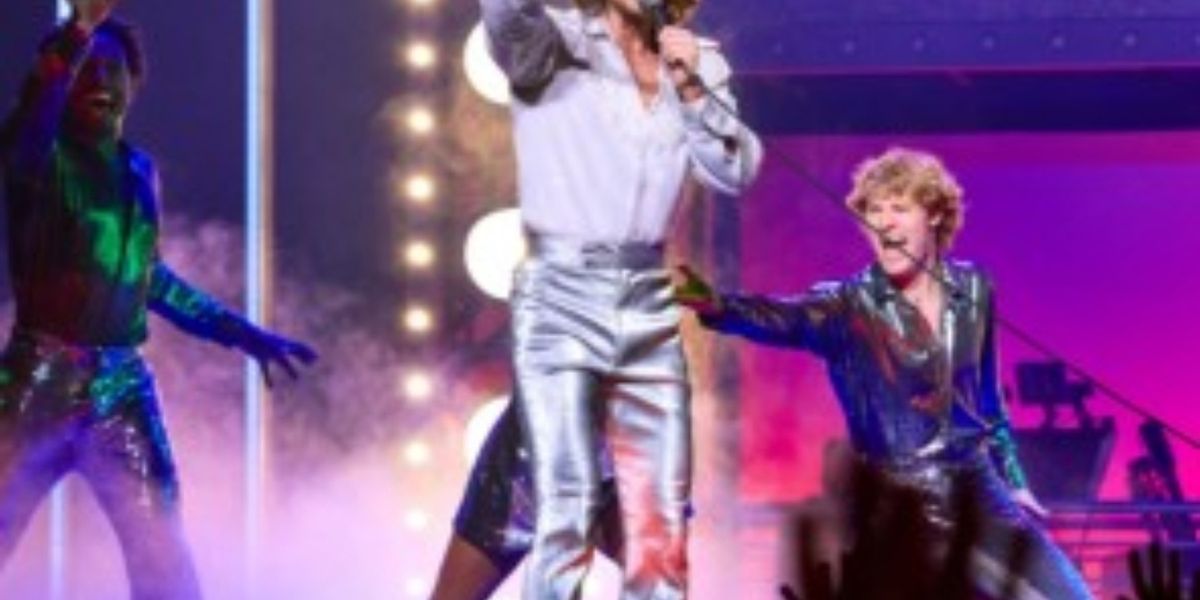
Guest contributor David Appleford’s take on the National Tour of A Beautiful Noise: THE Neil Diamond MUSICAL.
Titled after Neil Diamond’s 1976 album of the same name, A Beautiful Noise: THE Neil Diamond MUSICAL aims for something more intimate and riskier than the average jukebox musical. Rather than simply charting a performer’s rise to fame, it presents a man in conversation with his past where he’s both haunted and sustained by the songs he wrote to survive it. The structure is unorthodox and quietly daring.
Now playing at ASU Gammage in Tempe until February 1, the show is built around a series of therapy sessions. An older Diamond sits with his psychiatrist, credited simply as Doctor (Lisa Renee Pitts), and listens as his life unfolds through the words of The Complete Lyrics of Neil Diamond. As the title suggests, the published lyrics to his songs are read aloud as confessions, almost like scripture.
In one of the show’s most imaginative early moments, members of the ensemble seem to materialize behind Diamond one by one, each voicing a familiar lyric from the book, creating the illusion that the words themselves are lifting off the page and drifting through the air around him. It’s a conceit that could easily feel forced, but under writer Anthony McCarten’s pen, once the songs are released from the page, they don’t merely underscore the drama, they become it.
That framing device is also the show’s greatest vulnerability. Some audience members may find the therapy-session structure repetitive or emotionally distancing, its insights suggested rather than fully confronted. The dramatic potential in Diamond’s private life, including his marriages, his creative paralysis, even the misfire of his film career, is often hinted at but rarely explored in satisfying depth. It’s the songs themselves that carry the emotional weight.
Fortunately, once you understand how those lyrics originated, the songs become extraordinary. The music is the show’s main event: a full-throated concert of hits that keeps the audience clapping and, ultimately, singing along. Director Michael Mayer wisely leans into that collective joy. For longtime fans, it’s an irresistible celebration; for newcomers, it’s difficult not to get swept up in Diamond’s melodic directness.
Structurally, the evening divides cleanly. Act I follows a familiar origin story: a Brooklyn-born son of Jewish immigrants claws his way into the Brill Building of the early 1960s, hungry for hits and artistic legitimacy. Act II loosens into something more impressionistic: a shimmering fantasia of Diamond’s sequined ’70s and ’80s, spliced with moments of private failure and an aching awareness of the cost of becoming a legend.
The show features two Neil Diamonds. Nick Fradiani is the younger, restless, ambitious ‘Neil Then.’ Robert Westenberg is the older, reflective, regret-shadowed ‘Neil Now.’ Together they embody two halves of the same soul. While Westenberg engages as the older Diamond, it’s Fradiani that anchors the evening. He doesn’t impersonate Diamond so much as channel him. He’s a man with a voice described as a gravel pit wrapped in velvet, carrying both style and ache.
From the buoyant swing of Cherry, Cherry to the aching unraveling of a marriage in Love on the Rocks, Fradiani threads musical performance and dramatic instinct with remarkable control. His chemistry with Tiffany Tatreau as first wife Jaye Posner and later with Mary Page Nance as second wife Marcia Murphey is emotionally raw, particularly in the slow backward unraveling of those relationships. They play less like breakups dictated by plot and more like ballads of regret, sung after the damage is already done.
Forever in Blue Jeans skirts the edge of kitsch, but as sung by Nance in blue jeans, both the song and the performance are undeniable crowd-pleasers. But it’s I Am… I Said sung as duet by both Neils that brings the narrative into focus. The song becomes a moment of personal reckoning, securing the show’s emotional thesis and suggesting that the noise of a life, however messy or melodious, is still worth making sense of.
And then, of course, there’s Sweet Caroline, sung mid-show and again in the finale. It threatens to feel like the expected jukebox payoff, but here it resonates differently, something closer to a secular hymn. It’s the moment when the audience, knowingly or not, joins Neil in singing away his loneliness.
McCarten’s script balances levity with a measure of gravity. It resists turning Diamond into either a tragic figure or a tortured genius, allowing him instead to exist in that gray space between stadium roar and domestic silence. There is humor here too, particularly in Diamond’s dealings with the mob-adjacent Bang Records executives, played with a touch of Goodfellas swagger and gun wielding menace by Michael Accardo and Gene Weygandt.
Where the script falters is in its psychological throughline. Diamond’s childhood traumas are introduced as explanatory threads. They suggest the emotional paralysis that followed him into adulthood, but they are not always tightly woven. Once again, it is left to the songs themselves to complete the picture. Curiously, the album that consumed a full year of his life, one crafted with care and precision, goes unmentioned. Jonathan Livingston Seagull, the soundtrack to the 1973 film, ultimately outgrossed the movie itself and earned Diamond both a Grammy and a Golden Globe, yet the musical glides past it without a glance.
Visually, the touring production impresses. It retains the Broadway version’s gleaming production values, with Kevins Adams’ shimmering lighting, Steven Hoggett’s fluid choreography, and David Rockwell’s scenic design that bridges the intimacy of a therapist’s office with the glitter of a Vegas stage. It’s immersive without becoming overwhelming.
Like its subject, A Beautiful Noise is not flawless. It can be messy, and it sometimes mistakes suggestion for depth. But it also gets something right about what it means to make art out of longing. Neil Diamond’s music was never cool. It was emotional, unabashed, sometimes corny, often cathartic. But it reminds us that even pop songs, like people, are rarely what they seem on the surface. In this instance, sometimes they’re the echo of a writer just trying to be heard. And that message may be the show’s biggest success of all.
ASU Gammage -- https://www.asugammage.com/ -- 1200 S. Forest Avenue, Tempe, AZ -- 480-965-3434
Photo credit to Jeremy Daniel – Center: Nick Fradiani

BroadwayWorld Merch
Shirts, mugs, phone cases & more


|
Powered by

|
|
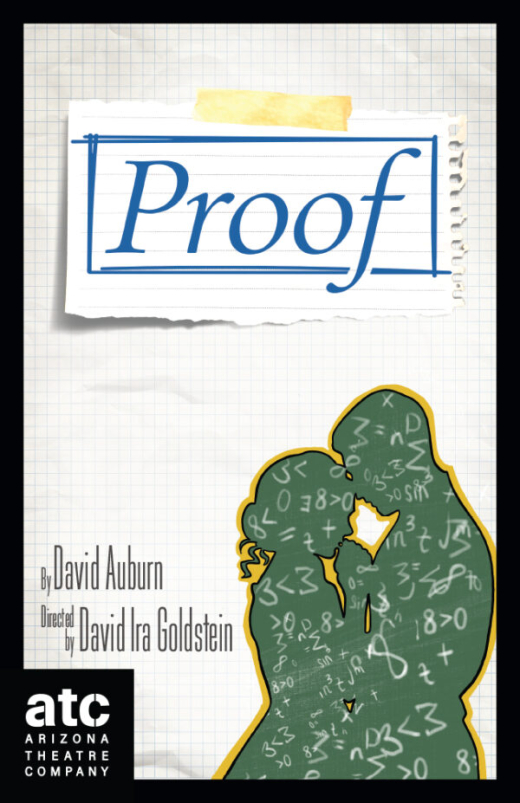
Proof Temple of Music and Art (9/27-10/17) |

|
Hi-Fi Holiday Concert Hale Centre Theatre Arizona (12/04-12/19) |
|
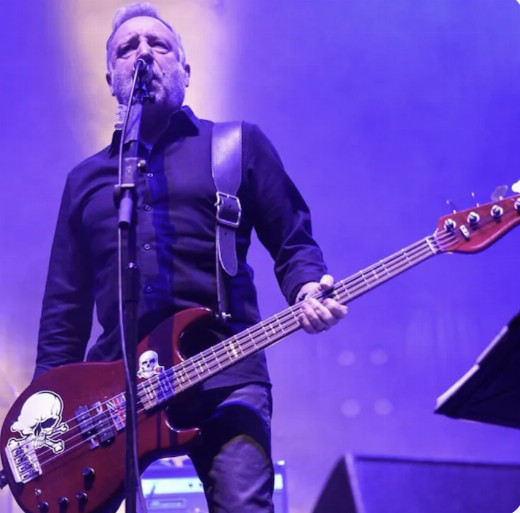
Peter Hook And The Light The Van Buren (9/15-9/15) |
|
Scott Silven Marroney Theatre (11/17-11/21) |
|
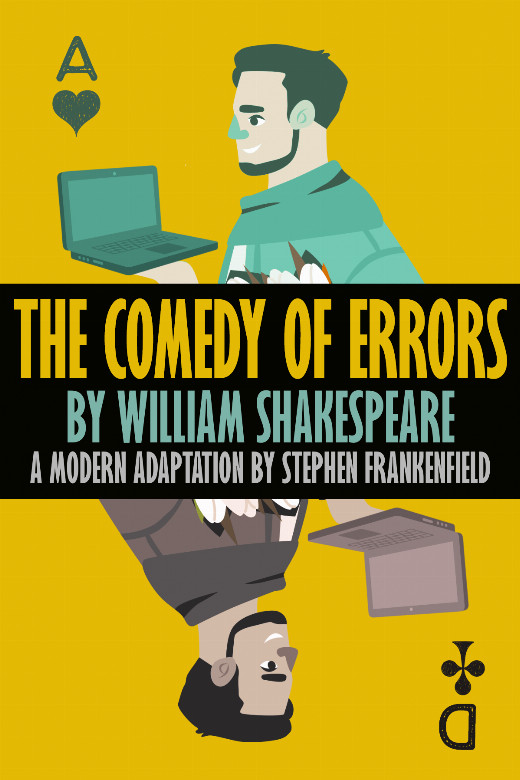
The Comedy of Errors By William Shakespeare Adapted by Stephen Frankenfield Live Theatre Workshop (9/18-10/11) |

|
Much Ado About Dinosaurs Beaver Street Theatre (10/16-10/25) |
|
The Taming Flagstaff Shakespeare Festival (9/19-10/04) |
|
MY MAN GODFREY Don Bluth Front Row Theatre (1/21-2/27) |

|
Sabaton, Pop Evil & Wings of Steel Arizona Financial Theatre (11/11-11/11) |
|
Nunsense Hale Centre Theatre Arizona (1/19-3/23) |

Reader Reviews
To post a comment, you must register and login.