


Review: AND THEN THERE WERE NONE at His Majesty's Theatre
Agatha Christie classic keeps you guessing until the very end
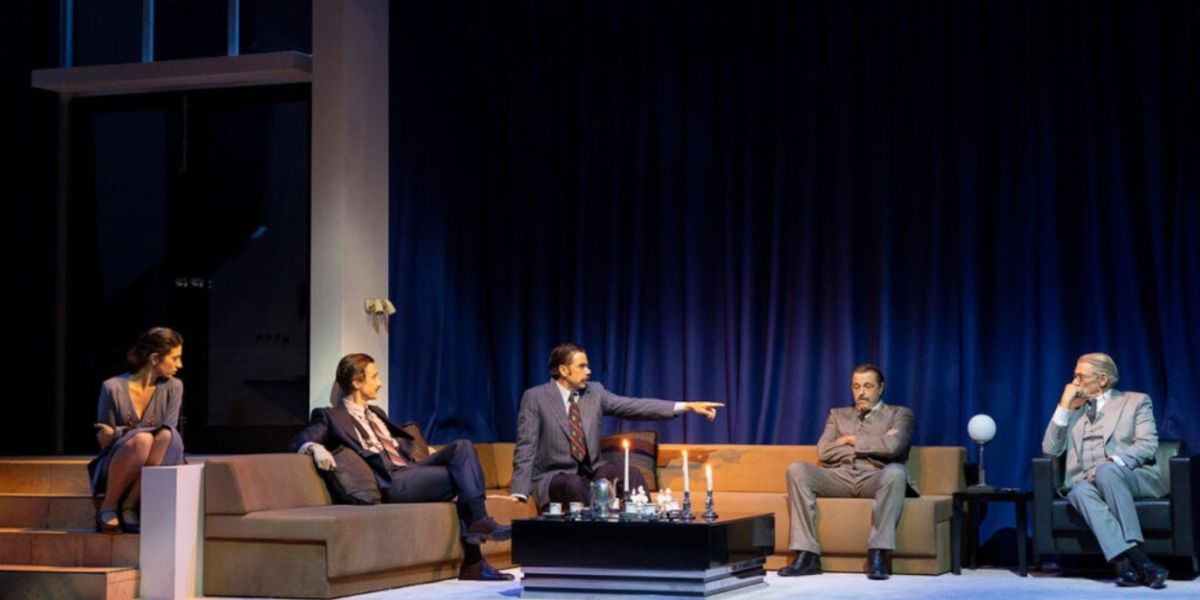
There’s certainly a lot to be said for classics. First published in 1939, Agatha Christie’s And Then There Were None is one of the highest selling books of all time, and one of Christie’s finest works. Since its stage adaptation in 1945, the plot has been tweaked and then returned, but even in 2025, a lot of classic stage techniques are utilised (as well as wonderful acting) to amaze you and keep you guessing until the very end.
The same team that brought The Mousetrap to Australian audiences in 2023 reunite to bring AND THEN THERE WERE NONE to life, and there are certainly similarities. Both, for example, feature a single set, with anything outside the single room of action left to be illustrated by dialogue alone. Director Robyn Nevin ensures the space is well utilised, whilst the lighting (by Trudy Dalgleish) and sound (Paul Charlier) carefully and slowly transform the set as well as the atmosphere, building the suspense as the show goes on.
AND THEN THERE WERE NONE tells the story of eight strangers, all invited to an opulent house on a secluded island where they are met by two housekeepers. Soon, they begin dying one by one, with each character’s death foretold by a nursery rhyme that sits (unseen, so the audience generally is unable to guess the next cause of death) on a wall in the house. Concurrently with each death, a soldier figurine disappears from the table, itself an excellent piece of theatre. The characters quickly realise that their would-be host may not exist at all, and what’s worse, as their numbers continue to diminish they realise that murderer must be one of them.
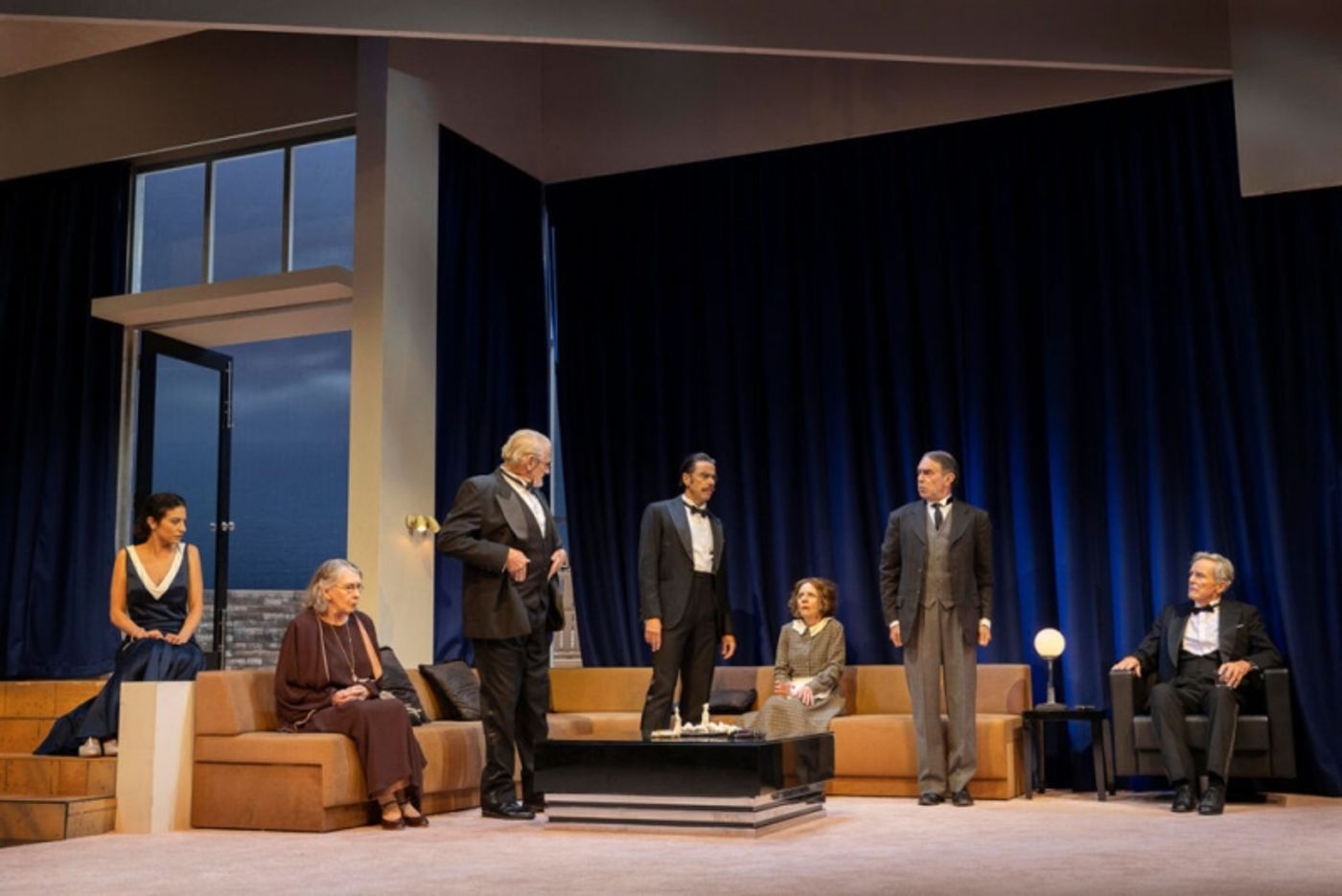
As Anthony Marston is Jack Bannister, who turns his character into the caricature of the young, rich Englishman. Complete indifference to those around him and some sharp dialogue make Bannister’s performance enjoyable. Peter O’Brien’s William Blore is a key character, transforming early on but doing a great deal to build the mystery, with the character pointing the finger at just about everyone else as the show goes on. Eden Falk as Dr Armstrong is does just as much to adjust the atmosphere, his descent from self-assured and confident source of knowledge to a jittery and suspicious mess bringing the audience well within the changing mood. Mia Morrissey as Vera Claythorne follows a similar line, showing excellent depth of talent to manipulate the feel of the show.
Grant Piro as Rogers and Christen O’Leary as Mrs Rogers do plenty in their characters, showing the suspicious devotion to servitude that is both expected yet criticised by the other characters. Stage and screen legend Nicholas Hammond portrays a frail and ever deteriorating General Mackenzie, whilst Tom Stokes as Philip Lombard somewhat anchors the show, his character showing the same demeanour throughout. Anthony Phelan is outstanding as Justice Wargrave, his deep voice and immoveable demeanour suiting the show’s voice of reason, whilst Jennifer Flowers as Emily Brent is brilliant, abrasively and shamelessly criticising the youth she is almost entirely surrounded by.
With wonderful acting ever altering the mood and shifting the spotlight between the characters, AND THEN THERE WERE NONE will truly leave you guessing. What’s particularly striking is the apparent simplicity of the production, with atmosphere and misdirection perfectly deployed by a talented cast and crew. Not only will you be kept guessing for the whole show, there are plenty of surprises still, least of all the reveal at the end. For a piece of pure theatre, with excellent staging and acting, AND THEN THERE WERE NONE proves just why the classics continue to hold up.
AND THEN THERE WERE NONE is playing at His Majesty’s Theatre until June 29th. Tickets and more information available from AND THEN THERE WERE NONE Australia.
Photos thanks to Jeff Busby. Video thanks to Crossroads Australia/And Then There Were None Australia.
|
BEETLEJUICE THE MUSICAL - PREVIEW Crown Theatre Perth (8/16-8/19) |
|
A VERY MUSICAL THEATRE CHRISTMAS Planet Royale (12/18-12/19) |

|
BEETLEJUICE THE MUSICAL - Auslan Interpreted Performance Crown Theatre Perth (9/06-9/06) |

|
The Book of Mormon (Australia) Crown Theatre Perth (10/20-11/01) |
|
|
BEETLEJUICE THE MUSICAL Crown Theatre Perth (8/20-9/06) |
Reader Reviews
To post a comment, you must register and login.