

New Russian Drama NY Premiere at La MaMa 11/2
By: Gabrielle Sierra
On November 2nd, a group of Russian playwrights and theater directors will present a staged reading of two new plays at La Mama E.T.C., a renowned venue for experimental and international theater. The featured plays, which have never before been seen in the US, are "Pavlik is my God" by Nina Belenitskaya and "The Ides of March" by Marina Krapivina. The readings, presented in English, will be staged by directors Marat Gatsalov and Mikhail Ovchinnikov. They will be followed by a Q&A with the playwrights and directors, who are in the US as part of a residency program co-hosted by CEC ArtsLink, an international nonprofit arts organization, and the Yale School of Drama.
"If you are interested in Russia for any reason, and you are not paying attention to what new playwrights are writing, you are missing much of this country's story," wrote John Freedman of the Moscow Times last December in a review of the Moscow production of "Pavlik is my God." Indeed, for audiences mostly familiar with the classics of Russian drama such as Chekhov, these plays will offer an insight into what Freedman calls "one of the most vital art forms in Russia for most of the last decade."Perhaps tellingly, both plays focus on the protagonists' difficult relationship with a parent, and through that prism their relationship with their country and its history is also revealed. The protagonist of "The Ides of March" is enjoying herself with a lover when she receives news of her alcoholic mother's sudden death, spurring her to look back on their family's rocky past. In "Pavlik is my God", it is the father who cold-heartedly abandons his young daughter. Feeling betrayed and yearning for justice, she turns her prayers to the iconic figure of Pavlik Morozov, a Soviet national hero. According to official propaganda, the 14-year-old Pavlik was so devoted to the higher good of communism that he turned in his own father, an enemy of the people, and died a martyr's death at the hands of his family. However, as both the play's Pavlik and actual historical documents reveal, the truth is much less clear-cut and heroic. Orphaned by life circumstances and by history, the characters of both plays have no higher authority left to appeal to but themselves. "Pavlik Is My God," currently running at Moscow's Teatr.doc theater, gained wide exposure when it was presented as part of the 2010 Russian Case program of the Golden Mask theater festival. Krapivina's "Ides of March" made it into the short list of "Lyubimovka," Russia's most prominent competition for young playwrights. The two young directors of the staged reading are also making their names known on the Russian and international theater circuit. Gatsalov has had two recent productions featured at the Golden Mask, one of which won the special jury prize and was named as one of the top three plays of the season. Ovchinnikov, 25, already has two avant-garde productions, one of which is currently running in Moscow, and a Russian award for experimental theater under his belt. Both began their theater careers as actors and appeared in a number of Moscow productions before making the transition to directing. This is the first time any of the playwrights' and directors' work is presented in the United States. Prior to the New York reading, their residency will take them to Yale, where they will spend a week and a half at the Yale School of Drama attending a variety of workshops, classes, and performances. A staged reading of their plays will also take place at the Yale Cabaret on October 29th at 8:00pm and 11:00pm.The residency and readings are part of of the Open World Cultural Leaders Program, an endeavor of the Open World Leadership Center at the Library of Congress with partnership and funding from the National Endowment for the Arts and the Renova Group of Companies.
Local Shows

|
Broadway Magic Hour Broadway Comedy Club (1/01-6/30) |

|
The Braata Singers in Concert: All We A One A.R.T./NY (6/26-6/28) |
|
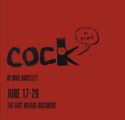
Cock East Village Basement (6/17-6/28) |

|
Miss Julie Gene Frankel Theatre (6/24-6/28) |
|
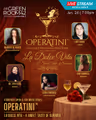
Operatini™ — A Boutique Opera & Live Music Series Presents: La Dolce Vita Green Room 42 (6/26-6/26) |

|
Shrek, the Musical! Emelin Theater (7/09-7/12) |

|
SpinQueen™ Brooklyn Art Haus (7/07-7/08) |

|
The City Speaks: How New Yawkahs Tawk Studio Dérive (6/14-6/28) |
|
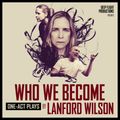
Who We Become: One-Act Plays by Lanford Wilson Factory Series at the Chain Studio Theatre (6/25-6/27) |
|
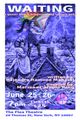
waiting: a queer black tragicomedy in two acts The Flea Theatre (6/25-6/26) |