


Robert Greer Adaptation of A DOLL'S HOUSE is Coming to Theater for the New City
Robert Greer has built a new adaptation of Ibsen's masterpiece by building upon the translation by R. Farquarson Sharp.
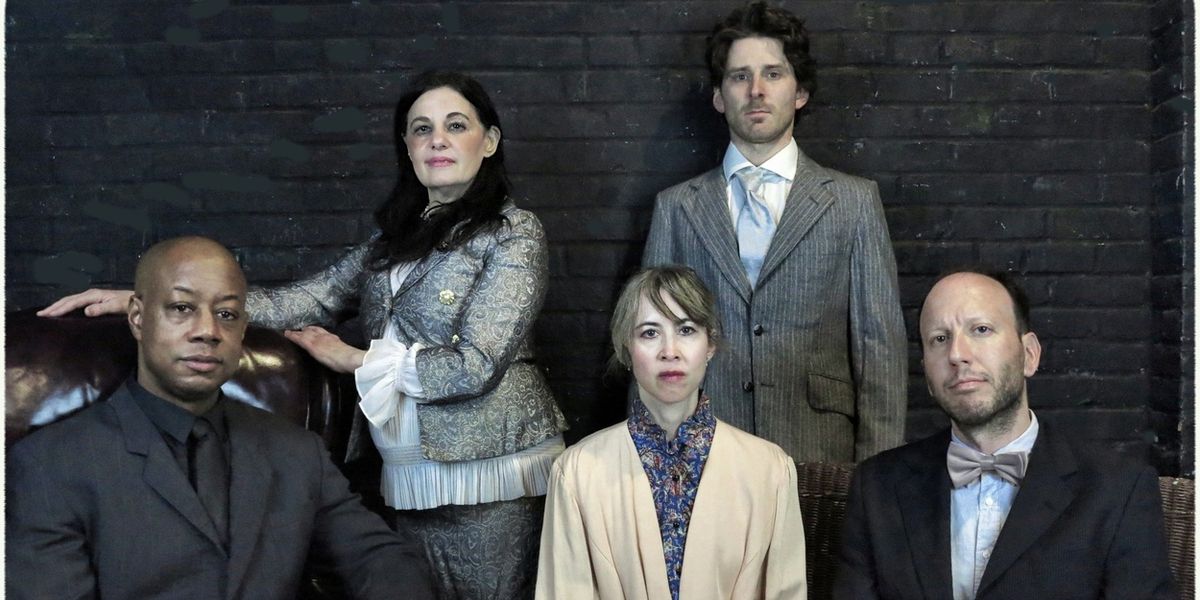
Robert Greer, Artistic Director of August Strindberg Rep, has always longed to re-write and stage Ibsen's "A Doll's House" into a version that Strindberg would have approved of. That is the genesis for his new adaptation, "Henrik Ibsen’s Doll House as told by August Strindberg and adapted by Robert Greer." Theater for the New City, where Strindberg Rep is a resident company, will present this daring new proposition March 26 to April 5.
In Ibsen's 1879 drama, Nora Helmer, a devoted mother and wife of a bank manager, has secretly borrowed money to save the life of her husband, Torvald, by forging the signature of her dying father on a loan guarantee. When the lender, a man named Krogstad, threatens exposure, Nora confronts the fragility of her marriage and Torvald’s patronizing attitudes toward her. As Torvald reacts with anger, sanctimony and self-interest, Nora realizes she has been treated like a “doll” her whole life. Determined to understand herself and the world independently, she makes the shocking choice to leave her husband and children, walking out in search of autonomy.
"A Doll House" was the first of Ibsen's plays to create a sensation and is now perhaps his most famous play. It was highly controversial when first published, as it is sharply critical of 19th Century marriage norms. The piece follows the formula of well-made play up until the final act, when it breaks convention. Instead of a standard dramatic collapse and restoration, the play ends with a serious philosophical discussion between Nora and Torvald about marriage, identity, and freedom. Rather than resolving the marriage or restoring order, Nora walks out. This is one of the reasons the ending was so shocking in 1879: audiences were denied emotional closure and forced to sit with the implications. It is often called the first true feminist play, although Ibsen denied this.
The play's exact title has always been in dispute. The original Norwegian and Danish manuscripts didn't have the possessive word "Doll's" in their titles. But Ibsen's first and most popular translator, William Archer, added the apostrophe. This diluted the meaning of the title, whose intention was to say that Nora was like a toy doll living in the house that was bought for her by her husband.
Strindberg issued a withering critique of "A Doll's House" in his preface to "Getting Married" (Swedish title "Giftas," 1884), a collection of short stories on various topics. At the time, Strindberg was fully committed to naturalism and devoted to literature as a form of social autopsy: illuminating social forces and scientific truths. He accused his Norwegian idol of sentimentality and moral simplification and objected to the play as essentially formulaic, since its heroine achieved moral clarity. Furthermore, her final act, "the door slam heard round the world," was theatrically powerful but intellectually insufficient. It all was too clean, too symbolic and too reformist.
Robert Greer has built a new adaptation of Ibsen's masterpiece by building upon the translation by R. Farquarson Sharp, who was Keeper of Printed Books at British Museum from 1924 to 1929. Greer says, "Nobody could improve Sharp's translation." The overall tone of Greer's adaptation comes from it, but about a quarter of the text is from Greer listening to it and thinking "That's not right." He says, "Strindberg was whispering in my ear."
The goal of the production is to accept Strindberg's criticisms and to make key adjustments that fulfill Strindberg's arguments in the introduction to "Getting Married," his volume of short stories, in which he:
· Attacks the institution of marriage as a social and economic arrangement rather than a sacred or romantic bond.
· Frames marriage as a legal contract shaped by property, religion, and gender inequality, rather than mutual love.
· Criticizes bourgeois morality, arguing that it enforces hypocrisy, especially regarding sexuality.
· Suggests that women are both oppressed and complicit in maintaining conventional structures.
· Defends literature’s role as a tool of social analysis, not moral instruction.
· Positions himself as a naturalist writer, influenced by scientific thinking and social realism.
· Rejects sentimental idealization in favor of exposing uncomfortable truths.
The actors are (in order of speaking) Charles Everrett (as Torvald Helmer), Natalie Menna (as his wife, Nora), Jane Cortney (as Mrs. Linde, Nora's childhood friend), Chris Hahn (as Doctor Rank, aclose, trusted friend of the Helmers) and Tom Paul Ryan (as Krogstad). Lighting design is by Alexander Bartenieff. Costume design is by Billy Little.
Prefer BroadwayWorld in Google Search?
Add us as a preferred source so our stories show up more often in Top Stories and Google’s AI answers — for you.
Sign up for all the news on the Fall season, discounts & more...

|
Priscilla Queen of the Desert the Musical Gallery Players (9/18-10/04) PHOTOS |

|
EN EL TIEMPO DE LAS MARIPOSAS Repertorio (1/07-12/31) |

|
After All These Years AMT Theater (9/09-10/10) |

|
LA CASA DE BERNARDA ALBA Repertorio (11/15-12/31) |

|
LA GRINGA Repertorio (2/08-12/31) |

|
FunikiJam’s WORLD MUSIC FAIR Actors Temple Theatre (10/17-12/05) |
