Exclusive: Maya Hawke Returns to Her Theater Roots in EURYDICE
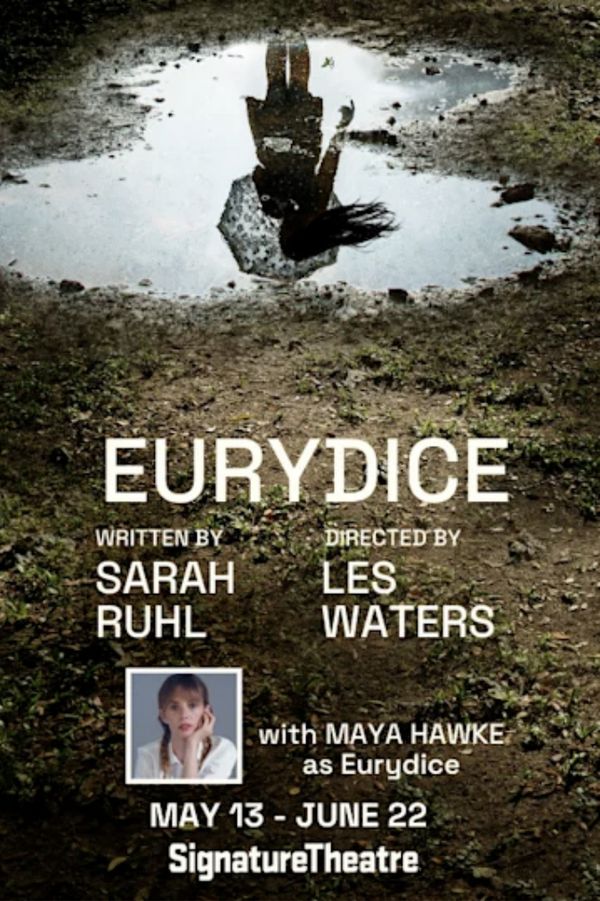
Sarah Ruhl's Eurydice is running at Signature Theatre's Romulus Linney Courtyard Theatre through June 22.
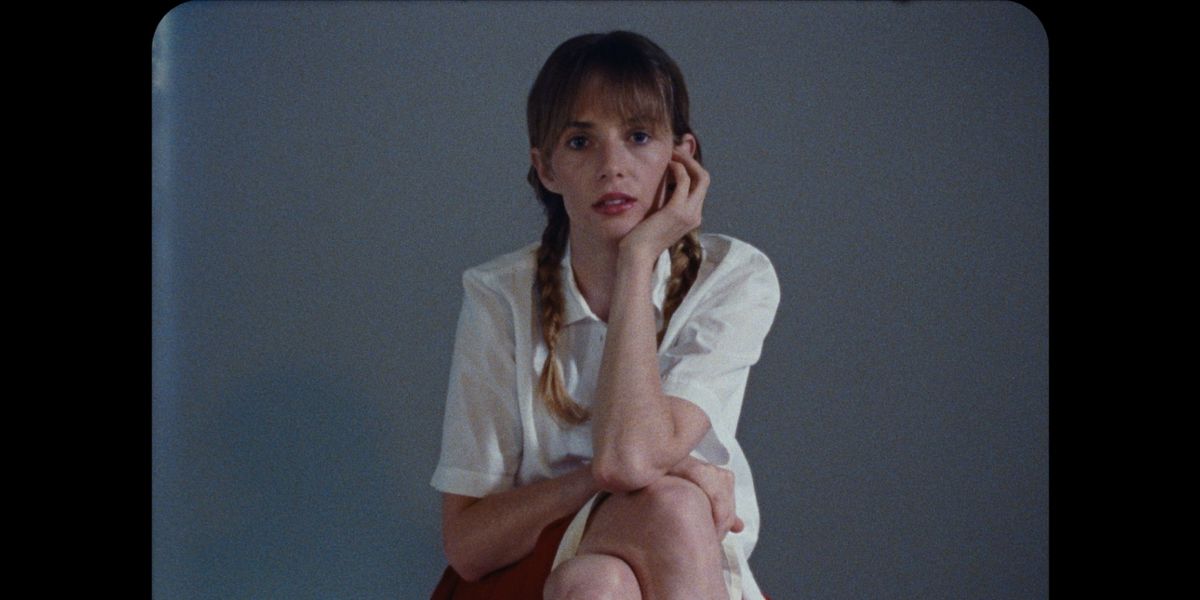
Visit the New York theater scene in the past couple of years, and you likely won't be far from Stranger Things. This might be in the form of Stranger Things proper (the prequel play is now running at the Marquis Theatre) or by finding yourself in the audience of a show featuring one of the charismatic Stranger Things "kids": Gaten Matarazzo in Sweeney Todd, Sadie Sink in John Proctor is the Villain and, now, the new off-Broadway production of Sarah Ruhl's Eurydice starring Maya Hawke.
Since Hawke's turn as the wonderfully awkward Robin Buckley in the Netflix series in 2019, her career has skyrocketed. That same year, she appeared in Quentin Tarantino's Once Upon a Time in Hollywood as a member of the infamous Manson clan, later starred as Leonard Bernstein's daughter in Bradley Cooper's Maestro, and in 2024, she embodied Anxiety in Inside Out 2.
However, before all of that, she was a theater kid through and through. After all, she chose to train at Juilliard after falling in love with the medium as a high school student. It might come as a surprise, then, that Eurydice marks the first time that Hawke has appeared on a professional New York stage. "I hadn't done a play since drama school," she said on a break from rehearsals during Eurydice's previews. "I have been tangentially around doing readings here and there... but I hadn't really found the right thing." Now, with Stranger Things coming to an end later this year, Hawke felt the timing was right. And her personal connection to the material only made it more appealing.
"It felt kind of like the perfect time to go touch back in with who I was before I'd started [Stranger Things] and what I wanted to do... I read this play and it felt like an invitation to live inside of a poem that had all kinds of different connectivity and relevance to my life...I am going through all kinds of personal life events that mirror Eurydice's journey. Not too closely, hopefully, but I felt really connected to the material and to the poetry of it," she explained.
The Ruhl play follows the titular Greek character who, in both this and the original tale, dies an untimely death after her wedding to famed musician Orpheus. Furthering the traditional legend, Ruhl introduces the character of Eurydice's father (played here by Brian d'Arcy James) with whom she reunites in the afterlife. The rest of the play is an exploration of love, memories, and language, and the delicate art of letting go of those things which we hold dear.
"My interpretation of the play, originally, was about this warning not to look back. Not to obsess over the happiest times of your life [and] your past so much so that you can't see forward to your future, or even believe that you could have one," Hawke shared. "And now, doing the play, I think this interpretation was wrong. Or at least it doesn't fit into the version of the play we're doing. My initial interpretation of the very end, when she puts the water over her head, was that it was almost a happy moment, a moment of letting go... When I read it initially, it was the poem that washed over me. Now doing it, it's the practicality of this character's choice that has to get made, and the desperation and the mistakes."
After Eurydice's death, her memory is wiped, and with it, gone are all the core qualities that make Eurydice, well, Eurydice. Her love of books and language, and the deep admiration she feels for her father. As this next movement of the play begins, Hawke must start from scratch, rediscovering each element of the character piece by piece. "Every day, I get into the elevator that rains...and I just try to forget everything. I try to imagine that I can't remember who I am and that all I can remember are my lines." She credits lighting designer Reza Behjat for his choices here, which allow her to fall into this mental space with ease. "When I walk out of the elevator, the lighting design is so beautiful and it really helps me in that moment....I'm blasted with light and I can't see anything. I look into the audience and I can't see any faces...There's something about that effect that feels like it obliterates my mind or something."
Throughout the play, there is an ongoing dialogue between music and language. We see this in the relationship between Eurydice and Orpheus, each of whom favors a different way of communicating. After her death, Orpheus attempts to reach his wife through both music and written language, all while she is relearning how to speak for herself.
"I think artists of all kinds hold music in extremely high regard because it is the universal language. It can communicate emotionally and intellectually to anyone: children, babies, and people who don't speak the language. I think there's some mystical alchemy to that... I think literacy has a profound desire to be known and understood, and she loves language because she sees it as the tool with which she can be understood. And when language itself is taken from her, she has to find a new way to be understood. I think, by the end of the play, she at the very least understands herself even without language and has come to some sense of grounding and self-knowledge. The play explores both the extraordinary capacity of language to take us on a journey and to make us feel, and to make us know each other. And it's violent limitations that can let us spend centuries with someone....and have them not know you really."
As for her co-stars —namely Caleb Everhart as Orpheus and Brian D'Arcy James as Eurydice's father —Hawke has nothing but appreciation and respect for them, both on and off the stage. "Caleb is an extraordinary actor.... I rarely meet anyone with as relentless a pursuit of truth as he is. When I feel at sea in the play, even if we're not on the same scene, I will watch him give his monologues out of the corner of my eye and get rerouted back in the world. I need to work with people like him because I can get distracted by the audience and the jokes, and the pace. He pulls me back into the world and into this inner landscape of the mind. And with Brian, I don't know if I've ever met someone who deserves more to be a giant egomaniac who isn't. He has every right to walk around like he owns the place, and instead, he spends most of his energy lifting other people up. Looking into his eyes, he floods you with energy and with love. He's just someone who loves this work and who loves other actors and people. He moves me every second I get to be on stage with him."
Even amid a continuing roster of screen projects (she was just cast as Wiress in the highly anticipated next installment of The Hunger Games franchise), Hawke hopes to continue developing her craft in the theater world. "I have always held [theater] on such a high pedestal, and this experience has [given me the chance] to take it off the pedestal and start to understand how it works," she admitted.
"I think Eurydice is a great play, and there is something about [great plays] that makes them impossible. There's some riddle to them where you could never get them exactly right... If it were a Sudoku puzzle, you would go into one corner and think you had perfected it. And then you go back to the other corner and realize that you'd ruined something, and it didn't quite fit. What makes them so great in that way is that they are these impossible Sudoku puzzles, so you never get bored of trying to solve them... There's something invincibly challenging about this material that will make it able to hold people's interest for hundreds of years."
Audiences can attempt to solve Sarah Ruhl's "Sudoku puzzle" of a play at the Signature Theatre's Romulus Linney Courtyard Theatre, running now through June 22.
Photo credit: Trevor Tweeten
Prefer BroadwayWorld in Google Search?
Add us as a preferred source so our stories show up more often in Top Stories and Google’s AI answers — for you.
Sign up for all the news on the Fall season, discounts & more...
|
|