


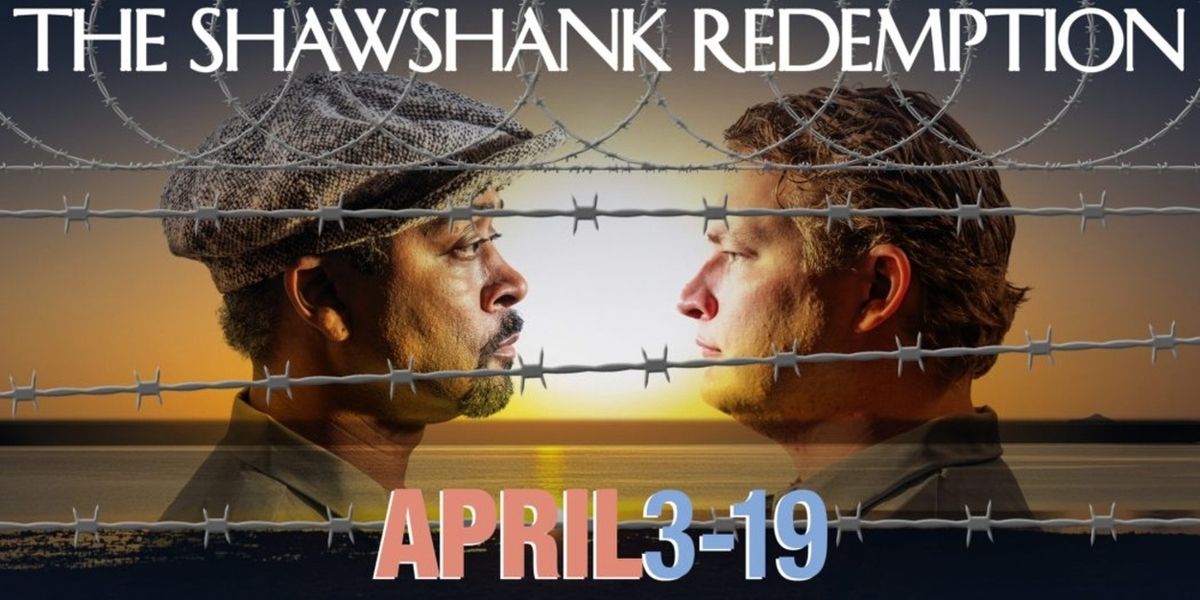
Stephen King may be crowned the “King of Horror,” but his body of work stretches far beyond scares, encompassing dramatic classics like, “Stand By Me,” “The Green Mile” and “The Shawshank Redemption.” Audiences devour the novels, the films, or both—but notice what’s missing from that list: stage productions. King has more than 80 screen adaptations, yet if you count the infamously disastrous CARRIE: THE MUSICAL, only six of his stories have ever made it to the stage. That’s telling. Horror’s difficulty is obvious—theatre can’t control the audience’s gaze the way film can—but what about his non‑horror stories? Where are the stage versions of “Stand By Me” or “The Green Mile?” Perhaps they simply don’t translate. Books invite imagination; movies offer sweeping scale and intimate close‑ups—two tools theatre doesn’t have. And yet, here comes THE SHAWSHANK REDEMPTION, now running at Theatre Memphis through April 19th. If you’re wondering why this adaptation isn’t produced more often, the answer becomes clear: it just doesn’t work.
Complicating matters in this particular production are several artistic choices (and performances) that detract rather than elevate an already tenuous quest. Under the direction of the highly talented John Maness, this “prison play” about two good men who come together under brutally unforgiving circumstances to model man’s humanity to man likely only succeeds in the eyes of fans of the original source material. Like a cover band singing an artist’s greatest hits, this play may evoke fond recollections of the movie, but it fails to stand on its own.
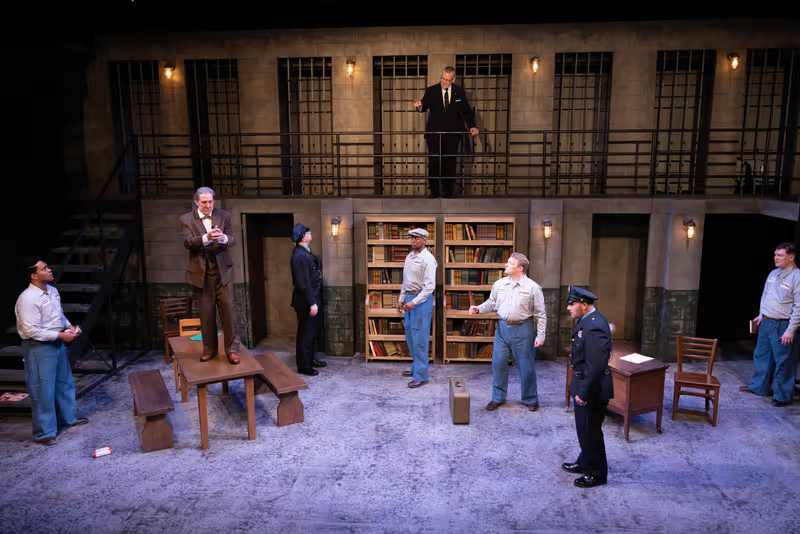
As is often the case with King’s works, this story is set in Maine—the state, not the name of some small city in Mississippi. But apparently no one told this cast. Most, if not all, lean heavily into southern drawls that make even this Alabama-born viewer struggle to understand. To confuse things even more, Maness intersperses the show with work songs or chain gang songs—a musical tradition that originates in the racialized prison systems of the South. Having a majority-white cast singing these songs (while not really doing any physical labor on stage) to reflect the setting of Maine underscores just how far this show veers off course.
On paper, this harsh prison tale appears gritty and full of inhumanity, but it simply doesn’t “play” that way. Never have gang rape, prison guard brutality, and attempted suicides been so muted. The movie version has realistic settings, extreme close-ups, and voice-over narration to highlight the intensity of emotion—all elements difficult to replicate on a stage. Rather than being forced to watch such extremes, a theatrical audience’s attention has endless opportunities to wander, and therefore, detach.
This cast of 14 male actors does an awful lot of acting (and indicating) instead of listening and reacting. The moments of genuine connection between them are almost non-existent. Yes, everyone seems committed, but they’re working in silos, leaving us unable to invest.
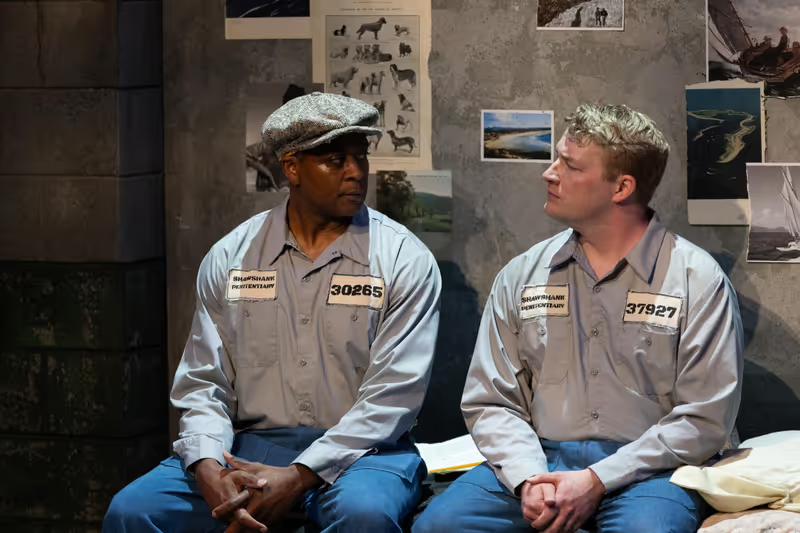
JS Tate plays the Morgan Freeman role from the film, Ellis Boyd “Red” Redding. He’s a man who makes a terrible mistake in his youth but grows to become the prison patriarch with a penchant for importing almost any contraband for the right price. He serves as the narrator of the play and the heart of the show. Although he leans too much into a Southern vernacular, he still plays it as closely to what must have been intended. Tate is believable as a man who owns his mistakes and accepts the price he must pay for them.
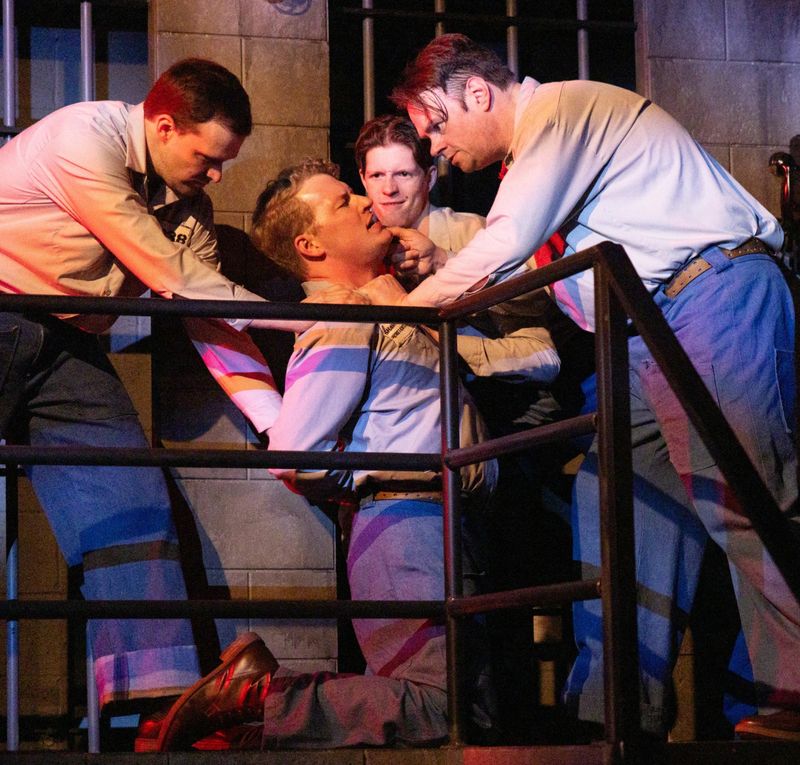
As the Tim Robbins character, Andy Dufresne, Mitchell Bentley portrays someone wrongly accused of killing his wife. He’s a renaissance man locked in a world of dishonesty, greed, and cruelty—all things he is not. Although Bentley has an amazing baritone speaking voice, it never shifts to reflect the dire circumstances he faces day in and day out. Whether he’s about to be gang-raped by his fellow prisoners or pushed off a ledge to his death by the prison guard, his voice remains “radio-broadcast steady,” which never evokes our empathy.
Bryne Zuege tackles the corrupt Warden Stammas—a dream role for any aspiring villain—with flashes of real menace, yet the performance ultimately feels hollow. Instead of trusting the script, Zuege leans heavily on indication: pointing to himself every time he says “me” or “I,” or miming a child’s height to signal a little girl. These choices strain credibility, lower the stakes, and leave us imagining the stronger performance that might have been.
The rest of the cast shows glimmers of potential (Christopher Tracy and Robert Alliston as the meanest inmate and prison guard around) but remains too indistinct and one-dimensional to ever have a breakout moment or help ground the situations in any true realism.
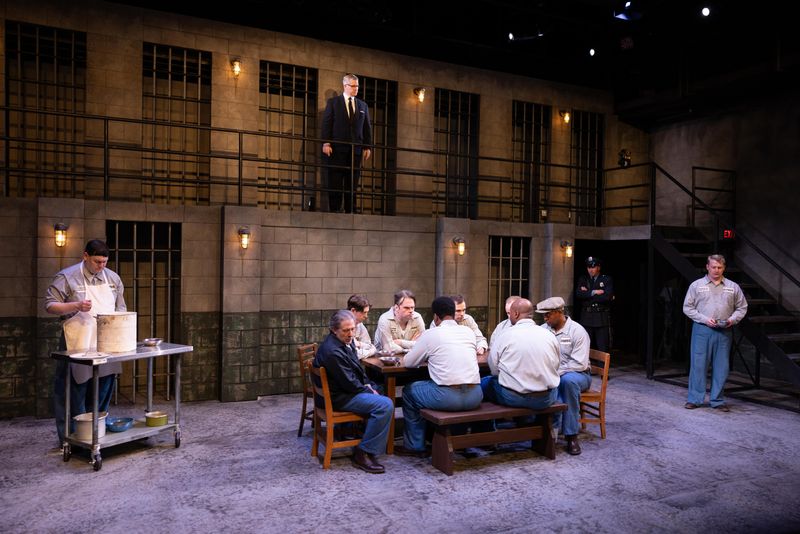
Theatre Memphis has long enjoyed the kind of success that sells out an entire run before opening night, and this production is no exception; unless you luck into a last-minute cancellation, you won’t get a seat. For devoted fans of the film or novella, this staging delivers the familiar beats. But for anyone walking in without that history—or relying on a faded memory of the movie—it’s hard to see what all the excitement is about. It’s now crystal clear that stage adaptations of Stephen King are rare for a reason, and this production makes that reason painfully obvious. Some stories belong on the page, some belong on the screen, and some—like a true King horror—should never be dragged out of the dark, because once exposed to the stage lights, all that’s left is the fear that something vital has been lost.
Prefer BroadwayWorld in Google Search?
Add us as a preferred source so our stories show up more often in Top Stories and Google’s AI answers — for you.
Sign up for all the news on the Fall season, discounts & more...

|
An Enemy of the People The Circuit Playhouse (9/11-10/04) |
|
The Great Gatsby Tennessee Shakespeare Company (1/29-2/14) |
|
A Swingin' Christmas Cabaret Tennessee Shakespeare Company (12/04-12/20) |

|
Opera Memphis' 70th Anniversary Concert Overton Park Shell (10/10-10/10) |

|
Continuum: A Faculty and Guest Artist Choreographed Dance Concert Department of Theatre and Dance, University of Memphis (11/20-11/22) |
|
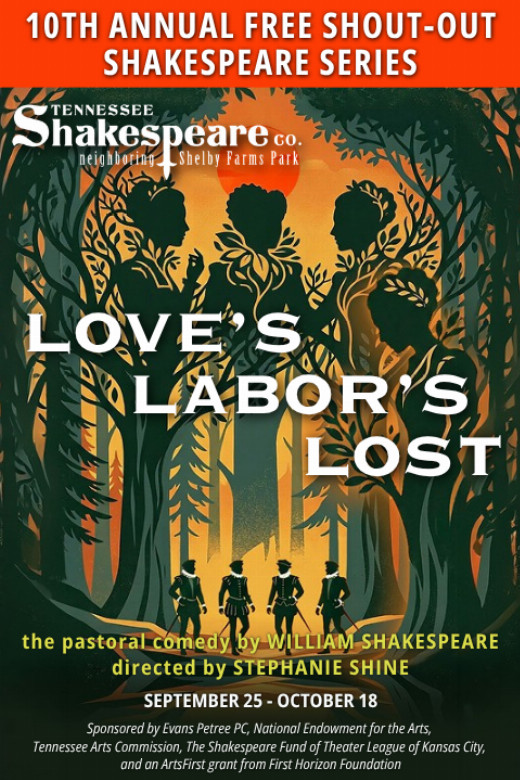
The 10th Annual FREE Shout-Out Shakespeare Series: Love's Labor's Lost Tennessee Shakespeare Company (9/25-10/18) |

|
American Page to American Stage: New, Classical Play Festival Tennessee Shakespeare Company (3/12-3/20) |

|
Clown Bar Department of Theatre and Dance, University of Memphis (9/24-9/26) |

|
Emerge: New Student Dance Works Department of Theatre and Dance, University of Memphis (3/26-3/27) |

|
Leanne Morgan McKenzie Arena (10/24-10/24) |

Reader Reviews
To post a comment, you must register and login.