


Interview: Playwright Jake Broder of UNRAVELLED at The Wallis
October 17-19 during the UnRavelled Outreach Festival of Brain Health
The world premiere of UnRavelled, an award-winning play offering a unique perspective on the extraordinary power of the human mind in the face of neurological disease by noted playwright Jake Broder (Louis & Keely Live at the Sahara, Our American Hamlet), takes place October 17-19, 2025, at the Wallis Annenberg Center for the Performing Arts in Beverly Hills. It centers on the stirring true story about the remarkable connection between the work of Canadian painter and eminent biologist Dr. Anne Adams (1940–2007) and French composer Maurice Ravel (1875–1937), both of whom lived with the same brain disease, frontotemporal dementia (FTD), almost 100 years apart.
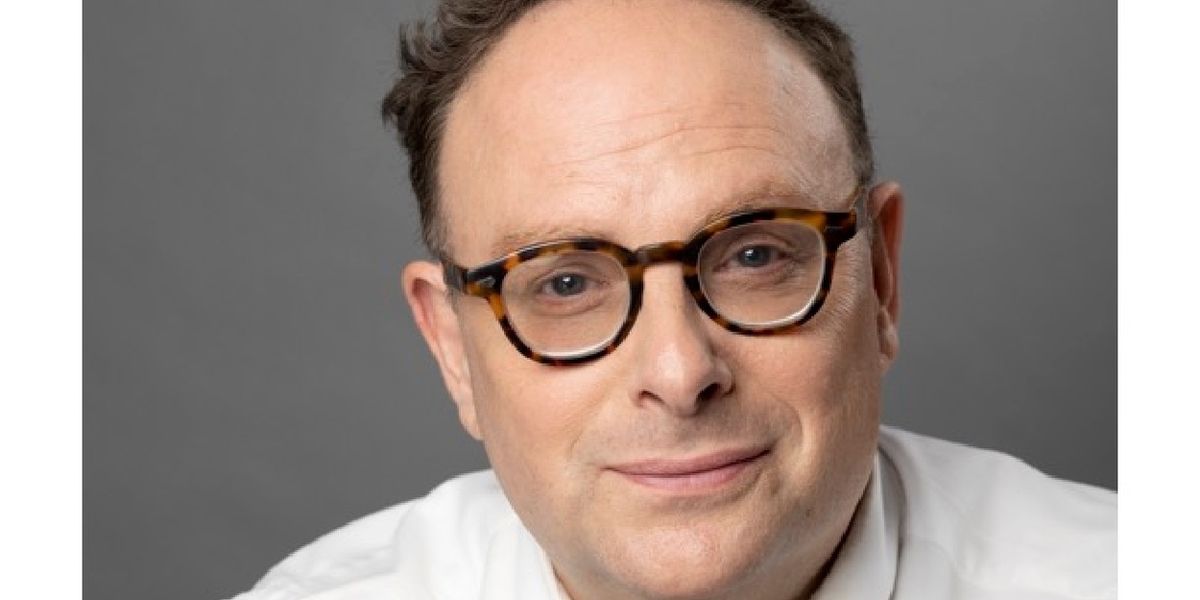
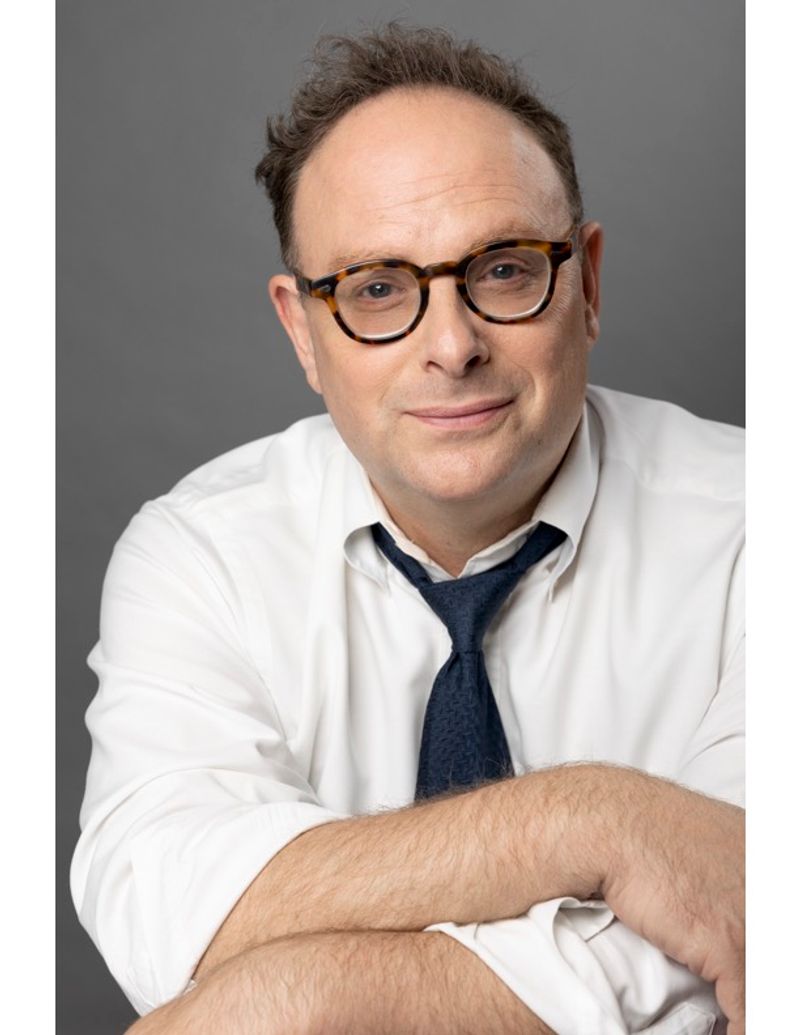 With FTD in the news due to actor Bruce Willis fighting the disease for several years, I decided to speak with playwright Jake Broder (pictured), an Atlantic Fellow at the Global Brain Health Institute, about his motivation to create the play and his research on the disease.
Thank you, Jake, for speaking with me about the world premiere of UnRavelled. What drew you to write a play about frontotemporal dementia — a very specific kind of dementia – and the story of Dr. Anne Adams?
Listening to Radiolab in my car. It was 2017, I believe. I had just arrived home, and wouldn’t get out of the car until the segment was over. The story of biologist and painter Anne Adams and composer Maurice Ravel was the subject of the episode, which included an interview with Dr. Bruce Miller. At the time, I was thinking a lot about dementia, because my dad was on the verge of some kind of diagnosis - but we didn’t know what it was (yet). And I was really terrified about it. I later realized, most people never leave that fear.
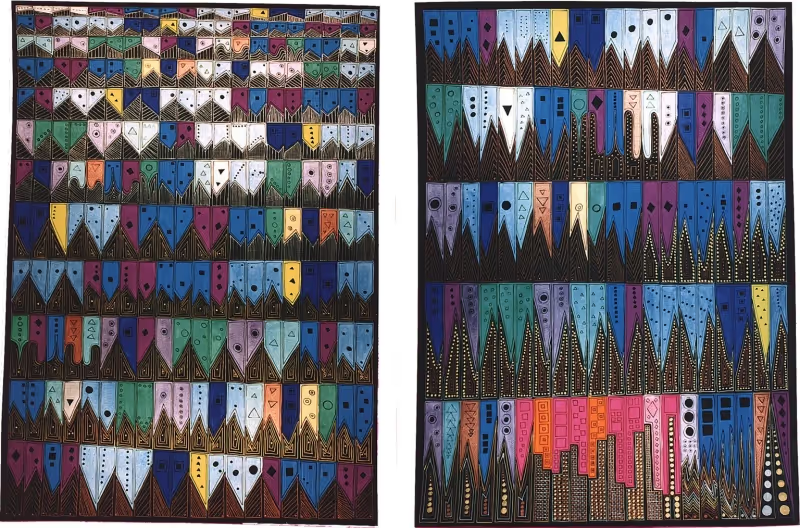
Unravelling Bolero by Dr. Anne-Adams
So, listening to Radiolab, I heard about how Anne Adams painted a version of Boléro (the composition by Maurice Ravel), and that it was the first sign that she had frontotemporal dementia (FTD). That there was a huge leap in the level of her visual creativity that corresponded to her experiencing a loss of words.
According to Dr. Miller, who helped diagnose Anne, there was actual scientific evidence that certain parts of her brain functioned better, for a time, even as degeneration destroyed other regions of her brain. And that gave me hope. That dementia isn’t solely about loss - there’s more to the story.
In the Radiolab episode, I also learned that Ravel had frontotemporal dementia (FTD) as well, and that he composed Bolero at the same age as Anne was when she painted her visual interpretation of the music in her masterwork, Boléro UnRavelled. They were both 53, although they lived about a century apart. So then I viewed Anne’s painting Boléro UnRavelled online while listening to Boléro. I felt the connection between them and the kind of creativity that is perhaps unleashed by this condition, and I felt hope. A hope that, for a little while, was stronger than the fear about what was happening to my father And then I knew. I was duty bound to share that feeling with as many people as possible.
Why is it important to differentiate frontotemporal dementia from other types of dementia? And how does it differ?
FTD is the most common form of dementia in the United States for people under 60. It is not about memory loss. Rather, it causes behavioral changes. There are different kinds of FTD, but the main idea is that if the left frontal lobe of the brain degenerates, then it causes the loss of words and if the right frontal side is impacted, then it causes a disorder of social cognition. Empathy goes.
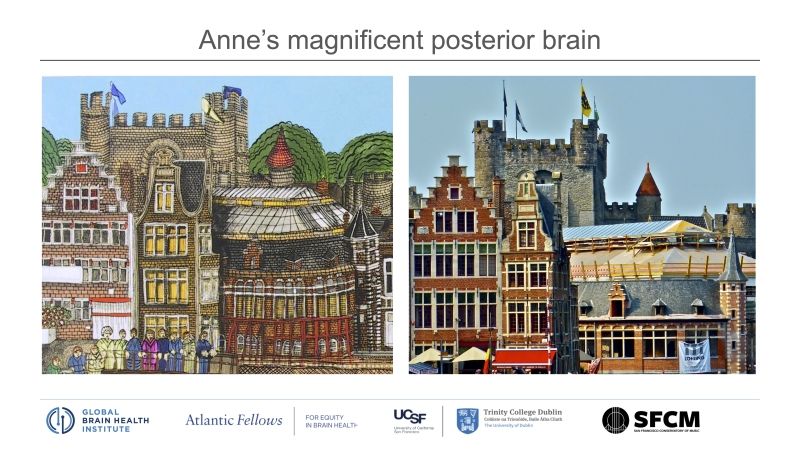
Ghent painting by Dr. Anne Adams with photo of scene she painted by memory
What responsibility do playwrights, screenwriters and other artists have in helping to shape perspectives and narratives about difficult subjects like dementia?
I think there is a tremendous opportunity in this particular moment in history for storytelling to do some really important work for the betterment of humanity. Our bodies are outliving our brains for the first time in human history and the rising tide of brain disease is partially a function of our success as a species.
In the last century, we focused on the heart - until we understood it well enough to create an artificial one. Now, it’s the time of the brain. The number of resources and human energy put towards understanding what is happening in that organ is immense. Neuroscience is the philosophy of the 21st century.
Significant inroads are being made into the mysteries of the brain. Today, we are looking at the first therapeutics and medicines coming through the pipeline to mitigate neurodegenerative disorders. And more are coming. We are at the beginning of a golden age of treatment for dementia. But we still typically live in fear of dementia. Even in High Income Countries (HICs) we struggle to view people who have a dementia diagnosis as more than their conditions. In Low or Middle Income Countries (LMICs), the problem is even more acute. There are places today where people with dementia are viewed as witches, and the ostracization is deadlier than the condition.
All of which is to say, that we have a choice of how we view dementia. And storytelling plays a very significant role in this challenge. The storytelling we need to do, based in empathy, in wonder, in curiosity and, yes, even in joy – anything that subverts the ‘diagnosis to death’ kind of story we are so familiar with in our films, books and TV shows about dementia – could be a valuable tool to help us reach what, I hope, will be a ‘pink ribbon moment” for dementia. When we openly talk about it with dignity to raise FTD and dementia awareness, we support caregivers and advocate for new treatments.
But it all starts with a partnership between science and art so that dementia messaging can be delivered to the public through a medium that helps us reframe the conversation about dementia, which, in turn, helps encourage more people to get involved in dementia studies, creates opportunities for earlier diagnosis, and, frankly, allows us to treat each other with more empathy, which is what is so desperately needed right now.
%20Lucy%20Davenport%20(Dr_%20Anne%20Adams)%3B%20Leo%20Marks%20(Maurice%20Ravel)%20-%20pc%20Courtesy%20of%20Rapt%20Productions.jpg?format=auto&width=800)
(L-R) Lucy Davenport (Dr. Anne Adams); Leo Marks (Maurice Ravel) in UnRavelled
Photo courtesy of Rapt Productions
What changes have you made to the play for this live production since it was initially streamed in 2021 during the pandemic?
This might sound strange, but I gave the play FTD. It started to have aphasia. The time started to bend, and the layers of reality started to bleed together. While the shape of current version of the play is similar to the streaming production, I developed a series of ‘fugue’ scenes - where two realities happen simultaneously. And because I’ve since learning even more about both the condition and FTD’s effect on caregivers and family, I have balanced out the creative journey of Ravel and Anne with the emotional journey of Anne’s husband, Robert, and the spiritual journey of Dr. Miller.
What challenges do the actors face in assuming the roles of the real people whose lives were impacted by FTD?
The actors have to do a tremendous amount of clinical research about FTD. Then, they need to let that all go and just inhabit the spirit of a person, not play a ‘disease.’ It’s the hardest thing to do because they are rendering a human soul. I admire the actors who are appearing in UnRavelled immensely. They don’t have an easy task. Anne has nfvFTD and Ravel has bvFTD, different forms of FTD that have different characteristics. This is a profoundly committed group of people. The actor playing Anne has worked on this for years. She has dug in so deeply. The actor playing Ravel became a fellow at the Global Brain Health Institute (GBHI), an organization dedicated to improving brain health and reducing the impact of dementia worldwide.
%20-%20pc%20Courtesy%20of%20Rapt%20Productions.jpg?format=auto&width=800)
Leo Marks portrays Maurice Ravel. Photo courtesy of Rapt Productions
What do you hope audiences will take away from UnRavelled?
I hope audiences leave with a sense of mystery and wonder, rather than despair. I hope they walk out of this feeling hope - that love wins and the brain is capable of more than we ever thought possible.
You are also the mastermind behind a major three-day brain health festival that will run concurrently with the play at The Wallis (available to all ticket holders). Tickets also include the exhibition of Dr. Adam’s paintings, a talk-back, and pre- and post-show experiential displays on dementia and FTD. Please describe the purpose of the brain health festival and some of its highlights.
The UnRavelled brain health festival is an engaging and informative multi-faceted event bridging the arts and science to raise awareness of frontotemporal dementia (FTD) and amplify the play’s themes beyond the stage. Running concurrently with the play and led by Outreach Director Samantha Rose Williams, it features an array of pre- and post-performance activities to help transform the conversation around dementia.
Highlights include the first major exhibit of Dr. Anne Adams' paintings, which will be on display in The Wallis lobby along with brain scans showing the changes in her brain that correlate to the different phases of her painting as her FTD progressed.
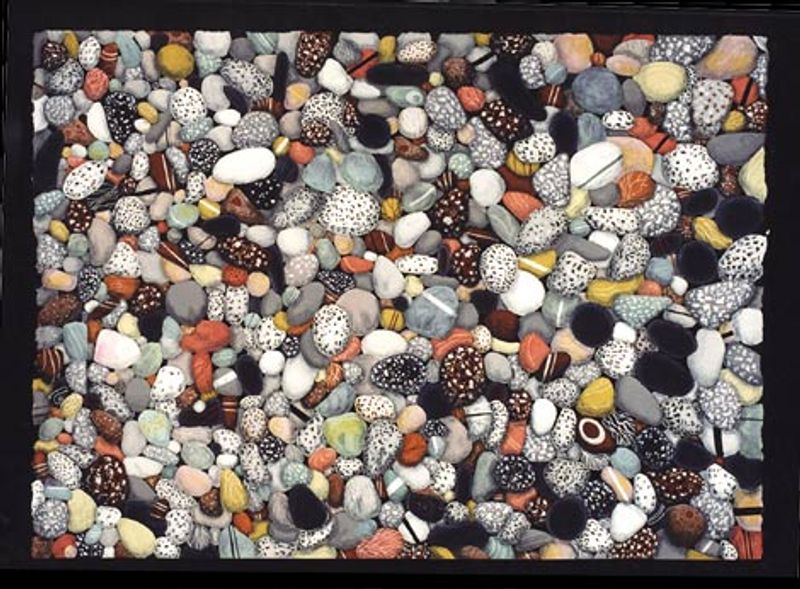
Pebbles by Dr. Anne Adams
The UnRavelled brain health festival will also bring to the Los Angeles community a new groundbreaking LA Caregiver Roadmap for FTD, produced by Cedars Sinai, in partnership with UCSF and Emma Heming Willis, Bruce Willis’ wife and caregiver, to connect LA-based caregivers to local services, research and drug trial opportunities, and community support for individuals diagnosed with FTD.
Talk-backs accompany each of the three performances with a mix of leading FTD medical experts and scientists from UCSF, UCLA, and Cedars-Sinai, caretakers, advocates, and artists, providing different perspectives on issues raised by the play. Further helping to increase public awareness of FTD, free copies of books about dementia will be available to attendees. They include Mysteries of the Social Brain by Dr. Bruce Miller and Dr. Virginia Sturm; ABC of Invertebrates by Anne and Robert Adams; and The Unexpected Journey by Emma Heming Willis (pictured), Bruce Willis’ wife and primary care partner.
%20QUOC.jpg?format=auto&width=800)
What types of exhibits will be available for hands-on exploration?
Tactile displays, created by For Their Thoughts, which is dedicated to bettering the lives of those impacted by dementia, will enable people to step into Dr. Adams’ shoes, simulating the overstimulation, language or motor barriers often felt by people with dementia, bridging our perception to their reality to spark empathy.
The Wallis’ Sculpture Garden is being transformed into The Redwood Forest, providing a calm space for reflection that highlights and their vital role in helping loved ones afflicted with dementia.
Advocates from local and national dementia and FTD organizations, including the Association for Frontotemporal Dementia, Global Brain Health Institute, Cedars-Sinai, UCLA, Alzheimer’s Los Angeles, The BrightFocus Foundation, Lilly Pharmaceuticals, and Hilarity of Charity will share resources and information with the public.
In addition to the brain health festival’s public-facing activities at The Wallis, other programs will directly target the frontline medical, academic, and FTD communities, including a Grand Rounds presentation at Cedars-Sinai and art therapy workshops in music, visual art, movement, and storytelling created specifically for those living with FTD and their caregivers led by international leaders in artistic interventions for people with dementia.
UnRavelled has attracted a huge range of local and national partners and sponsors not typically associated with theatrical projects. Why was it important for you to bring together neuroscience and the arts?
There is a robust and committed FTD community making advances in the field. Bringing together scientists, medical experts, pharmaceutical companies, advocacy organizations, patients and caregivers and other artists creates an ecosystem for partnership that serves as a vita platform for the audience. When audience members come out of the show, they will feel whatever it is they feel, but because of the brain health festival, they will be surrounded by the groups who, in my own heart of hearts, I personally would want to connect with after I saw this show.
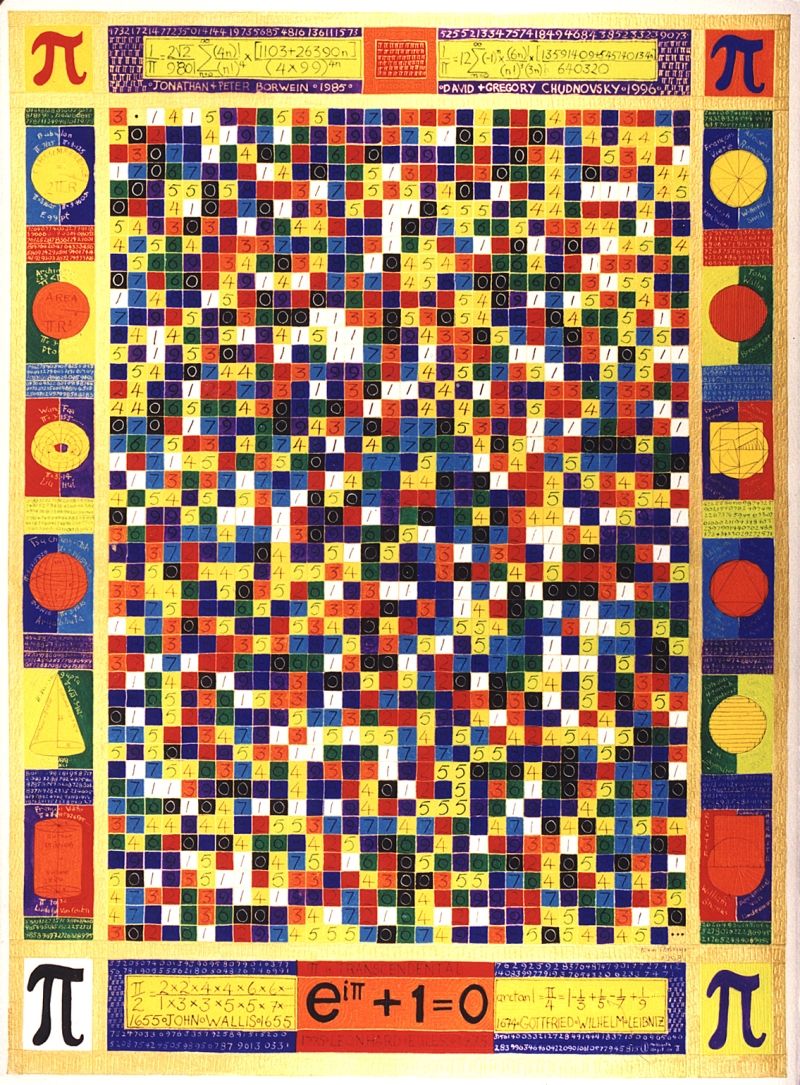
pi by Dr. Anne Adams
Do you plan to tour the play nationally? If so, will you build brain health festivals around those runs as well?
Yes, we’re now booking the play and accompanying festival for 2026 and beyond. In each city, we will build a consortium of partnerships. In LA it’s The Wallis, UCLA, Cedars-Sinai, GBHI, Lilly Pharmaceuticals, and other partners. In New York, we’re talking to Columbia University, Mt. Sinai and other partners. In Philly, it’s Penn, Opera Philadelphia and the Association of Frontotemporal Dementia (aFTD). You get the idea. We are also looking forward to developing international partnerships and presenting opportunities, using the robust network from the Global Brian Health Institute and the Atlantic Institute to bring this show and brain health festival to quite a few countries.
Do you have a favorite painting by Anne Adams, who is the main subject of the play?
I went to Vancouver, B.C., where Anne lived, to meet her family. I saw the vast amount of work she did. She made hundreds of paintings, of which seven are featured in the play. I love so many of her paintings that it’s hard to choose.
We’re presenting the first exhibition of her work along with the play at The Wallis in Beverly Hills. From there, the exhibit will next tour to San Francisco. I hope that the world discovers what an amazing artist Anne was along with the fact that her work stands on its own. But when people understand what was happening in her brain, which the exhibit makes clear in such a wondrous way, it makes her paintings truly magical to behold.
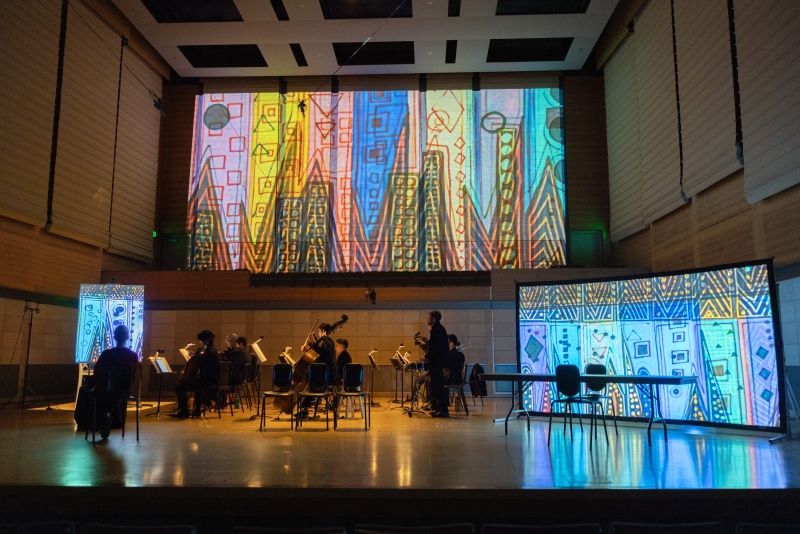
Music ensemble with projections of artwork by Dr. Anne Adams
Photo courtesy of Rapt Productions
Maurice Ravel’s Boléro, which one of the most popular and frequently performed classical works ever composed, is a central element of UnRavelled. Why did you decide to include the piece in the play, and how does it relate to FTD?
I didn’t choose to include it – the whole story orbits around it. The idea that a person in 1927 had the early phases of FTD and composed Boléro, and then 70 years later, someone else had the same condition and ‘interpreted’ Boléro in a painting is the whole reason for this play.
Boléro is not typical of Ravel’s work. He is known for his meticulously crafted arrangements and sophisticated melodies. He did not compose repetitious music. However, Boléro is an outlier. It is a mechanistic piece of music. It’s 314 measures. There is no musical development, just an unchanging melody, rhythm and counterpoint that repeats exactly seven times, has one chord change, and then collapses. It’s a very odd piece of work. And I believe it is perfectly correlated to the early phases of FTD. In fact, it more than relates to FTD, it is the sonic signature of the condition. I hope that people reevaluate Ravel’s work in that context after seeing this play.
How long did you work on developing UnRavelled prior to its upcoming world premiere?
In 2017, I learned about the story and started researching it. Eighteen months later, in 2019, I was in San Francisco, working with Dr. Miller as the Hellman Visiting Artist. I spent that year doing more research when I wrote the first few drafts, which I trashed. Then in 2020, I tried again, and the script was better. The pandemic hit and we couldn’t perform it live, so we filmed it with the support of the GBHI and the MAC at UCSF. Then we started to design outreach elements around it. In 2022, I found the director James Bonas, who led me to producer Cath Brittan. Our core team has now been together for three years. Cath and James are truly wonderful collaborators. We did a live workshop version of UnRavelled with a symphony in 2023, and a composition workshop in London in 2024. All leading to the play’s world premiere at the Wallis in Beverly Hills, October 17 through 19.
I really should be careful about what I get excited about listening to the radio. It can take eight years of my life *snap* just like that!
Please tell me about something surprising during your journey to create it.
Working on something like this is alchemical. You can apply all the effort in the world, but sometimes, the conditions must be just right. At this moment, the world is paying attention to FTD, in part because actor Bruce Willis was diagnosed with it, which no-one could have predicted. It has also been surprising to stumble upon a format for creation that is sustaining and deeply fulfilling. There’s a method of creating mission-driven, evidence based, advocacy minded entertainment that I very well may spend the rest of my life making
Is there anything else you would like to share about the play, the festival, or yourself?
There are so many people who have put their blood into this. I am so grateful for all of them along the way. Nothing like this happens alone. At the GBHI, the first thing they said to us was an African proverb: “If you want to go fast, go alone. If you want to go far, go together.” This experience has been some of the best ‘together’ I have ever been a part of… so far.
Thanks so much!
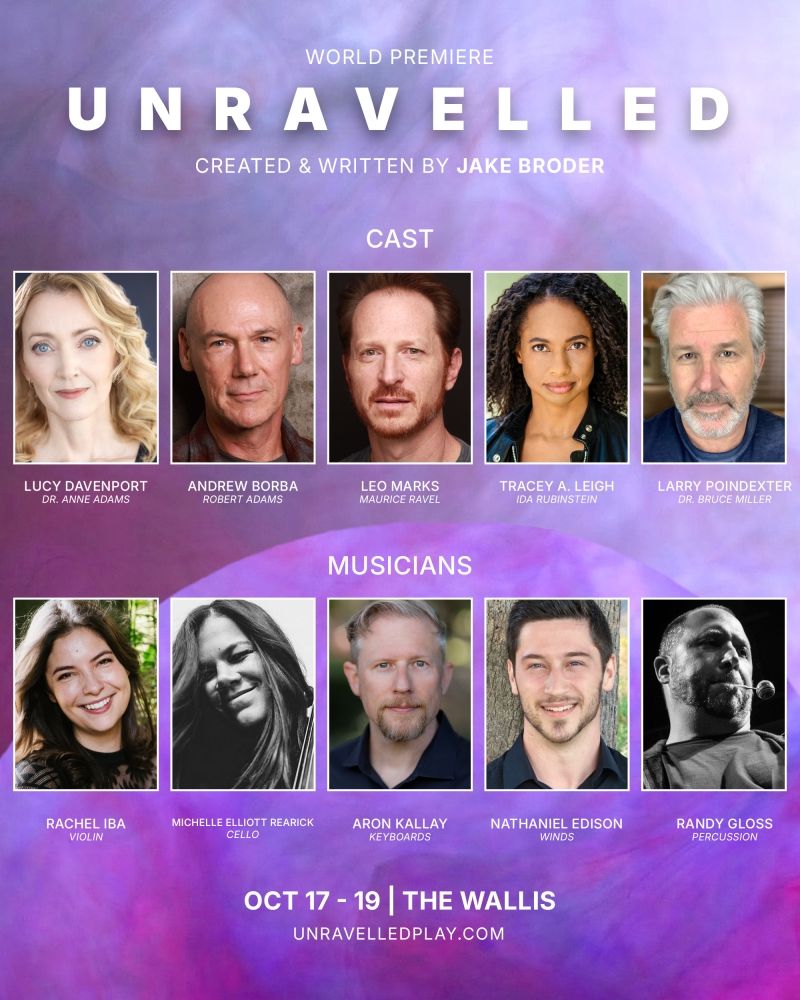
For more information about UnRavelled and the concurrent FTD festival running October 17-19, please visit www.unravelledplay.com. For tickets ($32 - $77) and information, please call 310-746-4000 or visit www.thewallis.org. Tickets also include the exhibition of Dr. Adam’s paintings, a talk-back, and pre- and post-show experiential displays on dementia and FTD. The Wallis is located at 9390 N. Santa Monica Blvd, Beverly Hills, CA 90210.
|
Good Night, Oscar North Coast Repertory (9/16-10/11) |
|
Catch Me If You Can Colony Theatre (9/17-10/18) |
|
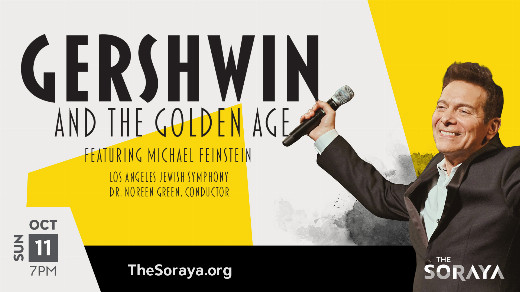
Gershwin and the Golden Age The Soraya (10/11-10/11) |
|
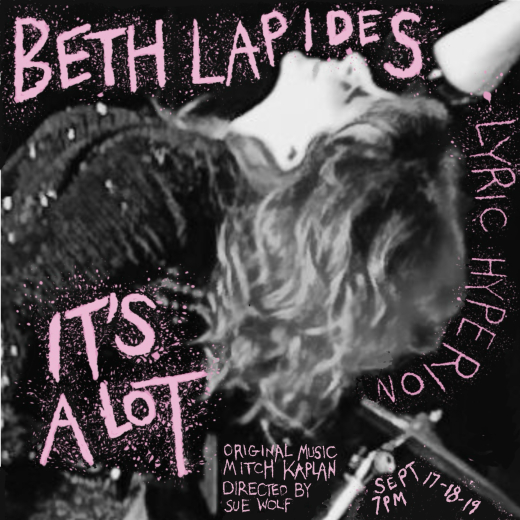
It's A Lot Lyric Hyperion Theater & Cafe (9/17-9/19) |
|
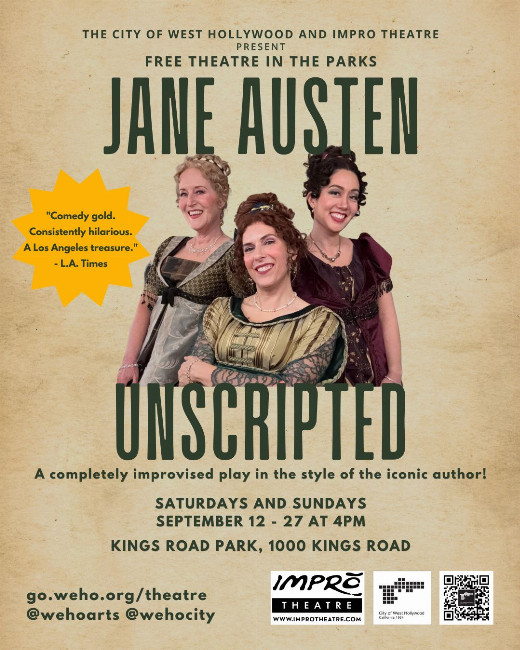
Jane Austen UnScripted Kings Road Park (9/12-9/27) |
|
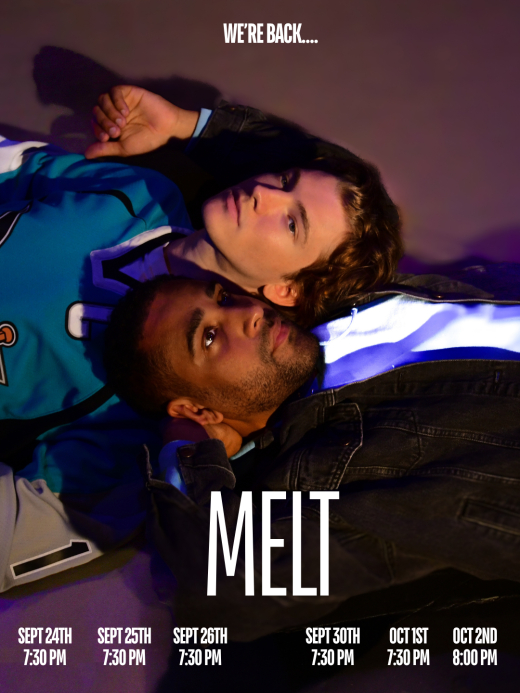
Melt : The Play The Marilyn Theatre at the Lee Strasberg Institute (9/24-10/02) |
|
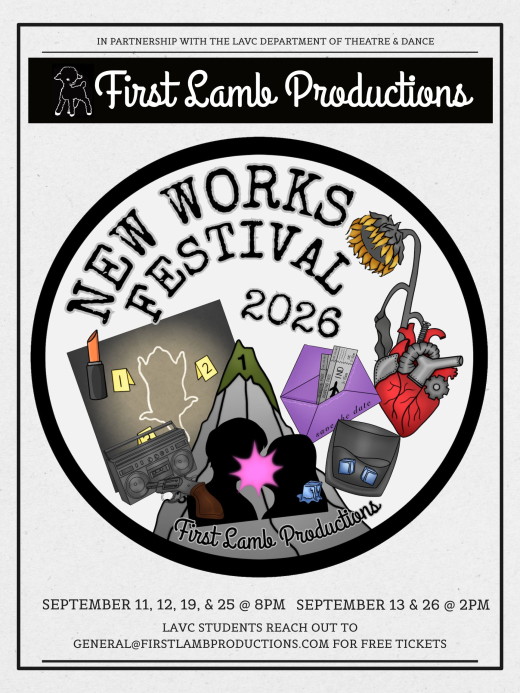
New Works Festival Shoebox Theatre (9/11-9/26) |
|
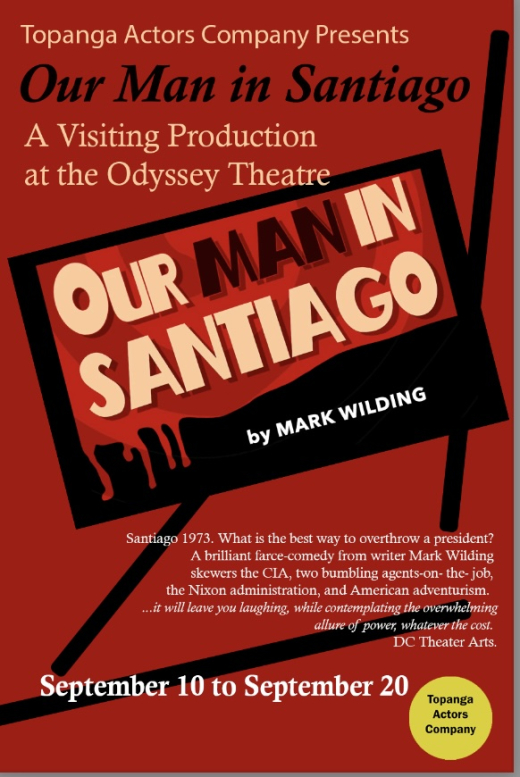
Our Man in Santiago by Mark Wilding Odyssey Theatre Ensemble (9/10-9/20) |
|
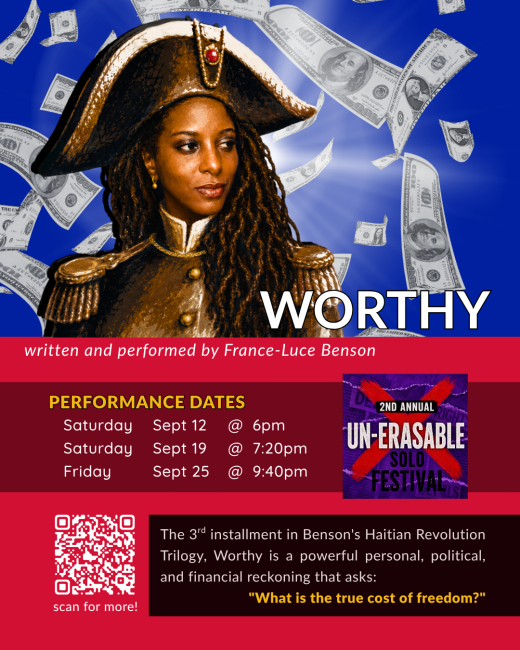
Worthy The Un-Erasable Solo Festival - Willie Agee Playhouse (9/12-9/25) |
|
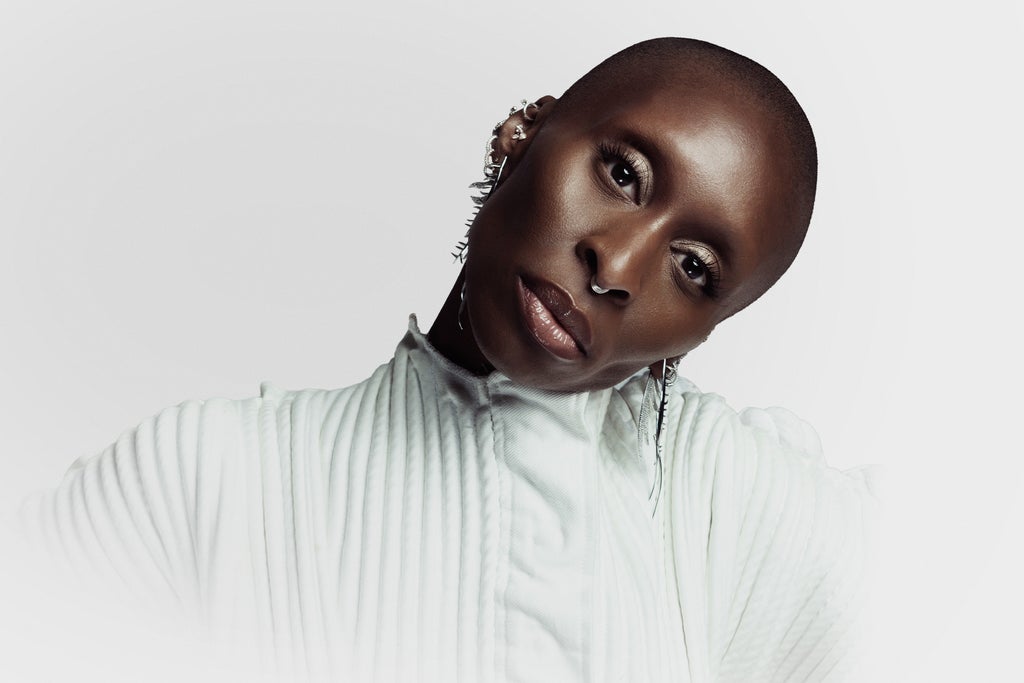
Cynthia Erivo: Let Me Sing To You Hollywood Bowl (10/15-10/15) |
