


Interview: Brian Leonard of THERAPIST ZERO at Taylor Street Theater
San Francisco Fringe Festival announces Brian Leonard's solo show at Taylor Street Theater
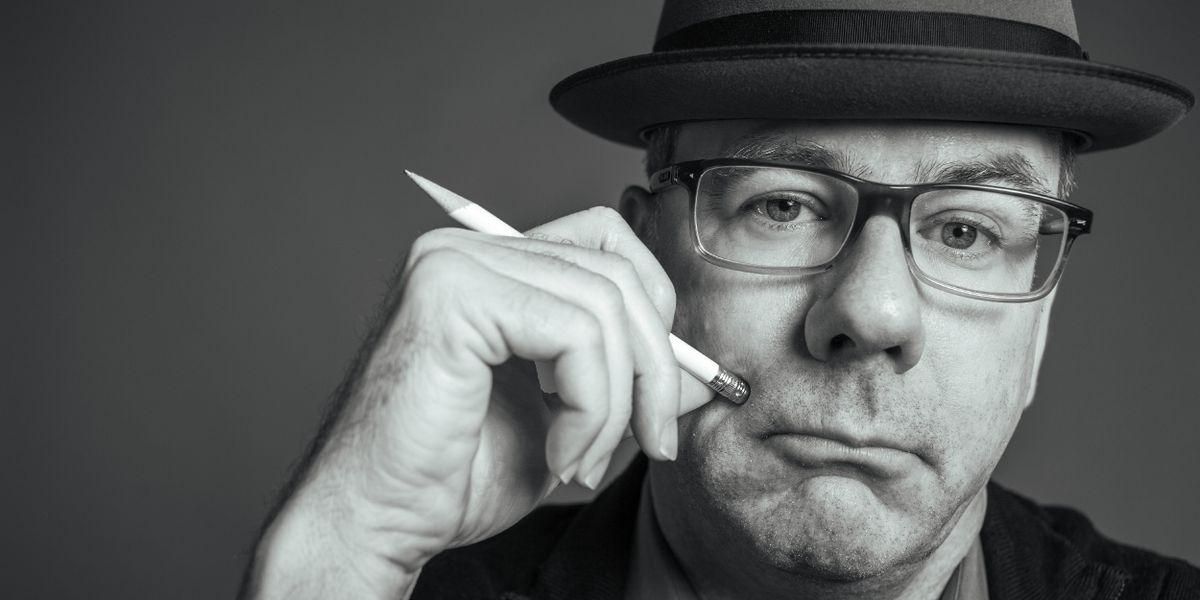
Brian Leonard is a West Coast writer, performer, and storyteller whose career spans stand-up comedy, television, theater, and animation. A veteran of the stand-up circuit in the 1980s and 1990s, Brian appeared on numerous TV comedy shows, earning praise as “…one of San Francisco’s most intelligent and funniest comedians” (San Jose Mercury News). Brian took ten minutes to answer ten questions about shaping up a solo show which has invited him to both the San Francisco and New York Fringe Festivals. Brian is no stranger to Los Angeles and offers enlightenment on West Coast Vs. East Coast comedy raps, priceless parenthood and the hanging fate of Steven Colbert.
Who were your earliest influences, muses or smart alecks who lured you into the limelight?
When I was a kid, George Carlin ruled my world. I wore out copies of Class Clown and AM/FM, memorizing them line for line like sacred texts. I’d recite whole routines to anyone who’d listen. He was smart, subversive, and fearless. I was 13 and he made me realize that comedy could be a weapon, a confession, and a philosophy class, all at once.
Growing up in a chaotic house with six kids, two parents, a grandfather, and a Great Dane stuffed into a three-bedroom home, I slept on the couch in the den until I was in high school. So, even as a little kid that meant I couldn’t go to sleep until everyone was done watching TV for the night. Johnny Carson’s monologue was basically my bedtime story. I fell asleep to George Carlin, Robert Klein, Joan Rivers, Richard Pryor, and David Brenner. Each of their sets was a bite-sized magnum opus. They weren’t just a collection of jokes, they were stories, confessions, manifestos, compressed into a 7 minute set.
I think that’s how I learned timing, rhythm, and the power of a well-placed pause. It was also probably the first time I saw someone use language to take control of a room, something I wouldn’t understand consciously until much later, but even at a young age, it landed.
Where did you enter the universe? Did your parents encourage you to run away and join the circus or take the academic route?
I was birthed in Chicago, number five of six kids. I was raised in the suburbs, Oak Forest, IL. Literally sub-urban. Not quite urban, kind of like being in the basement of a city. I was close enough to feel the cultural vibrations, but mostly you just hear leaf blowers and lawn mowers.
I attended Catholic school, this was at a time when Catholic schools still had free-range nuns with anger management issues still roaming the halls, armed with steel rulers.
My sister, Patti, and I were the grey sheep of the family. We had the rambling gene, we both moved to California, while the four other kids all lived within a 2 mile radius of where we were raised.
My parents didn’t really push any of us into one path or another. They weren’t really the guidance counselor types. I was interested in radio and that’s where I started and kind of stumbled forward from there: co-hosted a local TV comedy show (San Jose), did stand-up for 11 years full-time, went to acting school and had a semi-successful acting career for a few decades, started writing professionally, stumbled into directing for the camera, then morphed into creative director roles at agencies in San Francisco and London.
None of it was through some grand plan or design. My parents went along with all of it. But in their own way, they were supportive. They let me explore, figure it out. And I think deep down they were proud, even if they had no idea what I was doing.
The struggling class of Irish are attributed to the creation of Dark Comedy, is this reflected in your solo show?
I wouldn’t say my stand-up wasn’t about being Irish Catholic, but the sensibility is baked in, like whiskey in a fruitcake you didn’t ask for. (I haven’t done stand-up for many a year.) That mix of guilt, survival instinct, and inappropriate laughter at funerals? That’s the soil I grew up in. Dark comedy isn’t just a style; for people like me, it’s a coping mechanism dressed as entertainment.
There’s a certain emotional math in Irish culture: when something horrible happens, you don’t process it, you make a joke and put the kettle on. That gallows humor, that ability to smuggle truth through a punchline, feels like home to me. My material doesn’t dwell on suffering, but it definitely knows where the exits are, in case the fire alarm goes off mid-set.
So yeah, dark comedy is in there. It’s not always front and center, but it’s definitely sitting in the pew, quietly whispering something wildly inappropriate under its breath.
Congratulations on scoring big time with both the New York and San Francisco Fringe Festivals! Is there any East Coast-West Coast comedy rap rivalry? Do you adjust your material for either coast?
There’s no Biggie/Tupac rivalry, no one’s getting shot over punchlines, but there is a vibe shift. East Coast comics, especially in New York, tend to have a harder edge: tight, fast, joke-packed sets. West Coast comedy can lean more experimental, a little looser, more “let’s unpack this weird moment I had with my barista.” I love both. But that’s a bit of a generalization: there’s so much-cross pollination. There are plenty of character comics in New York, and no shortage of observational comics in LA. I do love visiting New York clubs where everyone’s fighting for seven minutes and a callback.
As far as adjusting material, not really. When I was doing stand-up full-time, I was on the road over 40 weeks a year working major cities and visiting small towns (Minot, ND; Marshall, TX, et. al.), places where people would ask, “You ain’t from around here, are ya?”
I didn’t tailor my act too much. I figured: be yourself, they’ll either come with you or they won’t. If they hate me, I won’t be invited back. It was self-selection in a way.
That said, when we lived in London and I performed there, I’d sometimes have to pause and ask myself, “Do they have monster truck rallies in the UK? Do they know what a televangelist is? Should I swap in a soccer chant and hope for the best?”
Now, did I ever adjust? Well… once I was in Indiana. My opening act was incredibly filthy. And the crowd was loving it. And when the opener said the word “blowj@b,” the room erupted like they just heard genius. And every punchline after that also involved a blowj@b. I’m watching this thinking, “I’m gonna die up there. Should I adjust?”
I go up, do my act. Seven, eight minutes go by… nothing. Stone-faced. Finally, a guy in overalls in the front row leans forward and says - loud enough for the whole room to hear:
“Boy, you been up there ten minutes and you ain’t said blowj@b once. You call yourself a professional? Get off the stage.”
So yeah, sometimes I adjust. And sometimes I die with dignity.
(Pausing for laughter) Your comedy is labeled "Observational Comedy" by the critics similarly to Jerry Seinfeld and Ellen Degeneres. Perfect genre for your show THERAPIST ZERO! Therapy is a status symbol on either coast but not so user friendly in the corn belt. Does your show explain this phenomenon?
Great question. Not directly, but it’s in the mix.
I talk about how I got introduced to therapy, through a relationship. I dated a clinical psychologist for three years. We talked about getting married. She strongly encouraged me to see a therapist. In hindsight, I think it was her way of asking, “Are you emotionally house-trained?”
I think one of the reasons why people are put off by therapy is how a psychologist communicates with so much clinical jargon, instead of plain-spoken honesty. My former girlfriend tended to pathologize whatever I was doing.
We would get into an argument, about nothing, and she’d say something like, “You’re exhibiting maladaptive relational schemas, rooted in early developmental attachment disruptions…” Huh? “Why can’t you just call me a dick, and we can move on?”
Toward the end of our relationship, she said, “Brian, throw out the content and look at the process.” ???? She said, “That is, Throw out the content, of what you’re saying, and look at the process, of how you’re saying it.”
My response: “Counteroffer: Let’s throw out the relationship and look at the memories.”
That experience opened the door to the central idea of the show: finding the right therapist is both crucial and ridiculously hard.
Think about it: if you need a dentist, you can pretty much throw a dart and find someone competent. You know what you're getting. Fillings, cleanings, predictable outcomes.
But therapy? That’s a whole different beast. It's deeply personal, wildly variable. There are so many different styles: CBT, EMDR, psychodynamic, “Just talk to me like a human” Most of us don’t really know which one we need, especially when we’re at our most vulnerable.
The therapist-client fit is everything. And it’s totally subjective. That means people often try therapy once or twice, have a weird or unhelpful experience, and walk away thinking, “That was a waste of time. I’m out.”
And that’s a shame, because when it does work, it can change everything. But getting there? That’s where the comedy lives.
Where do you draw material from and do you write your own copy?
Absolutely. I write all my own material. And most of it comes from the same source: life is absurd.
Not in a “haha, clowns are funny” kind of way but in a “why is this happening and why is no one else freaking out?” kind of way. I’m drawn to the moments where real life makes no narrative sense, where people behave in bizarre, contradictory ways and somehow call it normal.
That’s the stuff I write about. The mundane disasters. The everyday weirdness. Trying to help your kid while you’re falling apart yourself. Taking parenting advice from early childhood mental health professionals who are not parents themselves and have no first hand experience – “Would you go to a mechanic who’s never driven a car? No!”
I don’t really “craft” jokes out of nothing. I observe, I listen, I panic slightly, and then I write. It’s all autobiographical, but bent through the lens of someone who still finds it strange that we pretend to have it all together.
So yeah, life is absurd. I’m just trying to hold it up to the light and tilt it slightly so people can see the crack running through the middle.
You are married to Emmy winning documentary editor, Eli Olson, which hurts or helps out your performances? (www.be-Creative.tv )
Huge help. Eli is not only a brilliant film editor, she’s also an editor of me, which is a much harder gig. She keeps me focused, trims the fat (verbally and otherwise), and isn’t afraid to call cut when I’m rambling.
She has this incredible sense of timing, not just for structure and pacing on screen, but in real life. I’ll be riffing or writing something and she’ll say, “That’s your punchline. Stop there.” And she’s right. (Usually.)
Not all film editors have comic timing, but Eli does. She’s got that quiet, sniper-level sense of humor that sneaks up on you and floors the room. Honestly, I love collaborating with her because she makes the work better and makes me better. Also, she’s the only person allowed to give me notes I actually take.
So yeah, Eli helps. Immensely. Just don’t tell her I said that.
Do your siblings know they are talked about in your show? Are they proud of brother?
Yes, they know. Though I didn’t share much about the show with them until recently. The only sibling who gets mentioned by name is Patti, and even then, it’s more about the moment than the person.
I was a little hesitant to let them in early on, mostly because - let’s be honest, Gene and Peg don’t exactly come off as Parents of the Year. As I say in the show, “My parents weren’t bad people. They were just tired. Outnumbered.” That’s the tone: honest, but not cruel.
The show really centers on three things:
- My family’s (Eli, Emily, and I) often frustrating, and sometimes absurd experiences with the mental health system.
- The challenge of trying to parent a brilliant, complex daughter in crisis, without a manual or a clue.
- And how that experience made me look back, more clearly, at how my own parents raised six kids in a very different world, with very different tools.
Is my family proud of me? I think so. My family’s always been supportive, even when they don’t fully understand what I’m doing. Over the years I’ve been a writer, a director, an actor, a stand-up comic, and a creative director. Or, as my mother once summed it up: “He’s unemployed in many fields.” (interviewer laughing again)
So yes, they’re proud, just with the classic family mix of love, confusion, and well-timed sarcasm.
Dare I ask you about the state of the union for late night comedy on television? Will it push folks back to live venues in Los Angeles?
I’m not ready to declare late night comedy dead, it's not being shown the door, yet. But it’s definitely been moved to a smaller room down the hall with fewer visitors. The landscape has changed for good. Viewing habits have shifted, short-form content rules, and most people now consume comedy as quick, streamable, snackable clips. The old ritual of watching a full talk show before bed is quietly fading away.
The real loss is that we may be witnessing the end of a particular kind of host: someone smart, thoughtful, well-researched, and genuinely interested in conversation. Stephen Colbert will survive, the bigger loss is that we may not ever see another like him. Colbert is as sharp as they come, and a great interviewer with a host’s heart, not just a performer’s ego.
So while the format may be fading, the appetite for comedy isn’t gone, it’s just migrated. It’s hard to figure out where the next stage is.
As for whether this means more people will flock to live shows in L.A. or elsewhere? I’m skeptical. I wish the answer were yes, but I don’t think the decline of late night is going to magically refill comedy clubs or theater seats.
In the Bay Area, for example, we’ve lost a heartbreaking number of theater companies in just the past few years: Cal Shakes, Aurora Theatre, EXIT Theatre, Cutting Ball, and more. And not all of it was Covid-related. It’s a bigger cultural shift. People are more likely to stay in, stream something, or scroll themselves to sleep than go out for a live performance, even if it’s excellent.
There are a lot of enemies at work, for example pricing. The Dead and Company tickets for their recent Golden Gate Park concerts in SF this weekend were $245. Shakedown Street, indeed. I just saw a couple of shows on Broadway, face value for each was more than $700 apiece. Yikes.
It’s a bit of a Sisyphean task of getting butts in the seats again. People need to be reminded that live is not just entertainment, it’s connection, risk, and electricity you can’t get on a screen.No pause button. No algorithm. Just people in a room, breathing the same air.”
You don’t go to the theater to escape life, you go to feel it more deeply.
What Los Angeles venues have you played and which ones earn your grace?
I used to play the Improv on Melrose pretty regularly, along with their Brea, Santa Monica, and Irvine clubs. Great rooms, good crowds.
When I was starting out, I played the Laugh Factory. After one set, Jamie Masada, the owner, came up to me and said, “You’re a funny motherfucker.” I took it as high praise. Jamie didn’t hand out compliments lightly… or at all, really.
Then there was The Comedy Store: Mitzi Shore herself set up a showcase for me in the Original Room. It was essentially an audition for the Main Room. Big night.
Right before I go on, Louie Anderson shows up to do a surprise set, he was prepping for Carson. He goes up, absolutely murders. Just levels the room. And then… they call my name.
I follow him and I kill too. I’m thinking, This couldn’t have gone better. I sit in the back, waiting for Mitzi to give me the nod, the whisper, the blessing. She finally gets up, walks by me, leans in, and says… “Too smart.”
And just like that, she was gone. No Main Room. No anointing. Just a shrug from the high priestess of comedy and a lesson in how fast the ground can shift beneath you in L.A..
As an actor, Brian appeared in Los Angeles films like Bottle Shock and Bee Season, TV shows including Nash Bridges and David E. Kelly’s Girls Club, and regional theater productions from San Francisco Shakespeare and TheaterWorks, among others. His writing credits include writing and directing for Ellen Degeneres, Jason Sudeikis, and Mindy Kaling; also writing for BBC Radio’s The Treatment, with story consulting for Pixar Animation. Brian's background in both performance and writing brings humor, heart, and sharp storytelling to the stage in his first solo outing, Therapist Zero, directed by Ken Sonkin (ACT, USF), for the San Francisco Fringe Festival at Taylor Street Theater August 10 (SOLD OUT!), 16th (SOLD OUT!) and 23rd. The tour de force moves on to New York's Fringe Festival: United Solo on October 18, 2025. Alix Cohen, Broadway World: New York, will be interviewing him for this leg of his East Coast comedy rap venture.
|
Good Night, Oscar North Coast Repertory (9/16-10/11) |
|
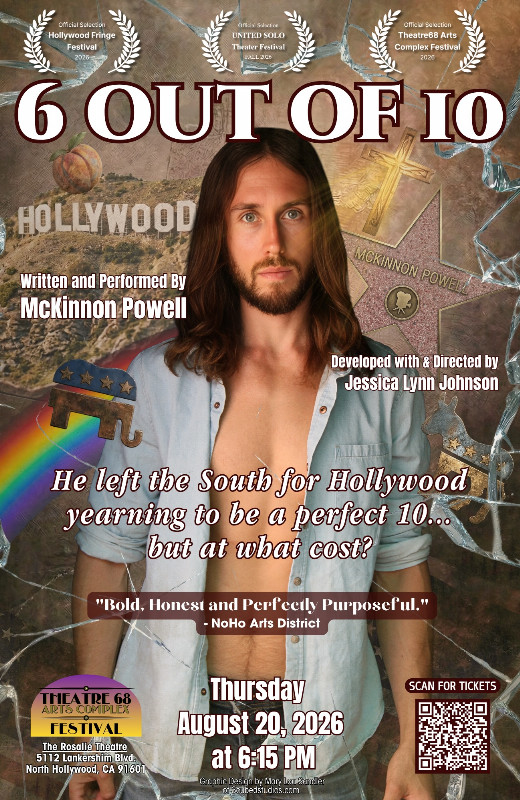
6 Out of 10 Theatre 68 (8/20-8/20) |
|
Catch Me If You Can Colony Theatre (9/17-10/18) |
|
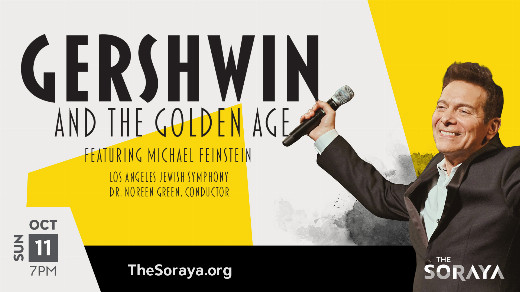
Gershwin and the Golden Age The Soraya (10/11-10/11) |
|
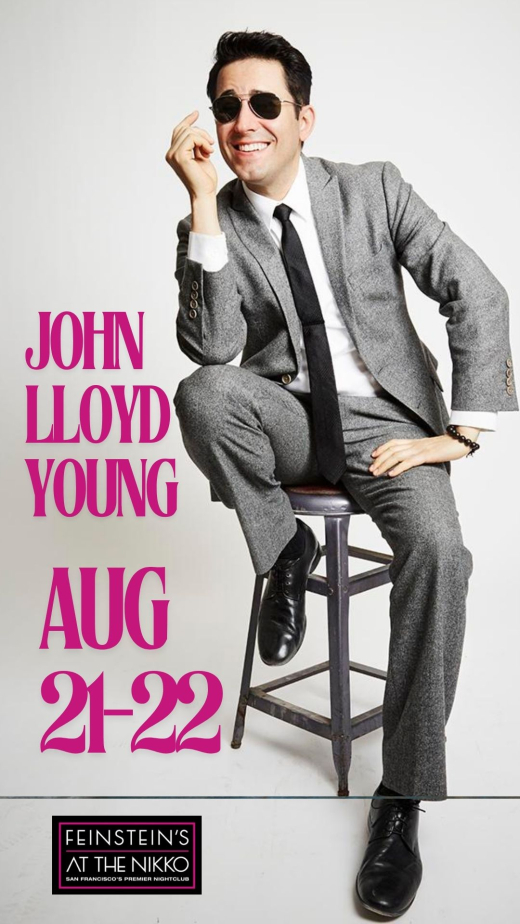
John Lloyd Young Feinstein's at the Nikko (8/21-8/22) |
|
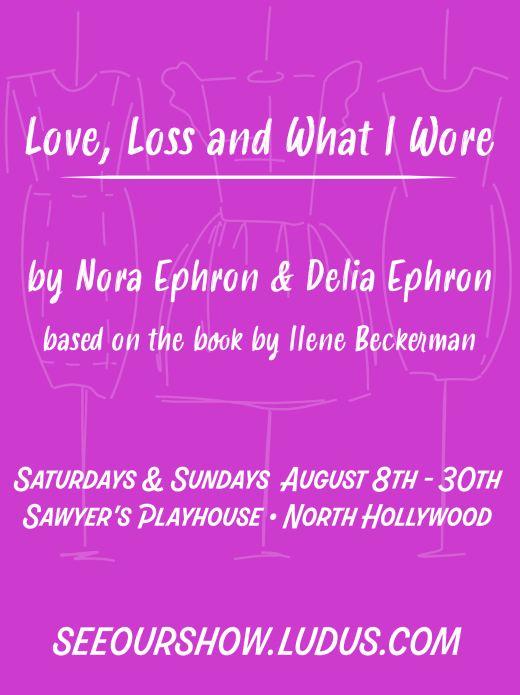
Love, Loss and What I Wore Sawyer's Playhouse (8/08-8/30) |
|
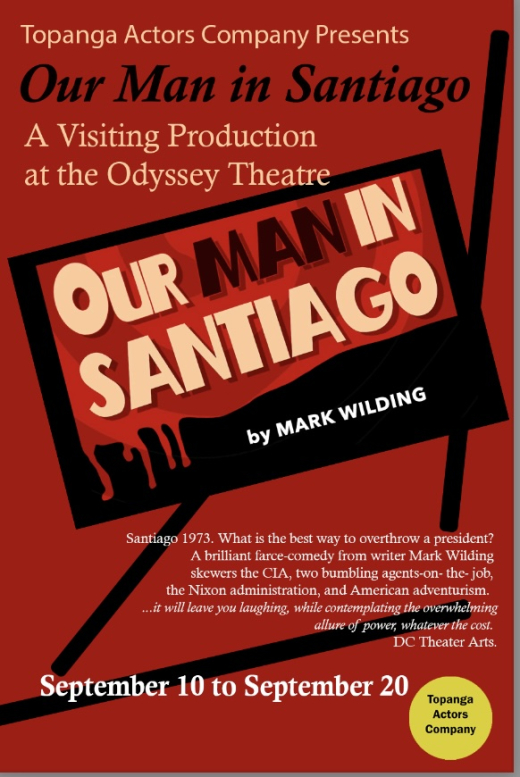
Our Man in Santiago by Mark Wilding Odyssey Theatre Ensemble (9/10-9/20) |

|
Duck Pond by Circa The Soraya (11/01-11/01) |
|
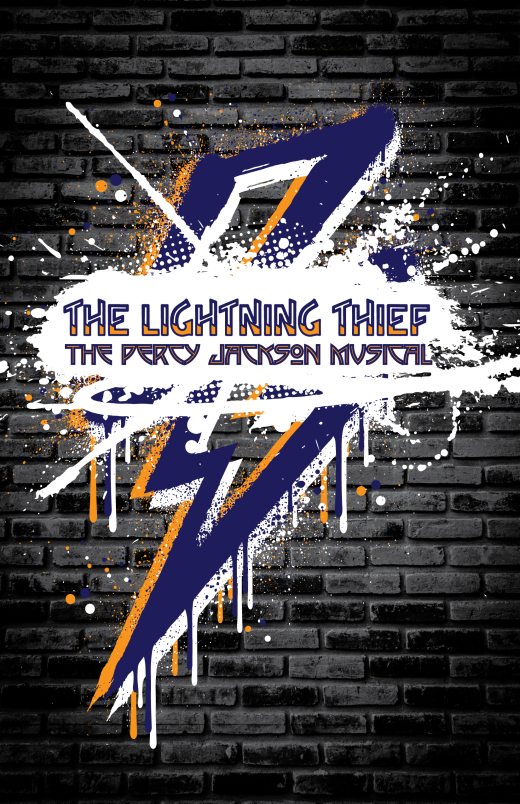
The Lightning Theif: The Percy Jackson Musical Canyon Theatre Guild (8/01-8/30) |
|
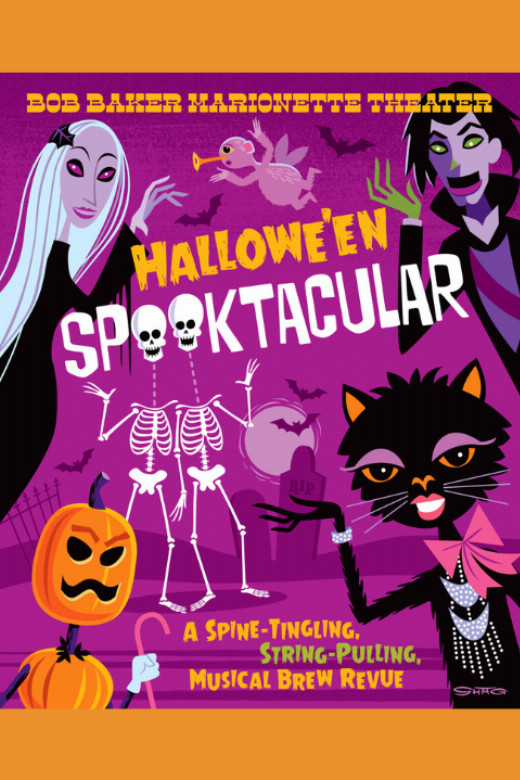
Hallowe'en Spooktacular Bob Baker Marionette Theater (9/05-11/08) |