


Interview: Two Seans: Marlow & Brown of DEATH OF A DRAG QUEEN at Portland's THE ECHO THEATER CO.
DEATH OF A DRAG QUEEN: Interview with the two Seans one headlining the other writing and directing within the ground breaking Portland theater scene.
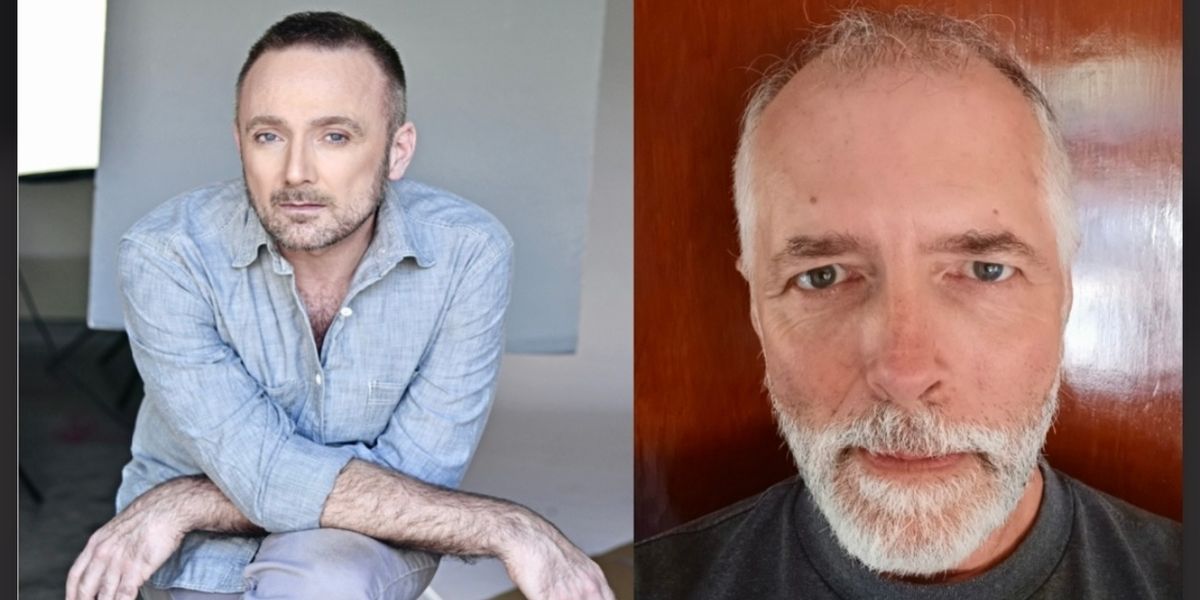
 Recently while transversing the metaverse a podcast out of progressive Portland, Oregon produced by KBOO radio station came into the Los Angeles digiverse a compelling interview with Portland's mover and shaker playwright/ director, Sean Brown. The sensible transgender host, Emily, was guiding an extremly fluid interview about a play dealing with a drag queen's final performance, a lipstick elegy so to speak. The accomplished leading actor is Sean Marlow brought in from Atlanta specifically to channel this role, Cram Brulee.
Broadway World requested of the two Seans just ten minutes to answer ten questions.
What are your drag queen names using the classic formula of the street you were born on + the name of your first pet?
Sean Marlow: Spangles, bangles and baubles are my preferred attire. Sparkle is my favorite color but due to being a military brat born on a Colorado U.S. Army base, I am unable to provide an appropriate drag name. I think it would depend on the occasion. Sometimes I prefer Vanilla Bondagee. Other times I like to steal my character name from Sean Brown’s movie, (STRICTLY PROFESSIONAL) and go incognito as Gloria Croft.
Sean Brown: Well according to the drag generator, my name would be Gigi Theisen, which is less ‘drag queen’ and more ‘third wife with an expensive divorce.’ She’s glamorous, chaotic, and absolutely the kind of queen who shows up late because her spiritual advisor double-booked in El Centro, CA
Tupac Shakur once said that Van Gogh was his muse the first time he saw Starry Night. Who have been your artistic muses — in television, theater, or film — and when did they first move you?
Sean M: - In all honesty I’m not sure that I’ve had a muse but Salvador Dali had a big impact on me as a kid. The talent, the ostentatiousness of it all, sensory overload. Being a child of the TV generation I would have to say Carol Burnett was a big influence as well as Bea Arthur. Women’s roles always seemed more exciting to me and they had better costumes.
Sean Brown: My muses came at me early and sideways. At nine years old, Harold and Maude rewired my brain —suddenly the world made sense in a strange, funny, existential way. Then John Waters kicked the door in, specifically Female Trouble, which taught me that art could be political, profane, defiant, and still gorgeous. Andy Milligan’s chaotic, no-budget filmmaking taught me to never confuse perfection with honesty. And the most important muse was an anonymous Mexican drag queen with polio who stripped while singing a ballad — deeply vulnerable, defiantly alive, and utterly unforgettable. She taught me what drag can do: reveal the human being under the fantasy, and sometimes make the fantasy even more human.
Why theater? Why drag? Why not “naughty nurses or manly Marines,” as the question puts it? Are you classically trained, or did you learn by watching and stealing from the greats?
Sean M: - I believe that acting was the only way out of my family's home. I had no predilection for anything else at the time and wasn’t sure what I was capable of doing at that age other than washing dishes. Art school was definitely out because my parents said I would starve to death. So, I found a way to get into United States International University thanks to scholarships and grants (classmates Jamie Foxx, John Barrowman, Walter Jones, and Susie Mosher) I studied the classics under some great teachers: Beth Hogan, Andrew Barnicle and my art history teacher, Netter Worthington. I was told I would be a character actor for obvious reasons which made me happy. Heroes always seemed a little dull and I’m on the shorter side.
Sean B: I’m not worried about naughty nurses or manly Marines — no fat orange turds are coming for them anytime soon. What I did want was to write a story about humanity that resonates widely without pandering. Death of a Salesman is the tragedy of the common man; Death of a Drag Queen is the tragedy— and the triumph — of the common queen. Not a legend, not a superstar, just someone so deeply human that you recognize yourself in her whether you want to or not. I had great teachers at my university, but honestly? Time, failure, stubbornness, and practice are what really taught me to write. You learn by doing, by surviving, and by stealing just enough wisdom from the artists who cracked you open.
Growing up, what was the attitude toward live theater in your home? Were you encouraged or discouraged?
Sean M: My childhood caretakers had no idea what to do with me. My Mom had a clue and let me be me as much as she could but I’m not sure she was confident in my ability to fly once out of the nest. My Dad, a high school football player who joined the Army, wanted no part of me or theater goings on. It was fine. I adapted and we were both relieved once I was far from his recliner in front of the television.
Sean B: I had an incredibly supportive introduction to theater. When I was about ten and told my mom I wanted to explore acting, she didn’t blink — she got us involved in the local community theater. My very first play was Luigi Pirandello’s Six Characters in Search of an Author, which, in hindsight, might explain my lifelong fascination with identity, narrative, and the blurry line between performer and character. From the beginning, theater wasn’t discouraged or dismissed — it was encouraged, nurtured, and treated like something worth taking seriously.
What was the first entertainment company or production that ever paid you to perform or create?
Sean M: My first paid gig was The Shakespeare Dallas Company. (a favorite company to perform with by Sigourney Weaver and Morgan Freeman)
Sean B: My first real paycheck in entertainment came from a children’s television network in Korea called Tooniverse. I spent about a year hosting a kids’ show where I, a fully grown 35-year-old man, had a best friend who was an eight-year-old girl named Nadi. Neither of us spoke the other’s language, though the producers would occasionally make me bark out Korean phrases phonetically. It was chaotic, endearing, and completely copyright-adjacent — like if Charlie Brown and Blue’s Clues had a legally questionable baby. But it taught me how to be fearless, playful, and adaptable in front of a camera.
You’ve both created stage work in New York, Chicago, Atlanta, Portland, and San Diego...Are theater audiences across the country similar, or do different cities bring different vibes?
Sean M: I think audiences are basically the same from place to place. Theater people are theater people for sure. And as an actor, I love giving them a show. Depending on the region some have been more responsive or participatory than others. (Portland theater peeps, here's your chance!)
Sean B: I’ve performed in New York, LA, Seoul, Portland, and San Diego, and each audience carries the cultural weather of its city. Some are cool and analytical, some are expressive and quick to laugh, some love nuance, others love spectacle. But American audiences share a collective vocabulary — we recognize the same emotional cues, the same stories, the same humor. The accents change, but the connection doesn’t. (Sean is the noted off Broadway playwright of LA ROCA and WAMS & WAS)
You first crossed paths in college — what brought you back together today in“fauxgressive” Portland?
Sean M: I enjoy working with Sean B because I enjoy his work. We are from the same time period. We have a common vocabulary that seems to have developed naturally, a similarly twisted sense of humor and a love for the art. Sean allows me to explore without the pressure of coming up with a “product”. He likes the element of danger created by unpredictability on stage and that is a great foil to my disabling sense of perfectionism.
Sean B: After many years of living our lives in different cities, we reconnected casually. When I became a filmmaker, I reached out to Sean M. and asked him to take on a role in my fourth feature film, Strictly Professional — a kind of Lee Grant–on–quaaludes character I thought only he could pull off. And he was brilliant. That collaboration reminded both of us how naturally we work together, and that connection eventually led us back into the same creative orbit here in Portland.
Sean Marlow: Dustin Hoffman shares every actor must find empathy for his unlikable character as he did for Willy Loman.
Sean M: Hmm. It was easier than I thought it would be. Miss Cram’s flaws and faults are my own if I look at myself honestly. That was the hardest part of this journey. Getting comfortable with putting my flaws and fears out there to be seen. I cannot comment on hers anymore more than I can on my own. We become what we become. Judgement serves no purpose when building a character, understanding to the best of my ability is what gets me there. (Dustin Hoffman was starring on Broadway at the same time the two Seans were studying drama at United States International University School of Visual and Perfornig Arts in San Diego, CA. Broadway World announced today, NATHAN LANE (BIRDCAGE) and LAURIE METCALF (LADY BIRD) will be headlining DEATH OF A SALESMAN back on Broadway)
Sean Brown: The title DEATH OF A DRAG QUEEN clearly echoes DEATH OF A SALESMAN. Is the reference to Arthur Miller intentional? What does that connection mean to you?
Sean B: The reference is absolutely intentional. Death of a Salesman is, at its core, the story of the common man— someone unremarkable in achievement but unforgettable in his humanity. With DEATH OF DRAG QUEEN, I wanted to give that same dignity to the common queen. Not the superstar, not the legend, but the working queen whose life contains beauty, regret, humor, collapse, resilience — all the things that make a person worth writing about. It’s an homage, but it’s also a reclamation. If Arthur Miller could find tragedy in a traveling salesman, then surely there’s tragedy — and comedy — in the queens who’ve survived everything except their own reflection. Attention must be paid!
Arthur Miller wrote empathy by refusing to distance himself from the people he wrote about in his work. Willy Loman is deeply flawed, delusional, sometimes unlikeable — and Miller still writes him from the inside out, with compassion for the wounds that shaped him. That’s the approach I took with Cram Brulee. She’s messy, she’s angry, she’s self-sabotaging, but she’s also tender and scared and trying to make sense of the life she built. The key to me is to never write a character as a symbol. You write the person. You sit in their loneliness, their regrets, their humor, their delusions. If you do that honestly, the audience will feel for them even when they stumble. Empathy isn’t about making a character virtuous — it’s about revealing their humanity.
In today’s cultural climate, drag and nonbinary performers are often misunderstood or lumped together. Do you hope DEATH OF DRAG QUEEN challenges or clarifies some of the stereotypes about drag queens?
Sean M: Tuck after tuck...Somethin's gotta give! It's a lipstick elegy. Come see for yourself!
Sean B: I hope so. Drag queens often get flattened into stereotypes — the clown, the costume, the punchline, the symbol. But in reality, drag is a survival strategy, a form of protest, a way of telling the truth through exaggeration. What I want this play to do is pull the humanity forward. Cram Brulee isn’t a trope — she’s a person. She’s messy, scared, funny, defiant, and vulnerable. If the play clarifies anything, it’s that drag queens aren’t caricatures; they’re whole human beings carrying enormous emotional weight behind the glamour. I’m not trying to lecture anyone — I’m just inviting people to see the person behind the wig.
More about the two Seans:
Sean Marlow had been raised into a southern military family causing him to be an Army brat throughout his childhood. He relocated to 21 U.S. Army bases by the time he was 19 years old. Sean Marlow in between the last two moves found himself stationed at the United States International University, San Diego to study acting on a full talent scholarship. (Coincidentally, literally next door to Mira Mar Air Naval Academy the famed location for TOP GUN starring Tom Cruise). Sean trained heavily in the classics with a focus on character acting. Sean graduated with honors and was then accepted to The University of Missouri, Kansas City graduate program. Life had other plans and Marlow had to leave UMKC before achieving a Master’s Degree.
After a few years of a finally non-scholastic life Sean moved to Chicago to start up the Trapdoor Door Theatre with a college bestie. Trapdoor changed the theatrical environment of Chicago when it opened in 1993 in the historic Bucktown regentrifying neighborhood. Sean received outstanding reviews in Chicago’s theatrical press and was nominated for Chicagoland's Tony Awards, The Joseph Jefferson Award for Best Actor for his captivating portrayal of Solange in Genet’s “THE MAIDS”. After parting with his his residency at “the Trap”, Sean returned to his family’s home state of Georgia to explore “civilian life” and art. Sean worked for several years in the television and film industry (Tyler Perry STUDIOS) as a successful set-dresser until reconnecting with fellow U.S.I.U./S.P.V.A. alumnus, Portland filmmaker, Sean Brown.
Marlow was cast in Brown’s much lauded underground hit “STRICTLY PROFESSIONAL”. Not long after Marlow was then cast as the lead in Brown’s sweet and quirky, “CHRISTMAS FREAK” (movie and its multiple award winning soundtrack are on all major streaming platforms). Jump to the present and Marlow and Brown are at it again. This time with a theatrical one person show, “DEATH OF A DRAG QUEEN”. The show’s raw themes and staging are more than pertinent in today’s USA and for mature audiences only!
Sean Brown’s work film and theatrical has long explored identity, resilience, and the spectacle of survival. His style and tone is most often compared to Baltimore's John Waters or Portland's native, Gus Van Sant, with a similar style that merges lyricism with unfiltered truth, Brown crafts theatrical worlds that shimmer with humor, heartbreak, and unapologetic humanity. DEATH OF A DRAG QUEEN continues that artistic lineage, presenting a story that confronts beauty and brutality in equal measure. DEATH OF A DRAG QUEEN is an original play written by Brown which uniquely features a ground breaking striking graphic-novel-inspired aesthetic and a deeply intentional approach to sound, costume, and stagecraft. This production was made possible by Portland's Regional Area Arts & Culture grant award (RACC) to a specific project reaching under served cultures within underserved communities . Sean Brown resides in Portland, Oregon, and is a proud father, husband, and a devoted piece of furniture for his chihuahua, Taco. Taco shares the screen rights for DEATH OF A DRAG QUEEN are available for film making on streaming platforms.
The play premieres December 5th at The Echo Theater in Portland, with additional performances on December 6, 12, 13, 19, and 20, followed by an extended January run at The Board Room at The Triangle Theater. As queer stories face both celebration and suppression in our current climate, Death of a Drag Queen arrives at exactly the right moment—reclaiming drag not as entertainment alone, but as a living archive of identity, memory, and defiant survival!

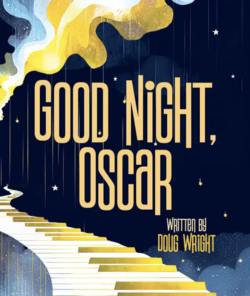
|
Good Night, Oscar North Coast Repertory (9/16-10/11) |

|
Catch Me If You Can Colony Theatre (9/17-10/18) |

|
Comics Reading Comics Dynasty Typewriter (9/13-9/13) |

|
Gershwin and the Golden Age The Soraya (10/11-10/11) |
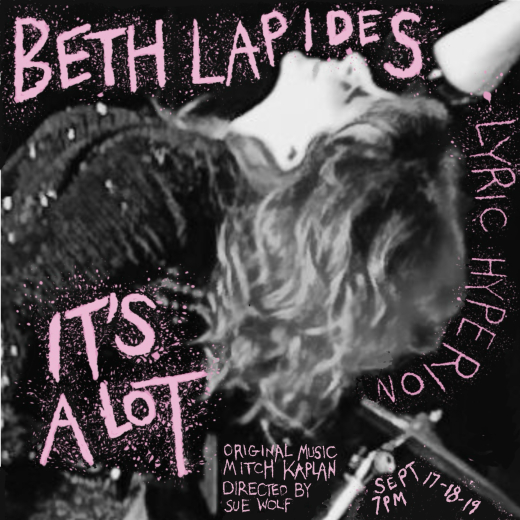
|
It's A Lot Lyric Hyperion Theater & Cafe (9/17-9/19) |
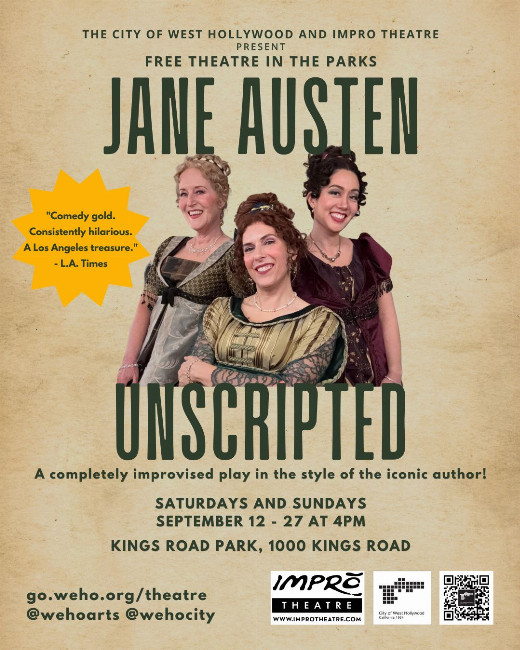
|
Jane Austen UnScripted Kings Road Park (9/12-9/27) |
|
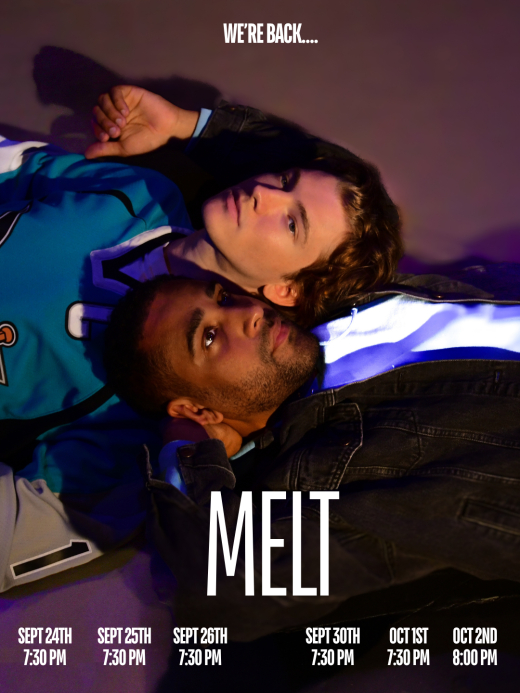
Melt : The Play The Marilyn Theatre at the Lee Strasberg Institute (9/24-10/02) |

|
New Works Festival Shoebox Theatre (9/11-9/26) |
|
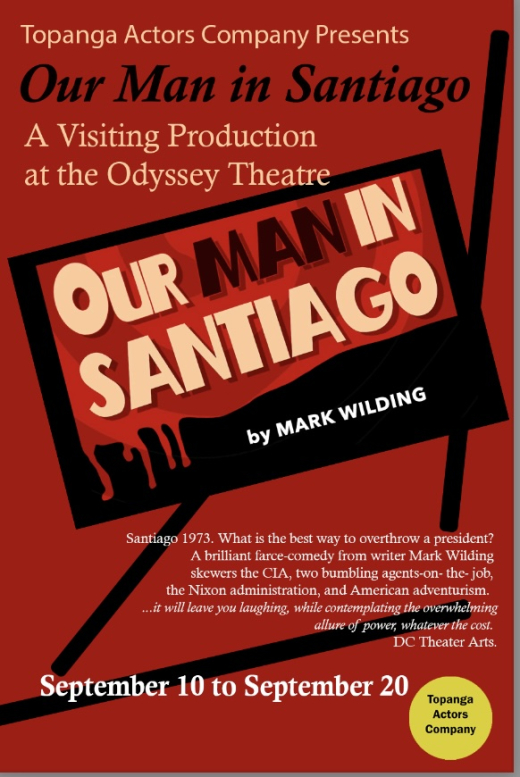
Our Man in Santiago by Mark Wilding Odyssey Theatre Ensemble (9/10-9/20) |

|
Worthy The Un-Erasable Solo Festival - Willie Agee Playhouse (9/12-9/25) |
