


ANW Announces Pay What You Can Performance of MRS. WARREN'S PROFESSION
By: Julie Musbach

A Noise Within (ANW) presents the third production of its 26th season, Mrs. Warren's Profession by George Bernard Shaw, directed by Michael Michetti, performing October 8 through November 18, 2017 (Press Opening October 14). Judith Scott, known for her role as Claudia Crane on the current FX series "Snowfall," makes her ANW debut as the titular Kitty Warren. A special Pay-What-You-Can performance has been announced for Thursday, October 12 at 7:30 pm.
Pay What You Can tickets (Thursday, October 12 at 7:30pm) go on sale at the box office window the day of the performance, starting at 2:30 pm, and are sold on a cash-only basis based on availability; limit of two tickets per person. Mrs. Warren's Profession explores what happens to a family when Cambridge-educated Vivie discovers that her genteel upbringing has been funded by her mother's illicit (but successful) business dealings as a prostitute and madam.Shaw, wanting to write about a realistic woman, wrote in a letter to Ellen Terry in 1897, "It's much my best play; but it makes my blood run cold: I can hardly bear the most appalling bits of it. Ah, when I wrote that, I had some nerve." In 1893, before it could be produced, Lord Chamberlain, Britain's theater censor, banned it as immoral and, otherwise, improper for the stage. Shaw would have been quite aware of censorship regulations, and did not think there was the least chance of the play being licensed. Shaw said, "Ordinary commercial theatres would have nothing to say to me." Shaw included it in his 1898 collection Plays Pleasant and Unpleasant. Sarah Wansley in program notes for the McCarter Theatre, wrote, "The scandal surrounding Mrs. Warren's Profession was not the fact that Shaw wrote about prostitution, but how he did it ... while other plays of the era dealt with prostitutes, they inevitably regretted their behavior and made a bad end." "The morally impugnable part of Shaw's play to his society, is that Mrs. Warren lives, unrepentant ... that as a fallen woman, Mrs. Warren 'is not wicked enough.' These critics, Shaw insists, have entirely missed the point. Rather than place the guilt of Mrs. Warren's Profession on Mrs. Warren herself, Shaw explains, 'The whole aim of my play is to throw that guilt on the British public itself.' The tumultuous production history and heated public reception of Mrs. Warren's Profession demonstrates that whether or not he succeeded in throwing guilt, he certainly managed to make a significant portion of the public uncomfortable." In 1902, Mrs. Warren's Profession was performed by the London Stage Society at the members-only (thus outside the censorship ban) New Lyric Club, which "rather courted a pleasantly scandalous representation," for a single matinee and evening performance. The St. James Gazette said, "That the tendency of the play is wholly evil we are convinced. The second act contains one of the boldest and most specious defenses of an immoral life for poor women that has ever been written." Shaw was delighted with the "shock to the foundations of morality, which sends a pallid crowd of critics into the street shrieking that the pillars of society are cracking and the ruin of the State at hand ... truly my play must be more needed than I knew." In 1905 in New Haven, pandemonium broke out in the upper galleries at its rowdy opening night (after all, the Yale Football Team had just beaten Princeton) when Vivie demands to know the identity of her father. Wansley wrote, "A silence fell over the theater and when the curtain closed [there were] rapturous applause sounds." "The next day, however, the mayor of New Haven, John P. Studley, received calls that something improper had played at the Hyperion ... the police chief revoked producer Arnold Daly's license and the company packed their bags for New York City. [There] the scandalous reputation of the play preceded it, and the production's opening night in New York was sold out. At the end of the third act, Daly gave a speech to the audience, suggesting that children should keep to simplified codes of morality, but for an adult audience, 'surely there should be room in New York for at least one theater devoted to truth, however disagreeable that truth may be'." The New York Herald said, "It defies immorality. It glorifies debauchery." The New York police commissioner arrested Daly and his company for "offending public decency," and cancelled all future performances (they were eventually acquitted by The Court of Special Sessions -- "there is nothing in the words themselves, nor in any particular phrase or expression, which can be said to be indecent"). Wansley continued, "Among the press's critique is the fact that women are present at the performance, which supposedly is improper for the ears and eyes of the weaker sex. Countering this allegation, Shaw points out that he not only wrote the play for women, but also that it had been performed and produced mainly through the determination of women. In 1907, Daly and his company, having been vindicated, produced Mrs. Warren's Profession at the Manhattan Theatre, followed by a national tour." In 2005, on the centenary of that production, Ben Brantley wrote, "Shaw was cutting a calculated, irresistibly dangerous figure as a firebrand critic, polemicist and soapbox orator long before his plays were first produced in London. It was a fire-breathing persona, stoked over seven decades, that expected, nay demanded, to be caricatured: 'the Celebrated G.B.S.,' as he put it, 'about as real as a pantomime ostrich.' No one expects to be shocked by Shaw anymore, but there's always the hope that he'll once again prove himself the provocateur par excellence, as well as a master practitioner of flashing wit."
Photo: Pictured: Erika Soto. Photo by Daniel Reichert
|
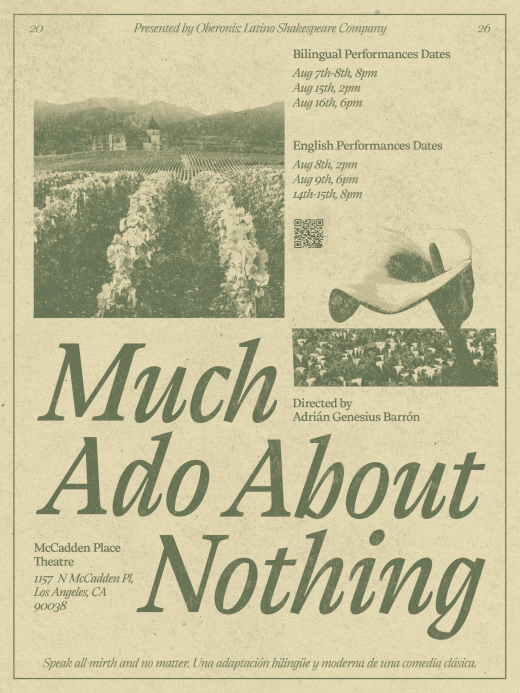
Much Ado About Nothing McCadden Place Theatre (8/07-8/16) |

|
6 Out of 10 Theatre 68 (8/20-8/20) |

|
After the Blast The Broadwater Second Stage (8/05-8/13) |

|
Catch Me If You Can Colony Theatre (9/17-10/18) |

|
Emily Skinner: In Concert Feinstein's at the Nikko (8/14-8/15) |

|
Gershwin and the Golden Age Younes and Soraya Nazarian Center for the Performing Arts (The Soraya) (10/11-10/11) |
|
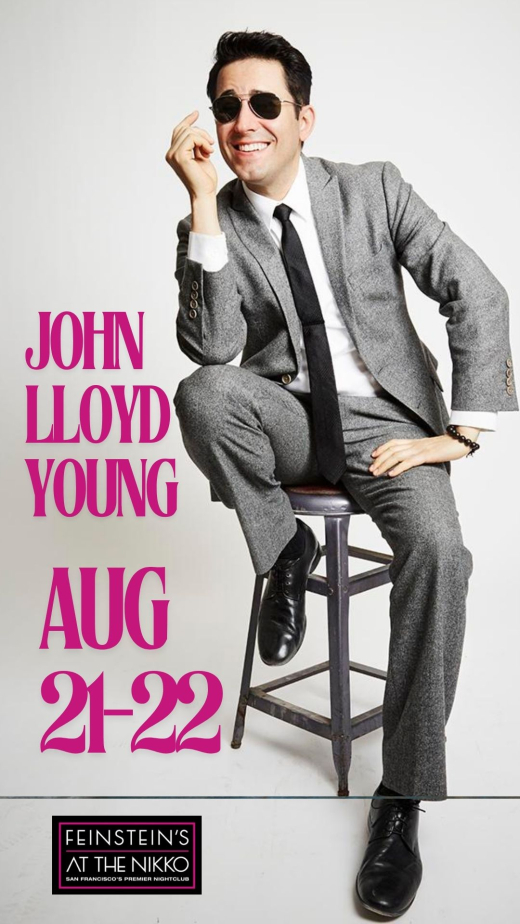
John Lloyd Young Feinstein's at the Nikko (8/21-8/22) |

|
Love, Loss and What I Wore Sawyer's Playhouse (8/08-8/30) |
|
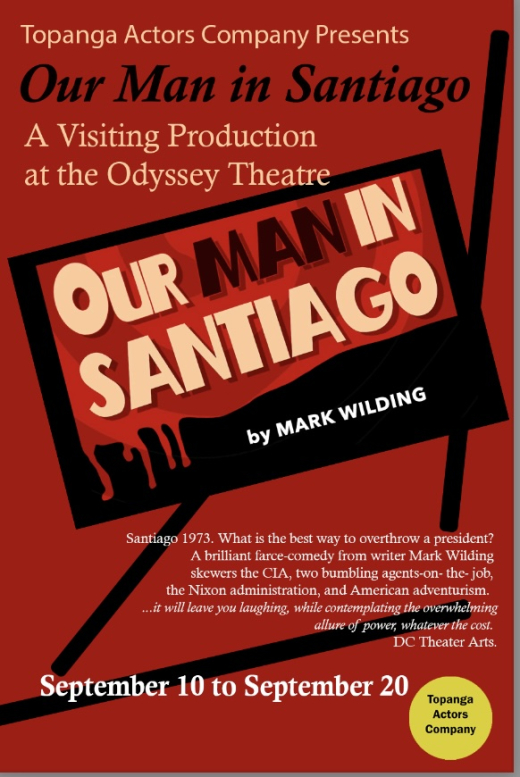
Our Man in Santiago by Mark Wilding Odyssey Theatre Ensemble (9/10-9/20) |

|
A Faery Hunt Magical Adventure Orcutt Ranch (8/22-8/22) |