


Review: SWEENEY TODD: THE DEMON BARBER OF FLEET STREET at Cultural Arts Playhouse Merrick
Superb acting skills bring the depravity of Sweeney Todd's London
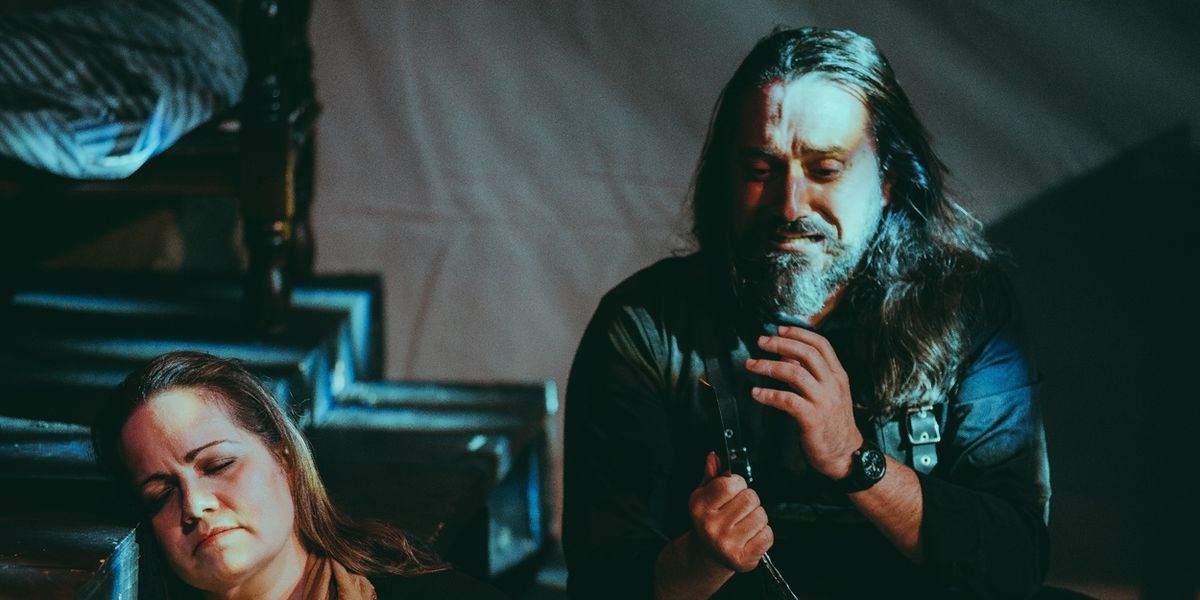
In a rousing performance, the cast of “Sweeney Todd: The Demon Barber of Fleet Street” at the Cultural Arts Playhouse in Merrick on Saturday, October 11, splayed out the humanity and depravity of the intricate story with bold voices and stark, but nuanced characters.
The story of a wronged man dead-set on revenge with those who stole his family and livelihood of barbering out of sheer greed and capability was given an intimate and exacting treatment by director, Tony Frangipane. The type of musical where acting can be lost amidst the spectacle of the backdrop, Frangipane’s Sweeney Todd put his cast’s well-honed acting skills front and center.
Set designer Brad Morrison made ingenious use of the stage space to reflect the multiple settings of the production often with pointed props and rigorous lightwork by stage manager, Anthony Orellana. Of particular note was the actual dough kneaded (and pounded) by Ms. Lovett and the actual pies eaten by Sweeney Todd and Tobias that added a sense of realness to pull in the audience into the dark and unforgiving world of the musical.
Don Dowdell as Sweeney Todd was the consummate tragic hero of the tale with a bold voice that could deftly uplift and pierce, depending on the will of his character. A fine dramatic actor, whose portrait of grief and menacing need for justice was engulfing, Dowdell's comedic talents as a thespian also shone through with facial expressions that created additional dimension to Sweeney Todd as more than just a sullen, vengeful man but a full-fledged person who once had beauty and love in his life.
Taneisha Corbin as Ms. Lovett was a terrific casting choice as her character arc of the longing and kind meat pie baker was filled with laughs, but genuine affection for Sweeney Todd and maternal instinct for Tobias. Corbin’s alternating between wide-eyed to wild-eyed added to her strong vocal command of the humorous (“Worst Pies in London”) to the generous (“Not While I’m Around”).
As star-crossed lovers Anthony Orellana as Anthony Hope and Leigh Corrado as Johanna had wonderful chemistry and a sense of urgency in the plan to run away together. Corrado’s ethereal appearance as the alabaster-skinned and golden-haired Johnna created a lilting and delicate ingenue who’s symbolic nature of purity is the currency amongst the men of the show. Orellana’s “Johanna” was filled with all the young Lothario crooning we expect from a boy on the verge of manhood in love.
In the third Mary role of the play was Mara Kaplan as the Beggar Woman, who embodies the sullied and forgotten unfortunate woman scorned and forgotten but consistently produced by the London of Sweeney Todd. Kaplan managed to keep her haggard appearance fresh with new iterations of a “A Miserable Woman” with each appearance. She is the living specter of the tale who in the final reveal of her face after her death reminds the audience that fate and redemption do not speak to each other until it’s too late.
Nick Rodriguez as the menacing and unhinged Beadle was a delight to see in contrast to Sweeney Todd’s calculated cruelty. As the goon of John DiGiorgio’s Judge Turpin, the two actors played off the respectable mask and violent enforcement of greed and corruption. DiGiorgio’s patrician air and upper-class ways gave a chilling sense of entitlement in “Pretty Women.”
Thomas Dean as Pirelli was Jack Sparrow-like in affectations and the character shift into hard-time black-mailer was a delicious transformation, even if it hurt our main protagonist. In “The Contest” and “Pirelli’s Death,” Dean gave a performance that could carry its own show with the “Italian” barber as the fun-house central character.
Tobias, perhaps the most tragic character in the story who is a victim from the beginning to the end, was portrayed with great care and sensitivity by Jack Dowdell. With silliness and a can-do attitude, Dowdell captured the undying purity of youth and even to the end commits a task given to him by an elder, repeating the cycle of Sweeney Todd’s London.
A strong ensemble, each reprise (there were 7) of the “The Ballad of Sweeney Todd” grew more resilient into an all-consuming character that while containing all the voices of London, drowned out the humanity of the beautiful sound.

|
Come From Away The Gateway Performing Arts Center of Suffolk County (8/07-9/06) |

|
Little Shop of Horrors: 40th Anniversary Screening Hosted By Ellen Greene Patchogue Theatre (8/30-8/30) |

|
THE WEDDING SINGER The John W. Engeman Theater (7/09-8/23) |
|
Megan Hilty Westhampton Beach Performing Arts Center (8/22-8/22) |
|
The Rocky Horror Picture Show Spooktacular Tour with Patricia Quinn Patchogue Theatre (10/29-10/29) |

|
Bonkers in the Boroughs Bay Street Theater (9/02-9/06) |

|
Pamela Morgan: What's Cooking? Where Every Song Comes with a Story and a Little Spice LTV Studios (8/23-8/23) |
|
The Importance of Being Earnest Theatre Three - NY (4/04-4/23) |

|
What's Cooking? With Pamela Morgan LTV Studios (8/23-8/23) |
|
Cabaret Theatre Three - NY (9/20-10/25) |
Reader Reviews
To post a comment, you must register and login.