


Review: KING LEAR at Resident Ensemble Players
In the 15 years Aisle Say has had the privilege to review this professional ensemble, always have the scenic design and costume design been breathtaking.

In the 15 years Aisle Say has had the privilege to review this professional ensemble, always have the scenic design and costume design been breathtaking. So it was with Riw Rakkulchon’s massive pyramid-like monolithic boulders of Lear’s castle. So it was with Kim Krumm Sorenson’s stunning silks for Lear, Cordelia and Regan.
In the Resident Ensemble Players’ stirring production of King Lear, director Jackson Gay strips the Shakespearean tragedy to its bare emotional bones—laying bare the cruelty, fragility, and aching humanity at its core. With a cast led by Stephen Pelinsky as Lear, this production at the University of Delaware’s Roselle Center for the Arts is a triumph of classical theatre.
Sound Design by Megumi Katayama created an ever-present atmosphere of unease, with rising winds and deafening punctuating scenes.
From the moment Pelinsky’s Lear strides onstage to divide his kingdom, it’s clear we are watching a ruler barely holding onto control—of his country, his daughters, and his mind. Lear’s for love and affirmation masks vulnerability. His descent into madness is gradual and harrowing, shaped by shifts in voice and posture. By the time he cradles the lifeless Cordelia in his arms, the transformation is total and heart-wrenching: a once-mighty sovereign reduced to a father mourning the only child who truly loved him.
The dynamic between Lear and his daughters is central to the tragedy, and here, it is electric. Kathleen Pirkl Tague’s Goneril is icy, flinty, and unapologetically ambitious. There’s no cackling villainy here—only a calculating woman shaped by years of neglect and political maneuvering. As Regan, Elizabeth Heflin delivers a performance of unnerving charm and casual cruelty. Her smiling sadism in the blinding of Gloucester is a most chilling moment, made all the more disturbing by her calm detachment.
The Earl of Gloucester’s parallel tragedy is given great depth by Hassan El-Amin, a performance in quiet dignity and heartbreak. El-Amin brings a gravitas to Gloucester that makes his betrayal and eventual suffering all the more poignant. His physical blinding is staged with both restraint and brutality, but it’s the emotional aftermath—his despair, his yearning for redemption—that lingers long after.
The Fool, (Jorge Castiilo-Midyett) is portrayed with melancholy insight and warmth. His quiet disappearance from the play is given thematic weight—he is the last voice of reason, extinguished just before Lear falls completely into madness.
Lee E. Ernst delivers a noble, impassioned performance as Kent, Lear’s most loyal and grounded ally. Ernst’s Kent is a moral compass in a landscape of betrayal and ego. Even after Lear banishment, his return in disguise as “Caius” is marked not by bitterness but by devotion, and Ernst plays this dual identity with nuance and a touch of wry humor. His scenes with Lear serve as emotional anchors, and in Pelinsky’s increasingly unmoored portrayal of the king,
Ernst was also Fight Choreographer and Intimacy Coordinator. An oxymoron?
Michael Gotch’s Edmund is seductive, smart, and chillingly contemporary. Gotch gives Edmund uses charm and intellect to claw his way into power. His soliloquies are delivered directly to the audience with a sly intimacy that makes us complicit in his schemes. There’s charisma in his cruelty and logic in his manipulation, making his betrayals feel disturbingly justified. His downfall, though inevitable, feels less like justice and more like a cautionary tale: the world created by Lear’s rashness is ripe for men like Edmund to rise.
Mic Matarrese’s Edgar undergoes perhaps the most transformative arc in the play, and he handles it with both emotional depth and technical mastery. Starting as a quiet, almost invisible son, Matarrese quickly shifts gears into “Poor Tom,” the mad beggar persona that serves as both disguise and crucible. His portrayal of Tom is haunting—gritty, feral, and physically committed, but never cartoonish. Matarrese doesn’t just play madness; he plays a man finding strength through suffering. Edgar stands not just as a survivor, but as a reluctant heir to a broken world.
Erin Partin brings quiet power and luminous integrity to Cordelia. From her first scene, where she refuses to flatter Lear with hollow praise, Partin establishes Cordelia as a figure of fierce moral clarity. Her reunion with Lear is one of the production’s most tender and understated moments. Her death, stark and senseless, feels like the final blow in a world that punishes honesty and rewards deceit. Partin’s Cordelia reminds us that virtue often goes unrecognized until it is too late—and that in King Lear, even love is not enough to save the innocent.
Resident Ensemble Players’ King Lear is not a safe, reverential staging—it is a bold, bracing confrontation with one of Shakespeare’s most devastating works. Tt is a production that does what great theatre should: it wounds, it awakens, and it leaves us changed. It reminds us that, though written in 1606, there are stark similarities to our present day chaos, presided over by an unhinged King
KING LEAR – Through April 27 Phone: (302) 831-2204 Email: cfa-boxoffice@udel.edu
Sign up for all the news on the Fall season, discounts & more...

|
Irving Berlin's White Christmas Smyrna Opera House (12/04-12/13) |

|
She Loves Me Possum Point Players (11/13-11/22) |

|
Beetlejuice JR. Second Street Players (10/09-10/18) |
|
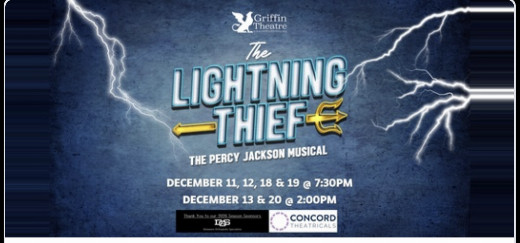
The Lightning Thief The Percy Jackson Musical Griffin Theatre (12/11-12/20) |
|
The Dinner Detective Wilmington True Crime Murder Mystery Show The Dinner Detective Wilmington (11/21-11/21) |
|
The Dinner Detective Wilmington True Crime Murder Mystery Show The Dinner Detective Wilmington (11/14-11/14) |

|
Winter Lights & Voices: A Holiday Celebration in Delaware Grand Opera House (8/03-8/01) |

|
ELF: The Musical Milton Theatre (11/19-12/13) |

|
Hedwig and the Angry Inch Milton Theatre (10/21-11/01) |
|
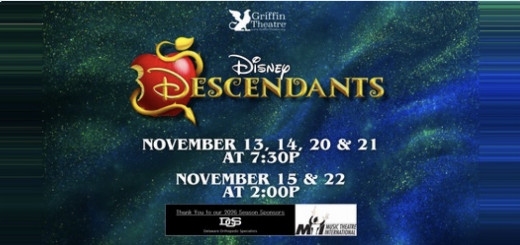
Descendants The Musical Griffin Theatre (11/13-11/22) |

Reader Reviews
To post a comment, you must register and login.