


Review: ANGELS IN AMERICA: Part One at Wilmington Drama League
In four decades of sitting in darkened houses across Delaware and Pennsylvania, Aisle Say has seen hundreds of productions come and go.

In four decades of sitting in darkened houses across Delaware and Pennsylvania, Aisle Say has seen hundreds of productions come and go. Some amuse, some delight, many entertain. But every now and then, a community theatre dares to reach beyond the comfort of Moon Over Buffalo, Noises Off–style crowd-pleasers. This past Friday, I witnessed just such a risk at Wilmington Drama League with their production of ANGELS IN AMERICA. Production Manager Kathy Buterbaugh and the WDL board should be applauded.
The choice of material was bold, courageous for a volunteer-driven stage. Yet the gamble paid off in a tour de force. What struck me most was not simply the technical competence—though there was plenty of that—but the sheer passion that radiated from the stage. These actors, unpaid and undaunted, poured themselves into their roles with a commitment and intensity that was palpable. The air was charged with risk and reward, with an urgency that can’t be faked.
Community theatre is, at its core, about love of the art. And here that love was writ large—evident in every line, every gesture, every breath. It reminded me why I keep coming back after all these years: to be surprised, to be moved, to see ordinary people create something extraordinary.
This was not a play delivered timidly, nor by halves. It was a tour de force by a dedicated ensemble, every actor switching with ease between their “signature” role and the “Others” Kushner demands. That doubling is no accident; the playwright insists upon it to underscore the themes of transformation, identity, and the fractured spirit of America in crisis.
Andrew Dluhy as Louis Ironson gave a searching, neurotic performance, his intellect forever at war with his cowardice. Louis’s abandonment of Prior is cruel, yet Dluhy shaded him with such nervous self-awareness that we recognized our own frailties in him.
Katie Finkelstein as the Angel was both ethereal and unnerving. Her physicality gave the celestial being a presence that was at once majestic and menacing. Her earthly “Others” provided welcome contrast, grounding her performance in human experience.
Bob Gatchel as Roy Cohn was, for me, a revelation. I had last seen him years ago in The Mystery of Edwin Drood, where he was a jaunty song-and-dance man. Here he shed every ounce of musical comedy charm to embody the venomous, swaggering power broker, dying yet defiant. Gatchel’s Cohn was mesmerizing: terrifying, pitiable, and grotesquely magnetic.
Keian Hagstrom’s Joe Pitt captured the inner torment of a man trapped between faith, ambition, and desire. Hagstrom played his Mormon lawyer with a quiet decency that made Joe’s repression and ultimate unraveling all the more painful to watch.
Joe Matthews as Prior Walter anchored the production with wit and pathos. Prior is the heart of Angels in America—both victim and prophet—and Mathews infused him with vibrancy and humor, even as illness ravaged him. His prophetic scenes with the Angel had both bite and beauty.
Jennifer Moses as Hannah Pitt was a study in transformation. Introduced as Joe’s rigid Mormon mother, she ended with compassion and openness, a journey Moses charted with conviction. Her ability to slip into ancillary characters with ease only heightened her impact.
Cara Tortorice’s Harper Pitt balanced fragility with luminous insight. Her hallucinations could have been played as caricature, but Tortorice grounded them in longing, making Harper’s pain deeply human.
Finally, Dominic Santos as Belize provided the play’s conscience. A late replacement after a cast member’s departure, the director himself stepped into the role—fortuitously, having played Belize before. His performance was seamless, sharp, and compassionate. As Prior’s friend and foil, Santos gave the play its necessary humor and grounding wisdom.
The evening belonged not just to individuals but to the ensemble. Their transformations into “Others” were consistently clear and compelling. In a work that wrestles with politics, identity, religion, sexuality, and mortality, these actors met Kushner’s demands with courage and passion.
Cohn proudly claimed three men as his models:
- Walter Winchell – the syndicated gossip columnist and radio personality. Winchell wielded words like weapons—destroying reputations with innuendo and rumor. He blurred journalism with personal vendetta, and showed Cohn how fear and scandal could be tools of power.
- J. Edgar Hoover – longtime FBI director. Hoover made surveillance, secrecy, and intimidation into instruments of control. His obsession with “un-American” elements created a culture of paranoia. Cohn admired his ruthless control of information and enemies.
- Sen. Joseph McCarthy – Cohn’s direct boss during the Army–McCarthy hearings. McCarthy perfected the politics of accusation: guilt by association, perpetual enemies lists, and public humiliation. Cohn cut his teeth as McCarthy’s bulldog, learning how to manipulate hearings and destroy opponents without ever proving a case.
Taken together, these “fathers” were men of dubious morality but immense power, who thrived on fear and never admitted wrongdoing.
Consider if you will, a present day public character who wields great power; a man Cohn himself mentored.
In the end, Angels in America is a play about America’s promise and its betrayals, about hypocrisy and hope, about angels and demons that often look much the same. This community theatre risked much in bringing it to the stage. The payoff was an evening of theatre that was both urgent and unforgettable—a reminder that, at its best, community theatre is not merely entertainment but an act of courage.
Rush to see it this weekend – til the 21st. If not, Aisle Say urges you to see Angels In America: Part Two. October 10-19.

|
Mean Girls Clear Space Theatre Company (6/26-8/29) |

|
Pretty Woman Clear Space Theatre Company (7/01-8/25) |
|
Golden Girls The Laughs Continue The Playhouse on Rodney Square (10/17-10/17) |
|
Sweeney Todd: The Demon Barber Of Fleet Street Milton Theatre (9/24-10/11) |

|
Run For Your Wife Kent County Theatre Guile (9/11-9/26) |

|
She Loves Me Possum Point Players (11/13-11/22) |

|
Disney's Descendants: The Musical Milton Theatre (8/20-8/23) |
|
|
Clear Space Theatre Company presents Mean Girls: The Musical (Children 12 and under are free to attend and do not need a ticket when sitting in the La Freeman Arts Pavilion (8/19-8/19) |
|
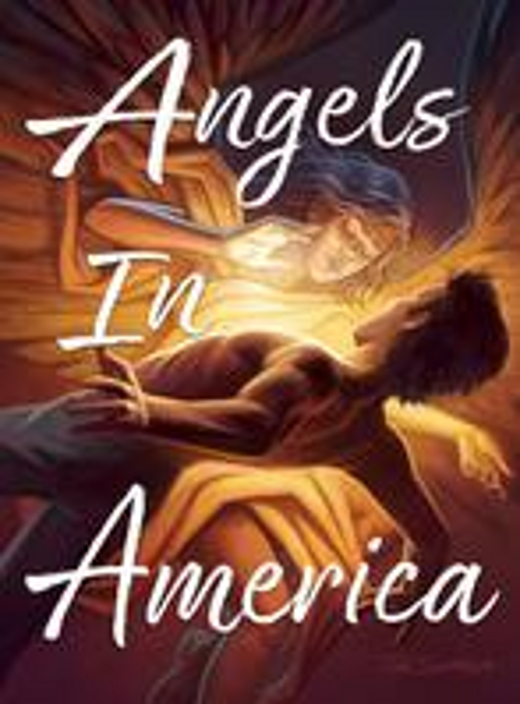
Angels in America: Millennium Approaches Possum Point Players (9/11-9/20) |

|
Winter Lights & Voices: A Holiday Celebration in Delaware The Grand Opera House (8/03-8/01) |
Reader Reviews
To post a comment, you must register and login.