


Review: LA BOHÈME, in Cinemas
Modern new film version of Puccini's popular opera set in London's East End
 After a shaky start – somewhat reminiscent of heroine Mimi's stuttering coughing fits – writer/director Robin Norton-Hale's new film adaptation of Giacomo Puccini's La bohème, launching in cinemas on March 3, ultimately strikes the right notes.
Norton-Hale, artistic director/CEO of English Touring Opera and founder of OperaUpClose, originally staged this contemporary version of La bohème in 2010 at Kilburn's c*ckTavern Theatre. A year later it transferred to Soho Theatre, clinching an Olivier Award for Best New Opera Production.
Progressive-thinking opera buffs and younger audiences could well be won over by Finite Films & TV and Atelier 11's up-to-the-minute take (set in London's East End) on Puccini's tale of young love and untimely death.
This isn't the first rendering of the classic opera. Remember Jonathan Larson's Rent, Baz Luhrmann's Moulin Rouge!, Moonstruck and The Simpsons' parody, The Homer of Seville, with Homer in the role of Rodolfo. And yet, Norton-Hale's reworking is particularly resonant today with cuts in arts funding, high rents and young artists trying to survive.
Charming Scottish tenor Matthew McKinney, in his first breakout feature film role, heads up a young cast as struggling novelist Rodolfo. His neighbour and ailing lover, Mimi, who cleans houses for wealthy folk, lives in the cramped flat above Rodolfo and his fellow down-at-heel artist mates Marcello (Benson Wilson), Schaunard (Mark Nathan) and Colline (Edward Jowle).
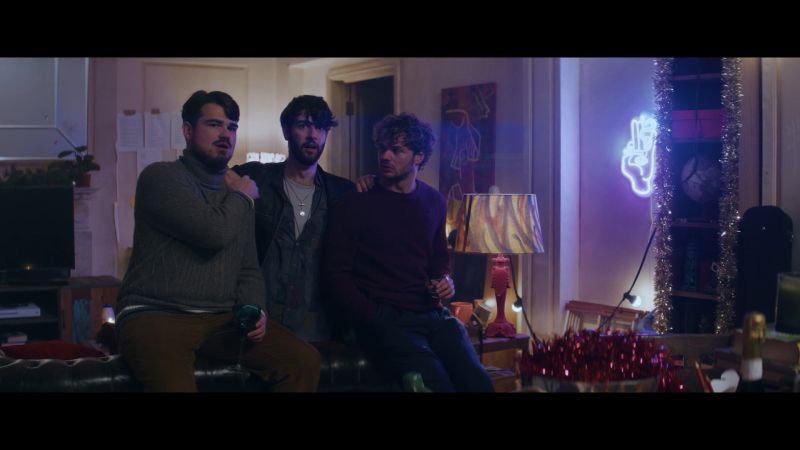
Photo credit: Paula Crickard and Finite Films & TV
Soprano Lucy Hall is a delight as Mimi, confidently conveying love and despair in a new interpretation of the score led by music director and conductor Alice Farnham, with orchestration by Jonathan Dove. Ben Caird's sound design ably combines the classical with modern-day rhythms of London.
Regrettably in Act One, when the power goes out and Rodolfo and Mimi meet and fall in love, it is so dark you can't see the couple's expressions. They are shot side-by-side in a static fashion, further hindering viewers' chances of seeing their faces, which is a bit of shame when they sing the famous duet "O soave faniculla" ("Oh lovely girl"). A chink of light through the window could have enhanced this crucial scene.
However, direction by Norton-Hale and Jack Edwards' cinematography picks up in the latter acts, to the degree it almost feels like a different production.
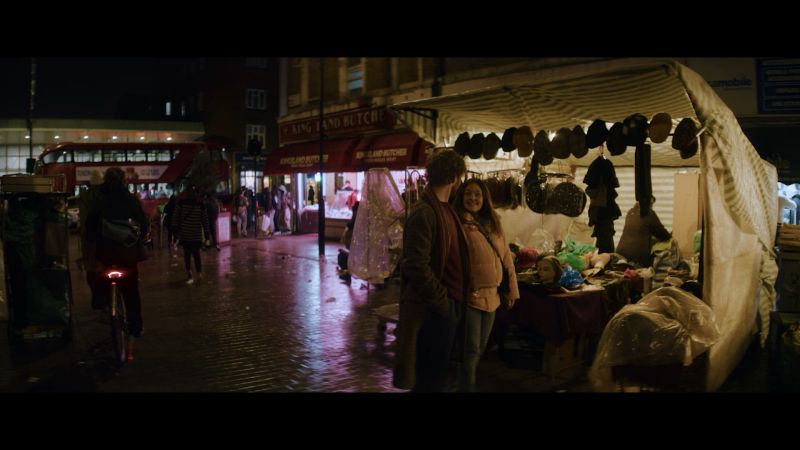
Photo credit: Paula Crickard and Finite Films & TV
I especially love present-day East End touches, including a jolly gathering in a pub, Rodolfo buying Mimi a yellow beret from a market stall and Marcello painting billboards for the local pub owner. Julia Mariko's excellent Musetta is realistic as a young woman juggling suitors on a fun night out in a Hackney hostelry.
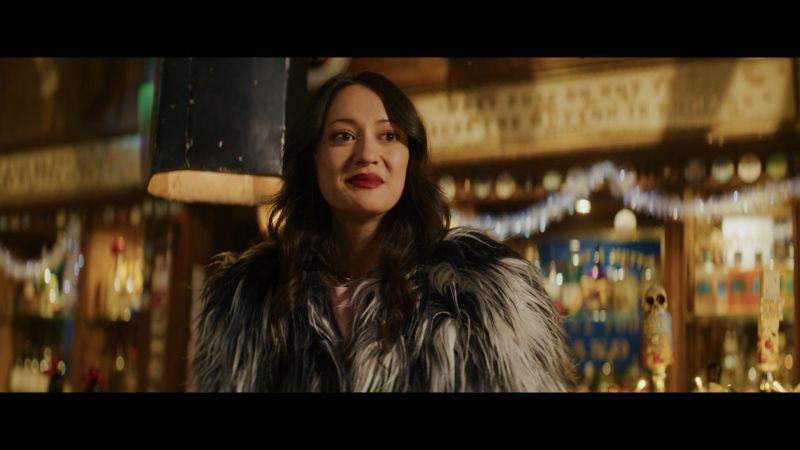
Photo credit: Paula Crickard and Finite Films & TV
There are some discrepancies though, such as Rodolfo burning pages of his novel to keep warm, while later writing a piece for a website on his laptop. Surely, he has a copy of his novel on his computer, so was the cremation of his novel really a great sacrifice?
Rather than abject poverty, this crowd feels pretty middle-class, brandishing their iPhones and ringing for an ambulance when Mimi is unwell. But lively shots of London Fields and surrounding area somehow make up for these improbabilities.
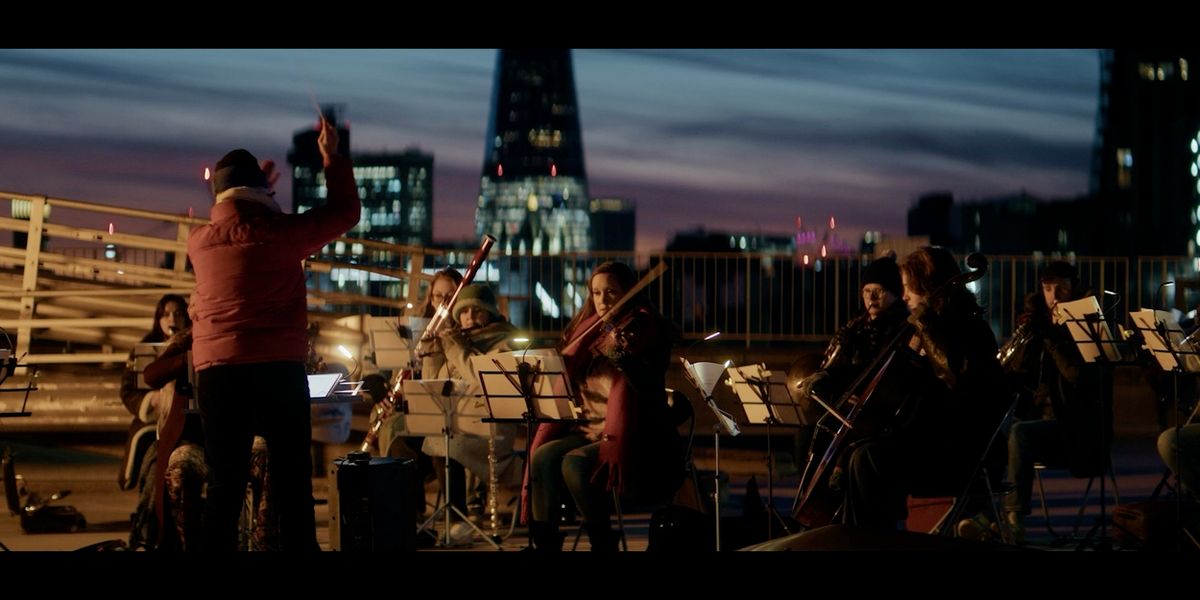
I like the first cutaway of part of the orchestra, bundled up in coats and scarves on the roof of an East End building. It reminds me of The Beatles' rooftop concert at their Apple headquarters in Savile Row. But several more shots of the orchestra threaten to take us out of the story. Stylistically, meta references to the mechanics of producing the opera mixed with reality in current East London and Puccini's Bohemian narrative sometimes jar.
All that aside, this upbeat La Bohème, with divine music and vocals, an enthusiastic and believable cast – for once the age of the performers is close to the age of the characters – and a new way to narrate a much-loved old story is well worth a trip to the cinema.
La Bohème runs for approximately 106 minutes and is in cinemas from 3 March
Photo credits: Paula Crickard and Finite Films & TV
Sign up for all the news on the Summer season, discounts & more...

.jpg?format=auto&width=365)




Reader Reviews
To post a comment, you must register and login.