


|
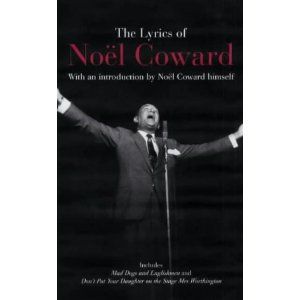
The Lyrics of Noel Coward
(1/1/2002) Mad Dogs and Englishmen, Don't Put your Daughter on the Stage, Mrs Worthington and over 250 more lyrics from Coward's musical masterpieces. Noel Coward is one of the greatest lyricists of the twentieth century. Songs such as A Room with a View, The Stately Homes of England, Mad Dogs and Englishmen and Mrs Worthington are known, sung and loved the world over. This edition gathers together over 250 of Coward's lyrics, arranged in chronological order and grouped by show. In addition, these masterp... |
 |
|
Theatre World 1994-1995, Vol. 51
(1/1/2000) Theatre World, the statistical and pictorial record of the Broadway and off-Broadway season, touring companies, and professional regional companies throughout the United States, has become a classic in its field. The book is complete with cast listings, replacement producers, directors, authors, composers, opening and closing dates, song titles, and much, much more. There are special sections with biographical data, obituary information, listings of annual Shakespeare festivals and major drama a... |
 |
|
Theatre World 1993-1994, Vol. 50
(1/1/2000) Theatre World, the statistical and pictorial record of the Broadway and off-Broadway season, touring companies, and professional regional companies throughout the United States, has become a classic in its field. The book is complete with cast listings, replacement producers, directors, authors, composers, opening and closing dates, song titles, and much, much more. There are special sections with biographical data, obituary information, listings of annual Shakespeare festivals and major drama a... |
 |
|
The Social Significance of Modern Drama
(1/1/2000) Out of print virtually since its completion in 1914, Emma Goldman's pioneer work Social Significance in Modern Drama bridges modern drama and political philosophy, pointing out the road that remains to be travelled toward a theatre of social empowerment. Activist, feminist, philosopher and anarchist, Emma Goldman was a passionate thinker about all things modern when the 20th century was still raw and new. The emergence of her treatise on the theatre after years of obscurity is certain to arouse ... |
 |
|
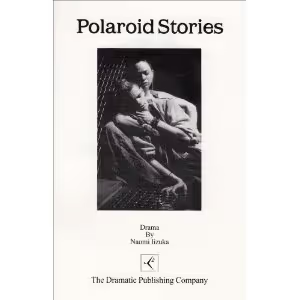
Polaroid Stories
(1/1/1999) Naomi Iizuka’s 1997 play, Polaroid Stories, consciously uses stories, characters and themes from Ovid’s Metamorphoses to tell the stories of street kids living on the edge in a desolate, urban landscape. Because these characters are named after Orpheus and Eurydice, and Echo and Narcissus, or based on stories of Dionysus, and Ariadne and Theseus, and because scenes are entitled “The Story of Semele” or “Theseus in the Labyrinth,” Iizuka creates a world that has two dimensions: the g... |
 |
|
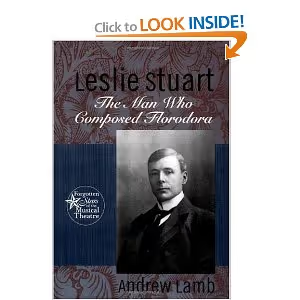
Leslie Stuart: Composer of Florodora
(12/31/1969) Leslie Stuart (1864-1928) was a British songwriter best remembered as the composer of the hit show, Florodora. He began writing popular songs as a teenager, first for blackface and vaudeville performers, and eventually for more "legitimate" shows and revues. Florodora (1899), written in collaboration with London's most fashionable librettist, Owen Hall, was a musical-comedy sensation. Its combination of the traditional slow love ballads and waltzes with more rhythmic and long-lined numbers made... |
 |
|
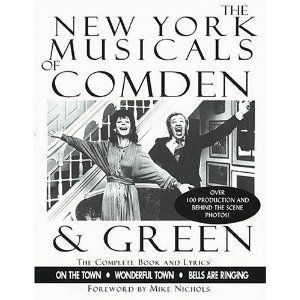
The New York Musicals of Comden and Green
(12/31/1969) The long-running partnership of Betty Comden and Adolph Green is certainly the most remarkable example of tenacious teamwork in the annals of the musical stage. As librettists, lyricists, and performers, they have been working together for nearly six decades and are still going strong. The New York Musicals of Comden and Green brings together three of their greatest Broadway triumphs: On the Town (1944) and Wonderful Town (1953), with music by Leonard Bernstein, and Bells are Ringing (1956), wi... |
 |
|
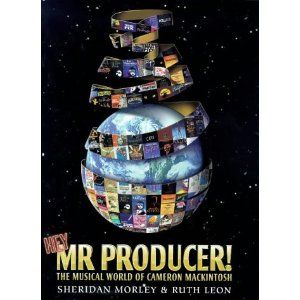
Hey Mr. Producer! the Musical World of Cameron Mackintosh
(12/31/1969) Sir Cameron Mackintosh ... is the most successful producer in the entire history of the stage musical, on Broadway, on London's West End, and in other theater capitals. He has been responsible for an amazing succession of hits, including Cats, Les Miserables, The Phantom of the Opera, and Miss Saigon. This book is the first ever to tell the story of the man behind so many of the triumphs of the contemporary musical stage. The authors, who have known Mackintosh since his earliest days in the thea... |
 |
|
Monteverdi's Musical Theatre
(12/31/1969) Claudio Monteverdi (1567-1643) is well known as the composer of the earliest operas still performed today. His Orfeo, Il retorno d’Ulisse in patria, and L’incoronazione di Poppea are internationally popular nearly four centuries after their creation. These seminal works represent only a part of Monteverdi’s music for the stage, however. He also wrote numerous works that, while not operas, are no less theatrical in their fusion of music, drama, and dance. This impressive book is the first t... |
 |
|
Black Musical Theatre: From Coontown to Dreamgirls
(12/31/1969) Black Musical Theatre begins its historical survey with Clorindy, the Origin of the Cakewalk and A Trip to Coontown, in 1898, and concludes with the Broadway smash Dreanigirls, in 1981. The section on the ragtime pianist and composer Eubie Blake and his popular 1920s show, Shuffle Along, attests to early black influence in American musical theater. Prior to the 1920s, black musical theater was enriched by Walker and Williams, Cole and Johnson, Miller and Lyles, and Ernest Hogan. White producers ... |
 |
|
The Broadway Musical: Collaboration in Commerce and Art
(12/31/1969) Three out of four Broadway-bound musicals fail to get there, and many of those that do, ultimately fail. The Broadway Musical takes an engrossing look at the industry's successes and failures in an effort to understand the phenomenon of mass collaboration that is Broadway. The authors investigate the complicated machinery of show business from its birth around the turn of the century through its survival of the cost explosions of the 1980s. Through interviews with many of Broadway's top produce... |
 |
|
Staging Musical Theatre
(12/31/1969) This all-in-one book is designed to help you become a superior producer, director or choreographer, or even a triple threat. You'll learn everything you need to know to put a show on the boards. It starts with selecting a musical, then addresses how to analyze and intepret your choice, coordinate the scenery and lights, costumes and props, and other technical elements. You'll be able to cast the top talent through efficient, well-organized auditions, and conduct productive rehearsals for music, ... |
 |
|
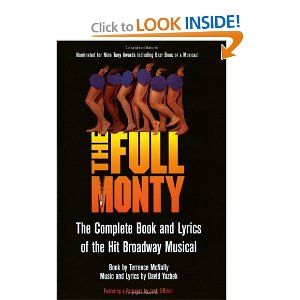
The Full Monty - The Complete Book and Lyrics of the Hit Broadway Musical
(12/31/1969) "Full of brilliance! It's a blockbuster and a mold-breaker. A one-of-a-kind Broadway musical. I loved it!" - Clive Barnes, The New York Post "A delightful salute to the human spirit!" - David Hinckley, The Daily News "Monty works on every level and is the kind of audience-pleaser that Broadway desperately needs." - Frank Scheck, The Hollywood Reporter |
 |
|
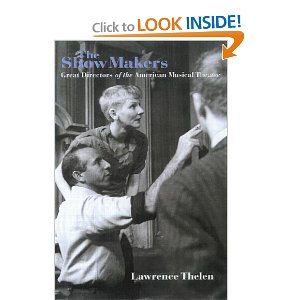
The Show Makers: Great Directors of the American Musical Theatre
(12/31/1969) In twelve portraits, Lawrence Thelen lets us see how these creative minds work, and what it takes to make musical theatre happen.. "Backstage with Lawrence Thelen we listen as these directors talk about careers and ideas. James Lapine's early involvement with photography becomes an influence on Sunday in the Park with George; Harold Prince's early desire to be a playwright is rechanneled into directing; George C. Wolfe speaks of the ongoing involvement of black artists with musicals since the l... |
 |
|
Sondheim's Broadway Musicals
(12/31/1969) With thirteen Broadway musicals to his credit, Stephen Sondheim's career in the musical theater has outdistanced those of most of his contemporaries. Each of his shows has presented new challenges to audiences, and each has cast fresh perspectives on the nature and potential of the American musical, as well as probing deeply, often painfully, into the nature of our culture. Sondheim's Broadway Musicals is the first book to take an in-depth look at Sondheim's work. Stephen Banfield examines eac... |
 |
|
How to Direct a Musical
(12/31/1969) How to Direct a Musical is a lively and practical guide to the seemingly overwhelming task of directing a musical. David Young brings to this handbook his extensive experience as a director of over 100 productions and more than 250 workshops in the US, China, Senegal and Brazil. Young takes a pragmatic, do-it-yourself approach, guiding the reader from planning to casting, rehearsal to opening night. Topics covered include script analysis, collaboration with designers, musical directors, choreogr... |
 |
|
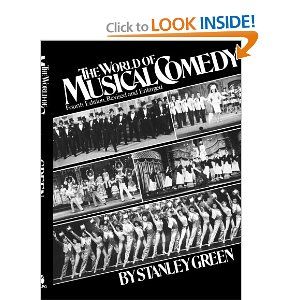
The World Of Musical Comedy
(12/31/1969) Acclaimed through three editions for its uniquely informative and entertaining style, this fourth edition of Stanley Green’s World of Musical Comedy updates and enlarges the theatrical scope to include such recent shows as A Chorus Line, Barnum, They’re Playing Our Song, and Annie. In a format that provides biographies of all the leading figures in the musical’s development, Stanley Green manages to convey the spirit of the Broadway stage, its musical make-believe, and yet remain objective... |
 |
|
First Nights: Five Musical Premiers
(12/31/1969) This is a unique and extremely attractive account of the premieres of five musical masterpieces spanning from 1607 to 1913: Monteverdi's opera Orfeo, Handel's oratorio Messiah, Beethoven's Ninth Symphony, Berlioz's Symphonie fantastique, and Stravinsky's ballet Le Sacre du printemps. The focus of each essay is the actual premiere, but Kelly, who teaches a course called "First Nights" at Harvard, first places each event in its broader historical and cultural setting and then proceeds to fill in ... |
 |
|
The American Musical Theatre Song Encyclopedia
(12/31/1969) The first encyclopedia of theatre songs from Broadway shows ranging from The Black Crook (1866) to the 1994 Tony-Award-winning PAssion, this handy guide features over 1800 songs from over 500 musicals. It gives such information as the songs' authors, original performers, and dates and history of recordings. Each song is described and briefly analyzed, explaining how the song fit in the original production and what is notable about its music, lyrics, and presentation. Thoroughly indexed by song ... |
 |
|
Sing Out, Louise!: 150 Stars of the Musical Theatre Remember 50 Years on Broadway
(12/31/1969) This ultimate Broadway insider's book is based on extensive interviews with hundreds of performers, including Lauren Bacall, Carol Channing, Barbara Cook, Nanette Fabray, Rex Harrison, Dorothy Loudon, Jerry Orbach, Tony Randall, Elaine Stritch, and Gwen Verdon, sharing personal recollections of dozens of shows. It's a backstage glimpse at the jealousy and heartbreak, the passion and commitment that have made Broadway the center of the American musical theatre for more than half a century. |
 |
|
America's Musical Stage: Two Hundred Years of Musical Theatre
(12/31/1969) Mates shows the musical stage in all its guises--from burlesque to musical comedy to grand opera--from its beginnings in pre-Revolutionary America to the present day. He deals sensitively with the recurrent aesthetic question of popular versus highbrow art and also looks at critical reactions to popular theatrical forms of musical entertainment. He introduces the reader to various types of theatrical companies, the changing repertory, and the many kinds of musical performers who have animated th... |
 |
|
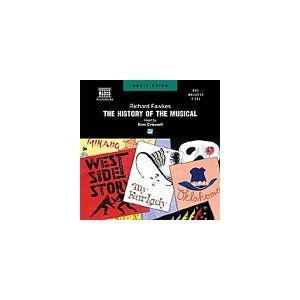
The History of the Musical
(12/31/1969) This audiobook traces the musical from its origins in classical music through to its flowering in America; "Showboat", "Anything Goes", "Guys and Dolls", "West Side Story", "The Sound of Music" - the list is endless. It also includes over 120 musical examples to illustrate the story. |
 |
|
Musical Theatre Classics
(12/31/1969) A fantastic series featuring the best songs from Broadway classics. Collections are organized by voice type and each book includes recorded piano accompaniments on CD. 13 songs, including: Falling in Love With Love * Hello, Young Lovers * Mister Snow * So in Love * In My Life * and more. |
 |
|
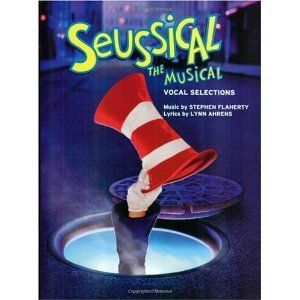
Seussical the Musical: Vocal Selections
(12/31/1969) From the composer and lyricist of Ragtime, this new musical is based on the beloved Dr. Seuss characters. Titles are: All for You * Alone in the Universe * Amayzing Mayzie * Biggest Blame Fool * Havin' a Hunch * Horton Hears a Who * How Lucky You Are * It's Possible * The Military * Notice Me, Horton * Oh, the Thinks You Can Think * Solla Sollew. |
 |
|
Next!: Auditioning for the Musical Theatre
(12/31/1969) A complete and concise guide for the actor auditioning for musicals. |
 |
|
Theatre in the Victorian Age
(12/31/1969) This book examines all major aspects of theater practice and dramatic literature of the Victorian period. Michael Booth's comprehensive survey explores the social and cultural context of the theater including theater management, the audience, architecture and production methods, acting and the job of the actor, as well as the drama itself. Within this framework, Booth discusses such topics as the effect on theater of population growth and the spread of the railway system, the typical organizatio... |
 |
|
Great Musicals of the American Theatre
(12/31/1969) Originally published in 1973 under the title Ten great musicals of the American theatre. Includes the librettos of Of thee I sing, Porgy and Bess, One touch of Venus, Brigadoon, Kiss me Kate, West Side story, Gypsy, Fiddler on the roof, 1776, and Company. |
 |
|
Staging A Musical
(12/31/1969) Musicals are undoubtedly one of the most popular forms of entertainment in the theatre today. They are also one of the most complex, since they often rely for their effect upon a combination of music, drama, dance, and spectacle. This book is an easy-to-read, step-by-step guide to the whole process of putting on a musical, placing a firm emphasis on good organization and careful planning. In Staging a Musical, Matthew White describes all the elements involved in putting on a musical production, ... |
 |
|
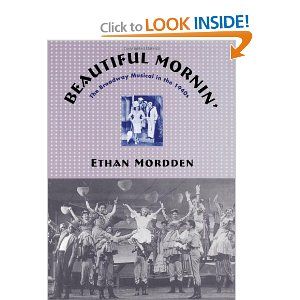
Beautiful Mornin': The Broadway Musical in the 1940s
(12/31/1969) Once again establishing that he is as impressive a nonfiction writer as he is a novelist (How Long Has This Been Going On?; Buddies), Mordden analyzes the many notable hits (and egregious flops) of the 1940s, and describes how they figured intoAand indeed establishedAthat period's importance to the Broadway musical theater. It was a decade of many milestones, chief among which was the emergence of Rodgers and Hammerstein with 1943's unlikely groundbreaker, Oklahoma ("all Broadway gaped as these... |
 |
|
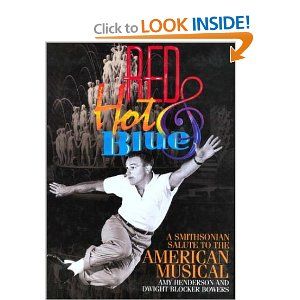
Red Hot & Blue: A Smithsonian Salute to the American Musical
(12/31/1969) This luxuriant coffee table book is packed with photos, posters, design sketches and drawings that accompanied American musicals from 1866 to the present. The book was published to coincide with the Washington, DC, exhibition of the same name running through July 1997 at the National Portrait Gallery, which co-created both exhibition and book with the National Museum of American History. The book has two main strengths: One, it treats the musicals of Broadway and Hollywood as part of the same p... |
 |
|
From Assassins to West Side Story: The Director's Guide to Musical Theatre
(12/31/1969) The subtitle "director's guide" is somewhat misleading and could do this fine book a significant disservice. Although it will certainly assist directors in planning productions with greater depth and impact, it should also attract a much broader audience?actors, production staff, teachers, theater enthusiasts, and the like. Director, composer, and lyricist Miller offers a creative look at 16 musical icons, including Cabaret, Into the Woods, Les Miserables, Sweeny Todd, Gypsy, Carousel, and more... |
 |
|
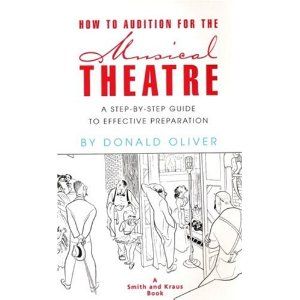
How to Audition for the Musical Theatre: A Step-By-Step Guide to Effective Preparation
(12/31/1969) Preparation is the key to a successful audition. Donald Oliver shares his many years of Broadway experience and will show you how to build your song portfolio, what not to sing, where to find songs, how to work with a vocal coach and what to do if you forget the lyrics. All the details of good and effective preparation are discussed in a plain and straightforward way. Also included is a list of the most overdone songs. This is a book to help the novice and aid the professional do a better and mo... |
 |
|
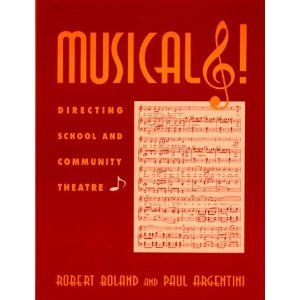
Musicals!: Directing School and Community Theatre
(12/31/1969) Musicals! is an illustrated sourcebook for total theatre training, emphasizing the director's role in the three main building blocks for mounting a performance: preparation, production, and performance. Boland and Argentini provide a comprehensive, step-by-step theatre primer which will prove invaluable to musical directors, teachers, administrators, students, and actors. After the initial decisions are made, specific guidelines in preparing the stage picture, holding auditions and casting, and ... |
 |
|
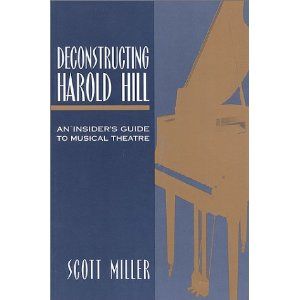
Deconstructing Harold Hill: An Insider's Guide to Musical Theatre
(12/31/1969) Miller contends that Americans don't take American musicals seriously; more precisely, American directors don't. That is why, he argues, most of the most imaginative and daring recent Broadway revivals have been directed by Brits and Australians. American directors are less willing to plumb the depths of musicals and to uncover, for instance, Camelot's dark subtext or the deep structure of The Music Man. Miller strives to set things aright by analyzing Camelot, Chicago, The King and I, March of ... |
 |
|
Encyclopedia Of The Musical Theatre
(12/31/1969) Drawing equally from Viennese operetta, Parisian cabaret, vaudeville, and Tin Pan Alley, the American musical theatre has thrived in an unprecedented variety of forms and styles as our truest hybrid art. From Show Boat and Oklahoma! to West Side Story, Fiddler on the Roof, and A Chorus Line, the musical has attracted our finest actors, composers, writers, directors, and choreographers. The greats and near-greats are finally brought together in this essential reference guide to over 2,000 persona... |
 |
|
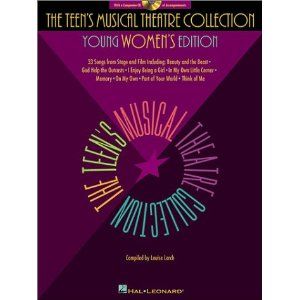
The Teen's Musical Theatre Collection: Young Women's Edition
(12/31/1969) These popular publications are compiled especially for the tastes and abilities of the talented teenage singer/actor. Songs span from classic stage musicals, to "the golden age of Hollywood," to the stage and cinema of the 1980s and '90s. Indispensible for teaching young singers, these book/CD packs also include notes on each selection.The Young Women's Edition includes 33 songs: Beauty and the Beast * Diamonds Are a Girl's Best Friend * Honey Bun * I Could Have Danced All Night * I Enjoy Being ... |
 |
|
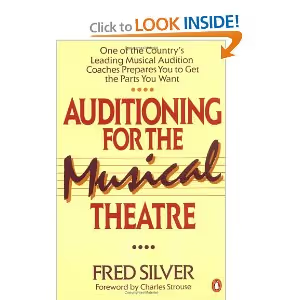
Auditioning for the Musical Theatre
(12/31/1969) Proven tactics and techniques from a leading New York vocal coach on how to "act" a song, choose the right material, handle a callback, what to wear, how to use eye contact, select a voice teacher and vocal coach, and more. Includes 130 excellent yet unusual audition songs for all types of situations and performers, including juveniles and dancers. |
 |
|
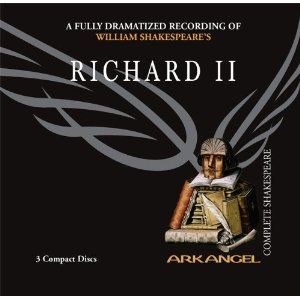
King Richard II
(12/31/1969) The sensitive and poetic Richard II is undoubtedly the rightful king of England, but he is unscrupulous and weak. When his cousin Henry Bolingbroke returns from banishment to usurp the crown, Richard's right to the throne proves of little help to him. Richard is forced to abdicate, but as his power is stripped away, he gains dignity and self-awareness, and he meets his death heroically. |
 |
|
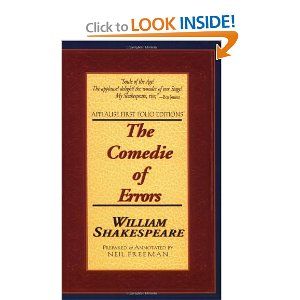
The Comedie of Errors
(12/31/1969) The Comedy of Errors is one of William Shakespeare's earliest plays. It is his shortest and one of his most farcical comedies, with a major part of the humour coming from slapstick and mistaken identity, in addition to puns and word play. The Comedy of Errors (along with The Tempest) is one of only two of Shakespeare's plays to observe the classical unities. It has been adapted for opera, stage, screen and musical theatre. The Comedy of Errors tells the story of two sets of identical twins that... |
 |
|
King Henry VI, Part 3
(12/31/1969) Henry VI, Part 3 or The Third Part of Henry the Sixt (often written as 3 Henry VI) is a history play by William Shakespeare believed to have been written in 1591, and set during the lifetime of King Henry VI of England. Whereas 1 Henry VI deals with the loss of England's French territories and the political machinations leading up to the Wars of the Roses, and 2 Henry VI focuses on the King's inability to quell the bickering of his nobles, and the inevitability of armed conflict, 3 Henry VI deal... |
 |
|
King Henry VI
(12/31/1969) Henry VI, Part 1 or The First Part of Henry the Sixt (often written as 1 Henry VI) is a history play by William Shakespeare, believed to have been written in 1591, and set during the lifetime of King Henry VI of England. Whereas 2 Henry VI deals with the King's inability to quell the bickering of his nobles, and the inevitability of armed conflict, and 3 Henry VI deals with the horrors of that conflict, 1 Henry VI deals with the loss of England's French territories and the political machination... |
 |
|
Henry V
(12/31/1969) Henry V is a historical play by William Shakespeare, written in 1599. It is based on the life of King Henry V of England, and focuses on events immediately before and after the Battle of Agincourt (1415) during the Hundred Years' War. The play is the final part of a tetralogy, preceded by Richard II, Henry IV, part 1 and Henry IV, part 2. The original audiences would thus have already been familiar with the title character, who was depicted in the Henry IV plays as a wild, undisciplined lad... |
 |
|
The Lamentable Tragedie of Titus Andronicus
(12/31/1969) Titus Andronicus is a tragedy by William Shakespeare that may be his earliest tragedy and is thought to have been written in the early 1590s. By far Shakespeare's bloodiest work, the play depicts a cycle of revenge between the Roman general Titus and his enemy Tamora, the Queen of the Goths. It lost popularity during the Victorian era because of its gore, but its critical reputation and popularity have recently revived. |
 |
|
Coriolanus
(12/31/1969) Shakespeare's last tragedy explores the career and death of a brilliant and arrogant Roman general. This is an ambitious and intriguing story of heroism. |
 |
|
The Merry Wives of Windsor
(12/31/1969) While emphasizing the liveliness of Shakespeare's play in stage terms, David Crane also claims that this citizen comedy needs to be taken as an expression of Shakespeare's fundamental understanding of human life, conveyed centrally in the character of Falstaff. In the process Crane also examines the bard's free and vigorous use of different linguistic worlds within the play. |
 |
|
Spunk
(12/31/1969) Zora Neale Hurston was an American folklorist, anthropologist, and author during the time of the Harlem Renaissance. Of Hurston's four novels and more than 50 published short stories, plays, and essays, she is best known for her 1937 novel Their Eyes Were Watching God. |
 |
|
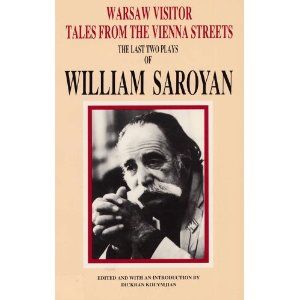
Warsaw Visitor, Tales from the Vienna Streets: The Last Two Plays of William Saroyan
(12/31/1969) Late in life Saroyan wrote: “In 1943 I turned my back on Broadway, but I did not stop writing plays… I wrote new plays every year… and they are part of the real American theatre, and of the real world theatre, even though they have not been produced, performed, and witnessed.” In fact, William Saroyan left some 150 unpublished plays, two of which are offered here. Typically Saroyan in their graceful, acrobatic use of language, these plays have a breadth, a universality, and a somber... |
 |
|
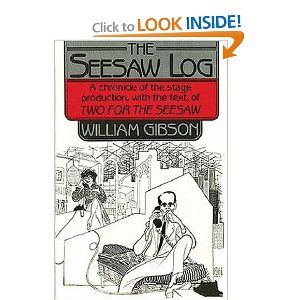
The Seesaw Log: A Chronicle of the Stage Production, with the Text, of Two for the Seesaw
(12/31/1969) A day-by-day candid account of the creativity, conflict and compromise involved in the making of a smash-hit Broadway play. |
 |
|
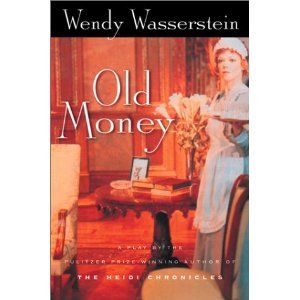
Old Money
(12/31/1969) Still best known for The Heidi Chronicles, which won a Tony Award and a Pulitzer Prize in 1989, Wasserstein is a comic and satirical playwright who has carved out a target area defined by wealth and the rarefied air of privilege. Poking fun at members of the American aristocracy is easy, but Wasserstein also makes us care about them as people. Old Money is no exception. This is a comedy of manners the kind of play that is funny if the manners are bad enough. It is set in fashionable Manhattan du... |
 |
|
Uncommon Women and Others
(12/31/1969) Comprised of a collage of interrelated scenes, the action begins with a reunion, six years after graduation, of five close friends and classmates at Mount Holyoke College. They compare notes on their activities since leaving school and then, in a series of flashbacks, we see them in their college days and learn of the events, some funny, some touching, some bitingly cynical, that helped to shape them. Each of the group is a distinct individual, and it is their varying reaction to the staid, shel... |
 |
Videos