


|
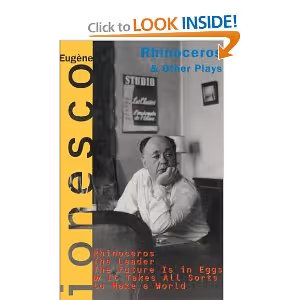
Rhinoceros, And Other Plays
(12/31/1969) Presents three dramatic works by the contemporary French experimental playwright: The Leader, The Future Is in Eggs or It Takes all Sorts to Make a World, and Rhinoceros |
 |
|
The Zoo Story and the Sandbox
(12/31/1969) The Zoo Story is American playwright Edward Albee's first play; written in 1958 and completed in just three weeks. It was originally titled Peter and Jerry. The play explores themes of isolation, loneliness, miscommunication as anathematization, social disparity and dehumanization in a commercial world. Initially the play was rejected by New York producers. Albee first had it staged in Europe, premiering in West Berlin at the Schiller Theater Werkstatt on September 28, 1959. In its first Ameri... |
 |
|
Plays, Movies, and Critics
(12/31/1969) This exceptional collection explores the mutual concerns of dramatic theater, film, and those who comment on them. Plays, Movies, and Critics opens with an original play by Don DeLillo. In the form of an interview, DeLillo's short play works as a kind of paradigm of the theatrical or cinematic event and serves as a keynote for the volume. DeLillo's interview play is accompanied in this collection by interviews with theater director Roberta Levitow, Martin Scorsese, and film/theater critic Stan... |
 |
|
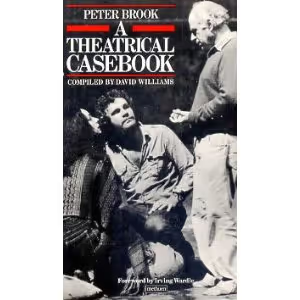
Peter Brook: A Theatrical Casebook
(12/31/1969) Peter Stephen Paul Brook CH, CBE (born 21 March 1925) is an English theatre and film director and innovator, who has been based in France since the early 1970s. |
 |
|
The Cabin: Reminiscence and Diversions
(12/31/1969) This pleasurable amalgam of travelogue and reminiscence explores Mamet's early years in Chicago and New York and his current life as a successful playwright. |
 |
|
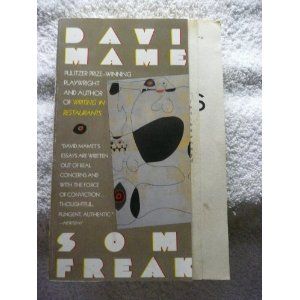
Some Freaks
(12/31/1969) A new collection of prose writings from the author of "Writing in Restaurants". Mamet discusses his parallel experience in cinema as screenwriter ("The Untouchables") and writer-director ("House of Games"). There are also pieces on being a Jew, politics, acting and Disneyland. |
 |
|
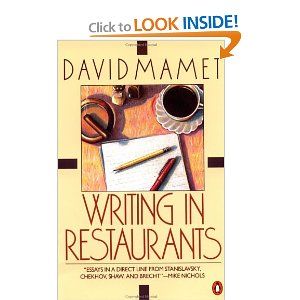
Writing in Restaurants
(12/31/1969) The title of Mamet's first collection of essays and speeches certainly doesn't suggest the themes of commitment and excellence. Nevertheless, if a collection of 28 essays on a variety of topics can be said to have an overarching theme or themes, then surely commitment and excellence sound clearly. These essays, apparently written over a considerable span of years, treat topics ranging from radio drama through middle-class fashion trends to the Academy Awards and the use of amplification in theat... |
 |
|
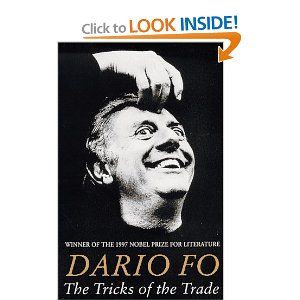
The Tricks of the Trade
(12/31/1969) When Dario Fo won the 1997 Nobel Prize for literature, establishments everywhere erupted in anger. Here was an anticlerical, obscene, communist clown receiving the world's top literary accolade. As this collection of his essays and lectures shows, Fo has such a unique vision that his mission as clown/playwright requires him to be all those other things. What's interesting about The Tricks of the Trade is not his politics, but the incredible amount of research he's done on 2,000 years' worth of ... |
 |
|
My Life in Art
(12/31/1969) Written with the same warmth, liveliness and ability to re-create reality that made Stanislavski a great actor, his autobiography tells of his childhood in the world of Moscow's wealthy merchants, his successes and failures as an amateur actor, how he studied human beings, and developed what has come to be known as the "Stanislavski Method," how his group of dedicated amateurs became "perhaps the greatest acting group the world has ever known (Washington Post)," The Moscow Art Theatre. |
 |
|
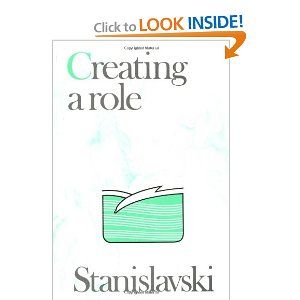
Creating A Role
(12/31/1969) This volume completes, with An Actor Prepares and Building a Character, the trilogy in which Stanislavski set down his life's accomplishment. Creating a Role describes the elaborate preparation that precedes actual performance. Stanislavski here relates the techniques he describes in his preceding books to analyzing specific plays and their roles. |
 |
|
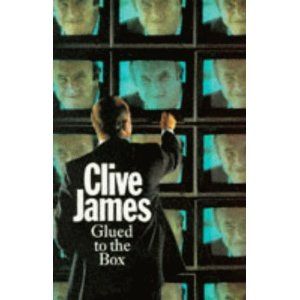
Glued to the Box: Television Criticism from the
(12/31/1969) Collection of the Australian-born writer's TV criticism published in the London 'Observer' during the period 1979-82. It is a paperback edition of a volume first published by Jonathan Cape in 1983. His earlier volumes of TV criticism are 'Visions Before Midnight' (1977 & 1981) and 'The Crystal Bucket' (1983). They were published in a single volume with a new introduction and index as 'Clive James on Television' (1991). |
 |
|
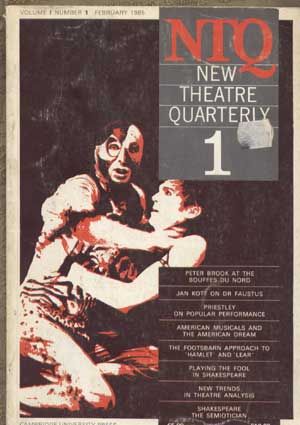
New Theatre Quarterly 15 (Part 3)
(12/31/1969) New Theatre Quarterly provides a vital international forum where theatrical scholarship and practice can meet and where prevailing dramatic assumptions can be subjected to vigorous critical questioning. It shows that theatre history has a contemporary relevance, that theatre studies need a methodology and that theatre criticism needs a language. The journal publishes news, analysis and debate within the field of theatre studies. |
 |
|
New Theatre Quarterly 14 (Part 2)
(12/31/1969) New Theatre Quarterly provides a vital international forum where theatrical scholarship and practice can meet and where prevailing dramatic assumptions can be subjected to vigorous critical questioning. It shows that theatre history has a contemporary relevance, that theatre studies need a methodology and that theatre criticism needs a language. The journal publishes news, analysis and debate within the field of theatre studies. |
 |
|
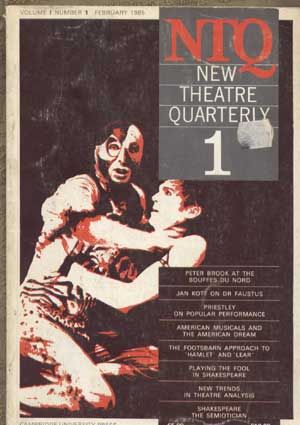
New Theatre Quarterly 13 (Part 1)
(12/31/1969) |
 |
|
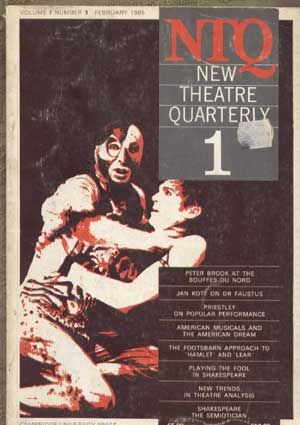
New Theatre Quarterly 11 (Part 3)
(12/31/1969) New Theatre Quarterly provides a vital international forum where theatrical scholarship and practice can meet and where prevailing dramatic assumptions can be subjected to vigorous critical questioning. It shows that theatre history has a contemporary relevance, that theatre studies need a methodology and that theatre criticism needs a language. The journal publishes news, analysis and debate within the field of theatre studies. |
 |
|
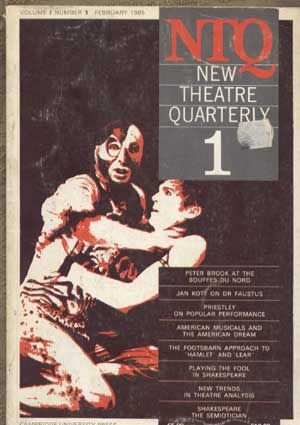
New Theatre Quarterly 10: Volume 3, Part 2
(12/31/1969) One of a series discussing topics of interest in theatre studies from theoretical, methodological, philosophical and historical perspectives. The books are aimed at drama and theatre teachers, advanced students in schools and colleges, arts authorities, actors, playwrights, critics and directors. |
 |
|
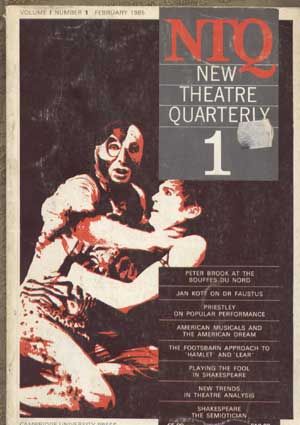
New Theatre Quarterly 12 (Part 4)
(12/31/1969) One of a series discussing topics of interest in theatre studies from theoretical, methodological, philosophical and historical perspectives. The books are aimed at drama and theatre teachers, advanced students in schools and colleges, arts authorities, actors, playwrights, critics and directors. --This text refers to an out of print or unavailable edition of this title. |
 |
|
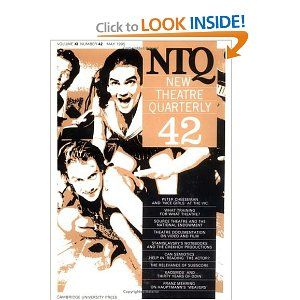
New Theatre Quarterly 42: Volume 11, Part 2
(12/31/1969) New Theatre Quarterly provides a valuable international forum where theatrical scholarship and practice can meet, and where prevailing dramatic assumptions can be subjected to vigorous critical questioning. It shows that theatre history has a contemporary relevance. |
 |
|
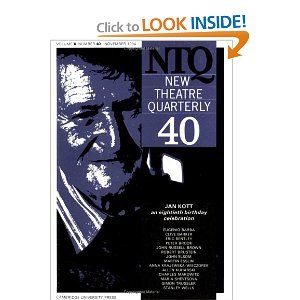
New Theatre Quarterly 40: Volume 10, Part 4
(12/31/1969) New Theatre Quarterly provides an international forum where theatrical scholarship and practice can meet, and where prevailing dramatic assumptions can be subjected to vigorous critical questioning. |
 |
|
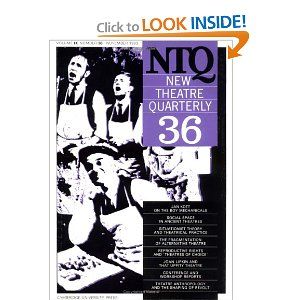
New Theatre Quarterly 36: Volume 9, Part 4
(12/31/1969) Providing an international forum for the discussion of topics of current interest in theatre studies, this edition of New Theatre Quarterly presents articles including the Gershwins in Britain; a discussion by Kott and Marowitz on 'Measure for Measure'; and Gramsci on Ibsen and Pirandello. |
 |
|
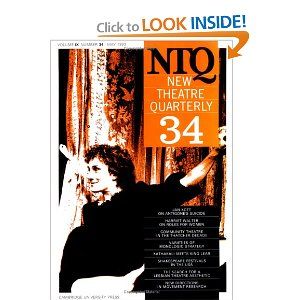
New Theatre Quarterly 34: Volume 9, Part 2
(12/31/1969) This is edition number 34 of the New Theatre Quarterly, which provides a lively international forum for discussion of topics of current interest in theatre studies, whether from the perspective of theory, methodology, philosophy or history. |
 |
|
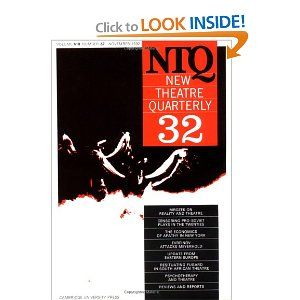
New Theatre Quarterly 32: Volume 8, Part 4
(12/31/1969) Part 32 of the New Theatre Quarterly, which provides a lively international forum for discussion of topics of current interest in theatre studies. This edition includes articles on and theatre versus reality, the economics of apathy, feminist theatre in Britain and more. |
 |
|
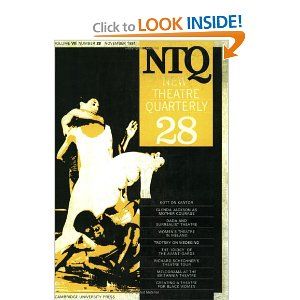
New Theatre Quarterly 28: Volume 7, Part 4
(12/31/1969) One of a series which discusses topics of interest in theatre studies from various perspectives. Part 28 includes discussions of 'Mother Courage' at the Citizens, 1990, by Margaret Eddershaw, and Wole Soyinka's 'Death and the King's Horseman', at the Royal Exchange, 1990, by Martin Banham. |
 |
|
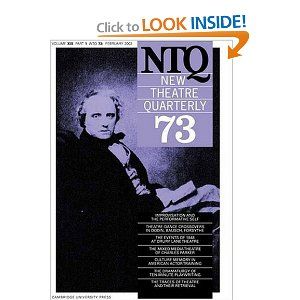
New Theatre Quarterly 26 (Part 2)
(12/31/1969) One of a series which discusses topics of interest in theatre studies from various perspectives. Part 26 includes reconstructions of John Barrymore's interpretation of 'Hamlet' and of Edward Booth's 'Jackets', and a discussion of sexuality and structure in expressionist drama. |
 |
|
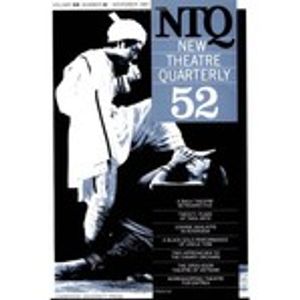
New Theatre Quarterly 25 (Part 1)
(12/31/1969) One of a series which discusses topics of interest in theatre studies from various perspectives. Part 25 includes an interview with Kaethe Ruelicke-Weiler on the artistic direction and management of the Berliner Ensemble, Bertolt Brecht and Helena Weigel. |
 |
|
New Theatre Quarterly 23 (Part 3)
(12/31/1969) One of a series discussing topics of interest in theatre studies from theoretical, methodological, philosophical and historical perspectives. The books are aimed at drama and theatre teachers, advanced students in schools and colleges, arts authorities, actors, playwrights, critics and directors. |
 |
|
New Theatre Quarterly 1 (Part 1)
(12/31/1969) New Theatre Quarterly provides a vital international forum where theatrical scholarship and practice can meet and where prevailing dramatic assumptions can be subjected to vigorous critical questioning. It shows that theatre history has a contemporary relevance, that theatre studies need a methodology and that theatre criticism needs a language. The journal publishes news, analysis and debate within the field of theatre studies. |
 |
|
New Theatre Quarterly 41: Volume 11, Part 1
(12/31/1969) New Theatre Quarterly provides a valuable international forum where theatrical scholarship and practice can meet, and where prevailing dramatic assumptions can be subjected to vigorous critical questioning. |
 |
|
New Theatre Quarterly 39: Volume 10, Part 3
(12/31/1969) New Theatre Quarterly provides a lively international forum where theatrical scholarship and practice can meet, and where prevailing dramatic assumptions can be subjected to vigorous critical questioning. It shows that theatre history has a contemporary relevance. |
 |
|
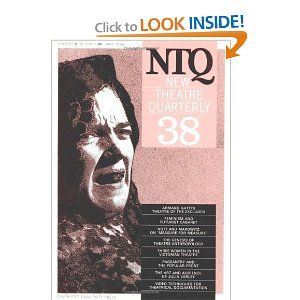
New Theatre Quarterly 38: Volume 10, Part 2
(12/31/1969) Topics in New Theatre Quarterly, 38, include Fulvia Guiliani, portrait of a futurist actress; ideological production and mass spectacle in popular front Britain; working in the margin: women in theatre history; Stanislavsky directing Chekhov; and the genesis of theatre anthropology. |
 |
|
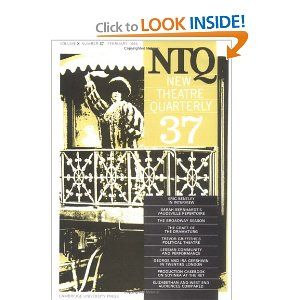
New Theatre Quarterly 37: Volume 10, Part 1
(12/31/1969) Based on a pair of comic dramas from ancient Rome, The Comedy of Errors presents a spectacle of pure farce in the spirit of utmost fun and - as the title suggests - hilarious confusion. Two sets of identical twins provide the basis for ongoing incidents of mistaken identity, within a lively plot of quarrels, arrests, and a grand courtroom denouement. One of Shakespeare's earliest dramatic efforts, the play abounds in his trademark conceits, puns, and other forms of fanciful wordplay. It also fo... |
 |
|
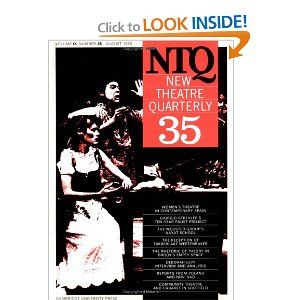
New Theatre Quarterly 35: Volume 9, Part 3
(12/31/1969) Provides an international forum for the discussion of topics of current interest in theatre studies. This issue includes articles on women and theatre in Spain; Sarah Bernhardt in Vaudeville; Giorgio Strehler's 'Faust' project; Deborah Levy in interview; and social space in ancient theatre. |
 |
|
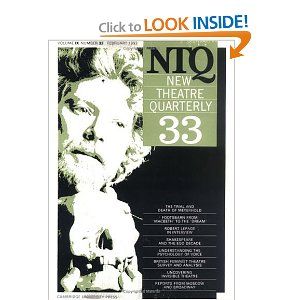
New Theatre Quarterly 33: Volume 9, Part 1
(12/31/1969) New Theatre Quarterly provides a lively international forum where theatrical scholarship and practice can meet, and where prevailing dramatic assumptions can be subjected to critical questioning. Articles in Volume 66 will include: Dario Fo, the Commune, and the Battle for the Palazzina Liberty; Dramaturgy according to Daedalus; 'Other' Spaces of Translation: the Theatre of Bernard-Marie Koltès; 'Everybody Got Their Brown Dress': Millennium Revivals of the Medieval Mysteries; 'Suffrage Shrews':... |
 |
|
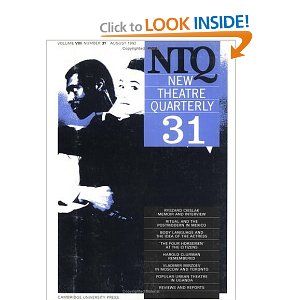
New Theatre Quarterly 31: Volume 8, Part 3
(12/31/1969) Part 31 of the New Theatre Quarterly, which provides a lively international forum for discussion of topics of current interest in theatre studies. This edition includes articles on 'The Four Horsemen' at the Citizen's Theatre, popular urban theatre in Uganda and body language. |
 |
|
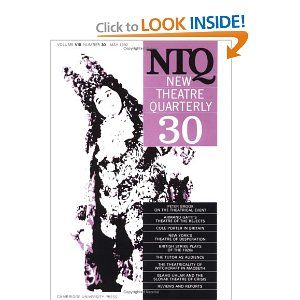
New Theatre Quarterly 30: Volume 8, Part 2
(12/31/1969) One of a series discussing topics of interest in theatre studies from theoretical, methodological, philosophical and historical perspectives. The books are aimed at drama and theatre teachers, advanced students in schools and colleges, arts authorities, actors, playwrights, critics and directors. |
 |
|
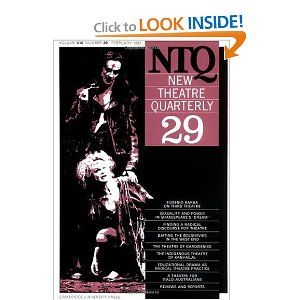
New Theatre Quarterly 29: Volume 8, Part 1
(12/31/1969) Part of a series which discusses topics of current interest in theatre studies, from the perspective of theory, methodology, philosophy or history. |
 |
|
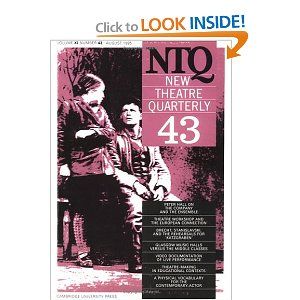
New Theatre Quarterly 43: Volume 11, Part 3
(12/31/1969) This journal provides a forum where theatrical scholarship and practice can meet and where dramatic assumptions can be questioned. It shows that theatre history has a contemporary relevance, that theatre studies need a methodology, and theatre criticism needs a language |
 |
|
AWAKE AND SING. A PLAY IN THREE ACTS
(12/31/1969) Awake and Sing! is a drama written by American playwright Clifford Odets. The play was initially produced by The Group Theatre in 1935. The play is set in The Bronx in 1933; it concerns the impoverished Berger family and their conflicts as the parents scheme to manipulate their children's relationships to their own ends, while their children strive for their own dreams. |
 |
|
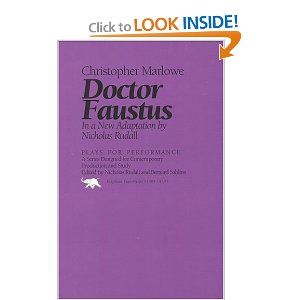
Doctor Faustus
(12/31/1969) Marlowe's classic treatment of the myth of man's greed and ambition has contemporary reverberations that make it compelling drama. Plays for Performance Series. |
 |
|
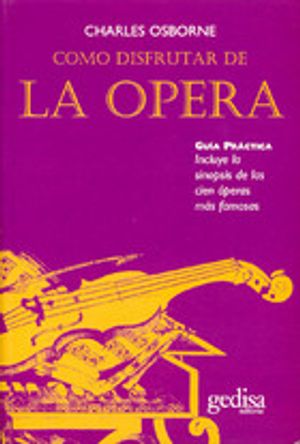
How to Enjoy Opera
(12/31/1969) Discusses the essential elements of opera, surveys the history of opera, and describes the plots of one hundred popular operas. |
 |
|
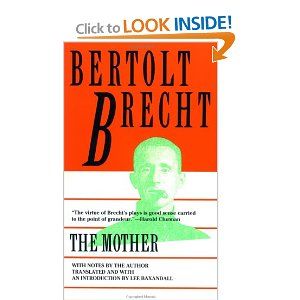
The Mother
(12/31/1969) The Mother is a play by the German modernist playwright Bertolt Brecht. It is based on Maxim Gorky’s 1906 novel of the same name. It was written in collaboration with Hanns Eisler, Slatan Dudow and Günter Weisenborn from 1930–31 in prose dialogue with unrhymed irregular free verse and ten initial songs in its score, with three more added later. It premièred at the Theater am Schiffbauerdamm in Berlin, opening on 17 January 1932. It was directed by Emil Burri and the scenic design was by... |
 |
|
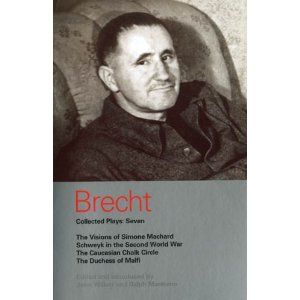
Visions of Simone Machard, The: Schweyk in the Second World War
(12/31/1969) Schweik in the Second World War is a play by German dramatist and poet Bertolt Brecht. It was written by Brecht in 1943 while in exile in California, and is a sequel to the 1923 novel The Good Soldier Švejk by Jaroslav Hašek. It is set in Prague and on the Russian Front during World War II. It is a satirical tale of a common man, Schweyk, who is forced into war and manages to survive. He overcomes dangerous situations in Gestapo Headquarters, a military prison, and a Voluntary Labor Service. ... |
 |
|
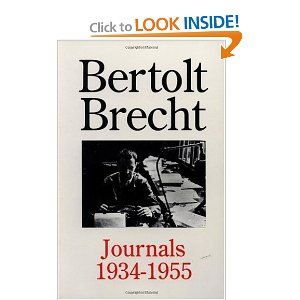
Bertolt Brecht: Journals 1934 - 1955
(12/31/1969) Bertolt Brecht's work journals trace his years of exile (the period from 1934 to 1955) in Denmark, Sweden, Finland, and America, as well as his return, via Switzerland, to East Berlin. These journals include his perceptive and at times polemical critiques of other writers and intellectuals, but the accounts of his own writing practice provide the greatest insights into the creation of his dramatic work as well as the development of his politics and theories about epic theatre. There are memora... |
 |
|
Saint Joan of the Stockyards
(12/31/1969) "A major Brecht play in an outstanding translation with an expert and up-to-date preface." -- Eric Bentley "... a fine translation.... Jones has handled Brecht's meters with great skill." -- Choice |
 |
|
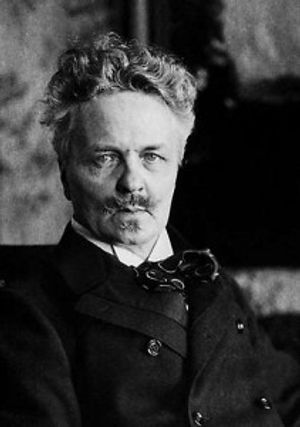
Open Letters to the Intimate Theater
(12/31/1969) Swedish playwright, novelist, and short-story writer, who combined in his works psychology, naturalism, and later elements of new literary forms. Strindberg was married three times – several of his plays drew on the problems of his marriages and reflected his constant interest in self-analysis. A sensitive and controversial writer, who suffered from hostile reviews, Strindberg represented the 19th-century ideal of artist as a free personality, unrestrained by convention. |
 |
|
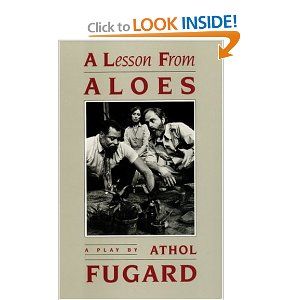
A Lesson from Aloes
(12/31/1969) The New Yorker has said of Athol Fugard, "A rare playwright, who could be a primary candidate for either the Nobel Prize in Literature or the Nobel Peace Prize." His major works for the stage include: Blood Knot; "Master Harold"...and the boys; My Children! My Africa!; A Lesson from Aloes; The Road to Mecca; Valley Song; and The Captain's Tiger. |
 |
|
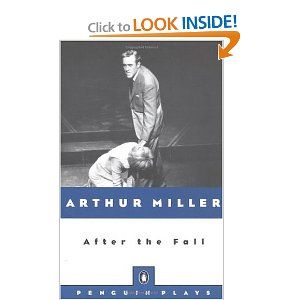
After the Fall: A Play in Two Acts
(12/31/1969) A lost character draws upon events in his past as he searches for life's meaning in Miller's powerful play. |
 |
|
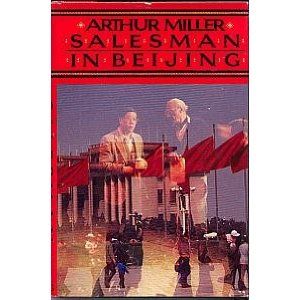
Salesman in Beijing
(12/31/1969) " In 1983 Arthur Miller was invited to direct a Chinese version of his play, "Death of a Salesman." "Salesman in Beijing" is his day by day account of his experience. Most of the book focuses on the problems of communication with the Chinese actors as a result of linguistic and cultural differences. He feels that he was able to overcome these difficulties because of the dedication of the actors and the fact that the play itself deals with universal qualities that transcend local culture. He ... |
 |
|
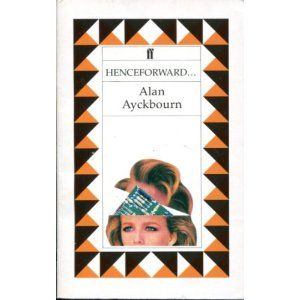
Henceforward
(12/31/1969) Starring Anne Heche and Jared Harris, the hilarious Henceforward... is one of Alan Ayckbourn s most unusual works. In the not-so-distant future a composer is building a female robot to act as his fiancée, so that he can convince his ex-wife that their daughter should come live with him. Thus, he hopes to overcome his writers block and redress the pain of his past. A full-cast performance featuring: Jack Davenport, Jared Harris, Anne Heche, Paula Jane Newman, Moira Quirk and Darren Richardson... |
 |
|
Agamemnon
(12/31/1969) Purchase of this book includes free trial access to www.million-books.com where you can read more than a million books for free. This is an OCR edition with typos. Excerpt from book: And wept; while visioned in the light Of her own loveliness, more bright Than pictured breathing form that is but mute, She looked as though she wished, with that pure voice, That oft her father's halls along, Had made full many a chieftain there rejoice, To speak to that assembled throng. STROPHE IV. Yes! at those... |
 |
Videos