


|
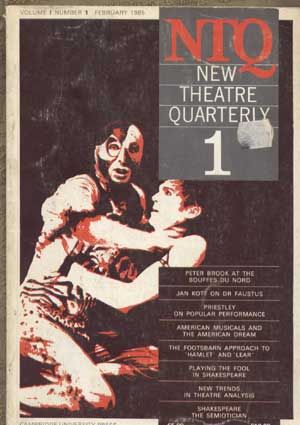
New Theatre Quarterly 13 (Part 1)
(12/31/1969) |
 |
|
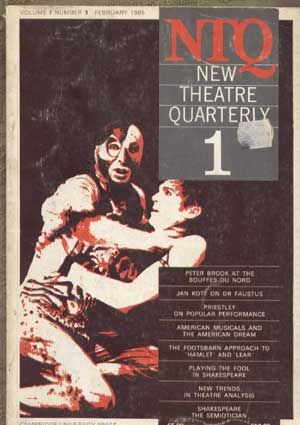
New Theatre Quarterly 11 (Part 3)
(12/31/1969) New Theatre Quarterly provides a vital international forum where theatrical scholarship and practice can meet and where prevailing dramatic assumptions can be subjected to vigorous critical questioning. It shows that theatre history has a contemporary relevance, that theatre studies need a methodology and that theatre criticism needs a language. The journal publishes news, analysis and debate within the field of theatre studies. |
 |
|
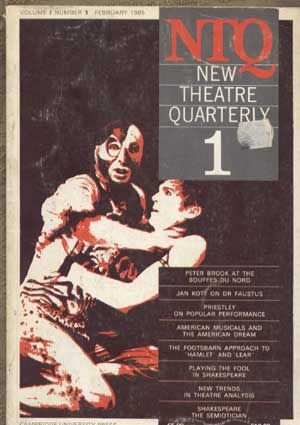
New Theatre Quarterly 10: Volume 3, Part 2
(12/31/1969) One of a series discussing topics of interest in theatre studies from theoretical, methodological, philosophical and historical perspectives. The books are aimed at drama and theatre teachers, advanced students in schools and colleges, arts authorities, actors, playwrights, critics and directors. |
 |
|
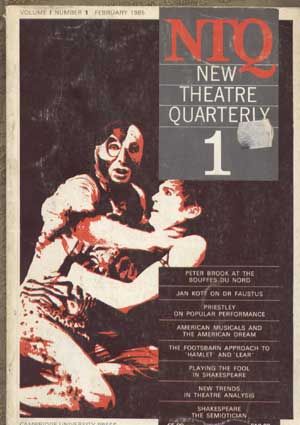
New Theatre Quarterly 12 (Part 4)
(12/31/1969) One of a series discussing topics of interest in theatre studies from theoretical, methodological, philosophical and historical perspectives. The books are aimed at drama and theatre teachers, advanced students in schools and colleges, arts authorities, actors, playwrights, critics and directors. --This text refers to an out of print or unavailable edition of this title. |
 |
|
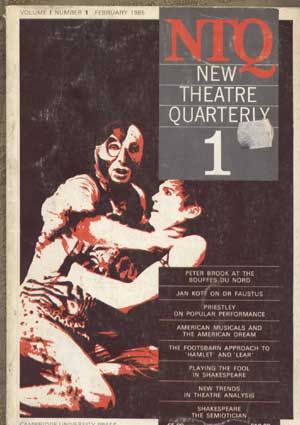
New Theatre Quarterly 1 (Part 1)
(12/31/1969) New Theatre Quarterly provides a vital international forum where theatrical scholarship and practice can meet and where prevailing dramatic assumptions can be subjected to vigorous critical questioning. It shows that theatre history has a contemporary relevance, that theatre studies need a methodology and that theatre criticism needs a language. The journal publishes news, analysis and debate within the field of theatre studies. |
 |
|
AWAKE AND SING. A PLAY IN THREE ACTS
(12/31/1969) Awake and Sing! is a drama written by American playwright Clifford Odets. The play was initially produced by The Group Theatre in 1935. The play is set in The Bronx in 1933; it concerns the impoverished Berger family and their conflicts as the parents scheme to manipulate their children's relationships to their own ends, while their children strive for their own dreams. |
 |
|
How to Enjoy Opera
(12/31/1969) Discusses the essential elements of opera, surveys the history of opera, and describes the plots of one hundred popular operas. |
 |
|
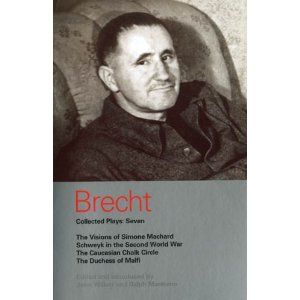
Visions of Simone Machard, The: Schweyk in the Second World War
(12/31/1969) Schweik in the Second World War is a play by German dramatist and poet Bertolt Brecht. It was written by Brecht in 1943 while in exile in California, and is a sequel to the 1923 novel The Good Soldier Švejk by Jaroslav Hašek. It is set in Prague and on the Russian Front during World War II. It is a satirical tale of a common man, Schweyk, who is forced into war and manages to survive. He overcomes dangerous situations in Gestapo Headquarters, a military prison, and a Voluntary Labor Service. ... |
 |
|
Saint Joan of the Stockyards
(12/31/1969) "A major Brecht play in an outstanding translation with an expert and up-to-date preface." -- Eric Bentley "... a fine translation.... Jones has handled Brecht's meters with great skill." -- Choice |
 |
|
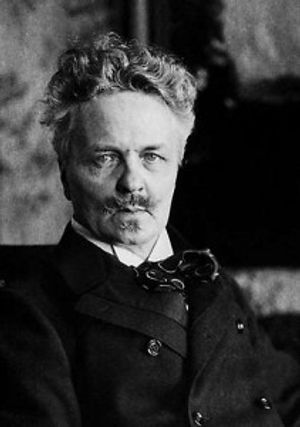
Open Letters to the Intimate Theater
(12/31/1969) Swedish playwright, novelist, and short-story writer, who combined in his works psychology, naturalism, and later elements of new literary forms. Strindberg was married three times – several of his plays drew on the problems of his marriages and reflected his constant interest in self-analysis. A sensitive and controversial writer, who suffered from hostile reviews, Strindberg represented the 19th-century ideal of artist as a free personality, unrestrained by convention. |
 |
|
After the Fall: A Play in Two Acts
(12/31/1969) A lost character draws upon events in his past as he searches for life's meaning in Miller's powerful play. |
 |
|
Salesman in Beijing
(12/31/1969) " In 1983 Arthur Miller was invited to direct a Chinese version of his play, "Death of a Salesman." "Salesman in Beijing" is his day by day account of his experience. Most of the book focuses on the problems of communication with the Chinese actors as a result of linguistic and cultural differences. He feels that he was able to overcome these difficulties because of the dedication of the actors and the fact that the play itself deals with universal qualities that transcend local culture. He ... |
 |
|
Henceforward
(12/31/1969) Starring Anne Heche and Jared Harris, the hilarious Henceforward... is one of Alan Ayckbourn s most unusual works. In the not-so-distant future a composer is building a female robot to act as his fiancée, so that he can convince his ex-wife that their daughter should come live with him. Thus, he hopes to overcome his writers block and redress the pain of his past. A full-cast performance featuring: Jack Davenport, Jared Harris, Anne Heche, Paula Jane Newman, Moira Quirk and Darren Richardson... |
 |
|
Cats: The Book of the Musical
(12/31/1969) A richly illustrated book that re-creates the making of one of Broadway’s biggest hits, based on Eliot’s Old Possum’s Book of Practical Cats. Color photographs and drawings by John Napier. |
 |
|
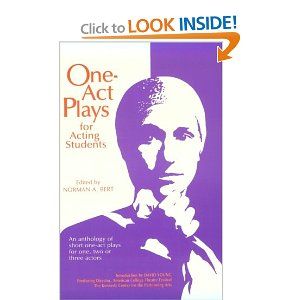
One Act Plays for Acting Students: An Anthology of Short One-Act Plays for One, Two or Three Actors
(12/31/1969) 23 short length plays for a cast of one, two, or three. 5 minutes acting time for each character. Performance times vary from 8-15 minutes. |
 |
|
A Short History of Opera
(12/31/1969) When first published in 1947, A Short History of Opera immediately achieved international status as a classic in the field. Now, more than five decades later, this thoroughly revised and expanded fourth edition informs and entertains opera lovers just as its predecessors have. The fourth edition incorporates new scholarship that traces the most important developments in the evolution of musical drama. After surveying anticipations of the operatic form in the lyric theater of the Greeks, medi... |
 |
|
Master Teachers of Theatre: Observations on Teaching Theatre by Nine American Masters
(12/31/1969) Claribel Baird reviews the interpretation of classical texts for theatrical performance. Howard Bay interrupted his stage design career of more than 150 Broadway productions to help students. Bernard Beckerman asks if there are approaches to the teaching of dramatic literature that particularly suit drama-as-theatre. Robert Benedetti offers suggestions on the teaching of acting. Oscar Brockett treats the problems of the theatre teacher and the processes of learning. Agnes Haaga shows that the ... |
 |
|
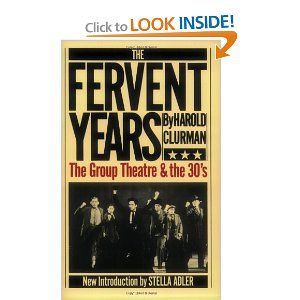
The Fervent Years: The Group Theatre And The Thirties
(12/31/1969) The Group Theatre was perhaps the most significant experiment in the history of American theater. Producing plays that reflected topical issues of the decade and giving a creative chance to actors, directors, and playwrights who were either fed up with or shut out of commercial theater, the ”Group” remains a permanent influence on American drama despite its brief ten-year life. It was here that method acting, native realism, and political language had their tryouts in front of audiences who... |
 |
|
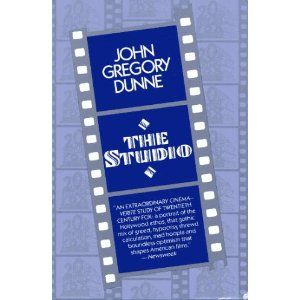
The Studio
(12/31/1969) In 1967, John Gregory Dunne asked for unlimited access to the inner workings of Twentieth Century Fox. Miraculously, he got it. For one year Dunne went everywhere there was to go and talked to everyone worth talking to within the studio. He tracked every step of the creation of pictures like "Dr. Dolittle," "Planet of the Apes," and "The Boston Strangler." The result is a work of reportage that, thirty years later, may still be our most minutely observed and therefore most uproariously funny po... |
 |
|
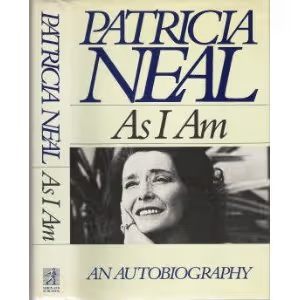
AS I AM
(12/31/1969) By age 21 the self-confident, determined, Southern-bred actress had starred in a Broadway hit, won a Tony, was "the toast of New York" and was featured on a Life coveronly the first of many triumphs in a celebrity life. In this account written "to reclaim the past that was stolen," Neal writes candidly about her numerous love affairs, both transient and profound, such as a liaison with Gary Cooper and her 25-year marriage to writer Roald Dahl. More arresting are the tragedies that beset her, in... |
 |
|
Don Giovanni
(12/31/1969) Standard Italian libretto, with complete English translation. Convenient and thoroughly portable—an ideal companion for reading along with a recording or the performance itself. Introduction. List of Characters. Plot Summary. |
 |
|
A Source Book in Theatrical History: Twenty-five centuries of stage history in more than 300 basic documents and other primary material
(12/31/1969) A rich resource for students of theater and theater historians, this volume features an annotated collection of more than 300 unusually interesting and detailed articles. Passages by contemporary observers from ancient Greece to modern times include notes on acting, directing, make-up, costuming, stage props, machinery, scene design, and much more. |
 |
|
Later Plays Of Eugene O'Neill
(12/31/1969) Eugene Gladstone O'Neill (16 October 1888 – 27 November 1953) was an American playwright, and Nobel laureate in Literature. His poetically titled plays were among the first to introduce into American drama techniques of realism earlier associated with Russian playwright Anton Chekhov, Norwegian playwright Henrik Ibsen, and Swedish playwright August Strindberg. His plays were among the first to include speeches in American vernacular and involve characters on the fringes of society, where they... |
 |
|
Godspell: Vocal Selections
(12/31/1969) 13 vocal selections from the perennial favorite, including the songs: All Good Gifts * By My Side * Day by Day * Learn Your Lessons Well * O Bless the Lord, My Soul * Prepare Ye (The Way of the Lord) * and more. |
 |
|
The Harold Arlen Songbook (P/V/G Composer Collection)
(12/31/1969) A "must-own" collection of 76 songs of Harold Arlen. Includes his major works and some previously unpublished titles. Highlights include: Come Rain or Come Shine * Get Happy * Let's Fall in Love * The Man That Got Away * Over the Rainbow * Stormy Weather * and more! |
 |
|
1776: A Musical Play
(12/31/1969) 1776 The musical was produced on Broadway in 1969, running for 1,217 performances, and was made into a film of the same name in 1972. The show was nominated for five Tony Awards and won three, including Best Musical. |
 |
|
24 Favorite One Act Plays
(12/31/1969) Two dozen classic dramas by some of the finest and most famous playwrights of the last hundred years--Anton Chekhov, Noel Coward, Oscar Wilde, Arthur Miller, and A.A. Milne. |
 |
|
Guys and Dolls: Vocal Selections
(12/31/1969) 12 vocal selections from the Broadway staple, including: Adelaide's Lament * A Bushel and a Peck * Fugue for Tinhorns * Guys and Dolls * I've Never Been in Love Before * If I Were a Bell * Luck Be a Lady * Sit down You're Rockin' the Boat * and more. |
 |
|
Jesus Christ Superstar: A Rock Opera (Vocal Selections)
(12/31/1969) Highly acclaimed show by Andrew Lloyd Webber and Tim Rice. Songs include: HEAVEN ON THEIR MINDS . EVERYTHING'S ALRIGHT . HOSANNA . PILATE'S DREAM . I DON'T KNOW HOW TO LOVE HIM . THE LAST SUPPER ;. I ONLY WANT TO SAY (GETHSEMANE) . KING HEROD'S SONG . SUPERSTAR |
 |
|
Prometheus Bound and Other Plays: Prometheus Bound, The Suppliants, Seven Against Thebes, The Persian
(12/31/1969) Aeschylus (525-456 BC) brought a new grandeur and epic sweep to the drama of classical Athens, raising it to the status of high art. In "Prometheus Bound", the defiant Titan Prometheus is brutally punished by Zeus for daring to improve the state of wretchedness and servitude in which mankind is kept. "The Suppliants" tells the story of the fifty daughters of Danaus who must flee to escape enforced marriages, while "Seven Against Thebes" shows the inexorable downfall of the last members of the c... |
 |
|
The Definitive Broadway Collection
(12/31/1969) This is simply the best and most comprehensive collection of Broadway music ever collected! 142 of the greatest show tunes compiled into one volume - this is one book that every Broadway lover must have! Songs include: Don't Cry for Me Argentina * Edelweiss * Hello, Dolly! * I Could Have Danced All Night * I Dreamed a Dream * I Know Him So Well * Lullabye of Broadway * Mack the Knife * People * Send in the Clowns * Somewhere * Summertime * Sunrise, Sunset * Tomorrow * What Kind of Fool Am I? * ... |
 |
|
The Actor's scenebook: Scenes and monologues from contemporary plays
(12/31/1969) Schulman and Mekler provide 78 new, fully playable scenes with story notes, including more monologues for men and women from today's best new plays. A diverse selection of scenes and characters to challenge the full range of readers' talents as actors. |
 |
|
No Acting Please
(12/31/1969) No Acting Please-Beyond the Method a Revolutionary Approach to Acting and Living. Foreword by Jack Nicholson |
 |
|
The Best Broadway Songs Ever
(12/31/1969) We've made this book even better with the addition of songs from some of Broadway's latest blockbusters such as Miss Saigon, The Phantom of the Opera, Aspects of Love, Les Miserables, and more - over 70 songs in all! Highlights include: All I Ask of You * As Long As He Needs Me * Bess, You Is My Woman * Bewitched * Camelot * Climb Ev'ry Mountain * Comedy Tonight * Don't Cry for Me Argentina * Everything's Coming Up Roses * Getting to Know You * I Could Have Danced All Night * I Dreamed a Dream *... |
 |
|
The Actor's Book of Contemporary Stage Monologues
(12/31/1969) This is the only book that offers a comprehensive collection of contemporary stage monologues for a complete range of roles. An invaluable tool for actors looking for new audition material or for anyone interested in theater. |
 |
|
The Beggar's Opera
(12/31/1969) Written in 1728, John Gay’s opera caricatures society, marriage and Italian operatic style in this comic satire which is considered revolutionary because it took on poverty and corruption as its subject as told by the thieves, prostitutes and villains of the slums and prisons of 18th century London. The lyrics were set to famous songs the day making it hugely popular with audiences and a radical departure from traditional opera. Bertolt Brech and Kurt Weill’s The Threepenny Opera is based on... |
 |
|
Performance Art: From Futurism to the Present
(12/31/1969) Performance is in some sense a combination of theater, dance, mime, concept art, music, and-today-even video; it can be simply defined as live art by artists. Goldberg discusses its origins in tribal rituals and passion plays and its twentieth-century revival by the Futurists. Surrealists, Dadaists, and Bauhaus artists. |
 |
|
Les Miserables: Vocal / Piano Selections
(12/31/1969) This terrific songbook features 14 vocal selections from the beloved Broadway musical: At the End of the Day * Bring Him Home * Castle on a Cloud * Do You Hear the People Sing? * Drink with Me (To Days Gone By) * Empty Chairs at Empty Tables * A Heart Full of Love * I Dreamed a Dream * In My Life * A Little Fall of Rain * Master of the House * On My Own * Stars * Who Am I?. Also includes beautiful full-color photos from the production. |
 |
|
Theater Games for the Classroom: A Teacher's Handbook
(12/31/1969) Based on the best-selling book by Viola Spolin, this new CD-ROM of Theater Games for the Classroom offers the most comprehensive theater instruction for all types of students, from small children to young adults. It includes over 130 theater games and exercises, instructional strategies, video examples, a lesson planning section, alignment to other curricular areas, and alignment to California Theatre Arts standards. First developed by Spolin, the originator of modern improvisational theater tec... |
 |
|
The Sound of Music: Vocal Selections
(12/31/1969) 11 songs: Climb Ev'ry Mountain * Do-Re-Mi * Edelweiss * I Have Confidence * The Lonely Goatherd * Maria * My Favorite Things * Sixteen Going on Seventeen * So Long, Farewell * Something Good * The Sound of Music. |
 |
|
Sense of Direction: Some Observations on the Art of Directing
(12/31/1969) By the founder of the famous American Conservatory Theatre (A.C.T.) in San Francisco - a candid account of his working method as a director. A Sense of Direction represents a life's work in directing. William Ball engages his audience in a wide-ranging discussion of the director's process, from first read-through to opening night. An informative, insightful, and often astonishingly clear look at the the process of making theatre. |
 |
|
Scene Design and Stage Lighting
(12/31/1969) Stressing recent innovations in stage lighting, the authors reveal the techniques and skills involved in designing sets for theatrical productions. |
 |
|
Designing with Light: An Introduction to Stage Lighting
(12/31/1969) This comprehensive survey of the practical and aesthetic aspects of basic stage lighting design treats its subject as an art closely integrated with that of the director, actor, and playwright, and as a craft that provides practical solutions for the manipulation of stage space. An eight-page color section provides a discussion of the practical applications of color theory as well as an analysis of the color choices for the lighting design of an actual production. Numerous illustrations of techn... |
 |
|
The Pot of Gold and Other Plays
(12/31/1969) One of the supreme comic writers of the Roman world, Plautus (c.254–184 BC), skilfully adapted classic Greek comic models to the manners and customs of his day. This collection features a varied selection of his finest plays, from the light-hearted comedy Pseudolus, in which the lovesick Calidorus and his slave try to liberate his lover from her pimp, to the more subversive The Prisoners, which raises serious questions about the role of slavery. Also included are The Brothers Menaechmus, which... |
 |
|
The Stanislavski System: The Professional Training of an Actor
(12/31/1969) This clearly written guide to the Stanislavski method has long been a favorite among students and teachers of acting. Now, in light of books and articles recently published in the Soviet Union, Sonia Moore has made revisions that include a new section on the subtext of a role. She provides detailed explanations of all the methods that actors in training have found indispensable for more than twenty years. Designed to create better actors, this guide will put individuals in touch with themselves... |
 |
|
An Unsocial Socialist
(12/31/1969) An Unsocial Socialist was published in 1887, having been written in 1883. The tale begins with a humorous description of student antics at a girl's school then changes focus to a seemingly uncouth laborer who, it soon develops, is really a wealthy gentleman in hiding from his overly affectionate wife. He needs the freedom gained by matrimonial truancy to promote the socialistic cause, to which he is an active convert. Once the subject of socialism emerges, it dominates the story, allowing only ... |
 |
|
Impro: Improvisation and the Theatre
(12/31/1969) Impro ought to be required reading not only for theatre people generally but also for teachers, educators, and students of all kinds and persuasions. Readers of this book are not going to agree with everything in it; but if they are not challenged by it, if they do not ultimately succumb to its wisdom and whimsicality, they are in a very sad state indeed . . . .Johnstone seeks to liberate the imagination, to cultivate in the adult the creative power of the child . . . .Deserves to be widely read... |
 |
|
Sanford Meisner on Acting
(12/31/1969) Meisner, a member of the Theater Guild and the Group Theater, has devoted most of 50 years to teaching acting and is one of the great unsung resources in American theater. This book is not an acting text, but a journal of a 15-month course taken by 16 adult actors. We follow them as they progress from early exercises through preparation to detailed scene work. Meisner emphasizes emotional truth and acting as the reality of doing. His students find the course difficult, but most improve markedly.... |
 |
|
Rosencrantz and Guildenstern Are Dead
(12/31/1969) Rosencrantz and Guildenstern Are Dead is an absurdist, existentialist tragicomedy by Tom Stoppard, first staged at the Edinburgh Festival Fringe in 1966. The play expands upon the exploits of two minor characters from Shakespeare's Hamlet, the courtiers Rosencrantz and Guildenstern. The action of Stoppard's play takes place mainly "in the wings" of Shakespeare's, with brief appearances of major characters from Hamlet who enact fragments of the original's scenes. Between these episodes the two ... |
 |
|
Environmental Theater
(12/31/1969) Here are the exercises which began as radical departures from standard actor training etiquette and which stand now as classic means through which the performer discovers his or her true power of transformation. Available for the first time in fifteen years, this new expanded edition offers a new generation of theater artists the gospel according to Richard Schechner, the guru whose principles and influence have influenced a quarter century of theater. |
 |
Videos