


|
Theatre World 1994-1995, Vol. 51
(1/1/2000) Theatre World, the statistical and pictorial record of the Broadway and off-Broadway season, touring companies, and professional regional companies throughout the United States, has become a classic in its field. The book is complete with cast listings, replacement producers, directors, authors, composers, opening and closing dates, song titles, and much, much more. There are special sections with biographical data, obituary information, listings of annual Shakespeare festivals and major drama a... |
 |
|
Theatre World 1993-1994, Vol. 50
(1/1/2000) Theatre World, the statistical and pictorial record of the Broadway and off-Broadway season, touring companies, and professional regional companies throughout the United States, has become a classic in its field. The book is complete with cast listings, replacement producers, directors, authors, composers, opening and closing dates, song titles, and much, much more. There are special sections with biographical data, obituary information, listings of annual Shakespeare festivals and major drama a... |
 |
|
The Social Significance of Modern Drama
(1/1/2000) Out of print virtually since its completion in 1914, Emma Goldman's pioneer work Social Significance in Modern Drama bridges modern drama and political philosophy, pointing out the road that remains to be travelled toward a theatre of social empowerment. Activist, feminist, philosopher and anarchist, Emma Goldman was a passionate thinker about all things modern when the 20th century was still raw and new. The emergence of her treatise on the theatre after years of obscurity is certain to arouse ... |
 |
|
What's It All About
(1993) He was born Maurice Joseph Micklewehite in London's impoverished East End. And yet Michael Caine emerged as one of the world's most versatile, enduring, and beloved actors of our time. With the easy charm of a natural raconteur, Caine takes us onto the sets and into the homes of Hollywood's most talented celebrities. Candid, vibrant, and warm, here is a captivating self-portrait of a man who is at once sublimely ordinary and freshingly unique, one of the greatest actors in film today. |
 |
|
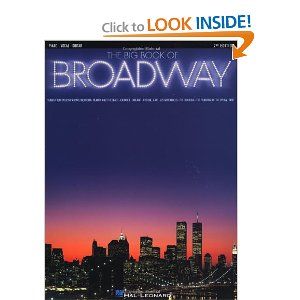
The Big Book of Broadway
(1994) This 2003 revised edition includes 70 songs from classic musicals to recent blockbusters like The Producers, Aida and Hairspray. Includes: All I Ask of You * Bring Him Home * Camelot * Elaborate Lives * Everything's Coming up Roses * If I Loved You * The Impossible Dream (The Quest) * A Lot of Livin' to Do * One * Some Enchanted Evening * Tell Me on a Sunday * Thoroughly Modern Millie * Till There Was You * What I Did for Love * and more. |
 |
|
Performance Success : Performing Your Best Under Pressure (Theatre Arts)
(2001) Performance Success teaches a set of skills so that a musician can be ready to go out and sing or play at his or her highest level, working with energies that might otherwise be wasted in unproductive ways. This is a book of skills and exercises, prepared by a master teacher. |
 |
|
The Actor's scenebook: Scenes and monologues from contemporary plays
(1984) Schulman and Mekler provide 78 new, fully playable scenes with story notes, including more monologues for men and women from today's best new plays. A diverse selection of scenes and characters to challenge the full range of readers' talents as actors. |
 |
|
The Sanford Meisner Approach: An Actors Workbook
(1994) Founding member of the famed Group Theater and friend, colleague, and later rival to Lee Strasberg, Sanford Meisner spent his life teaching a variation of the Stanislavsky-based Method acting that brought Strasberg so much fame. In this clearly written introduction to Meisner's techniques, Silverberg, himself a graduate of Meisner's Neighborhood Playhouse School of Theater, outlines a 15-week program of exercises designed by Meisner to help actors approach each performance with the playful spon... |
 |
|
A Year with the Producers: One Actor's Exhausting (But Worth It) Journey from Cats to Mel Brooks' Mega-Hit
(2002) In the summer of 2000, Denman, an actor in New York for eight years, set his heart on appearing in Brooks's much-hyped musical, ignoring New York Post gossip writer Michael Riedel's acerbic comment that it "[h]as all the makings of a floperoo." Here, Denman offers a candid one-year diary of his experiences as singer, dancer and understudy in the production. His style is breezy and refreshingly honest, charting each step from audition to opening night. Winning over director Susan Stroman was the... |
 |
|
The Playwright's Guidebook: An Insightful Primer on the Art of Dramatic Writing
(2002) A practical compendium based on author Stuart Spencer's experience crafting plays (Resident Alien; The Rothko Room; etc.) and teaching at Sarah Lawrence College, The Playwright's Guidebook offers counsel on issues like structure, conflict, character and problem-solving. This contemporary guide fills the gaps left open by many books, supplying organized and realistic advice for would-be playwrights. As Spencer says, "A play is more wrought than written. A playwright constructs a play as a wheelw... |
 |
|
On Method Acting
(1989) Practiced by such actors of stature as Marlon Brando, Robert De Niro, Julie Harris, Dustin Hoffman, and Ellen Burstyn (not to mention the late James Dean) the Method offers a practical application of the renowned Stanislavsky technique. On Method Acting demystifies the "mysteries" of Method acting -- breaking down the various steps into clear and simple terms, including chapters on: Sense Memory -- the most vital component of Method acting Improvisation -- without it, the most integral p... |
 |
|
Drafting for the Theatre
(1992) This process-oriented text—supplemented by 280 illustrations—is structured to provide students with a proper and practical approach to the development of drafting and related skills for the theatre. Dennis Dorn and Mark Shanda emphasize the standard drafting and designing practices of the theatre industry through a series of projects and exercises that help the student in the development of research skills. The early sessions focus on the basics of lettering, tool introduction, geometric... |
 |
|
The Playboy of the Western World and Riders to the Sea
(1993) Two beautifully crafted dramas set among the folk of the Aran Islands and western Irish coastlands. The Playboy of the Western World deals with its young hero’s progress, in the eyes of others, from timid weakling to paragon of bravery. Riders to the Sea is a dark elegy to the fragile existence of those who live at the mercy of the sea. Reprinted from authoritative editions, complete with Synge’s preface to The Playboy of the Western World. New introductory Note. |
 |
|
Travesties
(1994) Travesties was born out of Stoppard's noting that in 1917 three of the twentieth century's most crucial revolutionaries -- James Joyce, the Dadaist founder Tristan Tzara, and Lenin -- were all living in Zurich. Also living in Zurich at this time was a British consula official called Henry Carr, a man acquainted with Joyce through the theater and later through a lawsuit concerning a pair of trousers. Taking Carr as his core, Stoppard spins this historical coincidence into a masterful and riotous... |
 |
|
The Right to Speak: Working with the Voice
(1993) In The Right to Speak, renowned voice teacher Patsy Rodenburg teaches you how to meet any speaking challenge with total self-assurance. Rodenburg has trained thousands of actors, singers, media personalities, lawyers, politicians, business people, teachers and students in the art of using their voice fully and expressively without fear. She has taught them how to breathe, how to support their breath, how to stretch their voice to meet any vocal effort and how to have total confidence in whatever... |
 |
|
The Seagull
(2002) When it opened in St Petersburg in 1896, The Seagull survived only five performances after a disastrous first night. Two years later it was revived by Nemirovich-Danchenko at the newly-founded Moscow Art Theatre with Stanslasky as Trigorin and was an immediate success. Checkhov's description of the play was characteristically self-mocking: "A comedy - 3F, 6M, four acts, rural scenery (a view over a lake); much talk of literature, little action, five bushels of love". |
 |
|
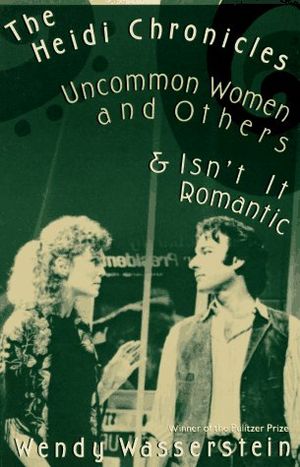
The Heidi Chronicles
(1991) The graduating seniors of a Seven Sisters college, trying to decide whether to pattern themselves after Katharine Hepburn or Emily Dickinson. Two young women besieged by the demands of mothers, lovers, and careers--not to mention a highly persistent telephone answering machine--as they struggle to have it all. A brilliant feminist art historian trying to keep her bearings and her sense of humor on the elevator ride from the radical sixties to the heartless eighties. |
 |
|
Voice and the Actor
(1991) "Speaking is part of a whole: an expression of inner life." Cicely Berry has based her work on the conviction that while all is present in nature our natural instincts have been crippled from birth by many processes—by the conditioning, in fact, of a warped society. So an actor needs precise exercise and clear understanding to liberate his hidden possibilities and to learn the hard task of being true to the ‘instinct of the moment’. As her book points out with remarkable persuasiveness ‘... |
 |
|
From Page to Stage: How Theatre Designers Make Connections Between Scripts and Images
(1998) What steps are involved in making the jump from a script's text to an engaging imaginative stage? From Page to Stage explores the relationships between text analysis, imagination, and creation. |
 |
|
The Stagecraft Handbook
(1996) This manual covers every aspect of scenery c onstruction, with information on shop organisation, tools, s afety, scaled drawings and materials as well as construction techniques. A wealth of illustrations help show how to make quick, inexpensive scenery. ' |
 |
|
Elia Kazan: A Life
(1997) According to PW , "flashes of sudden insight or eloquence keep the reader turning the pages of Kazan's garrulous autobiography." His expansive memoir makes no apologies for his decision to name names during the McCarthy era, and includes cutting portraits of Lillian Hellman and Arthur Miller, as well as glimpses of Odets, Cagney, Bankhead, Monroe, Brando, Goldwyn and dozens more. Photos. (Source: Publishers Weekly) |
 |
|
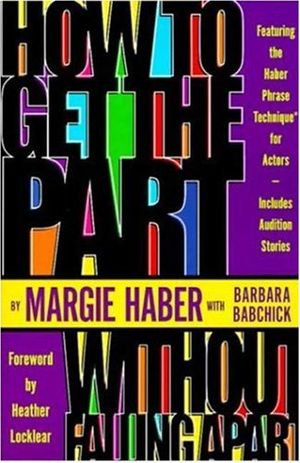
How to Get the Part... Without Falling Apart!
(1999) Gene Hackman, Halle Berry, Heather Locklear, Gabriel Byrne, James Bond's Pierce Bronson, Kelly Preston, most of the cast from Melrose Place and 1000s of actors all take acting classes from Margie Haber. How to Get the Part... gives actors tools to break through their psychological roadblocks to auditioning. |
 |
|
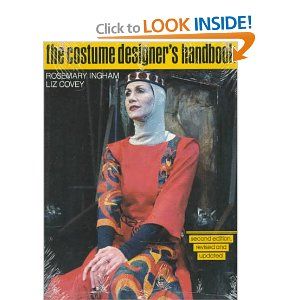
Costume Designer's Handbook: A Complete Guide for Amateur and Professional Costume Designers
(1992) Newly revised and updated, The Costume Designer's Handbook is now more comprehensive than ever and is the backbone of any costume designer's library since its original publication in 1983. |
 |
|
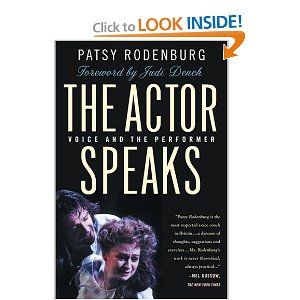
The Actor Speaks: Voice and the Performer
(2002) In The Actor Speaks, Patsy Rodenburg takes actors and actresses, both professional and beginners, through a complete voice workshop. She touches on every aspect of performance work that involves the voice and sorts through the kinds of vexing problems every performer faces onstage: breath and relaxation; vocal range and power; communication with other actors; singing and acting simultaneously; working on different sized stages and in both large and small auditoriums; approaching the vocal demand... |
 |
|
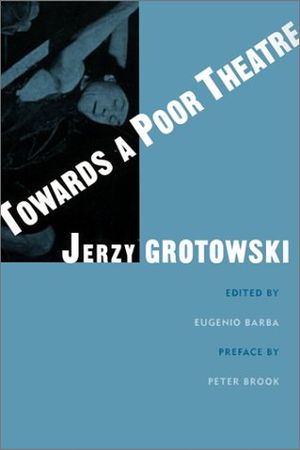
Towards a Poor Theatre
(1991) "One of the century's most impressive theatrical manifestos" - Irving Wardle Jerzy Grotowski created the Theatre Laboratory in Opole, South-West Poland, in 1959. His work since then, with a small permanent company, became one of the most potent sources of information for modern actors and directors. This is a record of the ideas that motivated the work of the Theatre Laboratory, and of the company's methods and discoveries.In his Preface Peter Brook writes: "Grotowski is unique. Why? Because no ... |
 |
|
Ginger: My Story
(1992) Winning a dance contest in Texas launched the 14-year-old Virginia Katherine McMath on her acting career and eventful personal life, episodes, emotions and dialogue from which she recreates here in exhaustive detail. Now 79, this devout Christian Scientist recalls her early vaudeville days in a determinedly upbeat tone, as well as her stage and film hits, including the 10 musicals-- Top Hat , Swing Time , etc.--in which she and Fred Astaire co-starred. Also discussed is Rogers's Oscar-winning Ki... |
 |
|
On Directing
(1997) This guide to directing takes the reader from the initial choice of play right through every aspect of its production to performances and beyond. It contains the author's directing notes for ten of his best-known productions and anecdotes about working with famous playwrights and actors. |
 |
|
Breaking Into Acting For Dummies
(2002) Provides the expert advice you need to get your big break! Jump-start your career and land that paying part From preparing for auditions to finding an agent, the acting business is a challenging and competitive field. This indispensable guide is what every aspiring actor needs to get a foot in the door. Discover how to market yourself, choose a dynamic head shot, create a stellar acting resume, join unions, and pay the bills while you pursue your acting dreams. The Dummies Way Explanat... |
 |
|
Creating Unforgettable Characters
(1990) In this book, Linda Seger shows how to create strong, multidimensional characters in fiction, covering everything from research to character block. Interviews with today's top writers complete this essential volume. |
 |
|
The Miser
(2000) This volume of Moliere's dramatic commentaries on society presents The Miser, a misguided hero who obsessively disrupts the lives of those around him. The School for Wives is newly translated for this edition and was fiercely denounced as impious and vulgar. Moliere's response to his detractors became The School for Wives Criticized. Even more alarming to critics was his version of Don Juan. In The Hypochondriac, he produced an outrageous expose of medicine. |
 |
|
No Acting Please
(1979) No Acting Please-Beyond the Method a Revolutionary Approach to Acting and Living. Foreword by Jack Nicholson |
 |
|
Free to Act: An Integrated Approach to Acting
(1990) Free to Act presents a holistic approach to actor training that integrates physical and psychological technique. Its integrated approach emphasizes the idea that the body informs the mind and that emotion is rooted in physical action. Providing a carefully developed system of training, Free to Act guides the student-actor through the complex process by which an actor is formed. |
 |
|
Thinking Like a Director: A Practical Handbook
(2001) Bloom draws on nearly twenty years of directing and teaching experience to convey the full experience of directing for the stage, as well as the mindset that all successful directors possess. More than a mere set of guidelines, Thinking Like a Director details a technique that covers every facet of theatrical production, from first reading through final rehearsals. The key to directorial thinking, Bloom asserts, is a dual perspective--an ability to focus on both the internal lives of the play’... |
 |
|
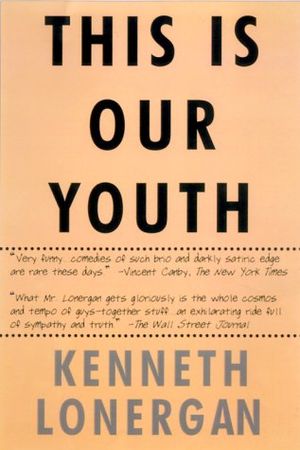
This Is Our Youth
(2000) In 1982, on Manhattan's Upper West Side, the wealthy, articulate pot-smoking teenagers who were small children in the '60s have emerged as young adults in a country that has just resoundingly rejected everything they were brought up to believe in. The very last wave of New York City's '60s-style Liberalism has come of age and there's nowhere left to go. In meticulous, hilarious, and agonizing detail, THIS IS OUR YOUTH follows forty-eight hours of three very lost young souls in the big city at th... |
 |
|
The Best Broadway Songs Ever
(1985) We've made this book even better with the addition of songs from some of Broadway's latest blockbusters such as Miss Saigon, The Phantom of the Opera, Aspects of Love, Les Miserables, and more - over 70 songs in all! Highlights include: All I Ask of You * As Long As He Needs Me * Bess, You Is My Woman * Bewitched * Camelot * Climb Ev'ry Mountain * Comedy Tonight * Don't Cry for Me Argentina * Everything's Coming Up Roses * Getting to Know You * I Could Have Danced All Night * I Dreamed a Dream *... |
 |
|
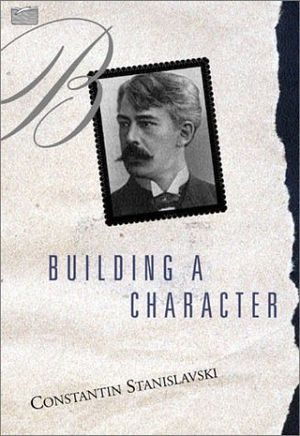
Building A Character
(1989) This is the second volume of Stanislaviski's enduring trilogy on the art of acting. The "System" which he describes is a means both of mastering the craft of acting and of stimulating the actor's individual creativeness and imagination. It has become the central force determining almost every performance we see on stage or screen, and still remains today the only comprehensive theory of acting we possess. In Building a Character Stanislavski discusses with mastery and insight the actor's physic... |
 |
|
Three Plays: Desire Under The Elms, Strange Interlude, Mourning Becomes Electra
(1995) These three plays exemplify Eugene O'Neil's ability to explore the limits of the human predicament, even as he sounds the depths of his audiences' hearts. |
 |
|
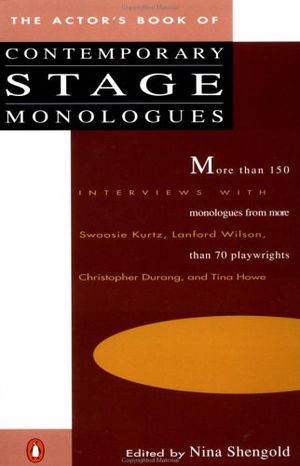
The Actor's Book of Contemporary Stage Monologues
(1987) This is the only book that offers a comprehensive collection of contemporary stage monologues for a complete range of roles. An invaluable tool for actors looking for new audition material or for anyone interested in theater. |
 |
|
J.B: A Play in Verse
(1989) Based on the story of Job, this drama in verse tells the story of a twentieth-century American banker and millionaire whom God commands be stripped of his family and wealth, but who refuses to turn his back on God. J.B. won the Pulitzer Prize for drama in 1959 and the Tony Award for best play. More important, the play sparked a national conversation about the nature of God. |
 |
|
The Actor and the Target
(2002) Declan Donnellan’s fresh and radical approach to acting takes a scalpel to the heart of actor’s persistent fears from . . . "I don’t know what I’m doing" through "I don’t know who I am" to "I don’t know what I’m playing." The Actor and the Target has already been hailed by the press in Russia where it is already published: "Practically and modestly written, Declan Donnellan’s book helps actors to release their talent to be free on stage. However Donnellan’s path leads to wid... |
 |
|
On the Technique of Acting
(1993) In the four decades since its first publication, Michael Chekhov's To the Actor has become a standard text for students of the theater. But To the Actor is a shortened, heavily modified version of the great director/actor/teacher's original manuscript, and On the Technique of Acting is the first and only book ever to incorporate the complete text of that brilliant manuscript. Scholars and teachers of Chekhov's technique have hailed On the Technique of Acting as the clearest, most accurate presen... |
 |
|
The Art and Craft of Playwriting
(2000) From "story" and "tension" right down to how to get a character from one side of the stage to the other, Hatcher, an award-winning playwright, conveys his expertise and love of the theater in an intelligent, engaging style. -- fourteen essential elements found in every good play, with examples from historical and contemporary theater -- a step-by-step walk through the classic play Hedda Gabler, showing good playwriting elements in action -- interviews with playwrights Marsha Norman, Jose Rivera... |
 |
|
Lazzi: The Comic Routines of the Commedia dell'Arte
(2001) This best-selling PAJ volume presents over 250 comedy routines used by commedia performers in Europe from 1550 to 1750. Includes an introduction, two complete commedia scenarios, and a glossary of commedia characters. |
 |
|
The Book of Liz
(2002) Sister Elizabeth Donderstock is Squeamish, has been her whole life. She makes cheese balls (traditional and smoky) that sustain the existence of her entire religious community, Clusterhaven. However, she feels unappreciated among her Squeamish brethren, and she decides to try her luck in the outside world. Along the way, she meets a Cockney-speaking Ukrainian immigrant couple who find her a job waiting tables at Plymouth Crock, a family restaurant run almost entirely by recovering alcoholics. Th... |
 |
|
The Beggar's Opera
(1987) Written in 1728, John Gay’s opera caricatures society, marriage and Italian operatic style in this comic satire which is considered revolutionary because it took on poverty and corruption as its subject as told by the thieves, prostitutes and villains of the slums and prisons of 18th century London. The lyrics were set to famous songs the day making it hugely popular with audiences and a radical departure from traditional opera. Bertolt Brech and Kurt Weill’s The Threepenny Opera is based on... |
 |
|
Saint Joan
(2001) With Saint Joan, Shaw reached the height of his fame as a dramatist. In this play he distilled many of the ideas he had been trying to express in earlier works on the sublects of politics, religion and creative evolution. Fascinated by the story of Joan of Arc, but unhappy with the way she had traditionally been depicted, Shaw wanted to remove 'the whitewash which disfigures her beyond recognition'. He presents a realistic Joan: proud, intolerant, naive, foolhardy, always brave - a rebel who cha... |
 |
|
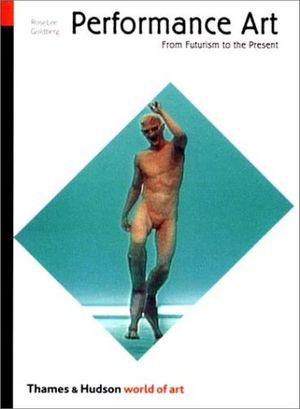
Performance Art: From Futurism to the Present
(1988) Performance is in some sense a combination of theater, dance, mime, concept art, music, and-today-even video; it can be simply defined as live art by artists. Goldberg discusses its origins in tribal rituals and passion plays and its twentieth-century revival by the Futurists. Surrealists, Dadaists, and Bauhaus artists. |
 |
|
The Great Acting Teachers and Their Methods
(1995) With clarity and insight, Richard Brestoff introduces the great acting teachers, explaining their techniques and how ther are applied today. Beginning with Quintilian and Delsarre he guides us to the present with an inside look at what is currently being taught in the major acting schools and private acting studios; The Actor's Studio, Yale University, NYU, Juillard and many more are visited. Great Acting Teachers and Their Methods will help you understand the most important ideas about acting, ... |
 |
|
The Stage Management Handbook
(1992) Offers advice, for both professional and amateur stage managers, on putting on a show, discussing its three phases, and includes information on the organizational structure of theaters and how to manage human behavior. |
 |
|
Magnificent Monologues for Teens: The Teens' Monologue Source for Every Occasion
(2002) Magnificent Monologues For Teens: The Teens’ Monologue Source For Every Occasion! provides 12-17 year-olds with performable age-appropriate comedic and dramatic monologues, all 100% teen tested. CHAMBERS STEVENS introduces young actors to the joys and how-to’s of performing monologues written in true Hollywood industry-standard style in preparation for competitions, debates and professional stage and screen auditions. +40 monologues are incorporated, each is titled for quick content perusal,... |
 |
Videos