


|
Theatre World 1994-1995, Vol. 51
(1/1/2000) Theatre World, the statistical and pictorial record of the Broadway and off-Broadway season, touring companies, and professional regional companies throughout the United States, has become a classic in its field. The book is complete with cast listings, replacement producers, directors, authors, composers, opening and closing dates, song titles, and much, much more. There are special sections with biographical data, obituary information, listings of annual Shakespeare festivals and major drama a... |
 |
|
Theatre World 1993-1994, Vol. 50
(1/1/2000) Theatre World, the statistical and pictorial record of the Broadway and off-Broadway season, touring companies, and professional regional companies throughout the United States, has become a classic in its field. The book is complete with cast listings, replacement producers, directors, authors, composers, opening and closing dates, song titles, and much, much more. There are special sections with biographical data, obituary information, listings of annual Shakespeare festivals and major drama a... |
 |
|
The Social Significance of Modern Drama
(1/1/2000) Out of print virtually since its completion in 1914, Emma Goldman's pioneer work Social Significance in Modern Drama bridges modern drama and political philosophy, pointing out the road that remains to be travelled toward a theatre of social empowerment. Activist, feminist, philosopher and anarchist, Emma Goldman was a passionate thinker about all things modern when the 20th century was still raw and new. The emergence of her treatise on the theatre after years of obscurity is certain to arouse ... |
 |
|
The Actor's scenebook: Scenes and monologues from contemporary plays
(1984) Schulman and Mekler provide 78 new, fully playable scenes with story notes, including more monologues for men and women from today's best new plays. A diverse selection of scenes and characters to challenge the full range of readers' talents as actors. |
 |
|
The Sanford Meisner Approach: An Actors Workbook
(1994) Founding member of the famed Group Theater and friend, colleague, and later rival to Lee Strasberg, Sanford Meisner spent his life teaching a variation of the Stanislavsky-based Method acting that brought Strasberg so much fame. In this clearly written introduction to Meisner's techniques, Silverberg, himself a graduate of Meisner's Neighborhood Playhouse School of Theater, outlines a 15-week program of exercises designed by Meisner to help actors approach each performance with the playful spon... |
 |
|
On Method Acting
(1989) Practiced by such actors of stature as Marlon Brando, Robert De Niro, Julie Harris, Dustin Hoffman, and Ellen Burstyn (not to mention the late James Dean) the Method offers a practical application of the renowned Stanislavsky technique. On Method Acting demystifies the "mysteries" of Method acting -- breaking down the various steps into clear and simple terms, including chapters on: Sense Memory -- the most vital component of Method acting Improvisation -- without it, the most integral p... |
 |
|
Drafting for the Theatre
(1992) This process-oriented text—supplemented by 280 illustrations—is structured to provide students with a proper and practical approach to the development of drafting and related skills for the theatre. Dennis Dorn and Mark Shanda emphasize the standard drafting and designing practices of the theatre industry through a series of projects and exercises that help the student in the development of research skills. The early sessions focus on the basics of lettering, tool introduction, geometric... |
 |
|
The Playboy of the Western World and Riders to the Sea
(1993) Two beautifully crafted dramas set among the folk of the Aran Islands and western Irish coastlands. The Playboy of the Western World deals with its young hero’s progress, in the eyes of others, from timid weakling to paragon of bravery. Riders to the Sea is a dark elegy to the fragile existence of those who live at the mercy of the sea. Reprinted from authoritative editions, complete with Synge’s preface to The Playboy of the Western World. New introductory Note. |
 |
|
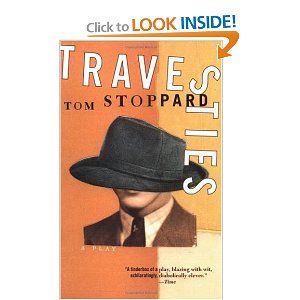
Travesties
(1994) Travesties was born out of Stoppard's noting that in 1917 three of the twentieth century's most crucial revolutionaries -- James Joyce, the Dadaist founder Tristan Tzara, and Lenin -- were all living in Zurich. Also living in Zurich at this time was a British consula official called Henry Carr, a man acquainted with Joyce through the theater and later through a lawsuit concerning a pair of trousers. Taking Carr as his core, Stoppard spins this historical coincidence into a masterful and riotous... |
 |
|
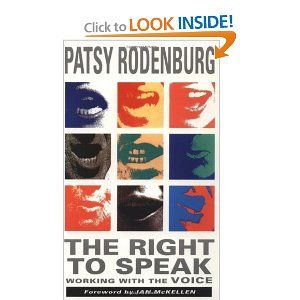
The Right to Speak: Working with the Voice
(1993) In The Right to Speak, renowned voice teacher Patsy Rodenburg teaches you how to meet any speaking challenge with total self-assurance. Rodenburg has trained thousands of actors, singers, media personalities, lawyers, politicians, business people, teachers and students in the art of using their voice fully and expressively without fear. She has taught them how to breathe, how to support their breath, how to stretch their voice to meet any vocal effort and how to have total confidence in whatever... |
 |
|
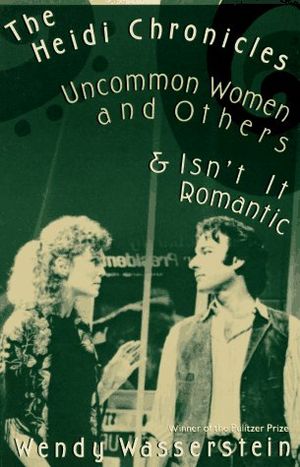
The Heidi Chronicles
(1991) The graduating seniors of a Seven Sisters college, trying to decide whether to pattern themselves after Katharine Hepburn or Emily Dickinson. Two young women besieged by the demands of mothers, lovers, and careers--not to mention a highly persistent telephone answering machine--as they struggle to have it all. A brilliant feminist art historian trying to keep her bearings and her sense of humor on the elevator ride from the radical sixties to the heartless eighties. |
 |
|
Voice and the Actor
(1991) "Speaking is part of a whole: an expression of inner life." Cicely Berry has based her work on the conviction that while all is present in nature our natural instincts have been crippled from birth by many processes—by the conditioning, in fact, of a warped society. So an actor needs precise exercise and clear understanding to liberate his hidden possibilities and to learn the hard task of being true to the ‘instinct of the moment’. As her book points out with remarkable persuasiveness ‘... |
 |
|
From Page to Stage: How Theatre Designers Make Connections Between Scripts and Images
(1998) What steps are involved in making the jump from a script's text to an engaging imaginative stage? From Page to Stage explores the relationships between text analysis, imagination, and creation. |
 |
|
The Stagecraft Handbook
(1996) This manual covers every aspect of scenery c onstruction, with information on shop organisation, tools, s afety, scaled drawings and materials as well as construction techniques. A wealth of illustrations help show how to make quick, inexpensive scenery. ' |
 |
|
Elia Kazan: A Life
(1997) According to PW , "flashes of sudden insight or eloquence keep the reader turning the pages of Kazan's garrulous autobiography." His expansive memoir makes no apologies for his decision to name names during the McCarthy era, and includes cutting portraits of Lillian Hellman and Arthur Miller, as well as glimpses of Odets, Cagney, Bankhead, Monroe, Brando, Goldwyn and dozens more. Photos. (Source: Publishers Weekly) |
 |
|
How to Get the Part... Without Falling Apart!
(1999) Gene Hackman, Halle Berry, Heather Locklear, Gabriel Byrne, James Bond's Pierce Bronson, Kelly Preston, most of the cast from Melrose Place and 1000s of actors all take acting classes from Margie Haber. How to Get the Part... gives actors tools to break through their psychological roadblocks to auditioning. |
 |
|
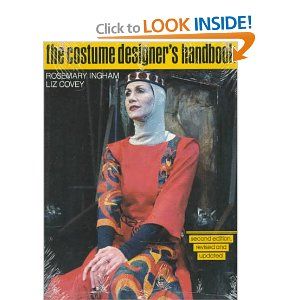
Costume Designer's Handbook: A Complete Guide for Amateur and Professional Costume Designers
(1992) Newly revised and updated, The Costume Designer's Handbook is now more comprehensive than ever and is the backbone of any costume designer's library since its original publication in 1983. |
 |
|
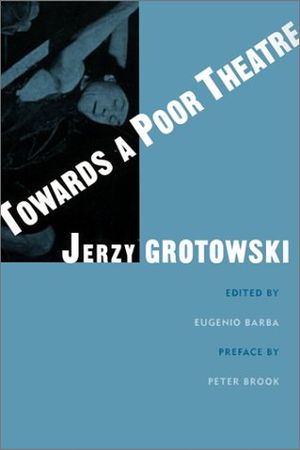
Towards a Poor Theatre
(1991) "One of the century's most impressive theatrical manifestos" - Irving Wardle Jerzy Grotowski created the Theatre Laboratory in Opole, South-West Poland, in 1959. His work since then, with a small permanent company, became one of the most potent sources of information for modern actors and directors. This is a record of the ideas that motivated the work of the Theatre Laboratory, and of the company's methods and discoveries.In his Preface Peter Brook writes: "Grotowski is unique. Why? Because no ... |
 |
|
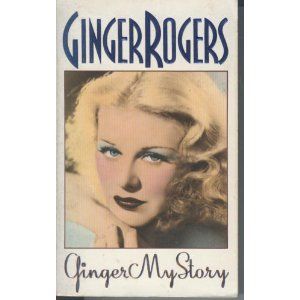
Ginger: My Story
(1992) Winning a dance contest in Texas launched the 14-year-old Virginia Katherine McMath on her acting career and eventful personal life, episodes, emotions and dialogue from which she recreates here in exhaustive detail. Now 79, this devout Christian Scientist recalls her early vaudeville days in a determinedly upbeat tone, as well as her stage and film hits, including the 10 musicals-- Top Hat , Swing Time , etc.--in which she and Fred Astaire co-starred. Also discussed is Rogers's Oscar-winning Ki... |
 |
|
On Directing
(1997) This guide to directing takes the reader from the initial choice of play right through every aspect of its production to performances and beyond. It contains the author's directing notes for ten of his best-known productions and anecdotes about working with famous playwrights and actors. |
 |
|
Creating Unforgettable Characters
(1990) In this book, Linda Seger shows how to create strong, multidimensional characters in fiction, covering everything from research to character block. Interviews with today's top writers complete this essential volume. |
 |
|
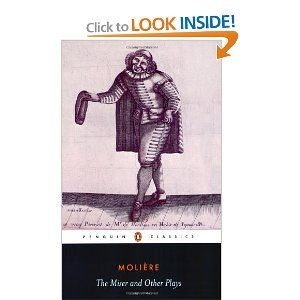
The Miser
(2000) This volume of Moliere's dramatic commentaries on society presents The Miser, a misguided hero who obsessively disrupts the lives of those around him. The School for Wives is newly translated for this edition and was fiercely denounced as impious and vulgar. Moliere's response to his detractors became The School for Wives Criticized. Even more alarming to critics was his version of Don Juan. In The Hypochondriac, he produced an outrageous expose of medicine. |
 |
|
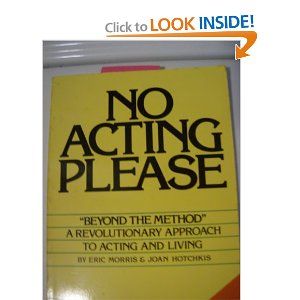
No Acting Please
(1979) No Acting Please-Beyond the Method a Revolutionary Approach to Acting and Living. Foreword by Jack Nicholson |
 |
|
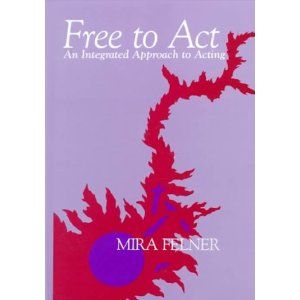
Free to Act: An Integrated Approach to Acting
(1990) Free to Act presents a holistic approach to actor training that integrates physical and psychological technique. Its integrated approach emphasizes the idea that the body informs the mind and that emotion is rooted in physical action. Providing a carefully developed system of training, Free to Act guides the student-actor through the complex process by which an actor is formed. |
 |
|
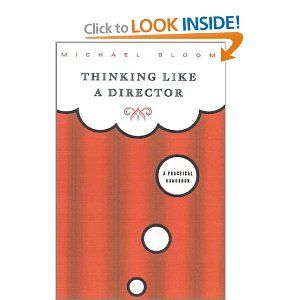
Thinking Like a Director: A Practical Handbook
(2001) Bloom draws on nearly twenty years of directing and teaching experience to convey the full experience of directing for the stage, as well as the mindset that all successful directors possess. More than a mere set of guidelines, Thinking Like a Director details a technique that covers every facet of theatrical production, from first reading through final rehearsals. The key to directorial thinking, Bloom asserts, is a dual perspective--an ability to focus on both the internal lives of the play’... |
 |
|
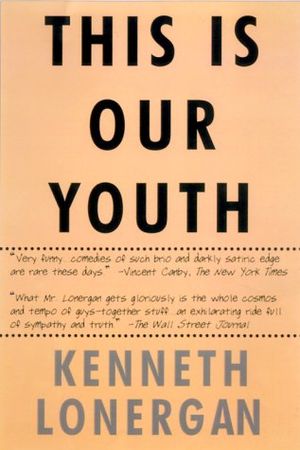
This Is Our Youth
(2000) In 1982, on Manhattan's Upper West Side, the wealthy, articulate pot-smoking teenagers who were small children in the '60s have emerged as young adults in a country that has just resoundingly rejected everything they were brought up to believe in. The very last wave of New York City's '60s-style Liberalism has come of age and there's nowhere left to go. In meticulous, hilarious, and agonizing detail, THIS IS OUR YOUTH follows forty-eight hours of three very lost young souls in the big city at th... |
 |
|
The Best Broadway Songs Ever
(1985) We've made this book even better with the addition of songs from some of Broadway's latest blockbusters such as Miss Saigon, The Phantom of the Opera, Aspects of Love, Les Miserables, and more - over 70 songs in all! Highlights include: All I Ask of You * As Long As He Needs Me * Bess, You Is My Woman * Bewitched * Camelot * Climb Ev'ry Mountain * Comedy Tonight * Don't Cry for Me Argentina * Everything's Coming Up Roses * Getting to Know You * I Could Have Danced All Night * I Dreamed a Dream *... |
 |
|
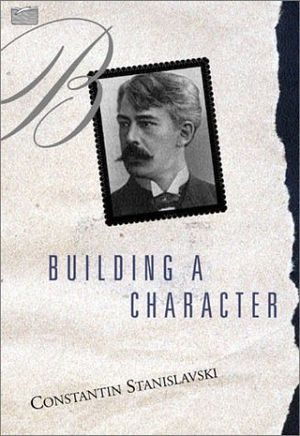
Building A Character
(1989) This is the second volume of Stanislaviski's enduring trilogy on the art of acting. The "System" which he describes is a means both of mastering the craft of acting and of stimulating the actor's individual creativeness and imagination. It has become the central force determining almost every performance we see on stage or screen, and still remains today the only comprehensive theory of acting we possess. In Building a Character Stanislavski discusses with mastery and insight the actor's physic... |
 |
|
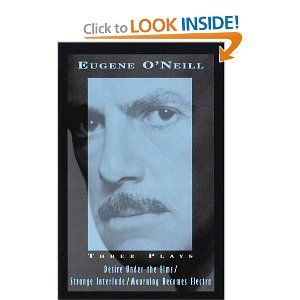
Three Plays: Desire Under The Elms, Strange Interlude, Mourning Becomes Electra
(1995) These three plays exemplify Eugene O'Neil's ability to explore the limits of the human predicament, even as he sounds the depths of his audiences' hearts. |
 |
|
The Actor's Book of Contemporary Stage Monologues
(1987) This is the only book that offers a comprehensive collection of contemporary stage monologues for a complete range of roles. An invaluable tool for actors looking for new audition material or for anyone interested in theater. |
 |
|
J.B: A Play in Verse
(1989) Based on the story of Job, this drama in verse tells the story of a twentieth-century American banker and millionaire whom God commands be stripped of his family and wealth, but who refuses to turn his back on God. J.B. won the Pulitzer Prize for drama in 1959 and the Tony Award for best play. More important, the play sparked a national conversation about the nature of God. |
 |
|
On the Technique of Acting
(1993) In the four decades since its first publication, Michael Chekhov's To the Actor has become a standard text for students of the theater. But To the Actor is a shortened, heavily modified version of the great director/actor/teacher's original manuscript, and On the Technique of Acting is the first and only book ever to incorporate the complete text of that brilliant manuscript. Scholars and teachers of Chekhov's technique have hailed On the Technique of Acting as the clearest, most accurate presen... |
 |
|
The Art and Craft of Playwriting
(2000) From "story" and "tension" right down to how to get a character from one side of the stage to the other, Hatcher, an award-winning playwright, conveys his expertise and love of the theater in an intelligent, engaging style. -- fourteen essential elements found in every good play, with examples from historical and contemporary theater -- a step-by-step walk through the classic play Hedda Gabler, showing good playwriting elements in action -- interviews with playwrights Marsha Norman, Jose Rivera... |
 |
|
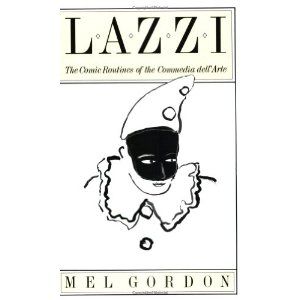
Lazzi: The Comic Routines of the Commedia dell'Arte
(2001) This best-selling PAJ volume presents over 250 comedy routines used by commedia performers in Europe from 1550 to 1750. Includes an introduction, two complete commedia scenarios, and a glossary of commedia characters. |
 |
|
The Beggar's Opera
(1987) Written in 1728, John Gay’s opera caricatures society, marriage and Italian operatic style in this comic satire which is considered revolutionary because it took on poverty and corruption as its subject as told by the thieves, prostitutes and villains of the slums and prisons of 18th century London. The lyrics were set to famous songs the day making it hugely popular with audiences and a radical departure from traditional opera. Bertolt Brech and Kurt Weill’s The Threepenny Opera is based on... |
 |
|
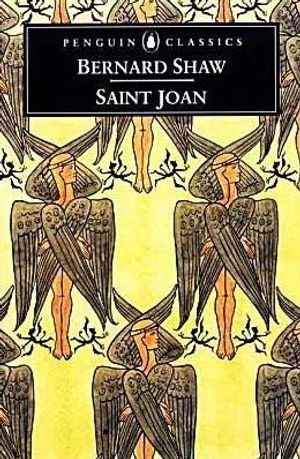
Saint Joan
(2001) With Saint Joan, Shaw reached the height of his fame as a dramatist. In this play he distilled many of the ideas he had been trying to express in earlier works on the sublects of politics, religion and creative evolution. Fascinated by the story of Joan of Arc, but unhappy with the way she had traditionally been depicted, Shaw wanted to remove 'the whitewash which disfigures her beyond recognition'. He presents a realistic Joan: proud, intolerant, naive, foolhardy, always brave - a rebel who cha... |
 |
|
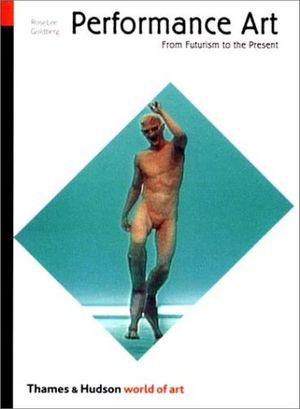
Performance Art: From Futurism to the Present
(1988) Performance is in some sense a combination of theater, dance, mime, concept art, music, and-today-even video; it can be simply defined as live art by artists. Goldberg discusses its origins in tribal rituals and passion plays and its twentieth-century revival by the Futurists. Surrealists, Dadaists, and Bauhaus artists. |
 |
|
The Great Acting Teachers and Their Methods
(1995) With clarity and insight, Richard Brestoff introduces the great acting teachers, explaining their techniques and how ther are applied today. Beginning with Quintilian and Delsarre he guides us to the present with an inside look at what is currently being taught in the major acting schools and private acting studios; The Actor's Studio, Yale University, NYU, Juillard and many more are visited. Great Acting Teachers and Their Methods will help you understand the most important ideas about acting, ... |
 |
|
The Stage Management Handbook
(1992) Offers advice, for both professional and amateur stage managers, on putting on a show, discussing its three phases, and includes information on the organizational structure of theaters and how to manage human behavior. |
 |
|
The Theater and Its Double
(1994) A collection of manifestos originally published in 1938, The Theater and Its Double is the fullest statement of the ideas of Antonin Artaud. “We cannot go on prostituting the idea of the theater, the only value of which is in its excruciating, magical relation to reality and danger,” he wrote. He fought vigorously against an encroaching conventionalism he found anathema to the very concept of theater. He sought to use theater to transcend writing, “to break through the language in order to... |
 |
|
The Lieutenant of Inishmore
(2001) A farcical look at political violence as it's played out during The Troubles in Northern Ireland against the drab backdrop of a bare, rustic Irish cottage and unending boredom in an inhospitable environment in which a mutilated cat sets off a murderous cycle of revenge. |
 |
|
Les Miserables: Vocal / Piano Selections
(1987) This terrific songbook features 14 vocal selections from the beloved Broadway musical: At the End of the Day * Bring Him Home * Castle on a Cloud * Do You Hear the People Sing? * Drink with Me (To Days Gone By) * Empty Chairs at Empty Tables * A Heart Full of Love * I Dreamed a Dream * In My Life * A Little Fall of Rain * Master of the House * On My Own * Stars * Who Am I?. Also includes beautiful full-color photos from the production. |
 |
|
Galileo
(1994) Considered by many to be one of Brecht's masterpieces, Galileo explores the question of a scientist's social and ethical responsibility, as the brilliant Galileo must choose between his life and his life's work when confronted with the demands of the Inquisition. Through the dramatic characterization of the famous physicist, Brecht examines the issues of scientific morality and the difficult relationship between the intellectual and authority. This version of the play is the famous one that was ... |
 |
|
Me: Stories of My Life
(1992) Admired and beloved by movie audiences for over sixty years, four-time Academy Award-winner Katharine Hepburn is an American classic. Now Miss Hepburn breaks her long-kept silence about her private life in this absorbing and provocative memoir. |
 |
|
Theater Games for the Classroom: A Teacher's Handbook
(1986) Based on the best-selling book by Viola Spolin, this new CD-ROM of Theater Games for the Classroom offers the most comprehensive theater instruction for all types of students, from small children to young adults. It includes over 130 theater games and exercises, instructional strategies, video examples, a lesson planning section, alignment to other curricular areas, and alignment to California Theatre Arts standards. First developed by Spolin, the originator of modern improvisational theater tec... |
 |
|
The Sound of Music: Vocal Selections
(1981) 11 songs: Climb Ev'ry Mountain * Do-Re-Mi * Edelweiss * I Have Confidence * The Lonely Goatherd * Maria * My Favorite Things * Sixteen Going on Seventeen * So Long, Farewell * Something Good * The Sound of Music. |
 |
|
Kids' Broadway Songbook
(2001) This landmark collection of music originally sung onstage by children was released in 1993, and has become the most used collection of theatre music for kids. Now this same collection is available with a much needed companion CD of piano accompaniments. Child singers can practice with the recording as many times as they like ... until they drive Mom and Dad crazy! Includes: Castle on a Cloud * Gary, Indiana * I Whistle a Happy Tune * It's the Hard-Knock Life * Let Me Entertain You * Tomorrow * W... |
 |
|
Improvisation for the Theater 3E: A Handbook of Teaching and Directing Techniques
(1999) This new edition of a highly acclaimed handbook, last published in 1983 and widely used by theater teachers and directors, is sure to be welcomed by members of the theater profession. Spolin, who died in 1994, developed her improvisational techniques of using "game" exercises while teaching with the WPA Recreational Project in Chicago. Editor Sills, her son and founder of the Second City Theater, here updates over 200 classic exercises and adds 30 new ones. The creative group work and games, whi... |
 |
|
Brecht on Theatre: The Development of an Aesthetic
(1997) This volume offers a major selection of Bertolt Brecht's groundbreaking critical writing. Here, arranged in chronological order, are essays from 1918 to 1956, in which Brecht explores his definition of the Epic Theatre and his theory of alienation-effects in directing, acting, and writing, and discusses, among other works, The Threepenny Opera, Mahagonny, Mother Courage, Puntila, and Galileo. Also included is "A Short Organum for the Theatre," Brecht's most complete exposition of his revolutiona... |
 |
|
Sense of Direction: Some Observations on the Art of Directing
(1984) By the founder of the famous American Conservatory Theatre (A.C.T.) in San Francisco - a candid account of his working method as a director. A Sense of Direction represents a life's work in directing. William Ball engages his audience in a wide-ranging discussion of the director's process, from first read-through to opening night. An informative, insightful, and often astonishingly clear look at the the process of making theatre. |
 |
Videos