


|
Theatre World 1994-1995, Vol. 51
(1/1/2000) Theatre World, the statistical and pictorial record of the Broadway and off-Broadway season, touring companies, and professional regional companies throughout the United States, has become a classic in its field. The book is complete with cast listings, replacement producers, directors, authors, composers, opening and closing dates, song titles, and much, much more. There are special sections with biographical data, obituary information, listings of annual Shakespeare festivals and major drama a... |
 |
|
Theatre World 1993-1994, Vol. 50
(1/1/2000) Theatre World, the statistical and pictorial record of the Broadway and off-Broadway season, touring companies, and professional regional companies throughout the United States, has become a classic in its field. The book is complete with cast listings, replacement producers, directors, authors, composers, opening and closing dates, song titles, and much, much more. There are special sections with biographical data, obituary information, listings of annual Shakespeare festivals and major drama a... |
 |
|
The Social Significance of Modern Drama
(1/1/2000) Out of print virtually since its completion in 1914, Emma Goldman's pioneer work Social Significance in Modern Drama bridges modern drama and political philosophy, pointing out the road that remains to be travelled toward a theatre of social empowerment. Activist, feminist, philosopher and anarchist, Emma Goldman was a passionate thinker about all things modern when the 20th century was still raw and new. The emergence of her treatise on the theatre after years of obscurity is certain to arouse ... |
 |
|
Polaroid Stories
(1/1/1999) Naomi Iizuka’s 1997 play, Polaroid Stories, consciously uses stories, characters and themes from Ovid’s Metamorphoses to tell the stories of street kids living on the edge in a desolate, urban landscape. Because these characters are named after Orpheus and Eurydice, and Echo and Narcissus, or based on stories of Dionysus, and Ariadne and Theseus, and because scenes are entitled “The Story of Semele” or “Theseus in the Labyrinth,” Iizuka creates a world that has two dimensions: the g... |
 |
|
The Phoenix: Noel Coward Diaries
(12/31/1969) Coward's diaries from 1941 to 1969 offer an intimate look at the last 30 years of the life of the popular, sophisticated British playwright and author. While some of the entries are of the "Stayed out until 4 at Mrs. B___'s party" variety, more of them give insight into Coward's well-connected life. Coward knew or met hundreds of people working in the theater, the movies, and the government, and encounters with Vivien Leigh, Marilyn Monroe, King George IV, Winston Churchill and the Queen Mother... |
 |
|
Autobiography: Consisting of Present Indicative, Future Indefinite and The Uncompleted Past Conditional
(12/31/1969) This reissue contains all three instalments of Coward's biography. "Present Indicative", published in 1937, deals with Noel's childhood and early life up to "Cavalcade" in 1931; "Future Indefinite", published in 1954, deals with the War years; also included is the opening to a planned third volume. |
 |
|
Blithe Spirit
(12/31/1969) Written in 1941 this book remians the longest-running comedy in the history of the British theatre for three decades. |
 |
|
The Overcoat
(12/31/1969) The Overcoat which is generally acknowledged as the finest of Gogol's memorable Saint Petersburg stories, is a tale of the absurd and misplaced obsessions. |
 |
|
Diary of a Madman and Other Stories
(12/31/1969) Illuminates the Russian writer's thoughts on madness, bureaucracy, and illusion in these five tales. --This text refers to an out of print or unavailable edition of this title. |
 |
|
La Mandragola
(12/31/1969) A superior treatment of Machiavelli's minor masterpiece! Flaumenhaft's beautifully crafted, literal translation aims to capture the original intent of the playwright. Machiavelli himself distinguished carefully between translations and revisions; thus, Flaumenhaft finds a faithful translation essential to conveying Machiavelli's thought and to allowing direct access to the work. The Prologue explores the relationship between Machiavelli's stage comedies--part of the Comedia Erudita of the Italia... |
 |
|
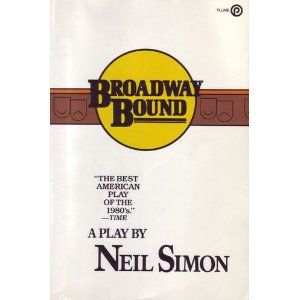
Broadway Bound
(12/31/1969) Based on the original play by Neil Simon, the story traces the attempts of Eugene and Stan Jerome's attempts to break into show business as comedy writers in the 1950s. |
 |
|
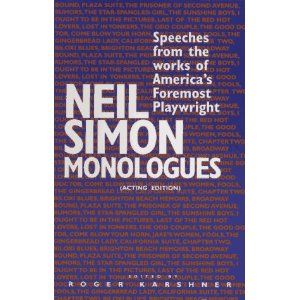
Neil Simon Monologues: Speeches from the Works of America's Foremost Playwright
(12/31/1969) This is the first authorized collection of monologues from Mr. Simon's plays and the most significant contribution to the drama genre in the past twenty-five years. As a scene-study book it is invaluable to actors at all levels. This definitive publication contains speeches for men and women from "Come Blow Your Horn" through "Jake's Women." Each play is comprehensively synopsized, and an in-depth exposition establishing setting and intent precedes each speech. With an introduction by Jack Lemm... |
 |
|
The Bungler
(12/31/1969) Poet Richard Wilbur’s translations of Molière’s plays are loved, renowned, and performed throughout the world. This volume is part of Theater Communications Group’s new series (with cover designs by Chip Kidd) to complete trade publication of these vital works of French neoclassical comedy. The Bungler is Molière’s first recognizably great play, and the first to be written in verse. The charming farce is set in Sicily and born of the great Italian tradition of the commedia dell’arte:... |
 |
|
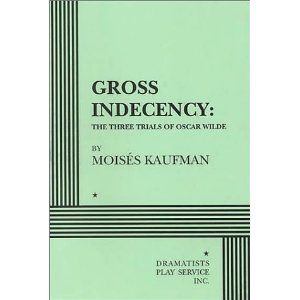
Gross Indecency: The Three Trials of Oscar Wilde
(12/31/1969) In three short months, Oscar Wilde, the most celebrated playwright and wit of Victorian England, was toppled from the apex of British society into humiliation and ruin. Drawing from trial documents, newspaper accounts, and writings of the key players, Moises Kaufman ignites an incendiary mix of sex and censorship, with a cast of characters ranging from George Bernard Shaw to Queen Victoria herself. |
 |
|
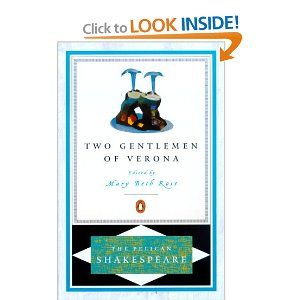
The Two Gentlemen of Verona
(12/31/1969) The Two Gentlemen of Verona is a comedy by William Shakespeare, believed to have been written in 1590 or 1591. It is considered by some to be Shakespeare's first play, and is often seen as his first tentative steps in laying out some of the themes and tropes with which he would later deal in more detail; for example, it is the first of his plays in which a heroine dresses as a boy. The play also deals with the themes of friendship and infidelity, the conflict between friendship and love, and th... |
 |
|
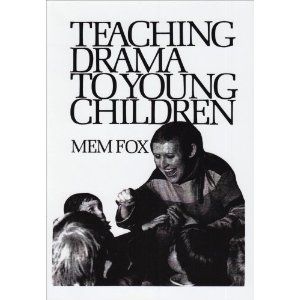
Teaching Drama to Young Children
(12/31/1969) Teaching Drama to Young Children has been written for teachers of children aged five to eight who would like to teach drama, but are not sure how to begin. |
 |
|
Mary McCarthy's Theatre Chronicles
(12/31/1969) This volume brings together Miss McCarthy's lively controversial essays on the theatre from the 1930's up to the present day. The intelligence and vitality of the author's analysis brings past productions of Shakespeare, Shaw, Ibsen, Chekhov, Wild, Odets, Saroyan, Wilder back to the reader with immediacy and freshness. Written in her trenchant prose, Miss McCarthy's articles on the drama are amusing, sharp, original and penetrating. |
 |
|
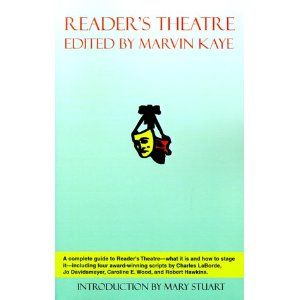
Readers Theatre: What It is and How to Stage It
(12/31/1969) A complete guide to Reader's Theatre--what it is and how to stage it--including four award-winning scripts by Charles LaBorde, Jo Davidsmeyer, Caroline E. Wood, and Robert Hawkins. (Performing Arts) |
 |
|
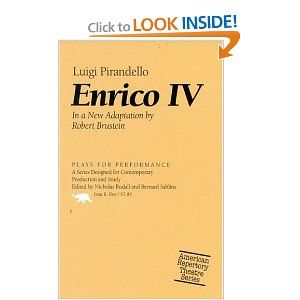
Enrico IV
(12/31/1969) Pirandello's savage comedy from 1921 reflects the warp of European reality after World War I and advances his philosophical arguement that reality is never a rock certainty, only a subjective creation. |
 |
|
Così è (se vi pare)
(12/31/1969) osì è (se vi pare) (English: Right you are (if you think so)) is an Italian drama by Luigi Pirandello. It premiered 18 June 1917 in Milan. |
 |
|
Sei personaggi in cerca d'autore
(12/31/1969) Six Characters in Search of an Author (Italian: Sei personaggi in cerca d'autore) is a play by the Italian writer Luigi Pirandello. The play is a satirical tragicomedy. It was first performed in 1921 at the Teatro Valle in Rome, to a very mixed reception, with shouts from the audience of "Manicomio!" ("Madhouse!"). Subsequently the play enjoyed a much better reception. This improved reception was helped in 1925 when, with the third edition of the play, Pirandello provided a foreword clarifying... |
 |
|
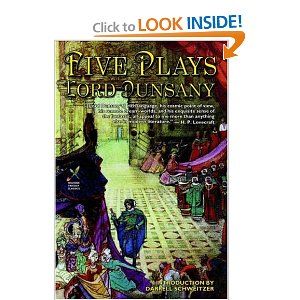
Five Plays
(12/31/1969) A fine selection of Dunsany's plays, including: "he Gods of the Mountain," "The Golden Doom," "King Argimenes and the Unknown Warrior," "The Glittering Gate," and "The Lost Silk Hat." Features a new introduction by Dunsany scholar Darrell Schweitzer. |
 |
|
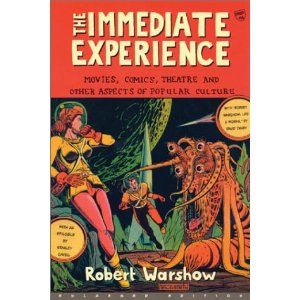
The Immediate Experience: Movies, Comics, Theatre, and Other Aspects of Popular Culture
(12/31/1969) This collection of essays, which originally appeared as a book in 1962, is virtually the complete works of an editor of Commentary magazine who died, at age 37, in 1955. Long before the rise of Cultural Studies as an academic pursuit, in the pages of the best literary magazines of the day, Robert Warshow wrote analyses of the folklore of modern life that were as sensitive and penetrating as the writings of James Agee, George Orwell, and Walter Benjamin. Some of these essays--notably "The Western... |
 |
|
The Bedford Introduction to Drama
(12/31/1969) With an abundance of plays, commentaries, and useful editorial features, the best-selling Bedford Introduction to Drama is the most comprehensive introductory drama resource available, giving students a diverse overview of dramatic literature and instructors a text with enough breadth and flexibility to complement a variety of approaches. |
 |
|
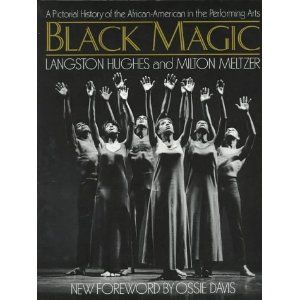
Black Magic: A Pictorial History of the African-American in the Performing Arts
(12/31/1969) Black Magic Langston Hughes's last book, presents the vast, sweeping story of African-American entertainers--the artists and the musicians, the singers and the dancers, the obscure and the illustrious--from the tragic beginnings in slavery to he triumphant artistic achievements of the late 1960s. Long considered the most comprehensive history of African-Americans in the performing arts, this milestone in black history features hundreds of rare and beautiful illustrations. Covering both the obst... |
 |
|
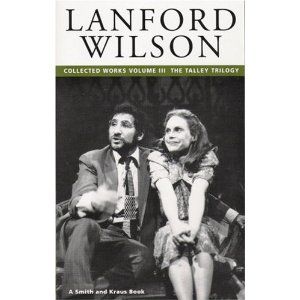
Lanford Wilson: Collected Works, Vol. 3: The Talley Trilogy
(12/31/1969) The fourth volume of Smith and Kraus' publication of the complete works of playwright Lanford Wilson. The plays in this volume include Fifth of July, Talley's Folly (the winner of the 1980 Pulitzer Prize) and Talley and Son. This collection will include introductory notes by the playwright, original cast and production information. From the New York Times: One of the rewards of the plays in the unfolding Talley Cycle is our knowledge of the interrelated, reflected worlds. When a character opens... |
 |
|
Scriptwork: A Director's Approach to New Play Development
(12/31/1969) Despite the popular myth that plays arrive at the theater fully formed and ready for production, the truth is that for centuries, most scripts have been developed through a collaborative process in rehearsal and in concert with other theater artists. David Kahn and Donna Breed provide the first codified approach to this time-honored method of play development, with a flexible methodology that takes into account differing environments and various stages of formation. Directors can use this un... |
 |
|
Book of Days
(12/31/1969) Acclaimed by Frank Rich as "a writer who illuminates the deepest dramas of American life with poetry and compassion," Lanford Wilson is one of the most esteemed contemporary American playwrights of our time. Nowhere is this more evident than in his latest play, Book of Days, which has won the Best Play Award from the American Theater Critics Association. Book of Days is set in a small town dominated by a cheese plant, a fundamentalist church, and a community theater. When the owner of the chees... |
 |
|
Learning Through Drama: Report of the Schools Council Drama, Teaching Project
(12/31/1969) A guide to teaching drama. It stresses the place of drama in the school curriculum and makes detailed recommendations both on the organization and on the content of drama teaching. |
 |
|
Inwardness and Theater in the English Renaissance
(12/31/1969) Katharine Eisaman Maus explores Renaissance writers' uneasy preoccupation with the inwardness and invisibility of truth. The perceived discrepancy between a person's outward appearance and inward disposition, she argues, deeply influenced the ways English Renaissance dramatists and poets conceived of the theater, imagined dramatic characters, and reflected upon their own creativity. |
 |
|
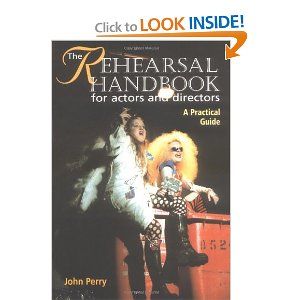
The Rehearsal Handbook for Actors and Directors: A Practical Guide
(12/31/1969) A useful guide for all actors, directors, and theater makers who want to optimize their rehearsal time. |
 |
|
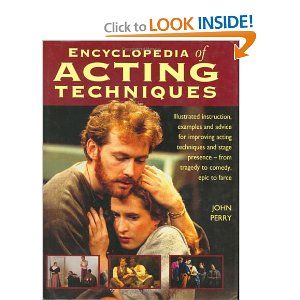
The Encyclopedia of Acting Techniques: Illustrated Instruction, Examples and Advice for Improving Acting Techniques and Stage Presence--From Tragedy to Comedy, Epic to Farce
(12/31/1969) From drama to farce, this photo-packed book offers a complete how-to reference to the craft of acting. Actors will find exercises for strengthening their focus and concentration, refining stage movements, improving voice, and understanding characters. 390 color illustrations. |
 |
|
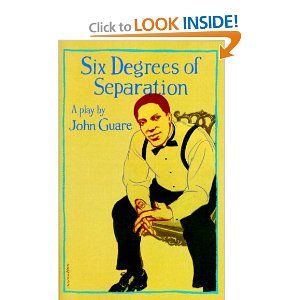
Six Degrees of Separation
(12/31/1969) A young black man named Paul shows up at the home of art dealer Flan Kittredge and his wife Ouisa, who live overlooking Central Park in New York City. Paul has a minor stab wound from an attempted mugging, and says he's a friend of their children at Harvard University. The Kittredges are trying to sell a painting by Paul Cézanne and now have this wounded stranger in their home. Paul claims he is in New York to meet his father, who is directing a film version of the Broadway musical Cats. Paul ... |
 |
|
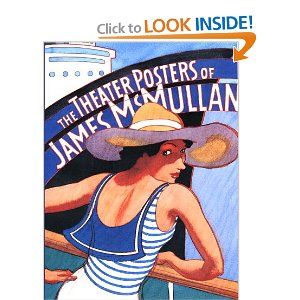
The Theater Posters of James Mcmullan
(12/31/1969) On buses, billboards, and train platforms, in newspapers and magazines, a poster's swift promise in glorious color or powerful dark tones offers a vivid impression of what awaits a theatergoer, and provides the lasting mental image of a play long after its closing night. No one creates such images with more invention, honesty, and beauty--sometimes disturbingly, but always memorably--than James McMullan. The Theater Posters of James McMullan is an illuminating collection of thirty-six posters f... |
 |
|
Lake Hollywood
(12/31/1969) The first act finds us on the shore of Scroon Lake in New Hampshire in August 1940. Agnes and Andrew, a soap salesman, arrive at Agnes’ home which she shares with her sister, Flo. Flo would like nothing better than to have the home all for herself. Also at the lake are Flo’s oddly infantile new husband, Randolph, who intends to run for office, and Randolph’s mother, Mrs. Larry, who speaks with a false German accent like a B movie Marlene Dietrich. The woods around the lake are ablaze, ... |
 |
|
Lydie Breeze
(12/31/1969) Lydie Breeze opens at dawn at the Hickman house, on Nantucket. The “very sparsely furnished” parlor and stairs leading to a landing are visible; there is also a porch and a beach with an upended rowboat buried in the sand. Lydie enters, carrying a candle, and kneels in prayer, followed by Beaty, who leads her through a strange ritual that tells of the suicide of Lydie’s mother, Lydie Breeze. The two invoke the dead woman’s spirit to “keep her alive.” It becomes clear that Beaty has ... |
 |
|
Plays of Gods and Men
(12/31/1969) Contains four of Lord Dunsany's fantasy plays: "The Tents of the Arabs," "The Laughter of the Gods," "The Queen's Enemies," and "A Night at an Inn." Part of the Wildside Fantasy Classics series. Introduction by Lin Carter and John Gregory Betancourt. |
 |
|
Black Theatre and Performance: A Pan-African Bibliography
(12/31/1969) "This important work contains just short of 4,000 citations to monographs, chapters in monographs, journal articles, dissertations, audio tapes, video tapes, and reviews. Drawn American and Western European as well as African imprints. The main body of the work is divided into three sections: `Cultural History and the Arts,' `African Theatre,' and `Black Theatre and Performance in the Diaspora.' . . . Because of its arrangement, it is an easy bibliography to browse. Four separate indexes (artist... |
 |
|
Action Art: A Bibliography of Artists' Performance from Futurism to Fluxus and Beyond
(12/31/1969) This comprehensive international bibliography is the first to attempt documentation of this diverse field, covering the history of "Artist's Performance." It focuses on its early twentieth-century antecedents in such movements as Futurism, Dada, Russian Constructivism, and the Bauhaus as well as its peak period in the 1950s, 1960s, and 1970s with such developments as Gutai, Fluxus, Viennese Actionism, Situationism, and Guerrilla Art Action. Major emphasis is also given to sources on 115 individu... |
 |
|
Polly: an opera
(12/31/1969) Trapes. There it is now! Whoever heard a man of fortune in England talk of the necessaries of life? If the necessaries of life would have satisfy'd such a poor body as me, to be sure I had never come to mend my fortune to the Plantations. Whether we can afford it or no, we must have superfluities. We never stint our Expence to our own fortunes, but are miserable, if we do not live up to the profuseness of our neighbours. |
 |
|
Exiled: An Evolutionary Comedy in Three Acts
(12/31/1969) John Galsworthy, an English novelist and playwright, and the winner of the Nobel Prize for Literature in 1932 was born August 14, 1867 in Surrey, England, the son of a well-to-do solicitor. He had a typical childhood of that time, was sent away to public school and then went to Oxford, where he studied law and graduated in 1889. Galsworthy showed little interest in being a lawyer, and in 1892 met Joseph Conrad, with whom he developed a life-long friendship. Conrad, among other friends, encoura... |
 |
|
The Complete Plays of John Galsworthy Volume 2
(12/31/1969) Includes: First Series: The Silver Box -- Joy Strife Second Series: The Eldest Son -- The Little Dream - Justice Third Series: The Fugitive -- The Pigeon -- The Mob Fourth Series: A Bit O' Love -- The Foundations -- The Skin Game Six Short Plays: The First and The Last -- The Little Man -- Hall-marked Defeat -- The Sun -- Punch and Go. |
 |
|
All For Love: A Tragedy
(12/31/1969) Although John Dryden the poet is best known for his alexandrine epics, John Dryden the playwright is most honored for this blank verse tragedy. The summit of Dryden's dramatic art, All For Love (1677) is a spectacle of passion as felt, feared, and disputed in the suspicious years following the English Civil War. |
 |
|
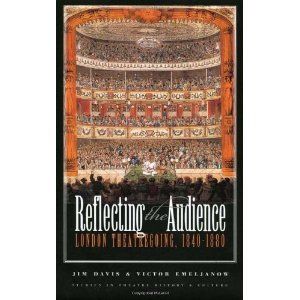
Reflecting the Audience: London Theatregoing, 1840-1880
(12/31/1969) This innovative work begins to fill a large gap in theatre studies: the lack of any comprehensive study of nineteenth-century British theatre audiences. In an attempt to bring some order to the enormous amount of available primary material, Jim Davis and Victor Emeljanow focus on London from 1840, immediately prior to the deregulation of that city's theatres, to 1880, when the Metropolitan Board of Works assumed responsibility for their licensing. In a further attempt to manage their material, t... |
 |
|
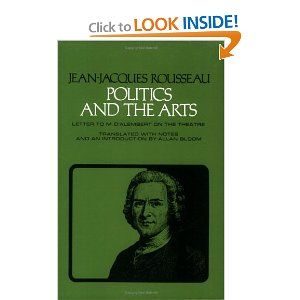
Politics and the Arts
(12/31/1969) This excellent translation makes available a classic work central to one of the most interesting controversies of the eighteenth century: the quarrel between Rousseau and Voltaire. Besides containing some of the most sensitive literary criticism ever written (especially of Molière), the book is an excellent introduction to the principles of classical political thought. It demonstrates the paradoxes of Rousseau's though and clearly displays the temperament that led him to repudiate the hopes of ... |
 |
|
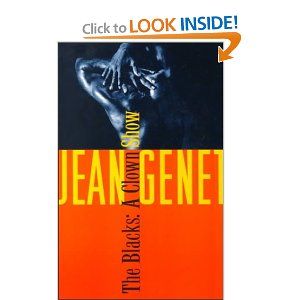
The Blacks: A Clown Show
(12/31/1969) 'One evening,' wrote Jean Genet in a prefatory note to The Blacks, 'an actor asked me to write a play for an all-black cast. But what exactly is a black? First of all, what's his colour?' - which is, perhaps, as good an introduction as any to this immensely interesting and exciting play. Translated by Bernard Frechtman, The Blacks is another striking example of the intensity, the depth and the complete originality that was Genet's view of life |
 |
|
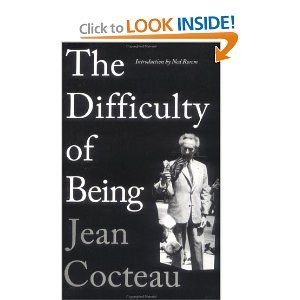
The Difficulty Of Being
(12/31/1969) Writer, filmmaker, visual artist, and celebrated leader of the French avant-garde, Jean Cocteau (1889–1963) once announced, "One must know how to go too far." The astounding scope of his work stands as a testament to that revolutionary spirit. Throughout his life he boldly experimented in almost every medium and achieved enduring success in them all: novels like Les Enfants Terribles; films such as The Blood of a Poet, Beauty and the Beast, and Orphee; as well as plays, ballets, drawings, poem... |
 |
|
Performance and Evolution in the Age of Darwin: Out of the Natural Order
(12/31/1969) Performance and Evolution in the Age of Darwin reveals the ways in which the major themes of evolution were taken up in the performing arts during Darwin's adult lifetime and in the generation after his death. The period 1830-1900 was the formative period for evolutionary ideas. While scientists and theorists investigated the law and order of nature, show business was more concerned with what was out of the natural order. Missing links and throwbacks, freak taxonomies and exotic races were fav... |
 |
|
The Donnellys
(12/31/1969) Based on the true story of an Irish family with seven sons and one daughter immigrating to Biddulph Township near London, Ontario, in 1844, The Donnellys tells the tale of mystery and truths stranger than fiction. It is the story of a secret society and a massacre that shocked the Canadian public, a story overlooked by the artistic community until Reaney's play elevated the events to the level of legend. First published in 1975, this script takes its place among other true Canadian classics on ... |
 |
|
Four Black Revolutionary Plays
(12/31/1969) These four one-act plays deal with the African-American experience of today. Their central elements are love and hatred echoed in violently explosive words, actions, thoughts and metaphor. The sum total of three hundred years of contained fury, they are powerful statements about the real meaning of white oppression of black people. In their militancy and anger, they perfectly express the mood and frustrations of black America and are as relevant today as when they were first publicly performed.... |
 |
Videos