


|
Theatre World 1994-1995, Vol. 51
(1/1/2000) Theatre World, the statistical and pictorial record of the Broadway and off-Broadway season, touring companies, and professional regional companies throughout the United States, has become a classic in its field. The book is complete with cast listings, replacement producers, directors, authors, composers, opening and closing dates, song titles, and much, much more. There are special sections with biographical data, obituary information, listings of annual Shakespeare festivals and major drama a... |
 |
|
Theatre World 1993-1994, Vol. 50
(1/1/2000) Theatre World, the statistical and pictorial record of the Broadway and off-Broadway season, touring companies, and professional regional companies throughout the United States, has become a classic in its field. The book is complete with cast listings, replacement producers, directors, authors, composers, opening and closing dates, song titles, and much, much more. There are special sections with biographical data, obituary information, listings of annual Shakespeare festivals and major drama a... |
 |
|
The Social Significance of Modern Drama
(1/1/2000) Out of print virtually since its completion in 1914, Emma Goldman's pioneer work Social Significance in Modern Drama bridges modern drama and political philosophy, pointing out the road that remains to be travelled toward a theatre of social empowerment. Activist, feminist, philosopher and anarchist, Emma Goldman was a passionate thinker about all things modern when the 20th century was still raw and new. The emergence of her treatise on the theatre after years of obscurity is certain to arouse ... |
 |
|
Polaroid Stories
(1/1/1999) Naomi Iizuka’s 1997 play, Polaroid Stories, consciously uses stories, characters and themes from Ovid’s Metamorphoses to tell the stories of street kids living on the edge in a desolate, urban landscape. Because these characters are named after Orpheus and Eurydice, and Echo and Narcissus, or based on stories of Dionysus, and Ariadne and Theseus, and because scenes are entitled “The Story of Semele” or “Theseus in the Labyrinth,” Iizuka creates a world that has two dimensions: the g... |
 |
|
Gross Indecency: The Three Trials of Oscar Wilde
(12/31/1969) In three short months, Oscar Wilde, the most celebrated playwright and wit of Victorian England, was toppled from the apex of British society into humiliation and ruin. Drawing from trial documents, newspaper accounts, and writings of the key players, Moises Kaufman ignites an incendiary mix of sex and censorship, with a cast of characters ranging from George Bernard Shaw to Queen Victoria herself. |
 |
|
The Two Gentlemen of Verona
(12/31/1969) The Two Gentlemen of Verona is a comedy by William Shakespeare, believed to have been written in 1590 or 1591. It is considered by some to be Shakespeare's first play, and is often seen as his first tentative steps in laying out some of the themes and tropes with which he would later deal in more detail; for example, it is the first of his plays in which a heroine dresses as a boy. The play also deals with the themes of friendship and infidelity, the conflict between friendship and love, and th... |
 |
|
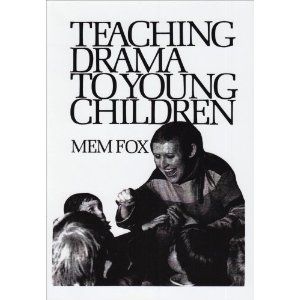
Teaching Drama to Young Children
(12/31/1969) Teaching Drama to Young Children has been written for teachers of children aged five to eight who would like to teach drama, but are not sure how to begin. |
 |
|
Mary McCarthy's Theatre Chronicles
(12/31/1969) This volume brings together Miss McCarthy's lively controversial essays on the theatre from the 1930's up to the present day. The intelligence and vitality of the author's analysis brings past productions of Shakespeare, Shaw, Ibsen, Chekhov, Wild, Odets, Saroyan, Wilder back to the reader with immediacy and freshness. Written in her trenchant prose, Miss McCarthy's articles on the drama are amusing, sharp, original and penetrating. |
 |
|
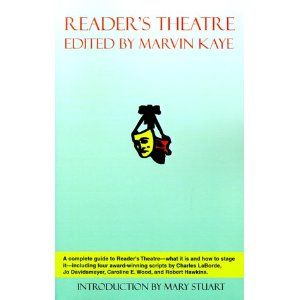
Readers Theatre: What It is and How to Stage It
(12/31/1969) A complete guide to Reader's Theatre--what it is and how to stage it--including four award-winning scripts by Charles LaBorde, Jo Davidsmeyer, Caroline E. Wood, and Robert Hawkins. (Performing Arts) |
 |
|
Così è (se vi pare)
(12/31/1969) osì è (se vi pare) (English: Right you are (if you think so)) is an Italian drama by Luigi Pirandello. It premiered 18 June 1917 in Milan. |
 |
|
Sei personaggi in cerca d'autore
(12/31/1969) Six Characters in Search of an Author (Italian: Sei personaggi in cerca d'autore) is a play by the Italian writer Luigi Pirandello. The play is a satirical tragicomedy. It was first performed in 1921 at the Teatro Valle in Rome, to a very mixed reception, with shouts from the audience of "Manicomio!" ("Madhouse!"). Subsequently the play enjoyed a much better reception. This improved reception was helped in 1925 when, with the third edition of the play, Pirandello provided a foreword clarifying... |
 |
|
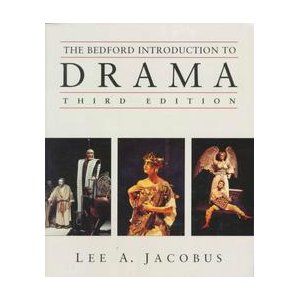
The Bedford Introduction to Drama
(12/31/1969) With an abundance of plays, commentaries, and useful editorial features, the best-selling Bedford Introduction to Drama is the most comprehensive introductory drama resource available, giving students a diverse overview of dramatic literature and instructors a text with enough breadth and flexibility to complement a variety of approaches. |
 |
|
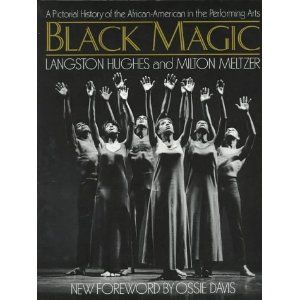
Black Magic: A Pictorial History of the African-American in the Performing Arts
(12/31/1969) Black Magic Langston Hughes's last book, presents the vast, sweeping story of African-American entertainers--the artists and the musicians, the singers and the dancers, the obscure and the illustrious--from the tragic beginnings in slavery to he triumphant artistic achievements of the late 1960s. Long considered the most comprehensive history of African-Americans in the performing arts, this milestone in black history features hundreds of rare and beautiful illustrations. Covering both the obst... |
 |
|
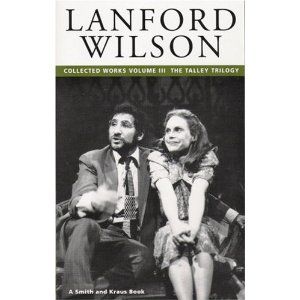
Lanford Wilson: Collected Works, Vol. 3: The Talley Trilogy
(12/31/1969) The fourth volume of Smith and Kraus' publication of the complete works of playwright Lanford Wilson. The plays in this volume include Fifth of July, Talley's Folly (the winner of the 1980 Pulitzer Prize) and Talley and Son. This collection will include introductory notes by the playwright, original cast and production information. From the New York Times: One of the rewards of the plays in the unfolding Talley Cycle is our knowledge of the interrelated, reflected worlds. When a character opens... |
 |
|
Scriptwork: A Director's Approach to New Play Development
(12/31/1969) Despite the popular myth that plays arrive at the theater fully formed and ready for production, the truth is that for centuries, most scripts have been developed through a collaborative process in rehearsal and in concert with other theater artists. David Kahn and Donna Breed provide the first codified approach to this time-honored method of play development, with a flexible methodology that takes into account differing environments and various stages of formation. Directors can use this un... |
 |
|
Learning Through Drama: Report of the Schools Council Drama, Teaching Project
(12/31/1969) A guide to teaching drama. It stresses the place of drama in the school curriculum and makes detailed recommendations both on the organization and on the content of drama teaching. |
 |
|
Inwardness and Theater in the English Renaissance
(12/31/1969) Katharine Eisaman Maus explores Renaissance writers' uneasy preoccupation with the inwardness and invisibility of truth. The perceived discrepancy between a person's outward appearance and inward disposition, she argues, deeply influenced the ways English Renaissance dramatists and poets conceived of the theater, imagined dramatic characters, and reflected upon their own creativity. |
 |
|
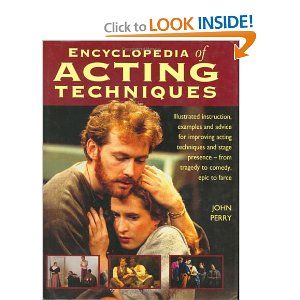
The Encyclopedia of Acting Techniques: Illustrated Instruction, Examples and Advice for Improving Acting Techniques and Stage Presence--From Tragedy to Comedy, Epic to Farce
(12/31/1969) From drama to farce, this photo-packed book offers a complete how-to reference to the craft of acting. Actors will find exercises for strengthening their focus and concentration, refining stage movements, improving voice, and understanding characters. 390 color illustrations. |
 |
|
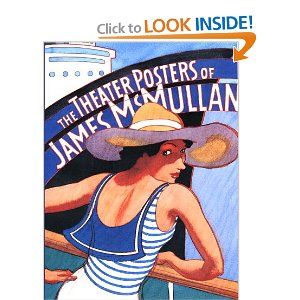
The Theater Posters of James Mcmullan
(12/31/1969) On buses, billboards, and train platforms, in newspapers and magazines, a poster's swift promise in glorious color or powerful dark tones offers a vivid impression of what awaits a theatergoer, and provides the lasting mental image of a play long after its closing night. No one creates such images with more invention, honesty, and beauty--sometimes disturbingly, but always memorably--than James McMullan. The Theater Posters of James McMullan is an illuminating collection of thirty-six posters f... |
 |
|
Lake Hollywood
(12/31/1969) The first act finds us on the shore of Scroon Lake in New Hampshire in August 1940. Agnes and Andrew, a soap salesman, arrive at Agnes’ home which she shares with her sister, Flo. Flo would like nothing better than to have the home all for herself. Also at the lake are Flo’s oddly infantile new husband, Randolph, who intends to run for office, and Randolph’s mother, Mrs. Larry, who speaks with a false German accent like a B movie Marlene Dietrich. The woods around the lake are ablaze, ... |
 |
|
Black Theatre and Performance: A Pan-African Bibliography
(12/31/1969) "This important work contains just short of 4,000 citations to monographs, chapters in monographs, journal articles, dissertations, audio tapes, video tapes, and reviews. Drawn American and Western European as well as African imprints. The main body of the work is divided into three sections: `Cultural History and the Arts,' `African Theatre,' and `Black Theatre and Performance in the Diaspora.' . . . Because of its arrangement, it is an easy bibliography to browse. Four separate indexes (artist... |
 |
|
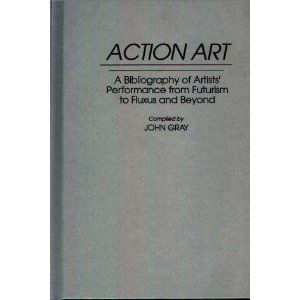
Action Art: A Bibliography of Artists' Performance from Futurism to Fluxus and Beyond
(12/31/1969) This comprehensive international bibliography is the first to attempt documentation of this diverse field, covering the history of "Artist's Performance." It focuses on its early twentieth-century antecedents in such movements as Futurism, Dada, Russian Constructivism, and the Bauhaus as well as its peak period in the 1950s, 1960s, and 1970s with such developments as Gutai, Fluxus, Viennese Actionism, Situationism, and Guerrilla Art Action. Major emphasis is also given to sources on 115 individu... |
 |
|
Polly: an opera
(12/31/1969) Trapes. There it is now! Whoever heard a man of fortune in England talk of the necessaries of life? If the necessaries of life would have satisfy'd such a poor body as me, to be sure I had never come to mend my fortune to the Plantations. Whether we can afford it or no, we must have superfluities. We never stint our Expence to our own fortunes, but are miserable, if we do not live up to the profuseness of our neighbours. |
 |
|
All For Love: A Tragedy
(12/31/1969) Although John Dryden the poet is best known for his alexandrine epics, John Dryden the playwright is most honored for this blank verse tragedy. The summit of Dryden's dramatic art, All For Love (1677) is a spectacle of passion as felt, feared, and disputed in the suspicious years following the English Civil War. |
 |
|
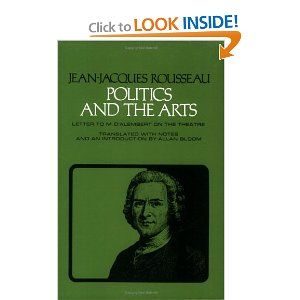
Politics and the Arts
(12/31/1969) This excellent translation makes available a classic work central to one of the most interesting controversies of the eighteenth century: the quarrel between Rousseau and Voltaire. Besides containing some of the most sensitive literary criticism ever written (especially of Molière), the book is an excellent introduction to the principles of classical political thought. It demonstrates the paradoxes of Rousseau's though and clearly displays the temperament that led him to repudiate the hopes of ... |
 |
|
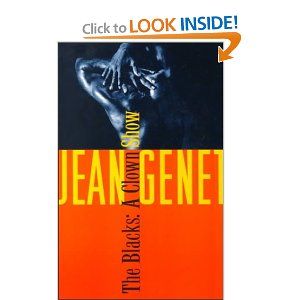
The Blacks: A Clown Show
(12/31/1969) 'One evening,' wrote Jean Genet in a prefatory note to The Blacks, 'an actor asked me to write a play for an all-black cast. But what exactly is a black? First of all, what's his colour?' - which is, perhaps, as good an introduction as any to this immensely interesting and exciting play. Translated by Bernard Frechtman, The Blacks is another striking example of the intensity, the depth and the complete originality that was Genet's view of life |
 |
|
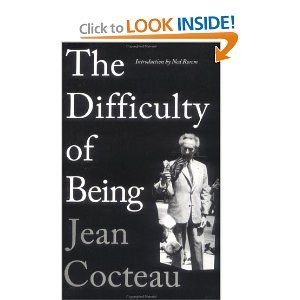
The Difficulty Of Being
(12/31/1969) Writer, filmmaker, visual artist, and celebrated leader of the French avant-garde, Jean Cocteau (1889–1963) once announced, "One must know how to go too far." The astounding scope of his work stands as a testament to that revolutionary spirit. Throughout his life he boldly experimented in almost every medium and achieved enduring success in them all: novels like Les Enfants Terribles; films such as The Blood of a Poet, Beauty and the Beast, and Orphee; as well as plays, ballets, drawings, poem... |
 |
|
The Donnellys
(12/31/1969) Based on the true story of an Irish family with seven sons and one daughter immigrating to Biddulph Township near London, Ontario, in 1844, The Donnellys tells the tale of mystery and truths stranger than fiction. It is the story of a secret society and a massacre that shocked the Canadian public, a story overlooked by the artistic community until Reaney's play elevated the events to the level of legend. First published in 1975, this script takes its place among other true Canadian classics on ... |
 |
|
Four Black Revolutionary Plays
(12/31/1969) These four one-act plays deal with the African-American experience of today. Their central elements are love and hatred echoed in violently explosive words, actions, thoughts and metaphor. The sum total of three hundred years of contained fury, they are powerful statements about the real meaning of white oppression of black people. In their militancy and anger, they perfectly express the mood and frustrations of black America and are as relevant today as when they were first publicly performed.... |
 |
|
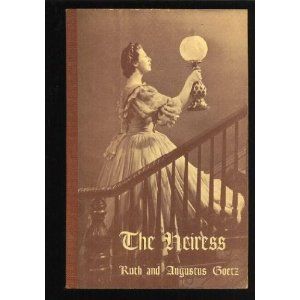
The Heiress
(12/31/1969) This series of contemporary plays includes structured GCSE assignments for use by individuals or groups. These include questions which involve close reading, writing and discussion. This play is based on the novel "Washington Square" by Henry James. --This text refers to an out of print or unavailable edition of this title. |
 |
|
Ghosts and Other Plays
(12/31/1969) The plays in this volume focus on the family and how it struggles to stay together by telling lies - and exposing them. In "Ghosts", Osvald Alving returns home only to discover the truth about the father he always looked up to, and learns the horrific effect his father's debauchery has had on him. It was Ibsen's most provocative drama, stripping away the surface of a middle-class family to expose layers of hypocrisy and immorality. "A Public Enemy" sets two brothers against each other when one w... |
 |
|
The Feast At Solhoug
(12/31/1969) Henrik Ibsen's "The Feast at Solhoug" is set at the annual feast to celebrate the wedding anniversary of Margit and Bengt Guateson. Knut Gesling, the King's sheriff, comes prior to the feast to ask for Margit's approval for marrying her sister, Signe. Knowing that Knut can be a brutal and violent man, Margit gives her permission on the condition that Knut can demonstrate he can be peaceful for a period of one year. In typical Ibsen fashion, anything but a peaceful outcome ensues. Written in 1855... |
 |
|
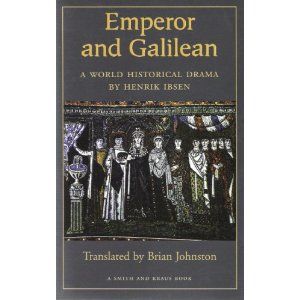
Emperor and Galilean
(12/31/1969) The publisher continues its "Great Translations for Actors" series with this 1873 epic, from Ibsen's middle period, which Ibsen considered his masterpiece. The story of Emperor Julian the Apostate, this was his last play to have a classical setting, and it signaled his adoption of a more prosy and less poetic dialog. But it is still drama on a vast scale; written in two parts, with five acts in each part, it covers the years 351-363 C.E. Under Constantine, Prince Julian becomes emperor, turns a... |
 |
|
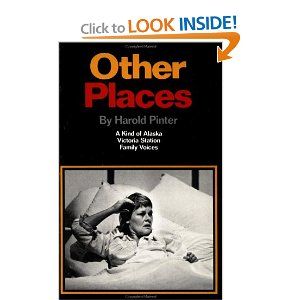
Other Places: Three Plays
(12/31/1969) Book jacket/back: When this triptich of new plays by Harold Pinter opened in London in October 1982 it was celebrated by critics and audiences alike as an electrifying theatrical event that confirmed once again the author's undisputed place in the forefront of today's dramatists. "The first two plays in 'Other Places' are strange, comic, ansd fascinating, but you would know they were Pinter if you met them in yoru dreams. However, the third play, 'A Kind of Alaska,' (which strikes me on ins... |
 |
|
King Solomon's Mines
(12/31/1969) An elephant hunter's chronicle of his safari into the interior of South Africa to search for a fabled diamond mine and to rescue the brother of the English gentleman who accompanies him across the deserts and mountains. |
 |
|
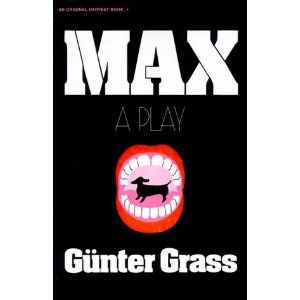
Max: A Play
(12/31/1969) A play that satirizes the political confusions of both youthful activists and middle-aged believers in gradual reform. Translated by A. Leslie Willson and Ralph Manheim. A Helen and Kurt Wolff Book. |
 |
|
British Dramatists
(12/31/1969) Part of the Writers' Britain series, first published in the 1940s, this book offers Graham Greene's evaluation of British drama, from its roots in the Mystery and Miracle plays of the market carnival through Shakespeare and the Restoration to the 20th century. |
 |
|
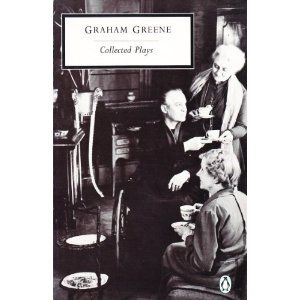
The Collected Plays
(12/31/1969) A reissue of a volume of Graham Greene's eight plays: "The Return of A.J. Raffles", "Carving a Statue", "The Complaisant Lover", "The Living Room", "The Potting Shed", "Yes and No", "For Whom the Bell Chimes" and "The Great Jowett". |
 |
|
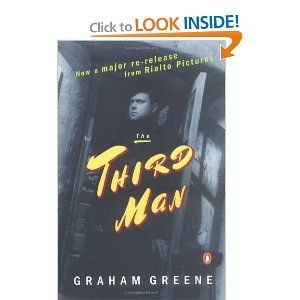
The Third Man
(12/31/1969) Greene's novella, or "entertainment," was written in 1950 as a sort of preliminary draft for a screenplay and was not actually intended to stand alone as a written work. The motion picture, stated Greene, is better than the story because it is the story in its finished state, and it is the film, starring Joseph Cotten and Orson Welles, that most people will remember. This audiobook, however, brings the story to life very effectively, with all its suspense, odd turns of plot, and intriguing chara... |
 |
|
The Best Man
(12/31/1969) The Best Man crackles with the smart lines and situations inherent to the work of Gore Vidal. The political intrigues rampant in Vidals 1960 setting are strangly similar to the political intrigues of the present day. This darkly satirical drama finds two presidential contenders seeking the endorsement of an aging ex-president and explores how personal agendas can change the course of a nations destiny. A L.A. Theatre Works full-cast performance featuring: Terrence Currier, Johnny Holliday, Naom... |
 |
|
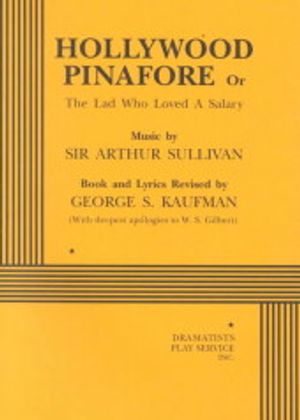
Hollywood Pinafore or the Lad Who Loved a Salary
(12/31/1969) Hollywood Pinafore, or The Lad Who Loved a Salary is a musical comedy in two acts by George S. Kaufman, with music by Arthur Sullivan, based on Gilbert and Sullivan's H.M.S. Pinafore. It opened on Broadway at the Alvin Theatre on May 31, 1945, and closed on July 14, 1945 after 52 performances. It was directed by Kaufman himself and starred Shirley Booth, Victor Moore, George Rasely, and William Glaxton. The adaptation transplants the maritime satire of the original Pinafore to a satire of the g... |
 |
|
Three Comedies
(12/31/1969) Edna Ferber and George S. Kaufman inebriated America during the Prohibition Twenties, then made everyone forget the Depression in the Thiries via gales of sophisticated laughter. The dynamic playwriting duo created three smash hits together: The Royal Family (1927) * Dinner at Eight (1932) * and Stage Door (1936. All three plays were promptly made by Hollywood into equally famous films - Dinner at Eight with Jean Harlow; Stage Door with a young Katharine Hepburn and Lucille Ball; and the Royal F... |
 |
|
You Never Can Tell
(12/31/1969) Purchase of this book includes free trial access to www.million-books.com where you can read more than a million books for free. This is an OCR edition with typos. Excerpt from book: ACT III The Clandons' sitting room in the hotel. An expensive apartment on the ground floor, with a French window leading to the gardens. In the centre of the room is a substantial table, surrounded by chairs, and draped with a maroon cloth on which opulently bound hotel and railway guides are displayed. A visitor e... |
 |
|
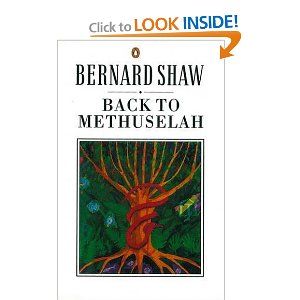
Back to Methuselah: A Metabiological Pentateuch
(12/31/1969) "Back to Methuselah" (A Metabiological Pentateuch) is a 1921 series of five plays and a preface by George Bernard Shaw. The five plays are: "In the Beginning: B.C. 4004" (In the Garden of Eden); "The Gospel of the Brothers Barnabas: Present Day"; "The Thing Happens: A.D. 2170"; "Tragedy of an Elderly Gentleman: A.D. 3000"; and, "As Far as Thought Can Reach: A.D. 31,920". The plays were published with a preface titled The Infidel Half Century, and first performed in 1922 by the New York Theatre ... |
 |
|
Selected Plays
(12/31/1969) Francis Russell O'Hara (March 27, 1926 – July 25, 1966) was an American writer, poet and art critic. He was a member of the New York School of poetry. |
 |
|
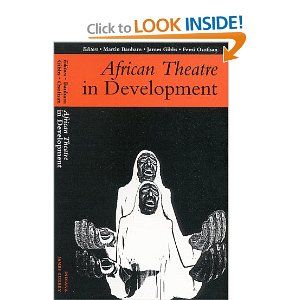
African Theatre in Development
(12/31/1969) Scholars and playwrights discuss theatre in Africa from propaganda and mass education to practice and policy in theatre and development. |
 |
|
Frederico Garcia Lorca: Impossible Theatre, Short Plays
(12/31/1969) This collection brings together new original English-language translations of frederico Garcia Lorca's so-called "impossible" plays, as well as new translations of thirteen of his most recognized poems from his Poet in new York cycle. Along with translations are essays on Lorca's work by some of his most prominent Lorca scholars currently working today, and cover art and dramaturgical notes by esteemed Catalan painter, scenic designer, and filmmaker Frederic Amat. This volume seeks to recontext... |
 |
|
Four Puppet Plays: Play without a Title, The Divan Poems and Other Poems, Prose Poems, and Dramatic Pieces
(12/31/1969) From Lorca's prologue to a puppet play: 'This is not the first time that I, the drunken puppet who marries Dona Rosita, leaves the hand of Federico Garcia Lorca on the stage, where I live and never die. The first time was in the house of this poet- remember that, Federico? It was spring in Granada, and the drawing rooom of your house was full of children who were saying: ' the puppets are flesh and bone, so how come they remain children and never grow up?' The famous Manuel de Falla was at the ... |
 |
|
Mariana Pineda
(12/31/1969) Una joven granadina es encarcelada en 1831 por haber mandado bordar la bandera que servira de insignia a una insurreccion liberal. Le prometen la libertad si delata a los jefes de esta, pero, al negarse, es condenada a muerte y ejecutada. |
 |
|
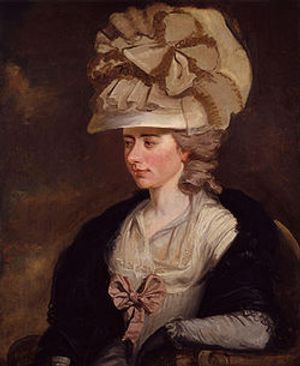
The Complete Plays of Frances Burney, 2 Volumes
(12/31/1969) In the plays, as in her novels, Burney satirizes the social conventions and pretensions of her day. The Witlings (1779), her first play, is a biting satire on the Bluestockings; it was never performed, however, for fear of a possible scandal. The violent, the grotesque, and the macabre also figure strongly in her writings. Contents Volume 1: The Comedies Introduction Chronology The Witlings (1778-80) Love and Fashion (1798-99) A Busy Day (1800-02) The Woman-Hater (1800-02) Volume 2: The Tragedie... |
 |
Videos