


|
Polly: an opera
(12/31/1969) Trapes. There it is now! Whoever heard a man of fortune in England talk of the necessaries of life? If the necessaries of life would have satisfy'd such a poor body as me, to be sure I had never come to mend my fortune to the Plantations. Whether we can afford it or no, we must have superfluities. We never stint our Expence to our own fortunes, but are miserable, if we do not live up to the profuseness of our neighbours. |
 |
|
All For Love: A Tragedy
(12/31/1969) Although John Dryden the poet is best known for his alexandrine epics, John Dryden the playwright is most honored for this blank verse tragedy. The summit of Dryden's dramatic art, All For Love (1677) is a spectacle of passion as felt, feared, and disputed in the suspicious years following the English Civil War. |
 |
|
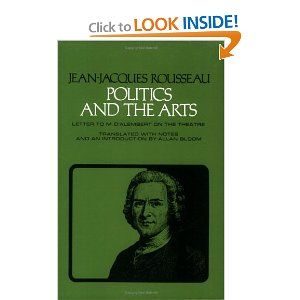
Politics and the Arts
(12/31/1969) This excellent translation makes available a classic work central to one of the most interesting controversies of the eighteenth century: the quarrel between Rousseau and Voltaire. Besides containing some of the most sensitive literary criticism ever written (especially of Molière), the book is an excellent introduction to the principles of classical political thought. It demonstrates the paradoxes of Rousseau's though and clearly displays the temperament that led him to repudiate the hopes of ... |
 |
|
Ghosts and Other Plays
(12/31/1969) The plays in this volume focus on the family and how it struggles to stay together by telling lies - and exposing them. In "Ghosts", Osvald Alving returns home only to discover the truth about the father he always looked up to, and learns the horrific effect his father's debauchery has had on him. It was Ibsen's most provocative drama, stripping away the surface of a middle-class family to expose layers of hypocrisy and immorality. "A Public Enemy" sets two brothers against each other when one w... |
 |
|
The Feast At Solhoug
(12/31/1969) Henrik Ibsen's "The Feast at Solhoug" is set at the annual feast to celebrate the wedding anniversary of Margit and Bengt Guateson. Knut Gesling, the King's sheriff, comes prior to the feast to ask for Margit's approval for marrying her sister, Signe. Knowing that Knut can be a brutal and violent man, Margit gives her permission on the condition that Knut can demonstrate he can be peaceful for a period of one year. In typical Ibsen fashion, anything but a peaceful outcome ensues. Written in 1855... |
 |
|
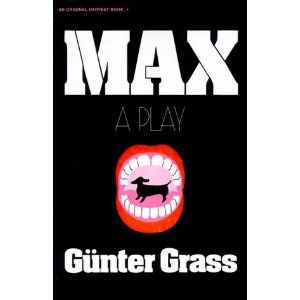
Max: A Play
(12/31/1969) A play that satirizes the political confusions of both youthful activists and middle-aged believers in gradual reform. Translated by A. Leslie Willson and Ralph Manheim. A Helen and Kurt Wolff Book. |
 |
|
You Never Can Tell
(12/31/1969) Purchase of this book includes free trial access to www.million-books.com where you can read more than a million books for free. This is an OCR edition with typos. Excerpt from book: ACT III The Clandons' sitting room in the hotel. An expensive apartment on the ground floor, with a French window leading to the gardens. In the centre of the room is a substantial table, surrounded by chairs, and draped with a maroon cloth on which opulently bound hotel and railway guides are displayed. A visitor e... |
 |
|
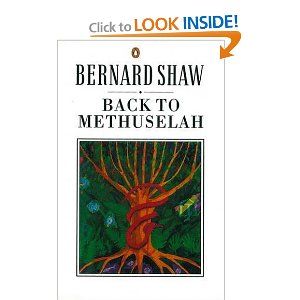
Back to Methuselah: A Metabiological Pentateuch
(12/31/1969) "Back to Methuselah" (A Metabiological Pentateuch) is a 1921 series of five plays and a preface by George Bernard Shaw. The five plays are: "In the Beginning: B.C. 4004" (In the Garden of Eden); "The Gospel of the Brothers Barnabas: Present Day"; "The Thing Happens: A.D. 2170"; "Tragedy of an Elderly Gentleman: A.D. 3000"; and, "As Far as Thought Can Reach: A.D. 31,920". The plays were published with a preface titled The Infidel Half Century, and first performed in 1922 by the New York Theatre ... |
 |
|
Selected Plays
(12/31/1969) Francis Russell O'Hara (March 27, 1926 – July 25, 1966) was an American writer, poet and art critic. He was a member of the New York School of poetry. |
 |
|
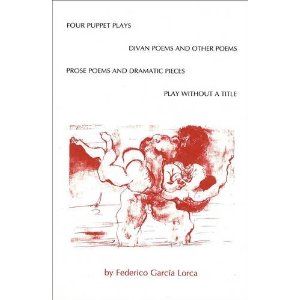
Four Puppet Plays: Play without a Title, The Divan Poems and Other Poems, Prose Poems, and Dramatic Pieces
(12/31/1969) From Lorca's prologue to a puppet play: 'This is not the first time that I, the drunken puppet who marries Dona Rosita, leaves the hand of Federico Garcia Lorca on the stage, where I live and never die. The first time was in the house of this poet- remember that, Federico? It was spring in Granada, and the drawing rooom of your house was full of children who were saying: ' the puppets are flesh and bone, so how come they remain children and never grow up?' The famous Manuel de Falla was at the ... |
 |
|
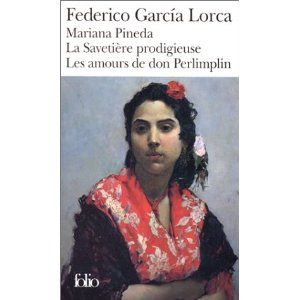
Mariana Pineda
(12/31/1969) Una joven granadina es encarcelada en 1831 por haber mandado bordar la bandera que servira de insignia a una insurreccion liberal. Le prometen la libertad si delata a los jefes de esta, pero, al negarse, es condenada a muerte y ejecutada. |
 |
|
The Zoo Story and the Sandbox
(12/31/1969) The Zoo Story is American playwright Edward Albee's first play; written in 1958 and completed in just three weeks. It was originally titled Peter and Jerry. The play explores themes of isolation, loneliness, miscommunication as anathematization, social disparity and dehumanization in a commercial world. Initially the play was rejected by New York producers. Albee first had it staged in Europe, premiering in West Berlin at the Schiller Theater Werkstatt on September 28, 1959. In its first Ameri... |
 |
|
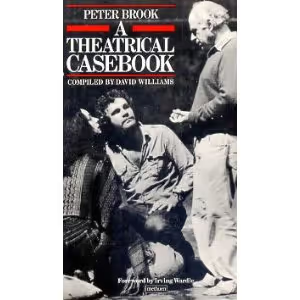
Peter Brook: A Theatrical Casebook
(12/31/1969) Peter Stephen Paul Brook CH, CBE (born 21 March 1925) is an English theatre and film director and innovator, who has been based in France since the early 1970s. |
 |
|
Writing in Restaurants
(12/31/1969) The title of Mamet's first collection of essays and speeches certainly doesn't suggest the themes of commitment and excellence. Nevertheless, if a collection of 28 essays on a variety of topics can be said to have an overarching theme or themes, then surely commitment and excellence sound clearly. These essays, apparently written over a considerable span of years, treat topics ranging from radio drama through middle-class fashion trends to the Academy Awards and the use of amplification in theat... |
 |
|
My Life in Art
(12/31/1969) Written with the same warmth, liveliness and ability to re-create reality that made Stanislavski a great actor, his autobiography tells of his childhood in the world of Moscow's wealthy merchants, his successes and failures as an amateur actor, how he studied human beings, and developed what has come to be known as the "Stanislavski Method," how his group of dedicated amateurs became "perhaps the greatest acting group the world has ever known (Washington Post)," The Moscow Art Theatre. |
 |
|
Creating A Role
(12/31/1969) This volume completes, with An Actor Prepares and Building a Character, the trilogy in which Stanislavski set down his life's accomplishment. Creating a Role describes the elaborate preparation that precedes actual performance. Stanislavski here relates the techniques he describes in his preceding books to analyzing specific plays and their roles. |
 |
|
Glued to the Box: Television Criticism from the
(12/31/1969) Collection of the Australian-born writer's TV criticism published in the London 'Observer' during the period 1979-82. It is a paperback edition of a volume first published by Jonathan Cape in 1983. His earlier volumes of TV criticism are 'Visions Before Midnight' (1977 & 1981) and 'The Crystal Bucket' (1983). They were published in a single volume with a new introduction and index as 'Clive James on Television' (1991). |
 |
|
New Theatre Quarterly 15 (Part 3)
(12/31/1969) New Theatre Quarterly provides a vital international forum where theatrical scholarship and practice can meet and where prevailing dramatic assumptions can be subjected to vigorous critical questioning. It shows that theatre history has a contemporary relevance, that theatre studies need a methodology and that theatre criticism needs a language. The journal publishes news, analysis and debate within the field of theatre studies. |
 |
|
New Theatre Quarterly 14 (Part 2)
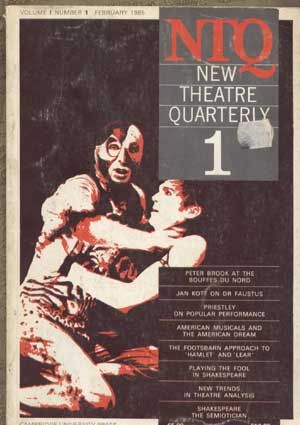
(12/31/1969) New Theatre Quarterly provides a vital international forum where theatrical scholarship and practice can meet and where prevailing dramatic assumptions can be subjected to vigorous critical questioning. It shows that theatre history has a contemporary relevance, that theatre studies need a methodology and that theatre criticism needs a language. The journal publishes news, analysis and debate within the field of theatre studies. |
 |
|
New Theatre Quarterly 13 (Part 1)
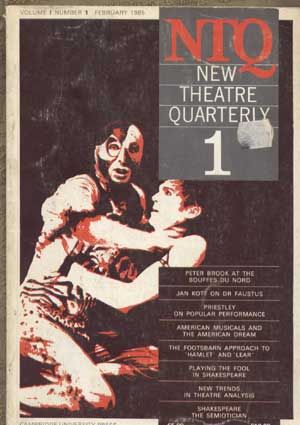
(12/31/1969) |
 |
|
New Theatre Quarterly 11 (Part 3)
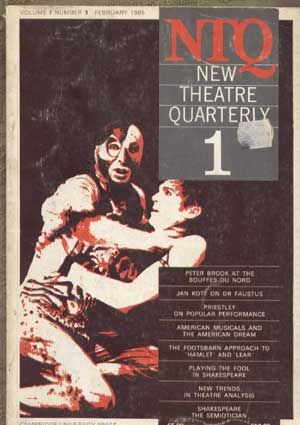
(12/31/1969) New Theatre Quarterly provides a vital international forum where theatrical scholarship and practice can meet and where prevailing dramatic assumptions can be subjected to vigorous critical questioning. It shows that theatre history has a contemporary relevance, that theatre studies need a methodology and that theatre criticism needs a language. The journal publishes news, analysis and debate within the field of theatre studies. |
 |
|
New Theatre Quarterly 10: Volume 3, Part 2
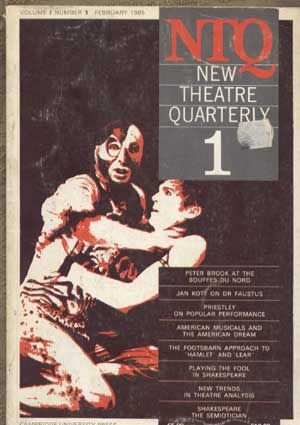
(12/31/1969) One of a series discussing topics of interest in theatre studies from theoretical, methodological, philosophical and historical perspectives. The books are aimed at drama and theatre teachers, advanced students in schools and colleges, arts authorities, actors, playwrights, critics and directors. |
 |
|
New Theatre Quarterly 12 (Part 4)
(12/31/1969) One of a series discussing topics of interest in theatre studies from theoretical, methodological, philosophical and historical perspectives. The books are aimed at drama and theatre teachers, advanced students in schools and colleges, arts authorities, actors, playwrights, critics and directors. --This text refers to an out of print or unavailable edition of this title. |
 |
|
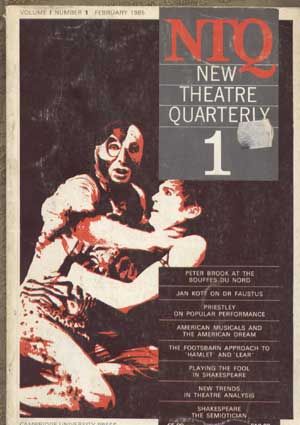
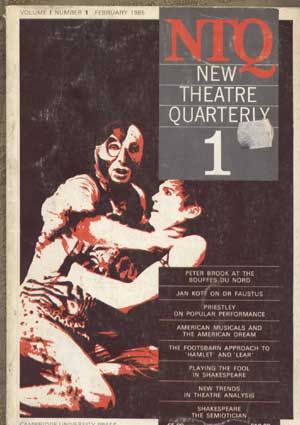
New Theatre Quarterly 1 (Part 1)
(12/31/1969) New Theatre Quarterly provides a vital international forum where theatrical scholarship and practice can meet and where prevailing dramatic assumptions can be subjected to vigorous critical questioning. It shows that theatre history has a contemporary relevance, that theatre studies need a methodology and that theatre criticism needs a language. The journal publishes news, analysis and debate within the field of theatre studies. |
 |
|
AWAKE AND SING. A PLAY IN THREE ACTS
(12/31/1969) Awake and Sing! is a drama written by American playwright Clifford Odets. The play was initially produced by The Group Theatre in 1935. The play is set in The Bronx in 1933; it concerns the impoverished Berger family and their conflicts as the parents scheme to manipulate their children's relationships to their own ends, while their children strive for their own dreams. |
 |
|
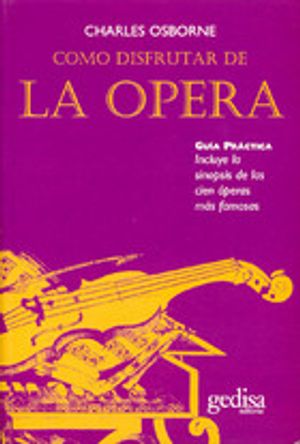
How to Enjoy Opera
(12/31/1969) Discusses the essential elements of opera, surveys the history of opera, and describes the plots of one hundred popular operas. |
 |
|
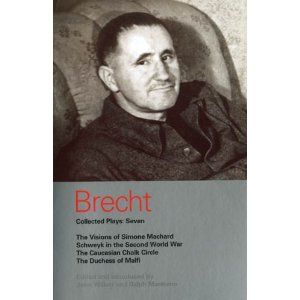
Visions of Simone Machard, The: Schweyk in the Second World War
(12/31/1969) Schweik in the Second World War is a play by German dramatist and poet Bertolt Brecht. It was written by Brecht in 1943 while in exile in California, and is a sequel to the 1923 novel The Good Soldier Švejk by Jaroslav Hašek. It is set in Prague and on the Russian Front during World War II. It is a satirical tale of a common man, Schweyk, who is forced into war and manages to survive. He overcomes dangerous situations in Gestapo Headquarters, a military prison, and a Voluntary Labor Service. ... |
 |
|
Saint Joan of the Stockyards
(12/31/1969) "A major Brecht play in an outstanding translation with an expert and up-to-date preface." -- Eric Bentley "... a fine translation.... Jones has handled Brecht's meters with great skill." -- Choice |
 |
|
Open Letters to the Intimate Theater
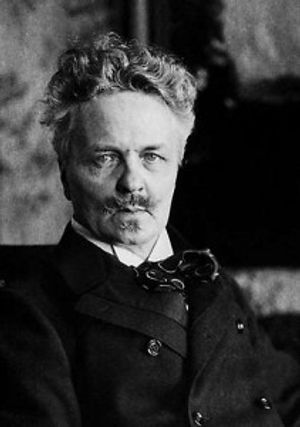
(12/31/1969) Swedish playwright, novelist, and short-story writer, who combined in his works psychology, naturalism, and later elements of new literary forms. Strindberg was married three times – several of his plays drew on the problems of his marriages and reflected his constant interest in self-analysis. A sensitive and controversial writer, who suffered from hostile reviews, Strindberg represented the 19th-century ideal of artist as a free personality, unrestrained by convention. |
 |
|
After the Fall: A Play in Two Acts
(12/31/1969) A lost character draws upon events in his past as he searches for life's meaning in Miller's powerful play. |
 |
|
Salesman in Beijing
(12/31/1969) " In 1983 Arthur Miller was invited to direct a Chinese version of his play, "Death of a Salesman." "Salesman in Beijing" is his day by day account of his experience. Most of the book focuses on the problems of communication with the Chinese actors as a result of linguistic and cultural differences. He feels that he was able to overcome these difficulties because of the dedication of the actors and the fact that the play itself deals with universal qualities that transcend local culture. He ... |
 |
|
Henceforward
(12/31/1969) Starring Anne Heche and Jared Harris, the hilarious Henceforward... is one of Alan Ayckbourn s most unusual works. In the not-so-distant future a composer is building a female robot to act as his fiancée, so that he can convince his ex-wife that their daughter should come live with him. Thus, he hopes to overcome his writers block and redress the pain of his past. A full-cast performance featuring: Jack Davenport, Jared Harris, Anne Heche, Paula Jane Newman, Moira Quirk and Darren Richardson... |
 |
|
Being and Doing: A Workbook for Actors
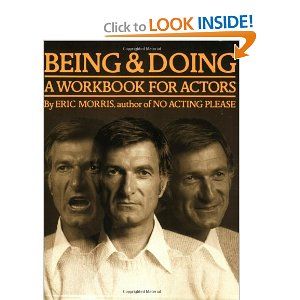
(12/31/1969) A fun and exciting workbook for actors to use in establishing a daily work schedule. Designed to help the actor integrate the two parts of the process, THE INSTRUMENT AND THE CRAFT. Which gives spontaneity, dimension, and authenticity to his performance. The numerous daily exercises deal with every aspect of acting including the actor's relationship to the business. Blank pages provide the actor with space to document his or her own involvement and progress. Being a workbook, every page is fill... |
 |
|
El Burlador De Sevilla
(12/31/1969) El burlador de Sevilla is a play by Tirso de Molina, first published in Spain around 1630, though it may have been performed as early as 1616. Set in the 14th century, the play is the earliest fully-developed dramatisation of the Don Juan legend. |
 |
|
Cats: The Book of the Musical
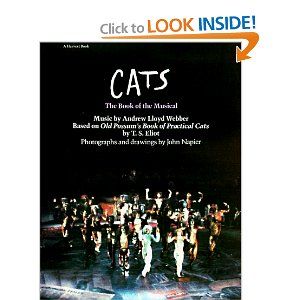
(12/31/1969) A richly illustrated book that re-creates the making of one of Broadway’s biggest hits, based on Eliot’s Old Possum’s Book of Practical Cats. Color photographs and drawings by John Napier. |
 |
|
One Act Plays for Acting Students: An Anthology of Short One-Act Plays for One, Two or Three Actors
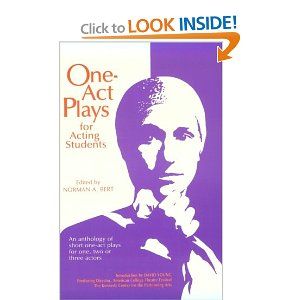
(12/31/1969) 23 short length plays for a cast of one, two, or three. 5 minutes acting time for each character. Performance times vary from 8-15 minutes. |
 |
|
A Short History of Opera
(12/31/1969) When first published in 1947, A Short History of Opera immediately achieved international status as a classic in the field. Now, more than five decades later, this thoroughly revised and expanded fourth edition informs and entertains opera lovers just as its predecessors have. The fourth edition incorporates new scholarship that traces the most important developments in the evolution of musical drama. After surveying anticipations of the operatic form in the lyric theater of the Greeks, medi... |
 |
|
Master Teachers of Theatre: Observations on Teaching Theatre by Nine American Masters
(12/31/1969) Claribel Baird reviews the interpretation of classical texts for theatrical performance. Howard Bay interrupted his stage design career of more than 150 Broadway productions to help students. Bernard Beckerman asks if there are approaches to the teaching of dramatic literature that particularly suit drama-as-theatre. Robert Benedetti offers suggestions on the teaching of acting. Oscar Brockett treats the problems of the theatre teacher and the processes of learning. Agnes Haaga shows that the ... |
 |
|
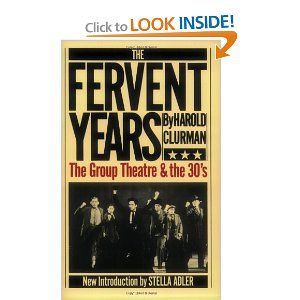
The Fervent Years: The Group Theatre And The Thirties
(12/31/1969) The Group Theatre was perhaps the most significant experiment in the history of American theater. Producing plays that reflected topical issues of the decade and giving a creative chance to actors, directors, and playwrights who were either fed up with or shut out of commercial theater, the ”Group” remains a permanent influence on American drama despite its brief ten-year life. It was here that method acting, native realism, and political language had their tryouts in front of audiences who... |
 |
|
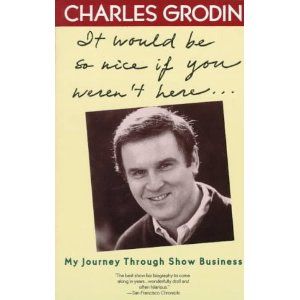
It Would Be So Nice If You Weren't Here: My Journey Through Show Business [
(12/31/1969) "In this ebullient, often rancorous autobiography, the stage, film and TV actor describes vividly the hassles that cost him the plum role in The Graduate and numerous other setbacks before he starred in The Heartbreak Kid . Instructive and entertaining, his story includes tidbits on Mike Nichols, Elaine May, Roman Po lanski, Ellen Burstyn, Simon & Garfunkel, and many other luminaries, none more intriguing than the un sinkable Grodin," said PW. Photos. |
 |
|
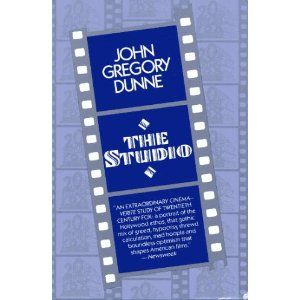
The Studio
(12/31/1969) In 1967, John Gregory Dunne asked for unlimited access to the inner workings of Twentieth Century Fox. Miraculously, he got it. For one year Dunne went everywhere there was to go and talked to everyone worth talking to within the studio. He tracked every step of the creation of pictures like "Dr. Dolittle," "Planet of the Apes," and "The Boston Strangler." The result is a work of reportage that, thirty years later, may still be our most minutely observed and therefore most uproariously funny po... |
 |
|
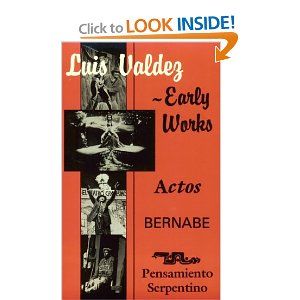
Luis Valdez Early Works: Actos, Bernabe and Pensamiento Serpentino
(12/31/1969) This collection is actually three books in one: 1) a collection of one-act plays by the famous farmwork theatre, El Teatro Campesino and its director, Luis Valdez, 2) one of the first fully realized, full-length plays by Valdez alone, and 3) an original narrative poem by Luis Valdez. |
 |
|
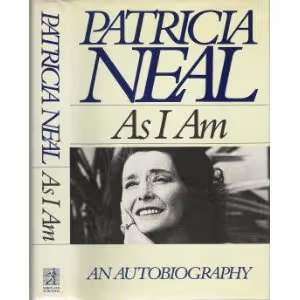
AS I AM
(12/31/1969) By age 21 the self-confident, determined, Southern-bred actress had starred in a Broadway hit, won a Tony, was "the toast of New York" and was featured on a Life coveronly the first of many triumphs in a celebrity life. In this account written "to reclaim the past that was stolen," Neal writes candidly about her numerous love affairs, both transient and profound, such as a liaison with Gary Cooper and her 25-year marriage to writer Roald Dahl. More arresting are the tragedies that beset her, in... |
 |
|
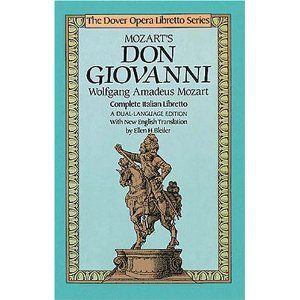
Don Giovanni
(12/31/1969) Standard Italian libretto, with complete English translation. Convenient and thoroughly portable—an ideal companion for reading along with a recording or the performance itself. Introduction. List of Characters. Plot Summary. |
 |
|
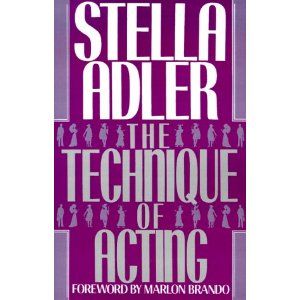
The Technique of Acting
(12/31/1969) Adler, among the most acclaimed actresses and teachers of acting, has written a dynamic book that is sure to become a classic. After the forward by former pupil Marlon Brando, Adler explains her technique, which is based on the methods of Stanislavskishe was a student of the famous Russian. The 12 chapters cover goals, body and speech control, imagination, action, and character; the book also includes a very useful listing of scenes from well-known plays. Adler made her stage debut in 1906 at th... |
 |
|
A Source Book in Theatrical History: Twenty-five centuries of stage history in more than 300 basic documents and other primary material
(12/31/1969) A rich resource for students of theater and theater historians, this volume features an annotated collection of more than 300 unusually interesting and detailed articles. Passages by contemporary observers from ancient Greece to modern times include notes on acting, directing, make-up, costuming, stage props, machinery, scene design, and much more. |
 |
|
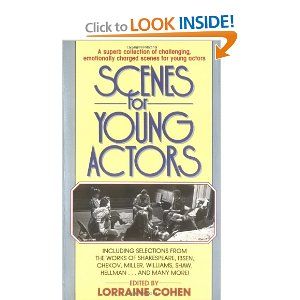
Scenes for Young Actors
(12/31/1969) A One-Of-A-Kind Acting Aid With Young Talent In Mind In drama classes and at auditions, young actors have continually had to resort to performing roles written for much older men and women -- roles that are often difficult for them to identify with or to fully understand. But this innovative scenebook gives younger performers the opportunity to portray characters their own age. From the classics to the finest in contemporary drama -- from Shakespeare, Shaw, and Chekov to Miller, Will... |
 |
|
Later Plays Of Eugene O'Neill
(12/31/1969) Eugene Gladstone O'Neill (16 October 1888 – 27 November 1953) was an American playwright, and Nobel laureate in Literature. His poetically titled plays were among the first to introduce into American drama techniques of realism earlier associated with Russian playwright Anton Chekhov, Norwegian playwright Henrik Ibsen, and Swedish playwright August Strindberg. His plays were among the first to include speeches in American vernacular and involve characters on the fringes of society, where they... |
 |
|
Godspell: Vocal Selections
(12/31/1969) 13 vocal selections from the perennial favorite, including the songs: All Good Gifts * By My Side * Day by Day * Learn Your Lessons Well * O Bless the Lord, My Soul * Prepare Ye (The Way of the Lord) * and more. |
 |
|
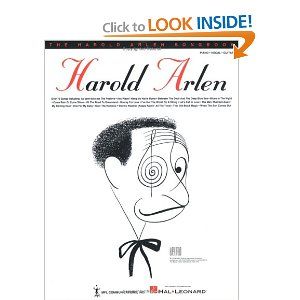
The Harold Arlen Songbook (P/V/G Composer Collection)
(12/31/1969) A "must-own" collection of 76 songs of Harold Arlen. Includes his major works and some previously unpublished titles. Highlights include: Come Rain or Come Shine * Get Happy * Let's Fall in Love * The Man That Got Away * Over the Rainbow * Stormy Weather * and more! |
 |
Videos