


The Fralin Museum Of Art Unveils Fall 2026 Exhibitions
Exhibitions at the University of Virginia will feature works by Georges Adéagbo and Narcissa Chisholm Owen.
The Fralin Museum of Art at The University of Virginia will present Legacies of Independence, a slate of four exhibitions exploring varied themes and perspectives around the legacies of Thomas Jefferson and the signing of the Declaration of Independence in 1776. On view from August 29, 2026, through January 3, 2027, the exhibitions take both historic and contemporary approaches to consider the ways Jefferson helped shape the United States in its infancy and promoted ideals we continue to deliberate to this day.
The exhibitions explore a variety of perspectives that range from a site-specific installation by internationally acclaimed artist Georges Adéagbo, to an examination of Jefferson's time in Southern France through eighteenth and early nineteenth-century prints, drawings, rare books, maps, and objects. The Fralin will also showcase 19th century Native American artist Narcissa Chisholm Owen's painting Jefferson and His Descendents and Sky Hopinka's video installation Mnemonics of Shape and Reason, to further celebrate the museum's recognition of the 250th anniversary of the signing of the Declaration of Independence.
Georges Adéagbo: Thomas Jefferson and the Legacies of Independence
August 29, 2026 - January 3, 2027
The Fralin Museum of Art has invited internationally acclaimed artist Georges Adéagbo (b. 1942, Benin) to build upon his previous works about Abraham Lincoln. Adéagbo is creating a site-specific installation centered on Thomas Jefferson, his life at Monticello, and the changing meanings of independence over time. Georges Adéagbo: Thomas Jefferson and the Legacies of Independence brings together archives, found objects, and newly created art objects to provide a global perspective and immersive experience exploring Jefferson, his peers, and the ongoing pursuit of the ideals of independence and equality.
In 2000, Adéagbo created the first of a series of presidential portraits of Lincoln for the exhibition Abraham-L'ami de Dieu at New York's Museum of Modern Art and wove together visual and textual narratives that weighed the concepts of sacrifice and freedom, linking the freeing of slaves in the United States with global liberation movements. In 2023, he created a three-part exhibition, Create to Free Yourselves-Abraham Lincoln and the History of Freeing Slaves in America, that traveled from Lincoln's Cottage in Washington, DC to Chesterwood (the museum and former studio of Daniel Chester French) in Stockbridge, Massachusetts, to the Smithsonian National Museum of African Art in Washington, DC. During this endeavor, the artist learned of Jefferson, the slave-owning architect of the Declaration of Independence. These contradictions-for whom Jefferson created space for life, liberty and the pursuit of happiness? -and what they mean today, have captivated Adéagbo's interest and are at the heart of this project.
Curated by Karen E. Milbourne, J. Sanford Miller Family Director, with Ariel Ankrah, Curatorial Assistant
Collection and Translation: Thomas Jefferson in Southern France
August 29, 2026 - January 3, 2027
Bringing a new perspective to a familiar founding narrative, this interdisciplinary exhibition foregrounds the transatlantic connections that helped shape the United States in its earliest decades. In early spring 1787, Thomas Jefferson set out on a three-month journey to the South of France. He sought information on valuable plants, labor strategies, and monumental architecture that he could translate into the American context. His observations of the terrain, peoples, and customs of the region are recorded in the form of detailed letters and diaries. Influences from the rich cultural landscape of southern France that Jefferson encountered are evident throughout Virginia. Most notably, his designs for the Virginia State Capitol in Richmond were inspired by the Maison Carrée, a Roman temple in Nîmes. Although Jefferson's encounter with southern France can be understood as an early American version of the European Grand Tour, his selective prospecting of the region's heritage tended to ignore other histories and experiences, from medieval town planning to the real conditions of French peasant labor. Organized into three sections-plants, labor, and architecture-this presentation brings together a group of eighteenth and early nineteenth-century prints, drawings, rare books, and maps. Each thematic section will include citations from Jefferson's writings as well as photographs of the locations that he visited.
Curated by Elisabeth Rivard, PhD Candidate, History of Art and Architecture, Barringer-Lindner Curatorial Fellow, University of Virginia
Independent Ideas: Narcissa Chisholm Owen
August 29, 2026 - January 3, 2027
Independent Ideas: Narcissa Chisholm Owen showcases a remarkable painting within a gallery dedicated to reflection and engagement with the legacies of independence-of people, ideas, and place-promoted by Thomas Jefferson and the founders of the United States.
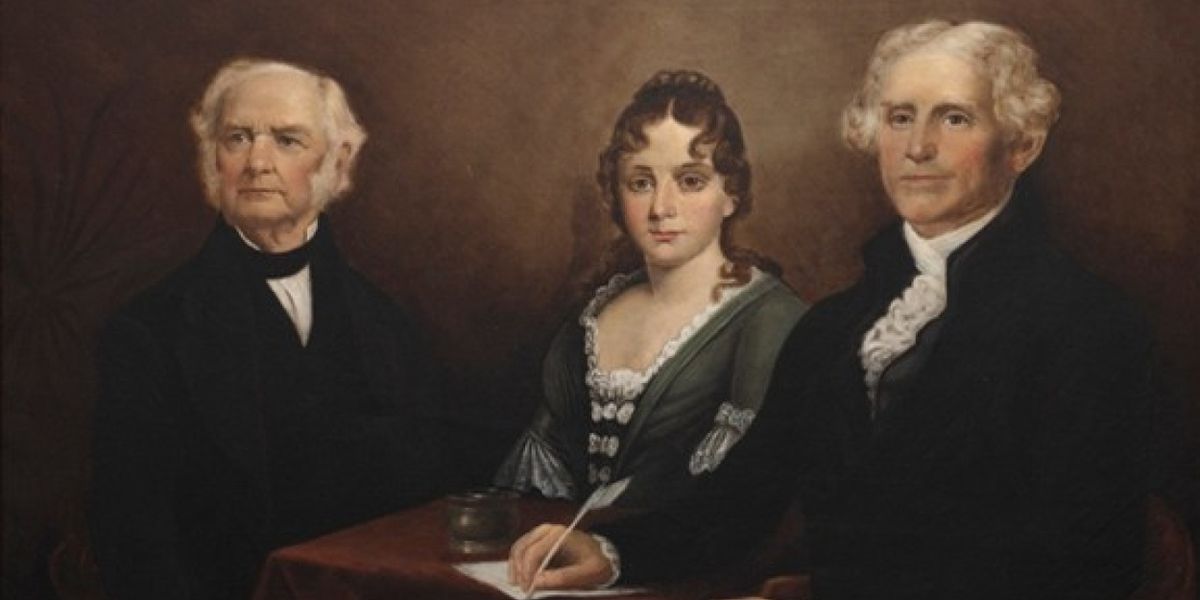
Painted by Narcissa Chisholm Owen (1831-1911, Oklahoma) in her studio at the Corcoran Gallery of Art in Washington, DC and exhibited at the Louisiana Purchase Exposition in St. Louis (1904) where it received a silver medal-Thomas Jefferson and His Descendents portrays America's third president, his daughter Martha Jefferson Randolph, and her son, Thomas Jefferson Randolph. One of two paintings by the artist to portray Jefferson's descendants, Owen brings her distinctive perspective to emphasize the importance of family, personal accomplishment, and the central role of women.
Narcissa Chisholm Owen was the daughter of Old Settler Cherokee Chief Thomas Chisholm, wife of Virginia state senator Robert L. Owen, and mother of both United States Senator Robert Latham Owen Jr. and Major William Otway Owen. She was also an accomplished painter, author, music teacher, and suffragist. Her father and grandfather were part of a delegation of western Cherokee who met with Thomas Jefferson in Washington, DC in 1808. The president presented her father with a silver Peace and Friendship medal that remained in the family and passed on to Narcissa. She subsequently named her own Oklahoma home Monticello in tribute. As she wrote of these paintings in her 1907 memoir: "Wishing to do my part in honoring him [Jefferson] and at the same time to show the world that the Cherokees were a cultured and civilized people, I painted ... the portraits of six generations of his family, doing what honor I could to the Indian people and to Jefferson's merits as a great statesman."
Curated by Adrianna Greci Green, PhD and America Meredith, Publishing Editor, First American Art Magazine
Sky Hopinka: Mnemonics of Shape and Reason
August 29, 2026 - January 3, 2027
As one of a series of exhibitions exploring the multiplicity of ideas related to independence, place, and history that have shaped the United States' 250-year history, The Fralin Museum of Art is featuring Sky Hopinka's lyric video Mnemonics of Shape and Reason (2021), an exploration of memory, land, and our place within both.
Hopinka (b. 1984, Ferndale, Washington) is a member of the Ho-Chunk Nation of Wisconsin/Pechanga Band of Luiseño Indians. His centering of Indigenous cultural forms and perspectives manifests in saturated views over land, under water, and above clouds that questions the separation of these spheres and introduces a poetic sense of affinity for terrains visited, lost, and longed for.
Curated by Karen E. Milbourne, J. Sanford Miller Family Director, with Ariel Ankrah, Curatorial Assistant
|
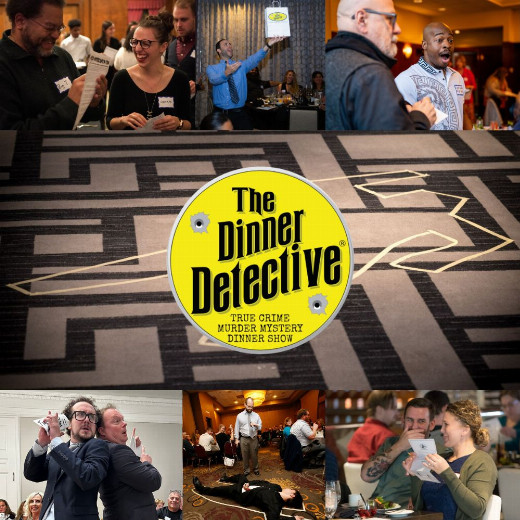
The Dinner Detective Murder Mystery Dinner Show The Dinner Detective Virginia Beach (8/15-8/15) |

|
Let's Raise Some Dough at Panera - Fredericksburg, VA Panera Bread (7/23-7/23) |
|
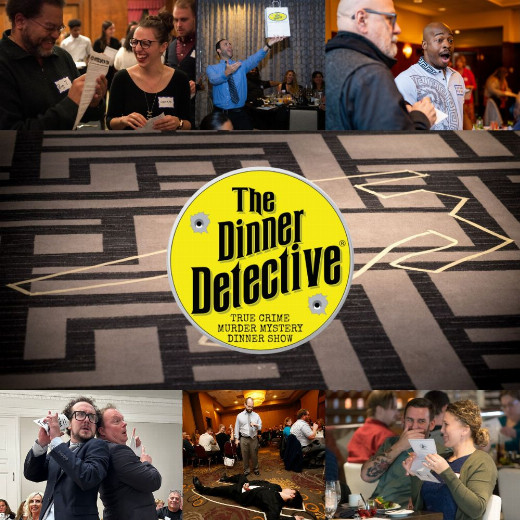
The Dinner Detective Murder Mystery Dinner Show The Dinner Detective Virginia Beach (8/08-8/08) |
|
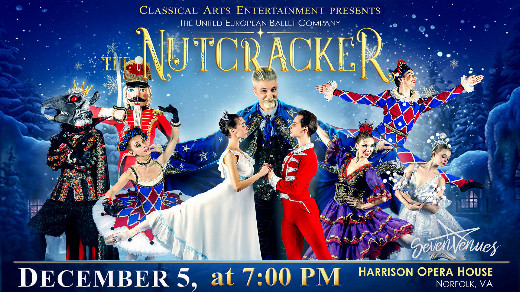
THE NUTCRACKER by The United European Ballet Harrison Opera House (12/05-12/05) |
|
THE NUTCRACKER by The United European Ballet Harrison Opera House (12/04-12/04) |
|
Nurse Blake: But Did You Die? Comedy Tour Capital One Hall (11/24-11/24) |
|
The Princess Concert Capital One Hall (8/13-8/13) |

|
K-Pop Icons Capital One Hall (7/18-7/18) |
|
Bruce Hornsby & The Noisemakers - Indigo Park Tour Ferguson Center for the Arts, Christopher Newport University, Newport News (10/17-10/17) |
|
Alice in Wonderland by International Ballet Stars in Lynchburg, VA Academy Center of the Arts (2/13-2/13) |