


Student Blog: To Bootleg or Not To Bootleg: Are Bootlegs Ethical?
If 'slime tutorials' are driving business to Broadway and immortalizing our favorite performances forever, do we have them to thank?

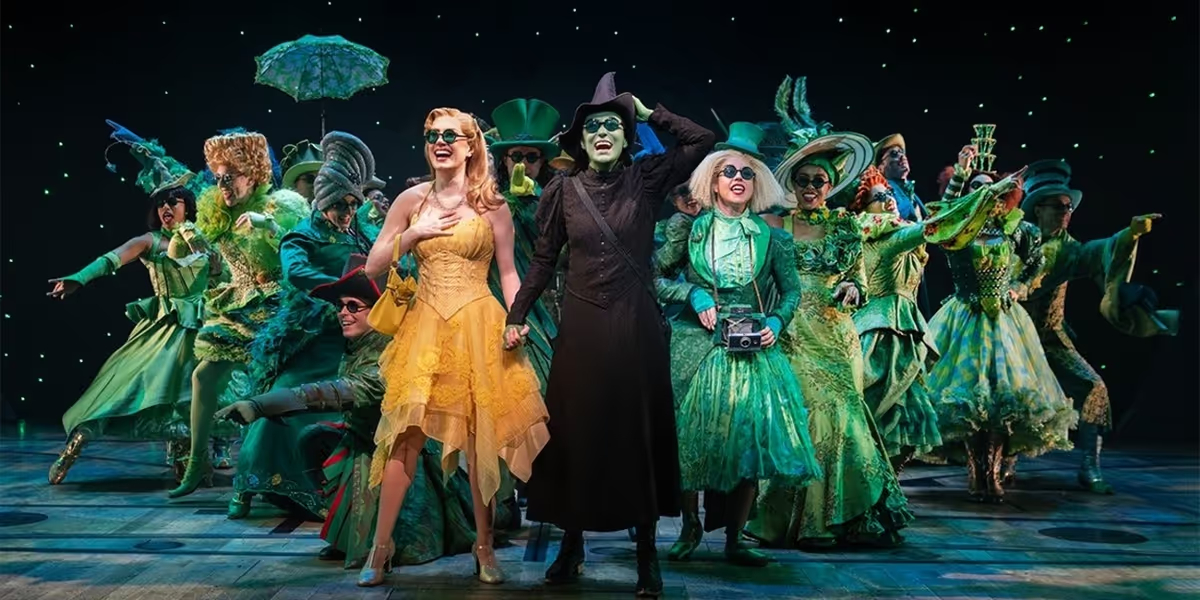
It’s freshman year of high school, 7:00am.
I’m slapping makeup on my face while “Pink and Green slime tutorial” plays loudly on my phone as I prepare for my long day of school and tech in the chilly November weather.
Bootlegs, Broadway World interviews, and Broadway.com vlogs continually inspired me, and so many others, to become artists when the life of a professional performer felt so far away. On stage performances are tangible, visceral, and unbelievably authentic. Yet, in this day and age, with a Broadway ticket averaging at over $100, finding accessible professional shows feels like a rarity. If the beauty of theater is experiencing it live, fully present, in a room with hundreds of other strangers, enjoying this specific, individual moment in time, are bootlegs killing or popularizing theater?
Many actors have a tortured relationship with bootlegs. A lot of us, especially those who belong to GenZ, grew up on bootlegs, using them as a guide to foster our love when the rhythmic hum of New York City felt so far away. But now that we are the next generation of performers, and the ones being bootlegged, it starts to feel like we've been placed under a large microscope.
I recently closed a satirical, wacky show at UCLA, and before one of the performances, I saw a bootleg of myself from the night before. I suddenly became extremely self-conscious and debated changing my performance because I didn’t like the way I looked. I’d now stripped the character of humanity, all because of a video. Yet, I also deeply cherish my recorded performances, and one of the greatest joys is being able to look back fondly on work of which I am proud.
I was recently scrolling through Tik Tok, when I came upon a video of Jack Wolfe and Morgan Dudley in Hadestown, a show that, for reasons unbeknownst to me, has an extremely high volume of HD quality bootlegs. One of the comments under the video said this,
“I know it's wrong, but as someone who will probably never have the money to go see this live I appreciate the people who record, it’s the only way I can get a glimpse of my passions” by Marina, whose username I’ve hidden for privacy purposes.
For so many, these bootlegs are the only way we can gain access to our favorite performances, without having to pay a lofty fee for subscriptions to various sites.
Another case I make for bootlegs is that they allow rare performances by understudies, swings, and standbys to be immortalized. Many of them are not given the chance to take on the role full-time when the principal performer leaves, and thus, they are left without professional coverage of a massive feat. Oftentimes, actors, like Amber Ardolino, for example, use these clips in their professional reels. In some cases, performers even post their own bootlegs either during their run, or after their run has concluded.
On the other hand, actors have raised problems regarding monetary compensation, as these videos garner hundreds of thousands of views, earning the creators that post them a small, but still effective sum. Each night, an audience member pays for a ticket that sponsors paychecks for performers, but if thousands are watching online, are they also responsible for compensating performers, or is the publicity that the show is receiving compensation enough?
An interesting case to examine here is Beetlejuice, a show that closed on Broadway in 2019, but due to copious bootlegs, and an incredibly Tik-Tokable soundtrack, found a robust online fandom that was able to bring the show back for another two Broadway runs, one in 2021, another in October 2025, a national tour, and a new production opening on the West End this year. For that company, an overwhelming sense of gratitude is extended to the kid in seat 11GG who risked their life and shaky camera for the good of the fans.
In other cases, bootlegging can be quite serious, and honestly, dangerous for performers that have any kind of nudity in their shows. One example being Jesse Williams’s production of Take Me Out in which he exposes himself to the audience briefly. A massive online discourse was raised during the 14-week Broadway revival in 2022, with fans sneaking cameras into the theater to post said moment on dark websites, completely violating the rules of the theater, and the privacy of the performer.
As actors, we are expected to give our all in a performance, to create a spectacular sense of home that can only be experienced in-person. A bootleg eradicates that magic feeling of being fully-present, and robs an audience of a truly intimate encounter. Yet, we have to thank bootleggers, because they, along with advertisements from the shows themselves, keep theater marketing alive, and expose our true love to a wider audience. If not for Tik Tok, and the shaky ‘slime tutorials’ that come across our pages, the magical allure of live theater may never reach a new audience.
Sign up for all the news on the Fall season, discounts & more...
.jpg?format=auto&width=300)
.png?format=auto&width=365)




