


Review: THE PLOUGH AND THE STARS at Abbey Theatre ****
The production runs at the Abbery Theatre until April 30th.
As an expat in Dublin, it is easy to inhabit a "Future Ready" version of the city. The tech hubs, the digital trends, and the fast-paced day-to-day consume us. We often walk these streets without digging into the history of the ground we stand on, treating the past as a distant backdrop rather than a foundation. But certain stories act as a cultural GPS. At the Abbey Theatre, the centenary production of Sean O’Casey’s The Plough and the Stars does exactly this, forcing us to confront the literal and emotional ruins that built this modern capital.
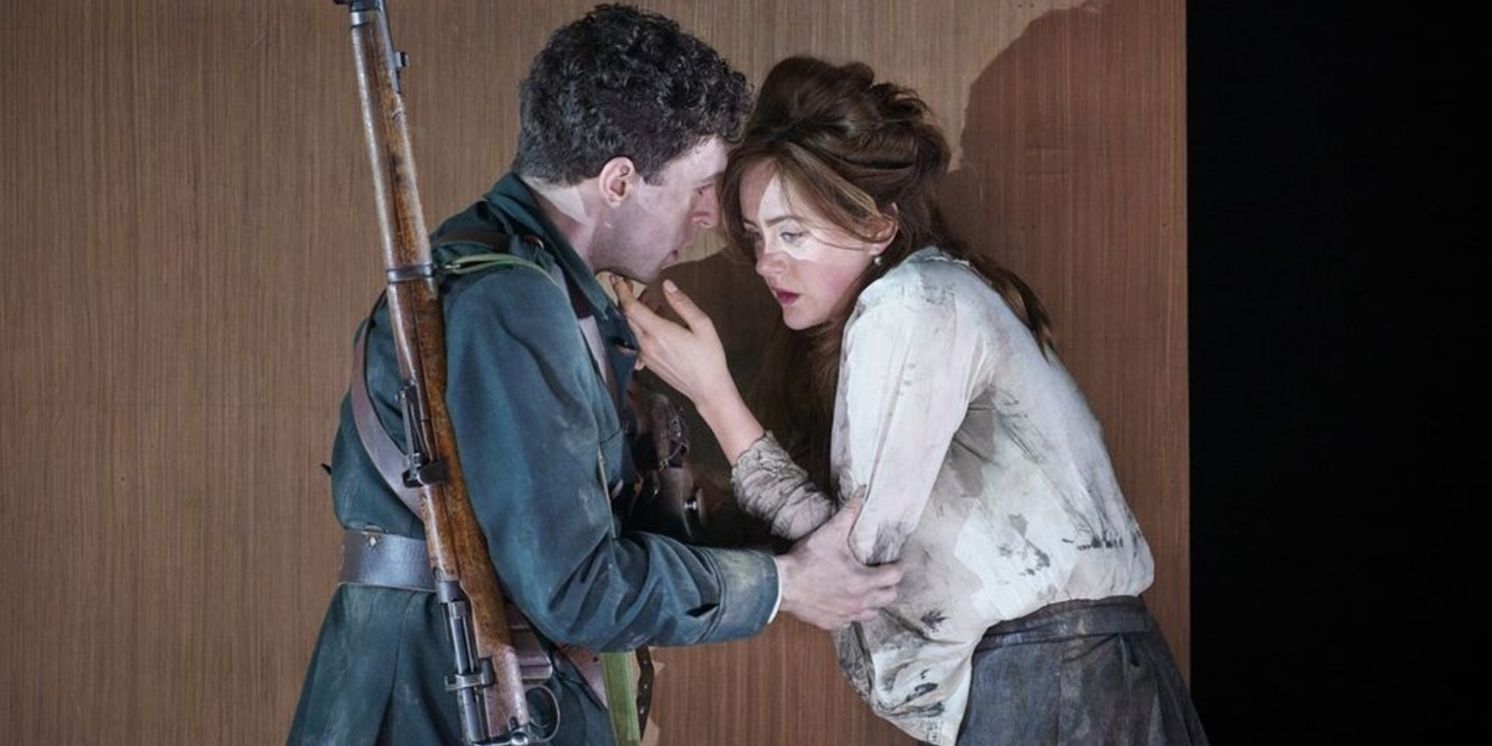
The connecting thread of this production, directed by Tom Creed, is the slow, deliberate erosion of "home." We begin with Jamie Vartan’s startlingly plain plywood wall that feels more like a modern, makeshift apartment than a 1916 tenement. But as the political fervor rises, the physical world begins to shrink. By the end of the second act, the staging hits a peak that feels remarkably familiar. With a revolving stage, rising flags, and a collision of different voices, it mirrors the "One Day More" energy of Les Misérables.
Whether it is the June Rebellion of 1832 in Paris or the Easter Rising of 1916 in Dublin, the choreography of revolution remains a repeating cycle. The technical similarity across these centuries tells us something vital: it doesn't matter which era you are in, the mechanics of "taking power back" look the same. But O'Casey’s point, and the point of this production, is that this cycle is, in fact, an evil one, because of the havoc it wreaks on the ordinary people caught in the gears.
This is anchored by the chillingly prophetic voice of The Speaker, who proclaims:
"War is a terrible thing, but war is not an evil thing... Ireland has not known the exhilaration of war for over a hundred years. When war comes to Ireland she must welcome it as she would welcome the angel of God."
Is it? Is war truly not an evil thing? The play asks the audience to determine who actually gets to decide that. Is it the martyrs who choose to die for a cause, or the ones left behind to pick up the pieces? Like Arthur Miller’s The Crucible (currently showing at the Gaiety Theatre), the show explores the terrifying speed at which "good" and "evil" are redefined by those in power, and how easily a community can be whipped into a self-destructive frenzy.
The tragic heart of this machinery is Jack Clitheroe (Eimhin Fitzgerald Doherty). We are told he died a "hero," but the play refuses to give us the comfort of a martyr's glory. His wife, Nora, played with shattering intensity by Kate Gilmore, doesn't want a hero; she wants a father for her child. Her final monologue isn't a political statement; it is the lived experience of someone who has lost everything to an "angel" they never invited in.
Marking 100 years since its debut, it’s impossible not to think of the premiere in 1926, which famously ended in riots. Back then, the audience fought back against O'Casey’s refusal to romanticize the Rising. Today, we aren’t rioting. Instead, we are collectively saddened and touched by how little has changed in the way history repeats its tragedies.
By the final acts, the plywood walls have vanished entirely, leaving the actors exposed against the bare brick and fire exits of the Abbey’s own stage. For those of us who moved here from elsewhere, this production changes our perspective. It reminds us that "home" is a fragile thing, often traded away for a "holy" war that ends in nothing but empty chairs. As the lights dim, we realize that the wreck and havoc of an uncalled war, whether in the 1900s or the 2020s, is a universal weight we all eventually have to reckon with.
Reader Reviews
Get Broadway News on WhatsApp
Receive the latest updates, breaking news, and exclusive coverage from Broadway directly in WhatsApp.

Videos