


Review: South Coast Repertory Presents THE HEART SELLERS
Pulitzer Prize finalist Lloyd Suh's poignant, funny, and resonant play depicts the struggles of female immigrants navigating American life in early 1970s.
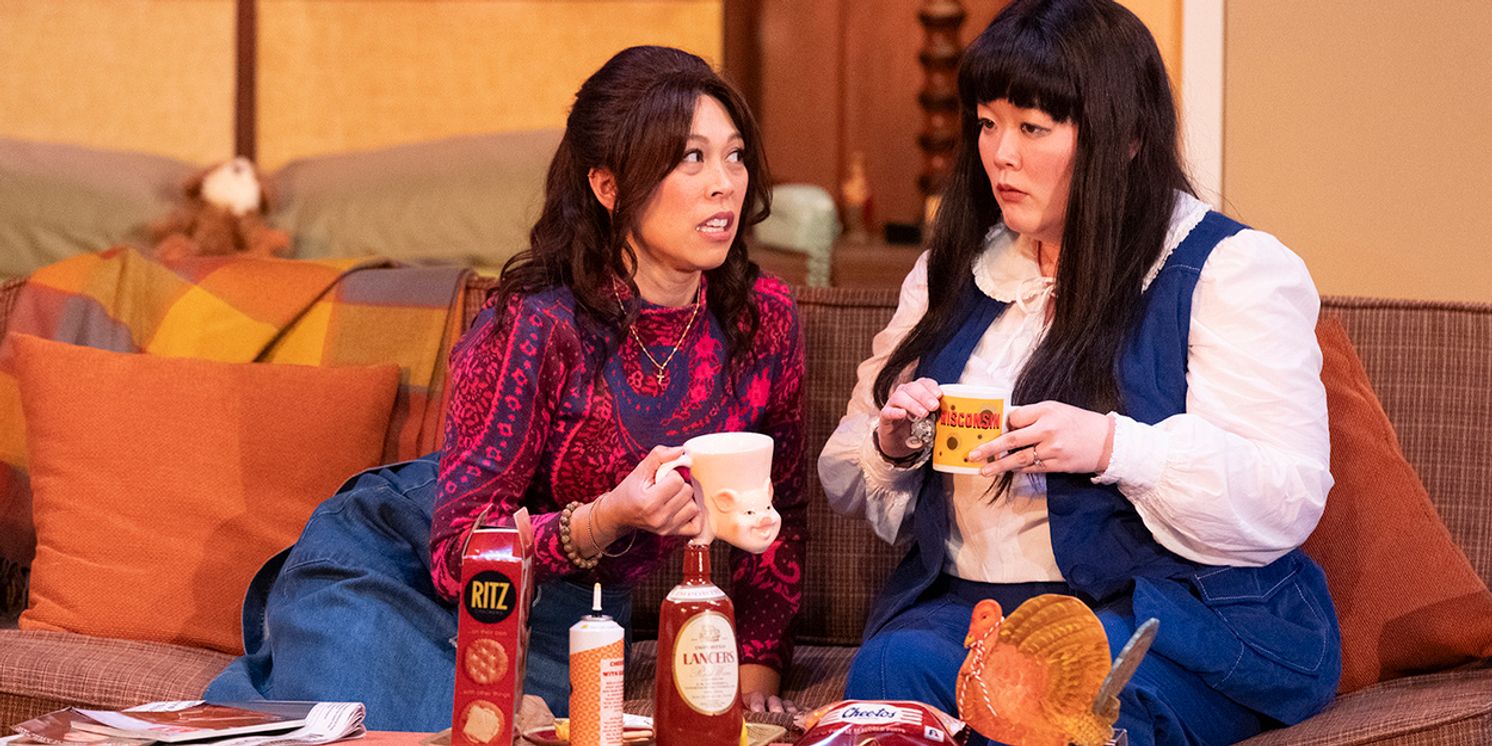
With immigration once again a top-of-mind issue at the moment (besides high prices and threats to our democracy, of course), seeing South Coast Repertory's latest production, THE HEART SELLERS—which continues performances in Costa Mesa through November 16, 2025—brings the cherished ideals of identity and belonging back to the forefront, particularly for those whose marginalized voices are less heard from than others.
An intermission-less, two-character, conversational-centric play that focuses on a pair of women's specific immigrant experiences—marked with loneliness, hopes, fears, and puzzlements big and small—Pulitzer Prize finalist Lloyd Suh's absorbing, touching, and occasionally (thankfully) very funny play explores the emotional tug-of-war between comfortable, familiar cultural traditions left behind and the need to accept, learn, and assimilate to the often confounding realities of their new home environment—a sometimes exciting, but also sometimes heartbreaking concept that many first-generation immigrants know all too well.
In the play's timeline, just eight years have passed since the enactment of the 1965 Hart-Cellar Act, the landmark law that finally lifted discriminatory restrictions against ethnicities that were previously banned from coming to the U.S. as previously instituted by the National Origins Formula, which, up until its abolishment, had been the rule of law since the 1920's—a longstanding policy that allowed only Western and Northern Europeans to immigrate to the U.S. in an effort to "preserve" America's mostly Caucasian-looking ethnic makeup.
Essentially with its passage, the Hart-Cellar Act provided the means for non-Western nationalities—including those of Asian descent—to finally come to the U.S. to become permanent legal residents, forever changing the demographics of a now more diverse, inclusive nation. And, of course, that law is the sounded-out inspiration behind the title of the play.
This groundbreaking piece of legislation opened up the so-called "American Dream" for more people like our duo in the play (and, personally speaking, for myself and my own extended family). But, as we soon observe in this play's onslaught of emotional confessionals, that aspirational dream—instigated by the promise of a much better life than what they left behind—has its many obstacles and drawbacks, and may not be all it's cracked up to be.
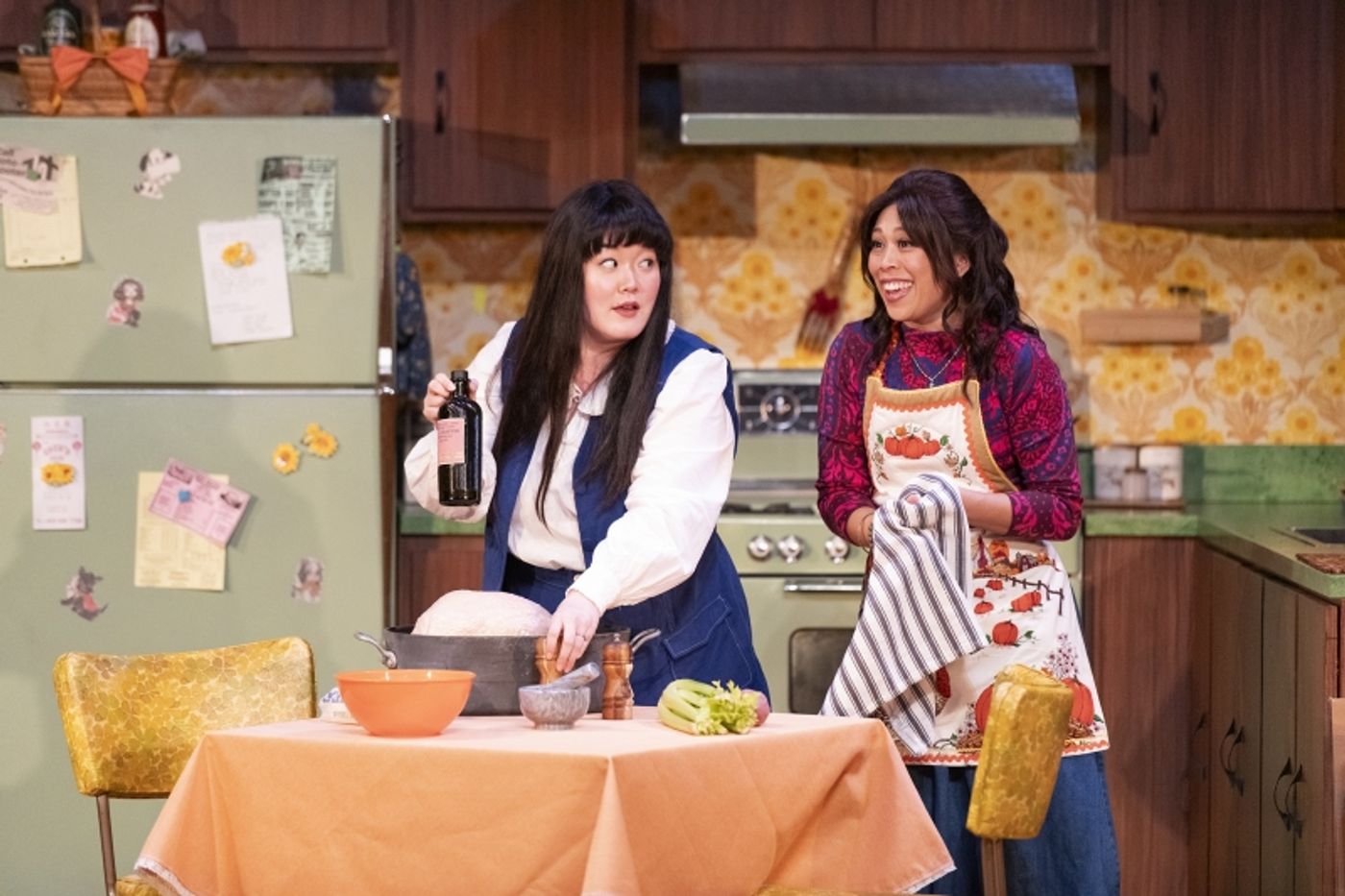
Taking place over the course of one revelatory, booze-fueled Thanksgiving evening—November 22, 1973 to be exact—THE HEART SELLERS unravels in somewhat real time inside a standard apartment in an unspecified American city, introducing us to a pair of lonely strangers that are each longing for connection.
A chance meeting earlier that day leads to an impromptu invite that later becomes an all-night spontaneous gab sesh, where the two strangers bond over shared commonalities in their mutual predicaments, which, as hours tick by, they both hope could ultimately—maybe—produce a close friendship with another understanding fellow comrade in arms to help them both navigate their ongoing struggles to take on life in America, and, perhaps, stop feeling so alone.
Between awkward pauses, heartbreaking testimonials, hearty laughs, and a LOT of alcohol to ease each other's inhibitions, the women find plenty of common ground between them despite coming from two very different countries that, sure, just happen to be on the same continent.
The play begins with the immediate introduction of the super excited, fast-talking Luna (Nicole Javier), whose rapid-fire outbursts seem to overwhelm the quieter, more reserved Jane (Narea Kang), whom Luna awkwardly welcomes into her apartment while helping her out of her amusingly thick layers of winter apparel.
Exchanges begin as most do amongst a pair of new acquaintances getting to know each other: the offering of snacks and libations, the awkward, unsure nods of agreement towards random statements, and even the unexpected revelation or two of personal points of view that no one else has been privy to until the moment they are divulged within the "protective" walls of Luna's apartment.
The resulting interaction runs the gamut of emotional highs and lows, allowing the audience to witness a tiny little microcosm of what it's like being a newly arrived immigrant to a country where they feel both welcome yet unwelcome at the same time. More importantly, we are given details on the kinds of emotional compromises these immigrant wives must endure in order to be closer to achieving that so-called "American Dream"… language barriers, confusing new rules and traditions, forced isolation and invisibility, and alienation between people from their past and people in their present.
This explains why Luna and Jane's meetup was long needed and long overdue.
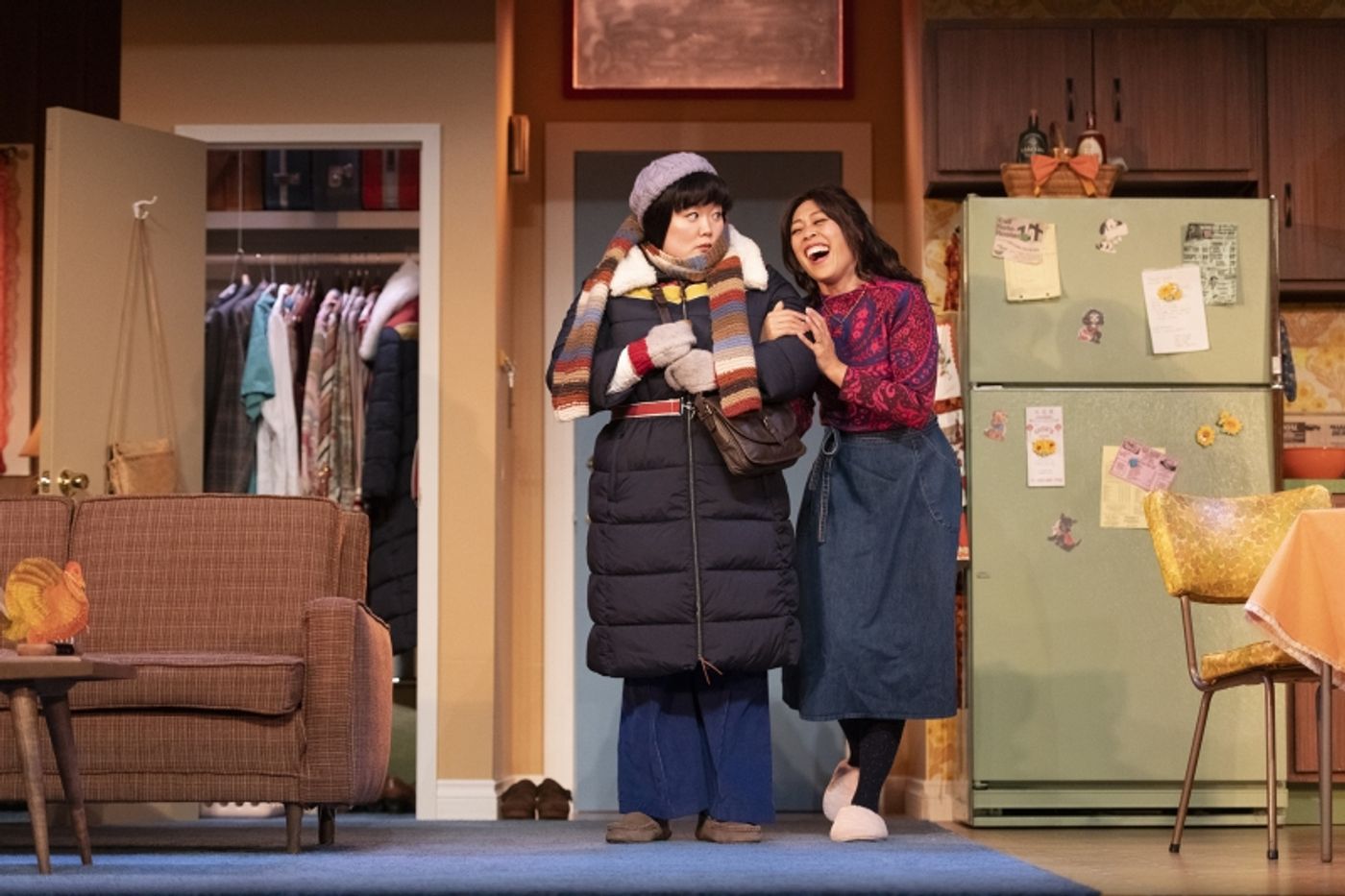
Both, we soon learn, are recent arrivals to the U.S.—Luna is originally from the Philippines and Jane is originally from Korea—that run into each other just minutes before while shopping by chance at the same grocery store, aimlessly wandering up and down the aisles uncertain of what they need to purchase to mark this peculiar, confounding American holiday that isn't celebrated in either of their respective countries.
Hoping to make a new friend, the bolder Luna invites shy Jane back to her apartment—still lined with unpacked boxes indicating a recent move—with the promise of a casual hang out, and, perhaps, maybe even figure out what you're supposed to make for a traditional American Thanksgiving.
After an awkward start—and a live demo of the magic of canned spray cheese—the ladies begin to open up to each other, helped along by some liquid courage provided by Luna's stash of wine. Both ladies are stay-at-home wives, with their respective husbands currently working, by coincidence, as medical residents at the local area hospital—the mutual reason both of them were afforded the chance to move to America in the first place, and the reason both have been cut off from their previous lives of being much more immersed in their cultures.
As they wait for Luna's unthawed, still frozen solid (!) turkey to cook in the oven, Luna and Jane begin sharing more and more personal truths—some joyful, some heartbreaking—as each speak candidly about everything that pops into their heads, from their mutual love of K-Mart to their debilitating homesickness and, of course, their shared feeling of being a stranger in a very strange land.
Meanwhile, the radio and/or television in the apartment will occasionally blast updates on the ongoing scandal surrounding then President Richard Nixon, who, at this point, is still months away from eventually resigning the Presidency.
Context clues—and, more often, outright testimonials—reveal two very complex, very vulnerable women grappling with a lot more than what their husbands might have ever expected or even ask about once they get home.
As booze continues to flow, Luna and Jane feel more progressively comfortable speaking unvarnished truths about their struggles to assimilate and to feel seen (and heard) while also feeling the connection to their culture slowly being erased as their time and distance away from their countries of origin gradually increases.
They both ache for belonging in a community, but feel detached from their current one specifically because of their ethnicity and the roles they must take on behind-the-scenes in service of their prominent husbands. There's even a feeling of shame in the air caused by an implied demand for them to be grateful for the opportunities presented by the new world, yet they also feel resentment for feeling like they're not really welcome there.
In a pair of heartbreaking revelations, Jane even implies of a trapped existence in which she has no autonomy or say in absolutely everything in her life, while Luna struggles to remember the reasons the move to America was the better option for a supposedly better life, fearing that she has left behind all the people she cared about and cared for her.
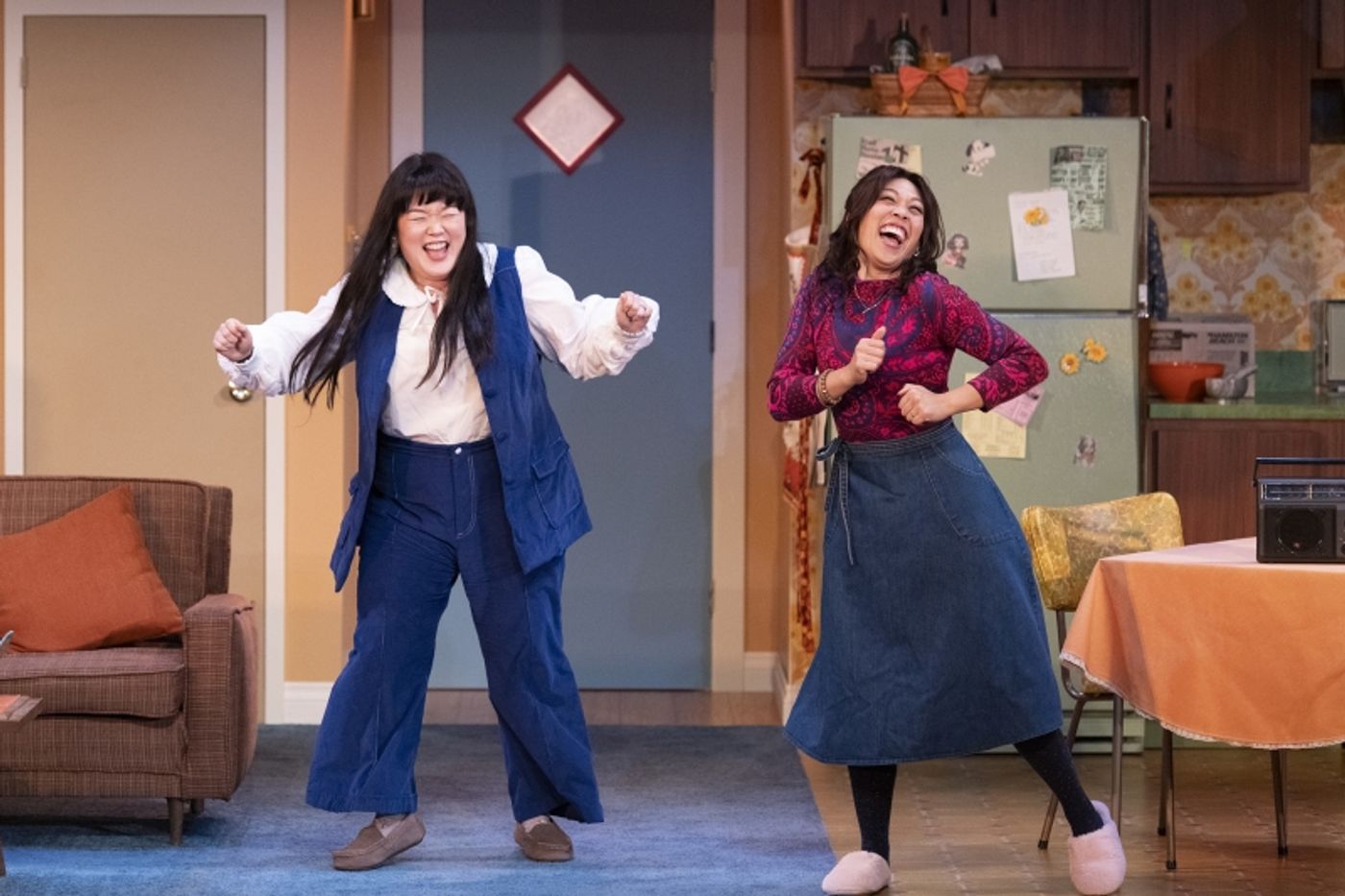
Thankfully, it's not all sniffles, tears, and regrets. The pair does manage to even break out into a spontaneous dance party, and partake on the deliciousness of American yams. Life here in the apartment does have its positive moments.
The play ends in a hopeful, jovial note (including an actual tone heard in many old school kitchens like these), ensuring that the deep bond the ladies established over the course of a very long, very revelatory evening most definitely assures the audience that both have made life-long friends with each other—and that, sometimes, you have to work harder to find "your people" to form your own little community, which can, in its own way, be considered "home."
Judging from their happy, excited smiles, the two clearly have finally found their home this evening.
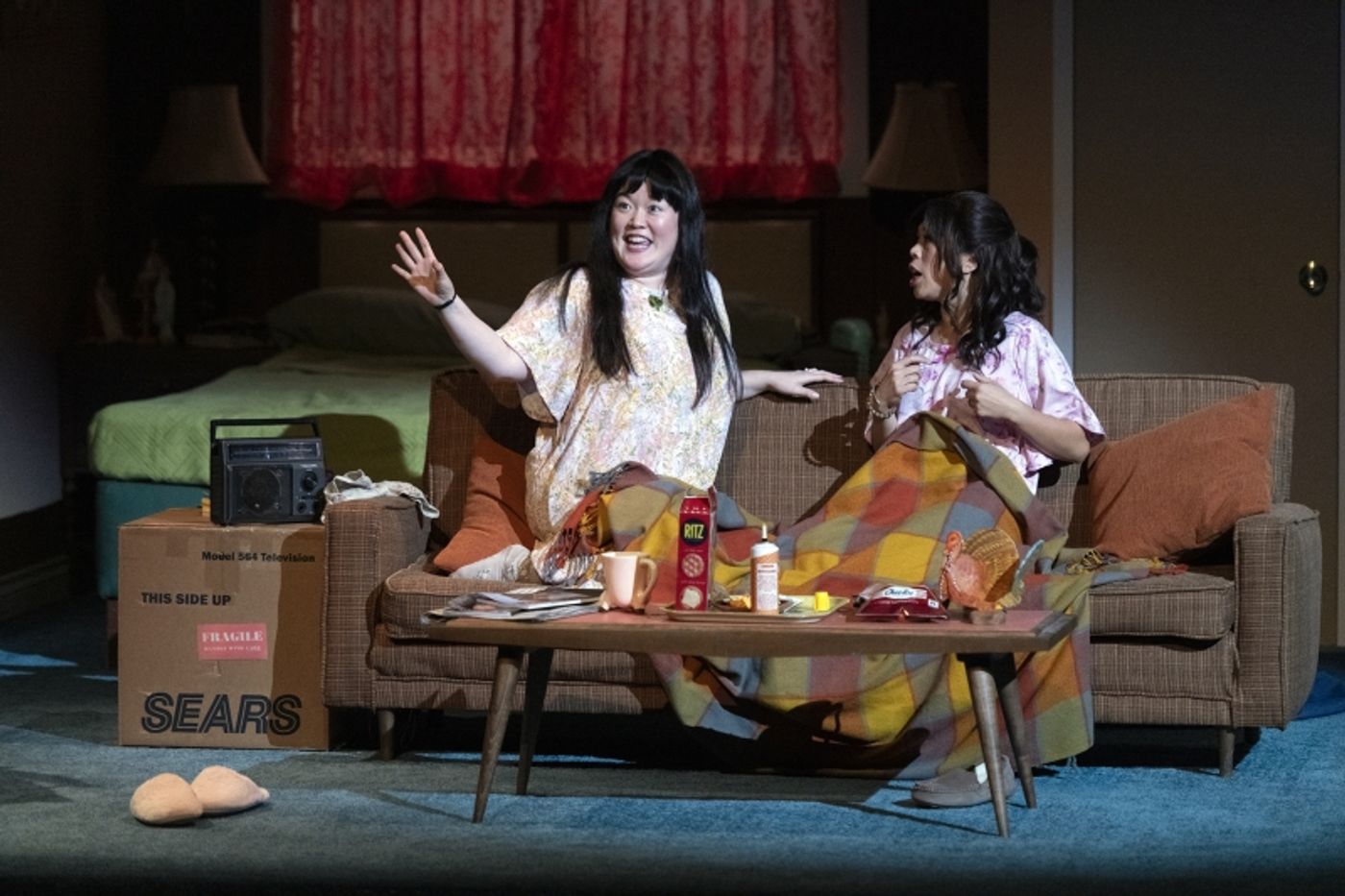
Emotionally-resonant and winningly poignant, THE HEART SELLERS—directed with delicate care for its acting duo by Jennifer Chong—presents specific points-of-view rarely seen on the theater stage: the struggles, sacrifices, and compromises that recent Asian immigrants must initiate for themselves while being left to their own devices as their husbands work away in large important positions. Their mutual confusion about their new home in America is mined for both hearty laughs and understandable tears, providing human faces to these very real, emotionally taxing struggles.
But along the way, thankfully, two women who have up to this point felt isolated and alone in this strange new world, are able to acknowledge these pains with no pretense, considering they have found a kindred spirit that genuinely understands their hopes and fears. I won't spoil what the title refers to, but it definitely summarizes what the characters had to do in order to live life here, in a roundabout metaphorical way.
And thanks to the brilliant, authentically nuanced performances of both Javier and Kang, SCR's production of this story sustains a consistent momentum that keeps the narrative riveting and bursting with life. Some might say their affected, emphasized accents are dangerously close to traversing into lazy stereotypes, but for me personally, their affectations felt eerily real and authentic—as if I was listening to a younger version of my Filipina mother or one of her sisters whose similarly accented English is peppered with the same contextual cadence and emphatic punctuation.
Later, I started getting teary-eyed the moment Javier started singing a Tagalog song with such gutsy emotion that I somewhat remember from my youth. That display of vulnerability hints at just how far Luna’s character had to go in order to dull her once brilliant shine for the sake of appearances. Meanwhile, Kang’s searing portrait of the sweetly timid but secretly ferocious Jane is so endearingly earnest, you will just fall madly in love with her—and feel the need to protect her at all costs.
What these beautiful, richly textured, and culturally evocative performances do convey are the lived truths that many of us who have lived through can confirm with shared zeal. I do remember that feeling of desperately wanting to "fit in" to my new environment as a freshly arrived new immigrant, sometimes resorting to shedding some of what makes my culture unique to me in order to seem more palatable to my neighbors. I was also just as guilty of tamping down certain characteristics and broken pronunciations in my learned English just to attain a sense of belonging and easier acceptance.
This play certainly brought all of those feelings back ten-fold, but it also reminded me of how deeply important the Hart-Celler Act has been for so many of us who have since become American Citizens.
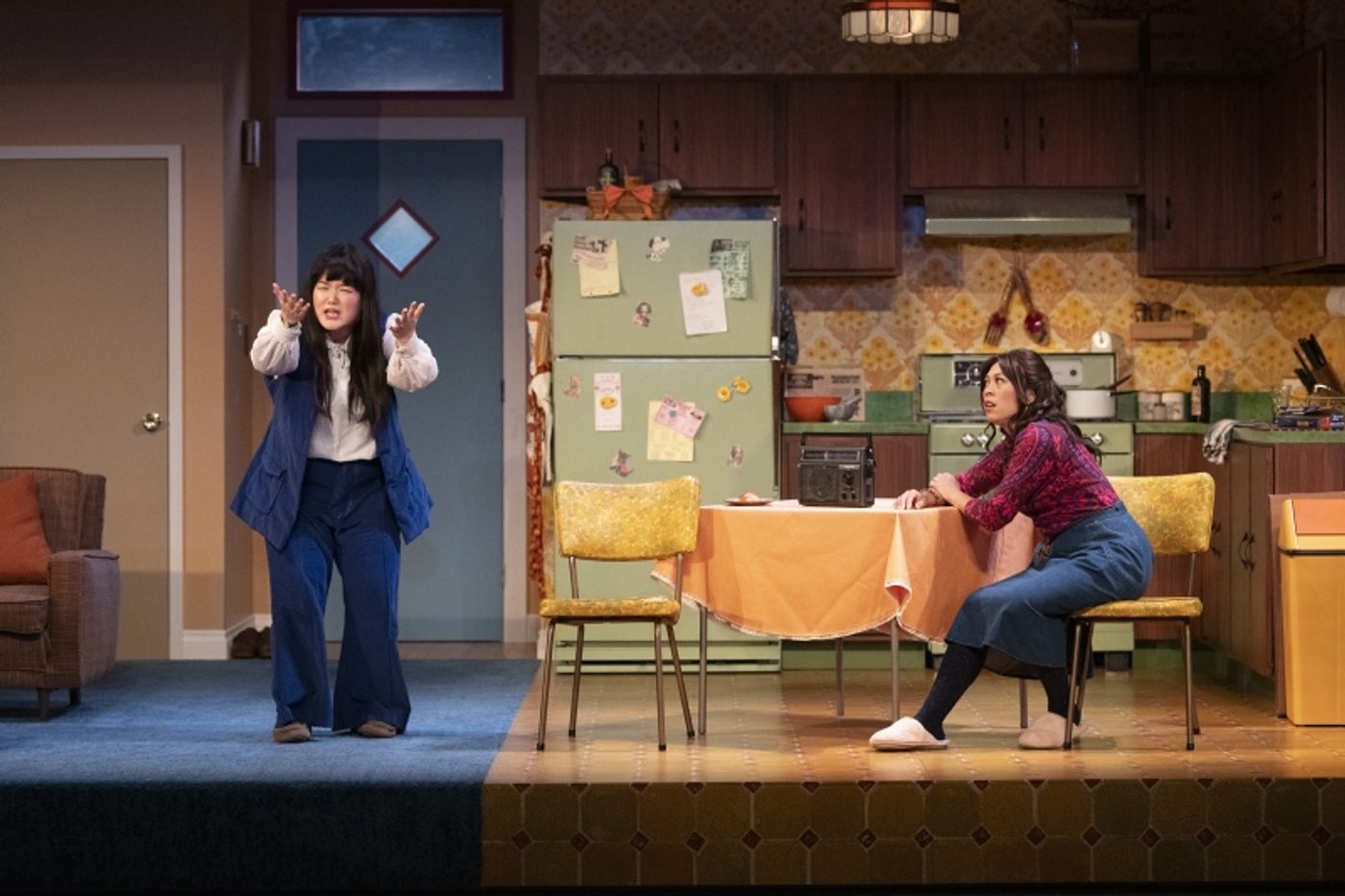
While the play, sure, can sometimes get mired in its own monologue-heavy machinations (some speeches do outstay their delivery more than others), the play, for the most part, keeps you engaged and intrigued throughout, whether its with heartbreaking storytelling or moments of exchanged bliss, which are such a welcome respite from the drama when they do come. Whenever Javier and Kang break out into the kind of hearty, pee-inducing laughter that most longtime BFFs share, we as an audience are infectiously swept up with them in their tornado of bliss.
To keep the duo in sharp focus, the play's visual accents provide an appropriately non-distracting canvas that also provides period authenticity and placement. To that end, kudos to set designer Tanya Orellana for Luna's believably modest, lived-in 70s middle class surroundings, Costume Designer Anthony Tran for the pair's vintage looks (my own Mom wore those "house" dresses!), and to lighting designer Pablo Santiago for his mood enhancements. And a shoutout to sound designer Melanie Chen Cole as well for the palpable atmosphere she created to envelope the play.
Emotional yet wrapped snuggly in humor, THE HEART SELLERS seems to come from an authentic place that balances giddiness and introspection—and it shows. By offering the resonant specificity of featuring two female Asian immigrants and to detail their relatable, somewhat universal struggles, the play gives a well-earned bullhorn to similar voices normally too timid or too taken for granted to ever speak up, especially within an intimidating environment that views them as just "plus-ones" to their husbands.
Surprise! They too have aspirations beyond making meals for these "important" men, thanks.
But more than anything, THE HEART SELLERS reminds us that every story is worth sharing and hearing—because despite our outward differences, inside we are all just humans trying their best and with something to say... and with a need to belong.
** Follow this reviewer on Bluesky / Instagram / Twitter X / Threads: @cre8iveMLQ **
-----
Photos by Robert Huskey, courtesy of South Coast Repertory.
Performances of Lloyd Suh’s THE HEART SELLERS at South Coast Repertory continue through May 18, 2025. Tickets can be purchased online at www.scr.org, by phone at (714) 708-5555 or by visiting the box office at 655 Town Center Drive in Costa Mesa.
Reader Reviews
Videos