


Review: R:EVOLUTION, Sadler's Wells
English National Ballet's mixed programme runs until October 11
 English National Ballet’s season opener, R:Evolution, offers up a varied set of challenges for the company, taking us back to the 1940s with George Balanchine and Martha Graham, to the present day with William Forsythe and David Dawson.
Aaron S. Watkin’s extensive connections in the ballet world also come to the fore both creatively and on the stage. The evening features a Guest Principal from his time at Semperoper Ballett in Dresden, and his long standing collaboration with David Dawson is showcased with Last Four Songs which premiered just two years ago in the Our Voices programme.
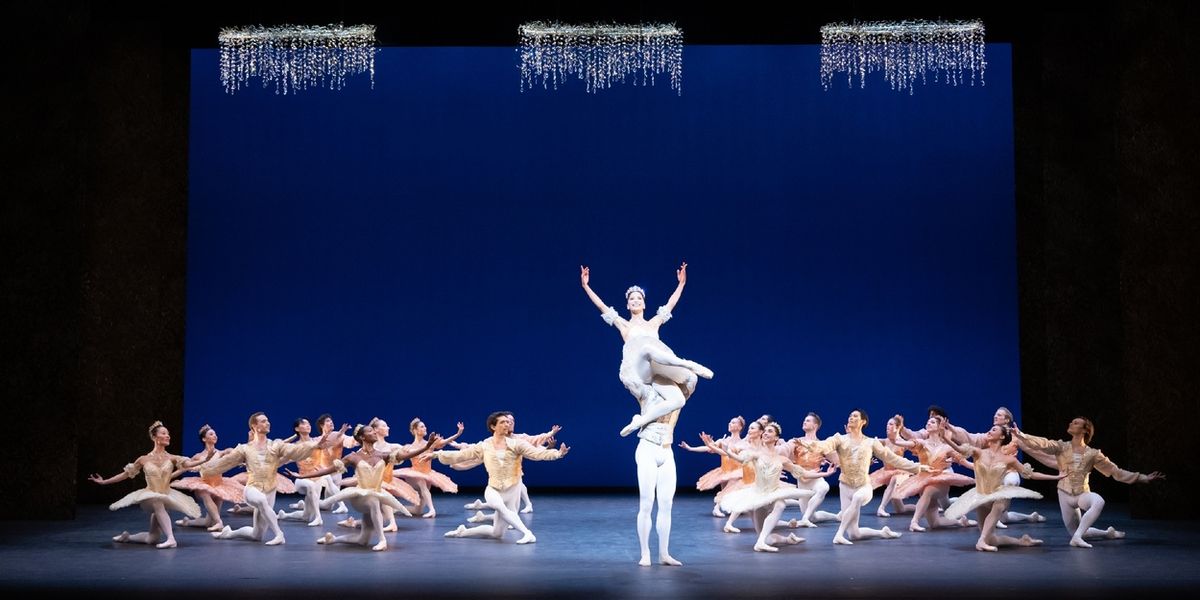
It’s a slice of classical ballet heaven that opens this bill in Balanchine’s Themes and Variations. Sparkling panels of crystals hang above the dancers, the tutu’s shimmer and set to Tchaikovsky’s Orchestral Suite it makes for one opulent opener.
The choreography is fiendish, with stamina sapping steps, intricate patterns and lifts that especially test the men. The centre piece on this first night are Guest Principals Ricardo Castellanos (Norwegian National Ballet) and Alice Mariani (Teatro alla Scala) - it’s a story of mixed fortunes. Mariani shines like a diamond, radiating glamour and charisma, her movements are unhurried and her commanding presence sees her use every sinew of the music. She digs deep for the slow développés in which she must stay connected to the corp de ballet who bourrée around her. Castellanos sadly can’t match Mariani’s star quality and appears nervous in the stop-starting solos and lifts that see the odd wobble here and there but his confidence seems to grow as the piece proceeds.
The leading pair are supported by some of ENB's most exciting talents. Precious Adams exudes serenity, delivering elegant support. There are strong showings too from Ken Saruhashi, Jung ah Choi and Eric Snyder. It all builds to a bubbling, effervescent conclusion, the final lift isn’t quite pulled off but Tchaikovsky's score and the glittering visuals still make for satisfying viewing.
New to the company is Martha Graham’s 1947 Errand into the Maze. It’s a tour de force for First Soloist Emily Suzuki who emerges not only with the technical power but also as a fine actress. The short piece based on a Greek myth features a female protagonist who must confront the beast of fear (Rentaro Nakaaki) before finally overpowering him. It’s a shame more of the company’s females won’t get a chance to have a go at the lead role but Suzuki more than rises to the occasion.
Gian Carlo Menotti’s music pulses with drama, Suzuki’s body ripples with anxiety, her gaze darting on high alert for the beast. Nakakki’s character is strong and unrelenting, he stomps imposingly from foot to foot with Suzuki wrapped around his torso, her limbs rigid in self defense. The mood dissipates as the beast is finally defeated and Suzuki can finally breathe freely. Utterly captivating stuff that’s all over too soon.
William Forsythe’s Herman Schmerman was seen recently from ENB in their evening celebrating the work of the American choreographer. The opening night cast remains the same save for Carolyne Galvao replacing Ivana Bueno, and it's another sizzling party piece in the company repetoire. Forsythe said of the work, “The ballet means nothing. It’s a piece about dancing that will be a lot of fun” and the dancers can truly delight in this nothingness that is essentially a gorgeous showcase of athleticism and stamina.
The challenge comes from the constantly changing rhythms of Thom Willem’s quirky score, and the strength required for the speedy changes of direction and balance. Each of the quintet get nice moments of shine, although I detected just a shade less energy than earlier in the year. It’s Galvao who catches the eye, however, fizzing through the steps, springing with lightness and the snappiest of footwork.
Rounding off the programme is David Dawson’s Last Four Songs. It’s one of the lengthier additions, bookending nicely with the Balanchine opener and the shorter pieces between. Dawson described the work as a ballet he’s been waiting to make for 30 years, when he was first introduced to Strauss’s score aged 19.
Although there is no explicit story, and the dancers are stripped back to their most pure in nude coloured leotards and tights, Dawson’s fluid choreography is romantic and reflective. Herman Hesse’s libretto is sung on stage by Soprano Madeleine Pierard creating a unique connection between the dancers and the music, feeling more profound. Sangeun Lee has long been a dancer of Dawson’s work from her days in Dresden and is especially captivating, her body ethereal, she commits entirely to the emotions of the music. Katja Khaniukova is similarly heartfelt and sincere in her interpretation. Pleasant yes, but perhaps not the barnstorming closer required.
Balanchine’s piece may have made more impact, but Dawson will have you thinking long after you’ve left the theatre.
R:Evolution runs at Sadler's Wells until 11 October
Photo credit: ASH






Reader Reviews
To post a comment, you must register and login.