


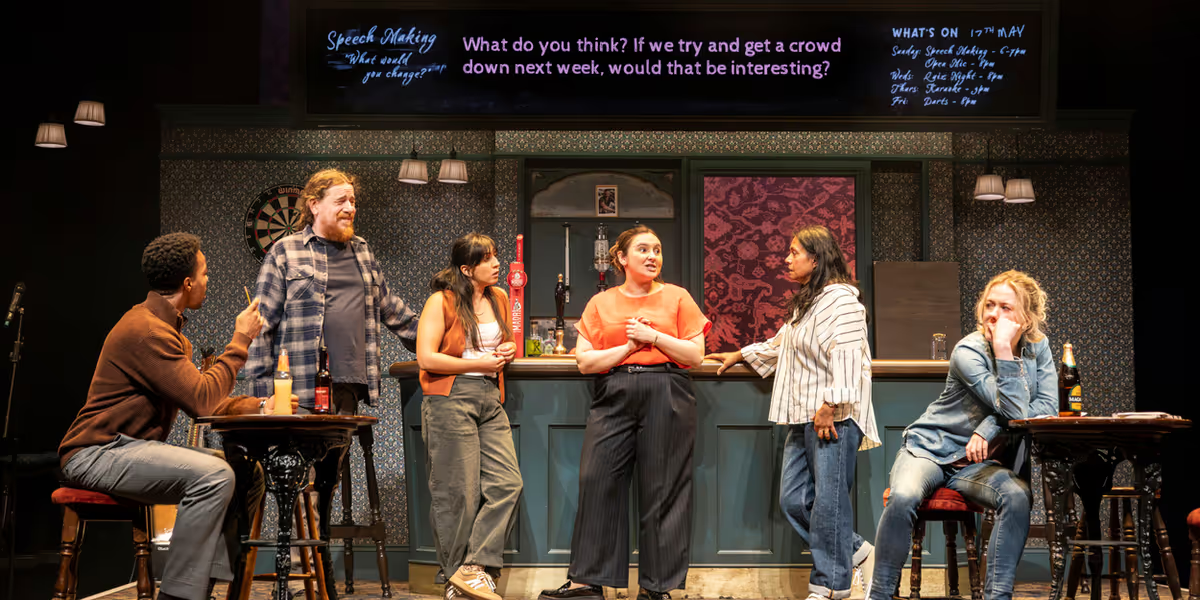
 One of the central ideas that underpin Barney Norris’s new play is that “...everyone has the ability to write and deliver a speech, which speaks truth to power.” Anyone who has spent any time in the last 20 years listening to radio phone-ins will raise a sceptical eyebrow at that assertion. And, if they’ve ever attended a school PTA meeting, they’ll probably raise the other eyebrow too.
Dash Arts thought otherwise and asked 700 individuals around the country a deceptively complex question, “What can we do today that will make tomorrow better?” Their “magnificent” answers formed the backbone of this play and they appear in both Jonathan Walton’s songs and in the dialogue. What emerges is something between the verbatim theatre of Alecky Blythe and the films of Ken Loach.
We’re in The Albion pub (geddit) where Sanj (Bharti Patel) is just about holding the business together and her grief at bay after the death of her husband. Her daughter, Anika (Chaya Gupta) who long ago left this left behind northern town for London arrives and family tension is immediately evident. Regulars, Jo (Lauren Moakes) and Scott (Fergus O’Donnell) have plenty of issues with which they are wrestling too.
This grimmer, 21st century, Rovers Return’s uneasy peace is broken by Mary (Gabriella Leon) the Labour Party candidate in the upcoming by-election and Tom (Kit Esuruos), the suited and booted party apparatchik who, wait for it, lives in Brighton.
Over the next two and a half hours (enough time to do Hamlet!) conversations ensue, skeletons emerge from the closet and relationships are fractured and repaired. Each character also sings a non-rhyming song drawn from those interviews - they sound like a much less engaging update of John Cooper Clarke’s seminal Beasley Street. There’s a very long interlude when two members of the public read a speech from typewritten texts, trying to make the mics work effectively and to inject some emotion into the words through tone and cadence. That is not an easy task for professional actors.
Another central argument - that people have no voice - is undermined by the fact that the by-election is required because Sanj organised a remarkably effective campaign on Facebook that led to all the ballot papers being spoiled.
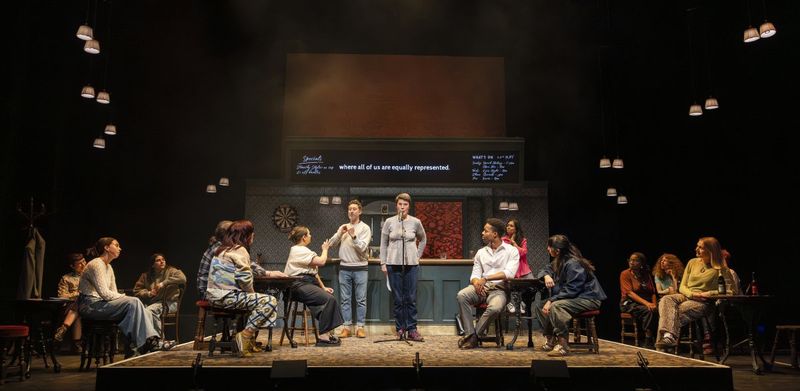
The actors do what they can with their roles, but the characters exist almost solely as types. Sanj is the salt of the earth landlady and Anika is the unfulfilled daughter she pushed away with her vicarious ambition. Jo is the abused single mother trying to get her kid back and Scott is lonely, a Reform supporter, but with plenty of emotional intelligence once it has somewhere to go. Mary is the ambitious politician slowly being compromised by the party machine and Tom is pulling himself up by the bootstraps but willing to sell his soul for power.
This is the kind of material that is important to get into the public domain, especially so in a big commercial London theatre and not a northern community venue. But it feels so lacking in the stuff of drama, too trusting of its ‘ordinary people’ roots, too didactic to succeed. There's the unmistakable whiff of the symposium paper, the breakout room and pitch for the next round of funding in the air. I've been in too many of those spaces before to ever want to go back.
Rather like the Sanjs, Anikas, Jos and Scotts in the Wakefields, Lincolns and Clactons, the contributors to this vast project deserve something rather better.
Our Public House runs at Marylebone Theatre until 4 July
Photo images: Pamela Raith
Sign up for all the news on the Fall season, discounts & more...
.jpg?format=auto&width=300)






Reader Reviews
To post a comment, you must register and login.