


Review: HAIRSPRAY at Titusville Playhouse
On stage through February 15, Titusville's HAIRSPRAY is bright, splashy, and just about everything you'd expect from the 'Baltimore fairyale' you know and love.
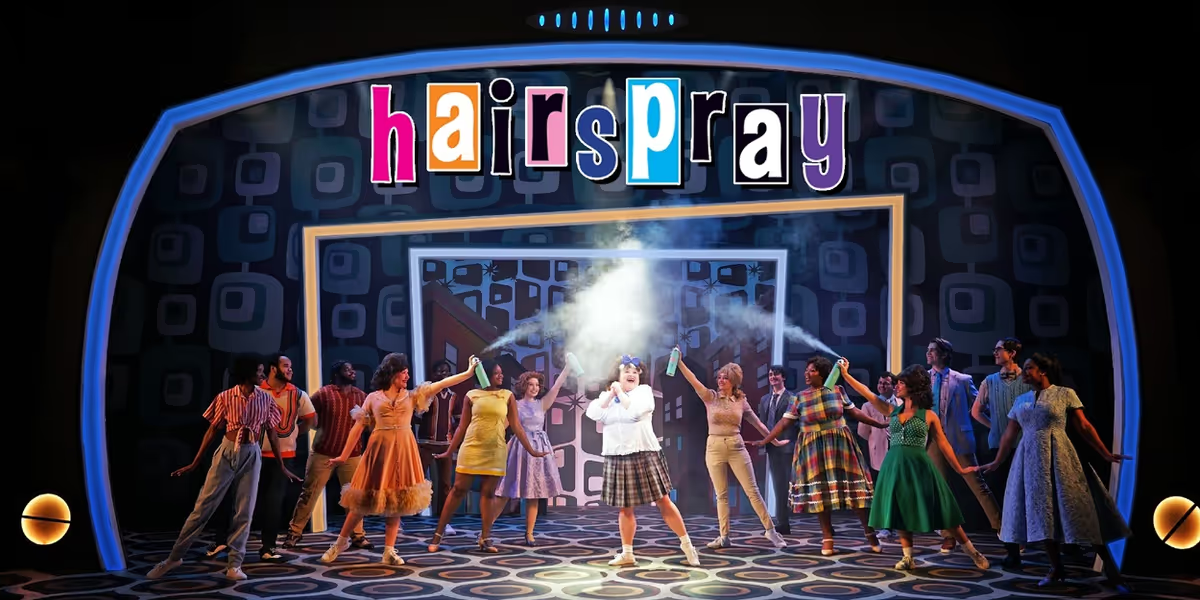
Since its Broadway opening in 2002, Hairspray has been blowing the roof off of theaters with the exuberance, zeal, and unabashedly joyful hope that the show not only requires but inspires. For the most part, Director Niko Stamos has not reinvented the wheel here - the Hairspray you are expecting is largely the Hairspray that you will see. Cues are taken from the two decades of replica productions that the material has stood upon, and that is a-ok. This is, after all, a musical comedy based on a John Waters film; anything less than the traditional high camp simply wouldn’t do, and it’s clear that Stamos knows this.
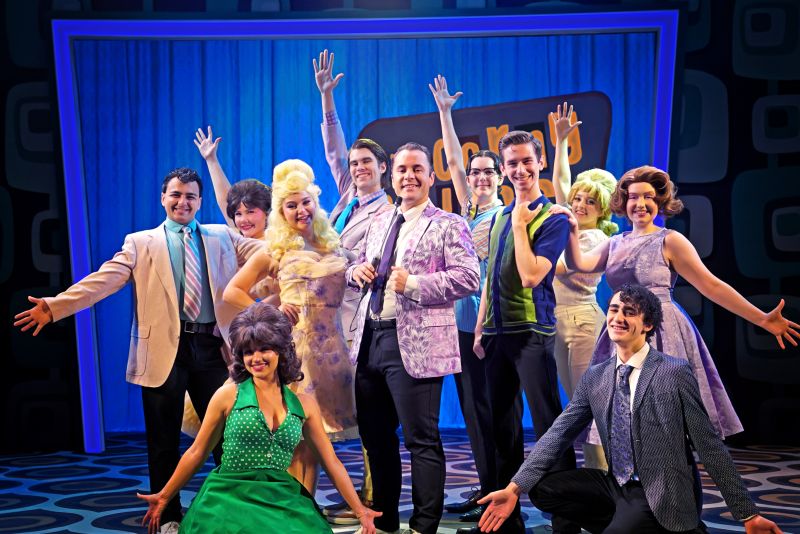
Like Wicked’s iconic Clock of the Time Dragon, the proscenium at Titusville Playhouse has been transformed into a portal through which to view the production: a gigantic mid-century television set, knobs and all, envelopes audiences in a vividly colorful invitation to tune in and catch the events surrounding the 1962 Miss Teenage Hairspray pageant. Within the brightly-lit outline of the television, Titusville’s “Baltimore fairytale” plays out on a series of flats and modest set pieces (along with the quintessential large-scale can of Ultra Clutch Hairspray) designed by Cody Tellis Rutledge. Rutledge leaves ample space on the smaller stage for a large cast to do what audiences are there to see: dance the “Stricken Chicken”, the “Peyton Place After Midnight”, and innumerable other moves set to Marc Shaiman’s legendarily infectious score. While the lack of a more ornate set is not felt, thanks to the generous size of the cast that fills the stage, one wishes for slightly more inventive and propulsive staging in the scenes between the consistently high-energy musical numbers choreographed by Ciera Livermore.
The dressing space for this production must either be massive or incredibly efficient (or both), because given the size of the cast and the number of impressive costumes they each wear on stage, it’s hard to imagine where it is all coming from. A technicolor parade of exaggerated early-1960’s fashion, courtesy of Costume & Wig Designer Jordyn Linkous, is as lively, rich, and stylized as the material calls for. Many of the wigs are effective and well done (particularly the Von Tussles), but unfortunately for a show entitled Hairspray, the hair work is where the seams start to show, becoming a bit inconsistent, especially later in the show.
Per usual, Titusville Playhouse presents us with a high-caliber cast of local talent, many of whom hail from theme park stages just down the road. Anneliese Olivia Banks (AEA) opens the show handily as Tracy Turnblad, the plucky plus-sized heroine whose pursuit of a dancing dream brings her to the forefront of the Baltimore civil rights movement. From the moment Banks yawns and sings the opening bars of “Good Morning Baltimore” from her upright bed, it’s clear that her Playbill bio isn’t exaggerating in stating Tracy is a “dream role of a lifetime” - she’s earnest, talented, and prepared to meet the challenge of carrying this musical.
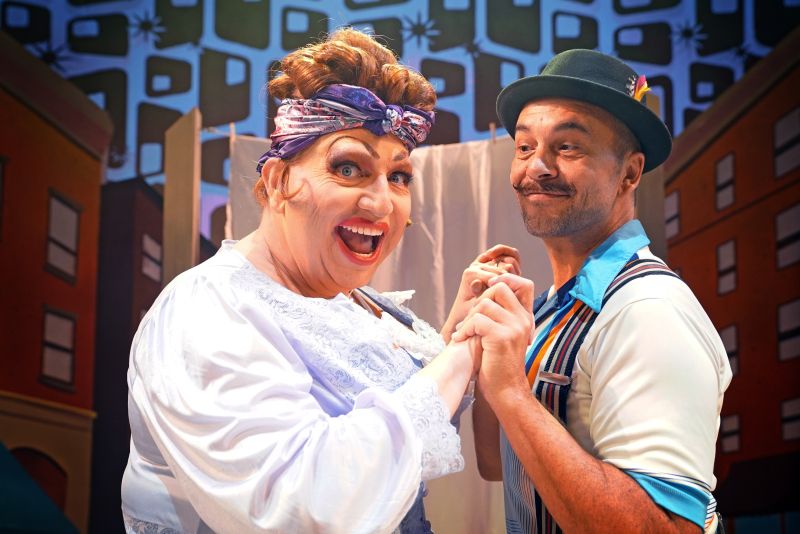
Tracy’s parents are brought to charming life by Steven J. Heron (Edna) and Frank Thompson (Wilbur). It was refreshing to hear Edna’s lines and lyrics without Harvey Fierstein’s trademark gravel; Heron’s delivery is much less grating to the ear, if significantly less bombastic. Heron seemed dubious at the top, sputtering on a few lines; luckily, this perceived uncertainty works for pre-“Welcome to the 60s” Edna. However, these presumed opening-night jitters were soon shaken off, and by the time Heron and Thompson have the stage to themselves in a heartwarming and raunchy “You’re Timeless to Me”, they were producing both cackles and tears from this reviewer with their palpable chemistry.
Marissa Beradelli’s Penny Pingleton is a fizzy stick of dynamite in a firecracker-sized package. Her performance is so wonderfully manic that at times, Banks’ Tracy appears to be the straight man to her clowning. Stamos has made a hysterical directorial decision to turn “I Can Hear the Bells” into not only a dream sequence for Tracy, but a simultaneous nightmare sequence for Penny - and he just lets Beradelli rip.
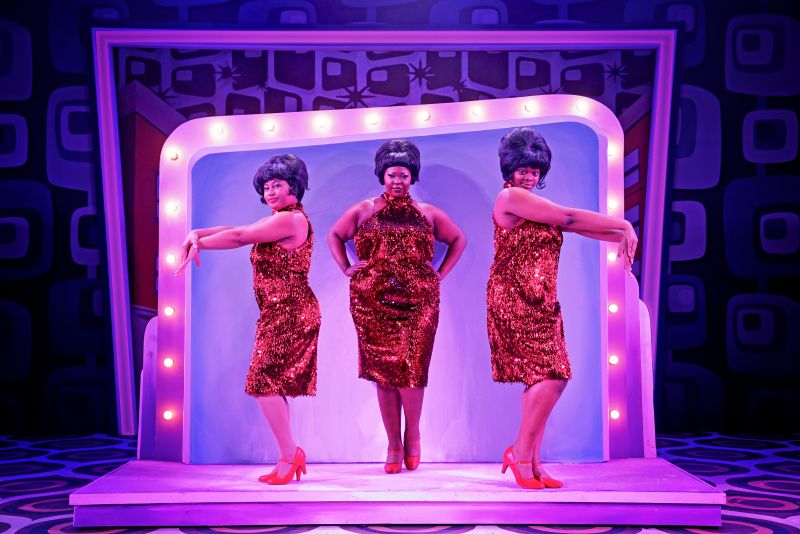
The cast is rounded out by excellent voices and perfectly capable performances from everyone at Motormouth Records and The Corny Collins Show. Carson Skidmore offers a slightly softer take on Link who is nonetheless charismatic and winsome, while Isaiah Bussey’s Seaweed is an incredibly smooth operator with moves to spare, despite a few minor vocal challenges. Daniela Gomez-Dugan (Amber) and Holly Fuller (Velma) bring forth deliciously obnoxious Von Tussles whose venomous jabs aren’t always as vicious as they could be. Shariah Brown packs a bright punch as Little Inez, and Nakiiya Coleman steals the second act as her mother; Coleman’s voice swoops and soars and then some, nimbly navigating the huge vocal range and emotional depth required of Motormouth Mabels on “I Know Where I’ve Been”.
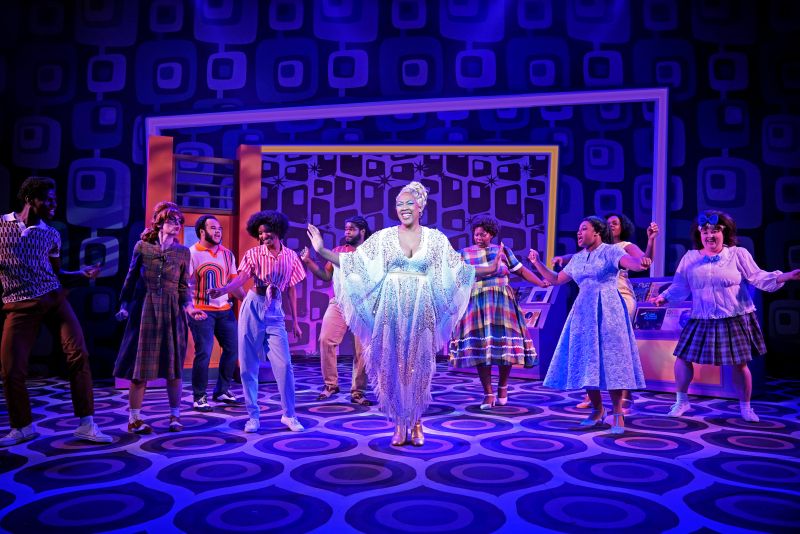
For all of its talk of a post-1960s world where equality and freedom reign, Hairspray remains joyously buoyant yet unfortunately relevant in 2026 America. It cuts deeply when Motormouth tells the group of protagonists, disillusioned by what they are up against, that “you were not the first to try, and you won’t be the last, but I am here to tell you - I’m gonna keep lining up until someday somebody breaks through”. 64 years after the events of this musical, that search for justice seems to get hazier all the time, which makes the foil of perseverance and unity in the face of helplessness all the more important.
In 2024, Music Theatre International issued an errata listing tweaks that must be implemented to future productions of Hairspray and which can be heard on stage in Titusville. None of these are massive changes, but faithful listeners of the Original Broadway Cast Recording will certainly catch a few lyrical swaps. Notably, in “You Can’t Stop the Beat”, Motormouth now sings:
‘Cause tomorrow is a brand new day, and it sees both white and black.
Rather than:
‘Cause tomorrow is a brand new day, and it don’t know white from black.
It’s a subtle but meaningful change, shifting off of the “colorblind” idea of erasing racial and cultural differences and onto acknowledging these contrasts and deepening our understanding of them. The changes are indicative of a creative team that recognizes a more modern perspective on the show’s central theme of diversity over two decades after the original Broadway run.
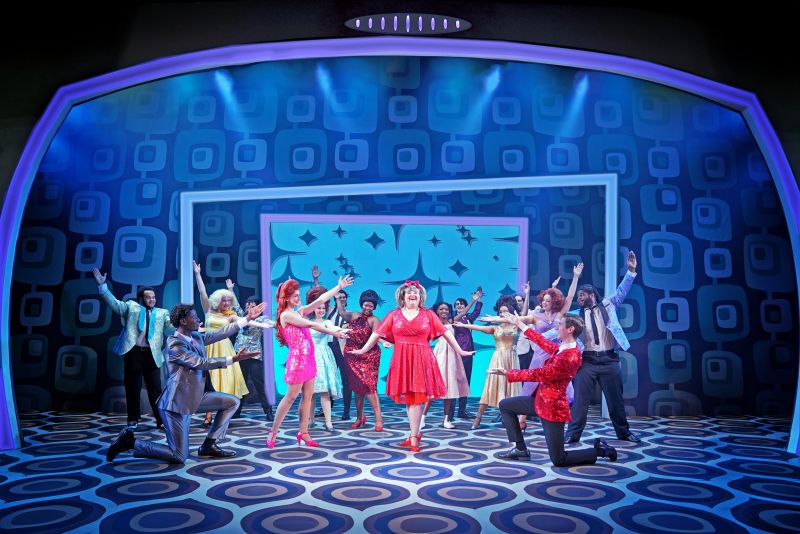
In presenting audiences with such a high-quality production of Hairspray, Titusville Playhouse has invited the community to look back on American history, albeit through a stylized lens; with that comes the unspoken request of a comparison to the here and now. As bright, fun, and flashy as it is, the musical, at its roots, is a story about overcoming racism and othering. While American society still writhes and agonizes through the miasma of a seemingly never-ending morality war, Hairspray at Titusville Playhouse offers the unique opportunity to simultaneously escape reality while still considering it. Though the happy ending may seem overly utopian, it’s the kind of ending that the story - and our bruised American spirits - deserve. Chances at dazzling optimism are much too few and far between in 2026; drop by Titusville’s 1962 Baltimore for a refreshing break.
Hairspray runs through February 15. For tickets, visit Titusville Playhouse's website at the link below or call the box office at (321) 268-1125.
Photo Credit: Niko Stamos
Sign up for all the news on the Fall season, discounts & more...
|
THE RAT PACK LOUNGE Winter Park Playhouse (9/24-10/18) |
|
The Best Halloween Ever Orlando Family Stage (10/10-11/01) |
|
Feltman: World's First Hot Dog Orlando Family Stage - Black Box Theater (10/23-10/23) |
|
Ted Swindley’s Honky Tonk Angels Athens Theatre (2/26-3/21) |

|
Madame Butterfly Dr. Phillips Center for the Performing Arts (10/02-10/04) |
|
Disney's Finding Nemo Athens Theatre (1/22-2/27) |
|
Evil Dead: The Musical Dr. Phillips Center for the Performing Arts (10/02-10/04) |
|
The Mouse & The Mustache Riverside Theatre (1/28-2/21) |
|
Right in the Eye Open Scene at the Maitland Art Center (10/17-10/17) |
|
Ted Swindley’s Honky Tonk Angels Athens Theatre (2/26-3/21) |

Reader Reviews
To post a comment, you must register and login.