


Review: EVERYBODY at Kansas City Actors Theatre
The new Kansas City Actors Theater production of “Everybody” is a sly meditation on the human condition.
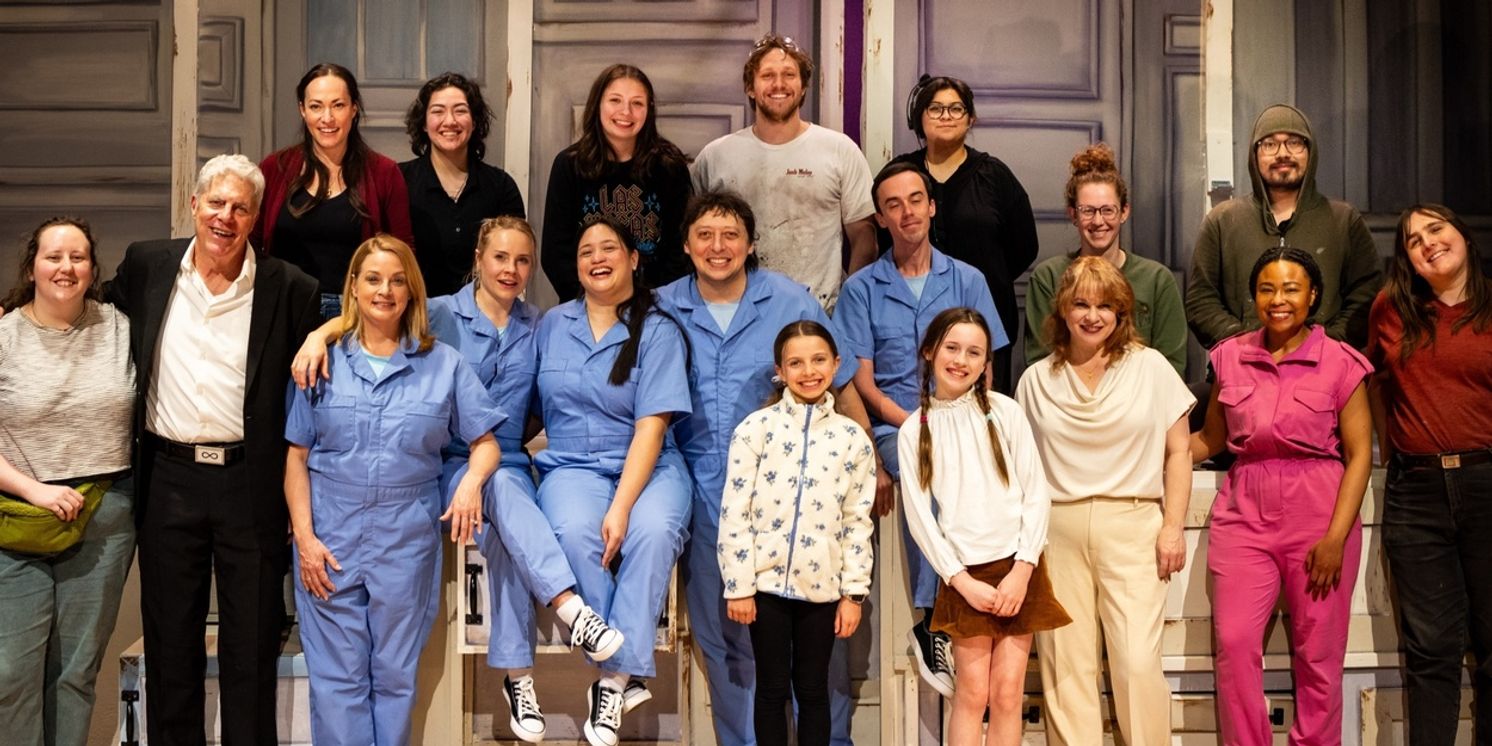
The new Kansas City Actors Theater production of “Everybody” is a sly meditation on the human condition. It is a riff on the oldest known surviving play in English called “Everyman.” The source material appeared around 1530 from an unknown playwright possibly based on an earlier Dutch play.
"Everybody" is a very tightly acted and imaginatively produced show by Director Vanessa Severo. I had researched “Everybody,” but was still a little unsure what I would see. You cannot leave this theater without admiration for an imaginative and taut production from all involved.
While inspired by “Everyman,” this version is written by playwright Branden Jacob-Jenkins as a ninety-minute presentation played without intermission. The play could be performed as a museum piece in Chaucer’s “middle English, but this “dream” of a show is truly its own animal.
The play begins, as do many Kansas City presentations, with a member of the hosting organization casually walking out to center stage, and introducing the evening’s entertainment.
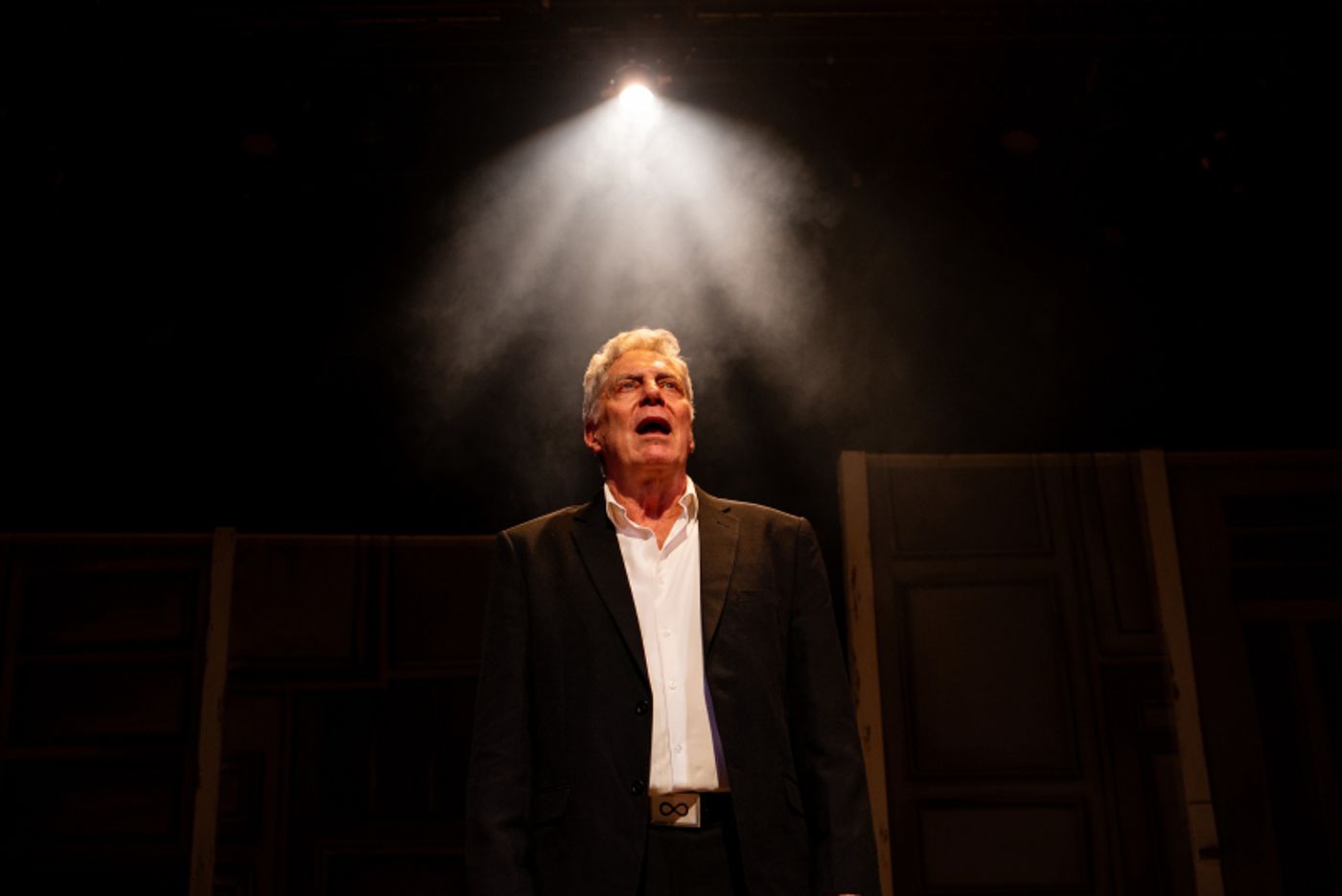
In this case, we are met by John Rensenhouse, a venerable, affable, familiar, cordial, and charming face. John administers the standard admonition about silencing cell phones, not snacking on noisy candy wrappers, no photographs during the performance, and so forth.
These warnings are a little more detailed than usual. Eventually, John finishes his spiel, turns his back to the audience, and crosses upstage center. We realize the play has begun. The opening explanation has been scripted.
John Rensenhouse is an actor blessed with a huge voice. He raises his arms in the most presentational way, and we realize that he has become God Almighty with apologies to the huge presence of the late Charleton Heston.
God explains a bit and details what we are about to see. He speaks for nearly thirty minutes of the ninety minute runtime before he surrenders the stage to the evening’s sexy main event.
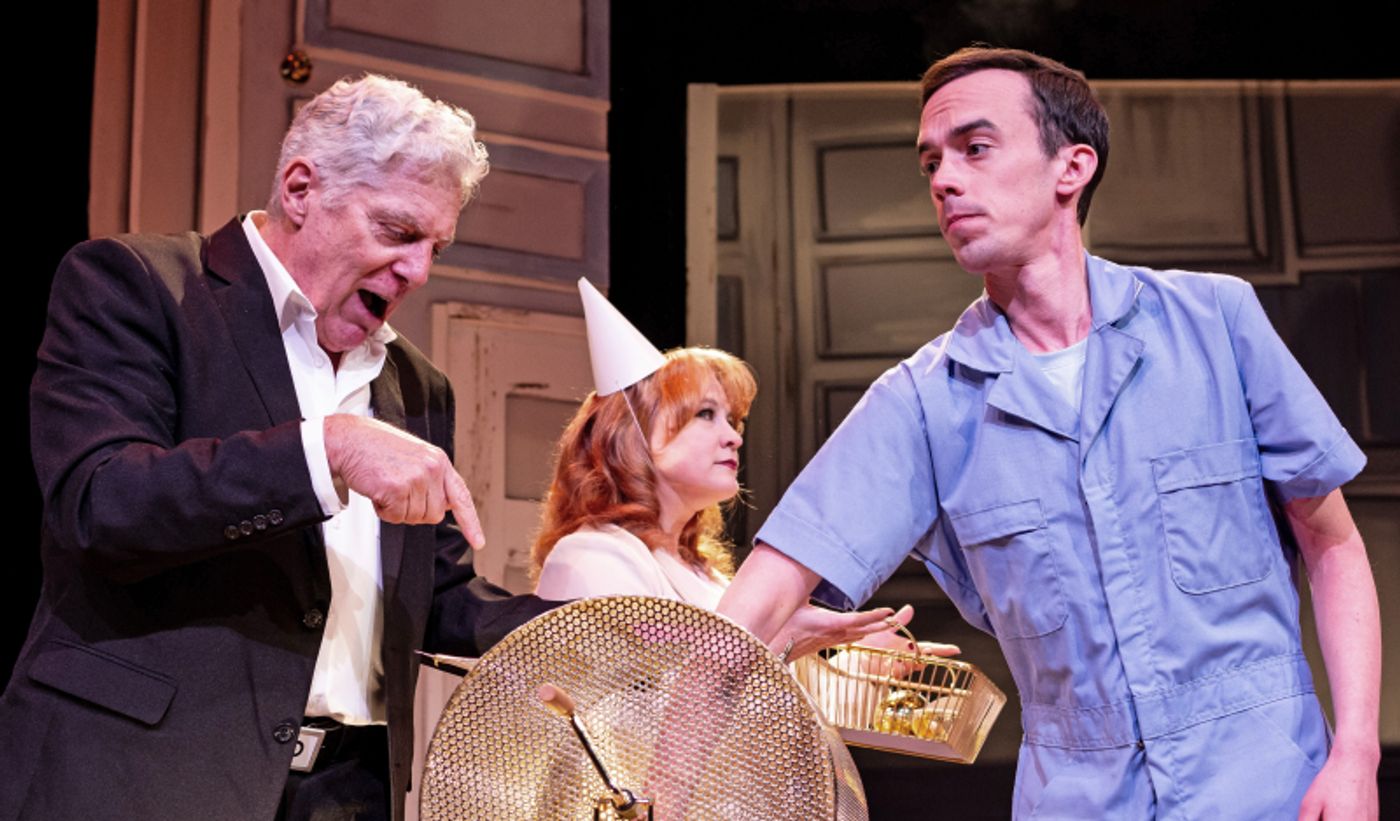
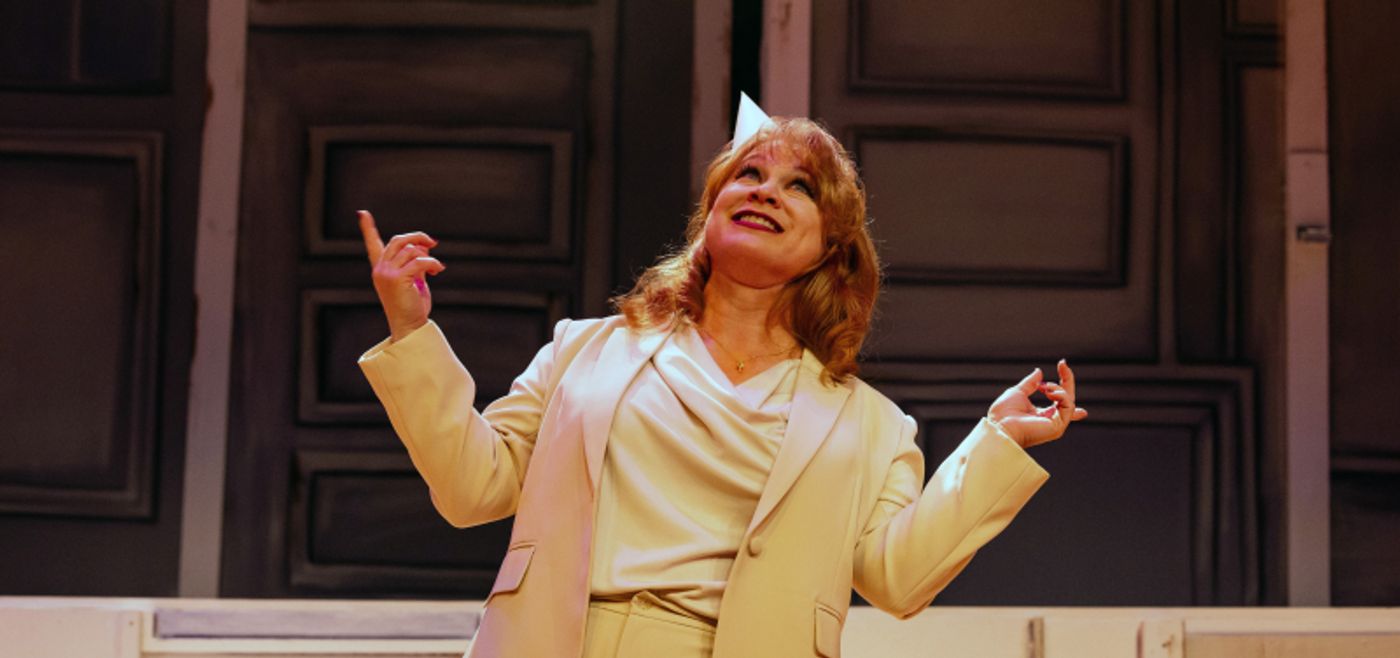
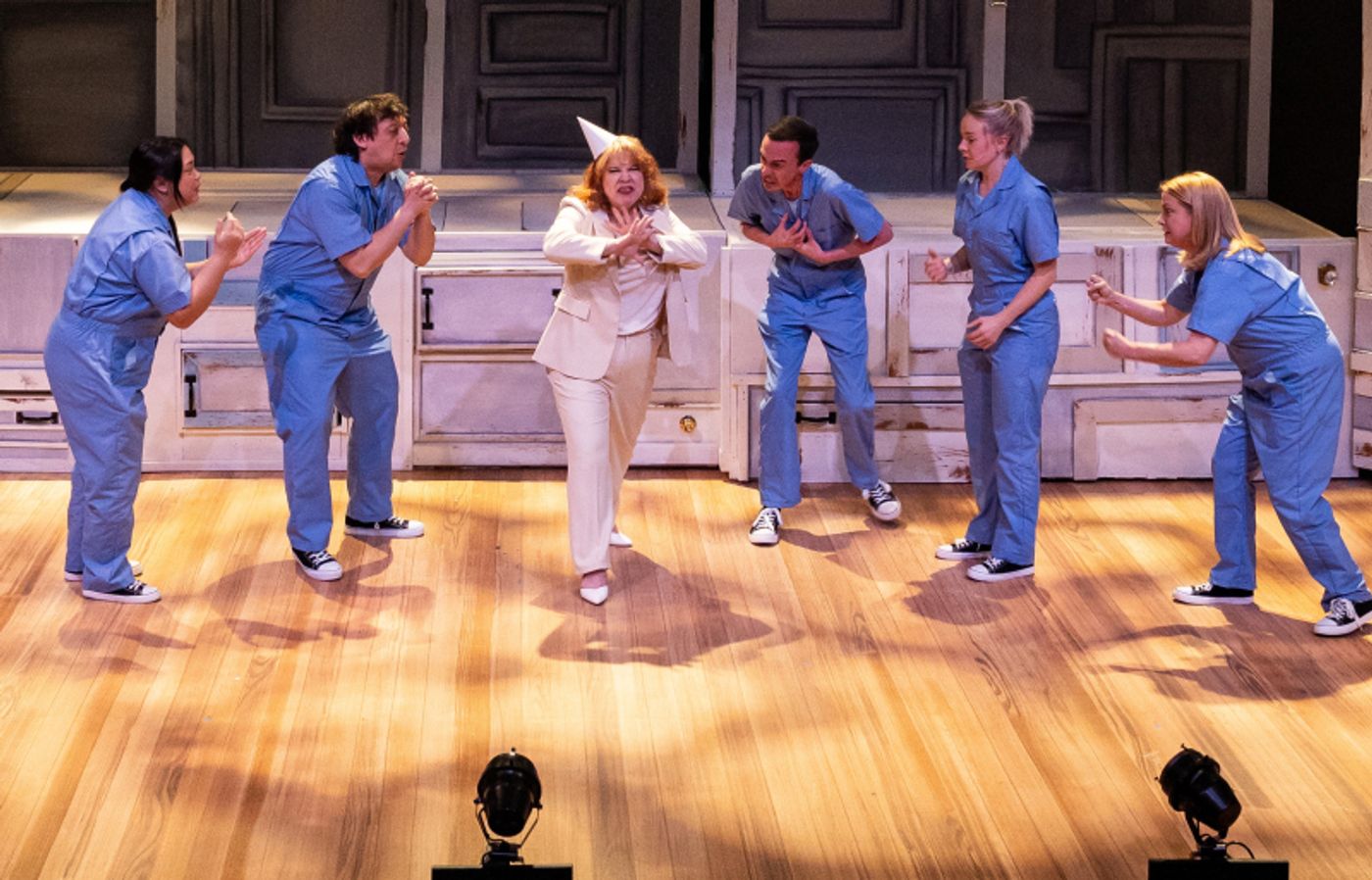
She is Cinnamon Schultz, resplendent and draped in a white pants-suit. She is Death herself. Death has come for Somebody. And it appears that the most likely Somebody is seated with us in the audience.
Death selects from our number five likely prospects for their life’s penultimate event; their own death. Each is attired in a medium blue jumpsuit. They are Elaine Elizabeth Clifford, Dri Hernaez, Mateo Moreno, Julie Shaw, and R.H. Wilhoit.
God reappears with a bingo-like lottery drum. God spins the drum and each actor retrieves a closed random ball. All five actors have been tasked with memorizing the entire remaining play. The assigned parts are Everybody, Friendship, Cousin, Kinship, Stuff, Beauty, and Mind.
.jpg?format=auto&width=1400 "Review: EVERYBODY at Kansas City Actors Theatre")
Until this very moment onstage, no actor knows which part he or she will play. One will die. As in life, we all die, but in no predictable order. There are one-hundred-twenty possible permutations. Each actor must prepare to play any one of the scripted parts.
It is remarkable how well this show holds together. It has a sly humor to it and if cues are not picked up, the humor risks falling flat. This cast hits every punchline and sight gag exactly as intended. Certain sections of the piece demonstrate the pathos and pain of death, but it is the humor that keeps Death from being absolutely crushing.
The featured Somebody (in this case Mateo Moreno) is afraid to face his fate alone. In turn, his Friends, his Family, his Beauty, all his Stuff, and even his Mind desert him. He ends being comforted by Love; embodied here by Teisha M. Bankston. This new Somebody comforts the chosen Somebody to his death and eventual internment.
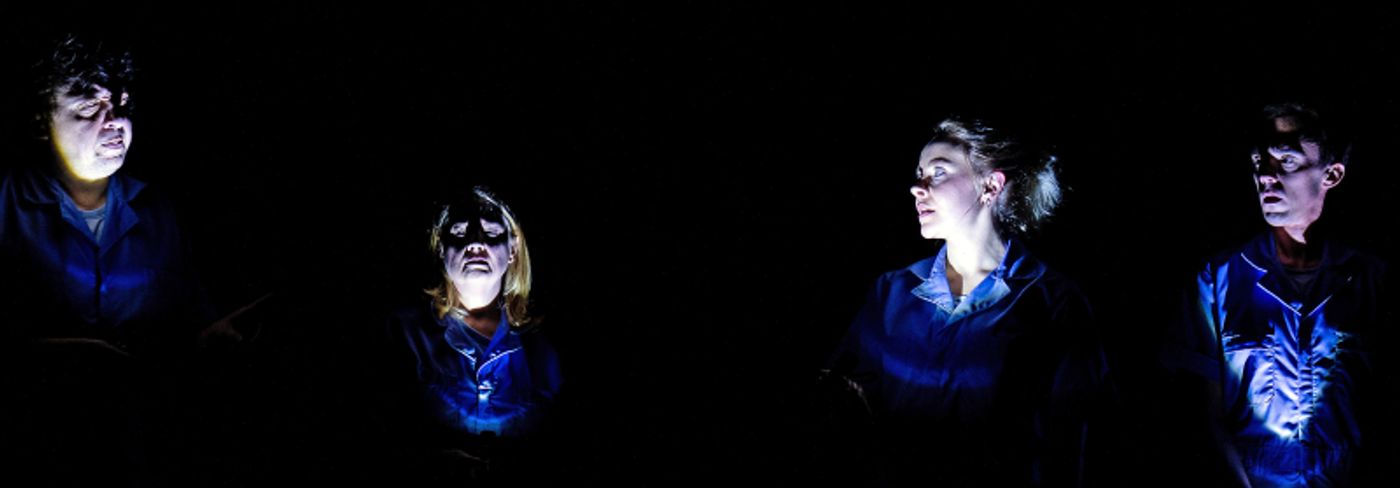
The set appears to be a piece of huge bedroom furniture with a number of drawers. We experience Somebody’s final dream. The drawers are actually clever stairs extending to a four foot high platform. A hidden door in the platform opens to become Somebody’s grave and an unexpected exit for the deceased, those who love him, and Death herself.
Jacobs-Jenkins’ most celebrated innovation is the lottery casting system: internal to each performance, actors randomly draw their roles. The performer who plays Everybody tonight may embody Stuff tomorrow. This mechanism reinforces the play’s thesis that identity is contingent, not fixed; that death is indiscriminate; that the self is, perhaps, merely a role temporarily inhabited.
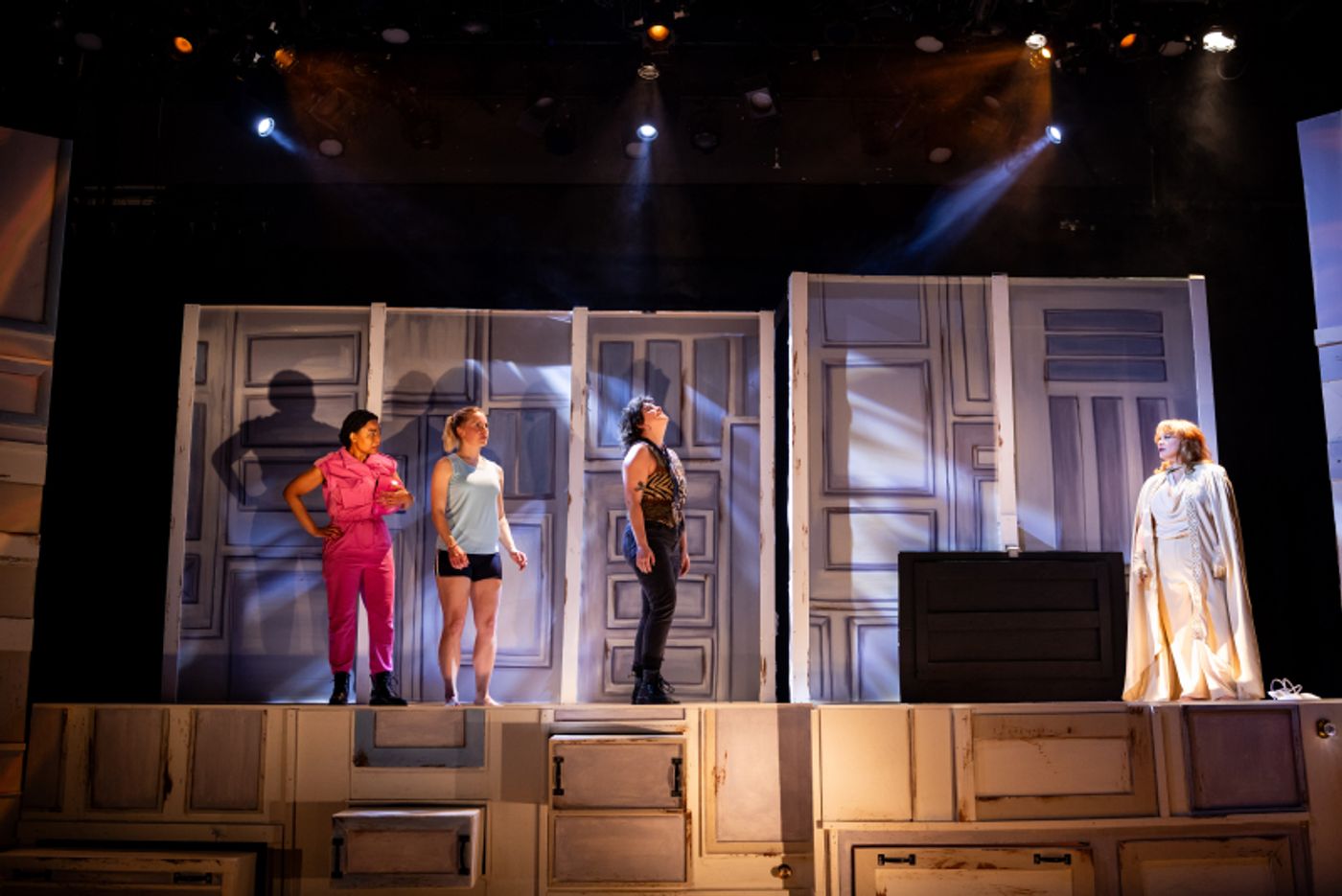
Director Severo’s choreography and insistence on pace make for a fascinating evening. The stair stepped set keeps blocking from appearing one dimensional. What seems stage flats backing the platform is in fact a scrim used at times to great effect. The set is designed by Kelli Harrod. The complex lighting scheme is executed by Zoe M. Spangler. Music is by Samy Toskin.
Each of these actors impressed me. What they are attempting ain’t easy, but they have pulled it off. I should be tempted to see “Everybody” again. With different actors playing new characters from the random draw, the result could be very different. That is the challenge and that is the risk. It is an actor’s Master Class.
“Everybody” continues through March 22 on the City Stage on the lower level of Union Station. Tickets are available online or by telephone 816.361.5228.
Photos by Brandon Parigo
Reader Reviews
Videos