Get all the top news & discounts for UK & beyond. No password required.
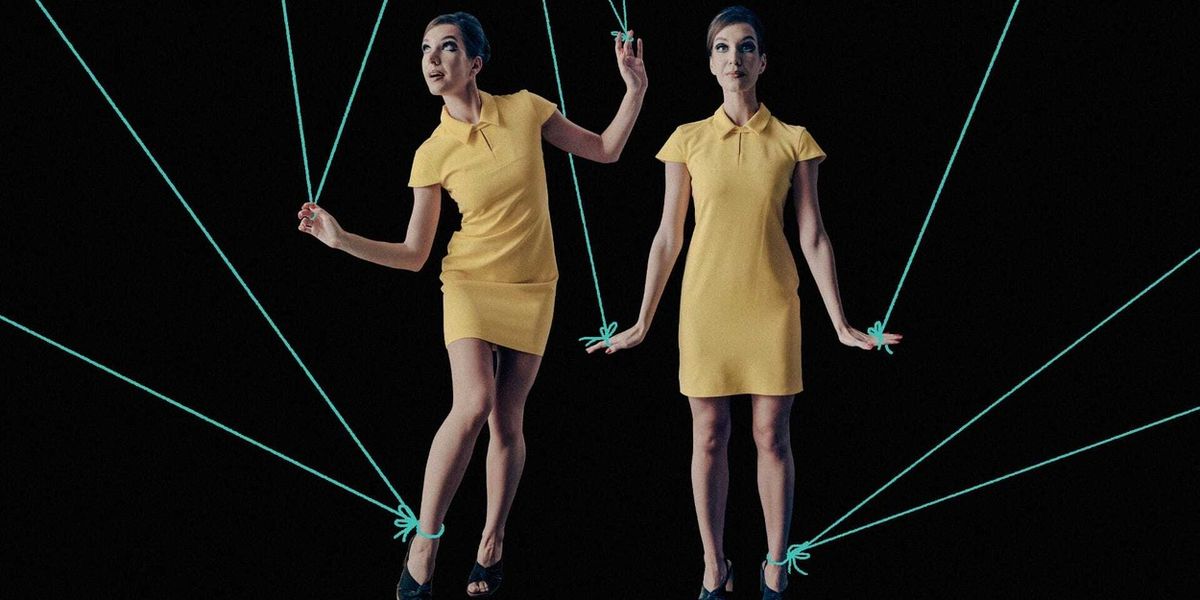
There’s a certain neat irony at the heart of this. A female director, returning to this opera for a second season (and for its third outing in Holland Park's semi-open staging), has chosen to stay largely faithful to a work whose central idea is that women are inherently unfaithful.
Cecilia Stinton sets the action in postwar Naples, with ostensibly American GIs stationed there and their girlfriends flying in from across the Atlantic. It’s an idea with real promise. A city still marked by occupation, saturated in tourist gloss and transactional desire, is a far more pointed setting for Alfonso’s cynicism than Mozart’s original world. But Stinton leans almost exclusively on Neil Irish’s designs to make that case, and then rather leaves the case unspoken.
Irish’s set begins with a Benvenuti a Napoli billboard, Vesuvius looming beyond it, and a stage that initially reads as classical ruins. On closer inspection, those ruins feel more like bomb damage polished into something picturesque. It’s a smart idea, quietly suggestive rather than showy. A single ticket booth shifts function throughout: airport arrivals then hotel desk and later Pompeii entrance.
Then in Act Two, the billboard lifts to reveal Pompeian frescoes with unmistakable undertones. Robert Price’s lighting is warm and carefully judged (especially after the interval) and the halo-shaped Holland Park stage is used with real fluidity, moving easily between depth and apron. It all looks assured. What it lacks is a fully formed argument to tie it together.
Elsewhere in London this season, two other productions have taken very different approaches. Phelim McDermott’s sublime ENO revival also has 1950s Americans but was set on Coney Island. Tom Pye’s fairground world is filled with circus energy, rides, and visual excess and, in an exquisite touch, the title is converted into a deliberate pluralisation to push back on the work's inherent misogyny: tutte become tutti and so "all women" became "all of us". Chaotic and charming in equal measure, it absolutely committed to its idea.
Jan Philipp Gloger’s high concept staging at Covent Garden, on the other hand, came at the comedy from another angle. Now retired after its 2024 revival, it turned the opera house itself into the set, collapsing the divide between audience and performer. Both were intelligent and modern approaches and, more importantly, made a point. Stinton’s Naples occasionally does the same, then forgets itself and loses its thread.
The most uneasy moments come in the disguise scenes. These apparent soldiers, with emphatically Italian names and polished Italian accents, return as Roman centurions, complete with swords and spears looking like gladiator extras straight from Cinecittà. By Act Two they’ve moved on to togas, lounging amid the frescoes of a restaurant that is run, of course, by Alfonso and Despina.
The opera’s central deception has always been somewhat strained; here it feels even more so, the disguises barely distinguishable from the identities they’re meant to conceal. This is less Superman and Clark Kent, more the earnest reporter first in a suit and then in fancy dress. If the production doesn’t establish what’s really at stake, the costumes end up doing very little beyond dressing the scene.
What holds the evening together is the pit. Still just 29 and already in demand internationally, Charlotte Corderoy conducts without a baton and with striking clarity, already showing a command of the score that feels beyond her years. When the stage falters, she tightens the musical line, keeping everything moving with purpose. The City of London Sinfonia respond with real character: winds and brass with a salty, almost impudent edge that suits the setting perfectly. She is clearly a conductor to watch.
The cast is uneven, but anchored by strong performances. Paul Carey Jones and Elizabeth Karani, as Alfonso and Despina, drive much of the evening. Karani turns Despina into a kind of one-woman service industry, guiding the sisters through every stage of their journey, from runway signals to passport booth to café and beyond. Although more muted a presence than in the McDermott or Gloger versions, she is more than capable of bringing the house down with just a swish of whatever she is holding. Carey Jones brings a heavy, commanding presence to Alfonso, his bass-baritone giving the role a weight that makes the mischief feel genuinely dangerous rather than merely playful. Between them, they tend to dominate the early scenes.
The four lovers take longer to settle. Madeline Boreham’s Fiordiligi makes Come scoglio land with real effort and conviction. By Per pietà, she finds something more inward and searching, and alongside Shakira Tsindos’s Dorabella, she grows into the final act with real emotional bite. Tsindos brings a bittersweet edge to È amore un ladroncello, and Osian Wyn Bowen’s Ferrando floats Un’aura amorosa with effortless poise, the Act Two duets between both men and their “wrong” partners finding moments of genuine pathos.
Yet the men themselves never fully commit to their own absurdity early on. Without that sense of self-aware ridiculousness, the women’s eventual surrender risks feeling less like a collapse of certainty and more like emotional fatigue.
Which brings the production back to its central question, one it circles without ever quite answering. Stinton introduces Pompeian death casts in the final act, human forms frozen in volcanic ash, as a kind of moral punctuation mark. Love gives way to death, she seems to be saying; while the game is revealed as cruelty, Alfonso’s experiment takes on a literal weight. But it underlines something the music already suggests with far more subtlety and force.
A finality suggested by the casts isn't seen in an ending that leaves things deliberately unresolved: no reconciliation, no neat restoration, just the couples left in the aftermath of the experiment. It’s a holiday that ends in disillusionment rather than revelation. The only real problem is that Mozart said much of this already, and he managed it without needing the bodies on display.
Così fan tutte continues at Opera Holland Park until 13 June



 There’s a certain neat irony at the heart of this. A female director, returning to this opera for a second season (and for its third outing in Holland Park's semi-open staging), has chosen to stay largely faithful to a work whose central idea is that women are inherently unfaithful.
.jpg?format=auto&width=300)





Reader Reviews
To post a comment, you must register and login.