
Interview: Robert Kelley of COME FROM AWAY at TheatreWorks Silicon Valley
BroadwayWorld chats with the Bay Area theater icon about his production of the Olivier-Award winning musical playing April 15th to May 10th in Mountain View
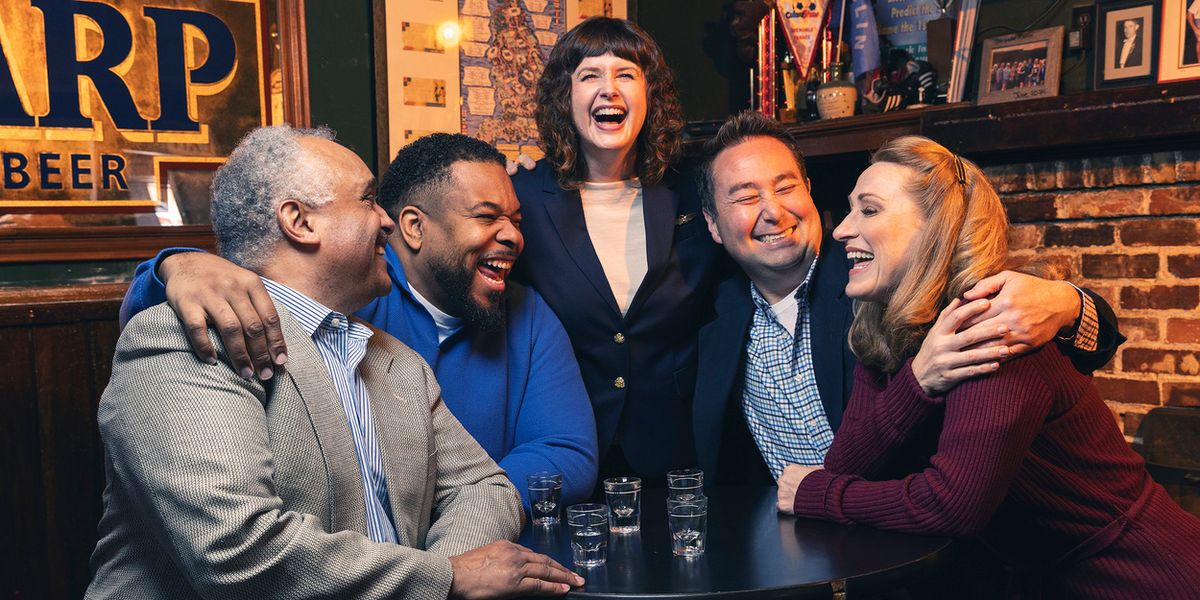
Sometimes good things really do come to those who wait. When I interviewed Robert Kelley back in 2022, I asked the veteran director which shows he’d still most like to have a go at and Come From Away topped his list. He’d first encountered the musical at a workshop presentation in New York several years earlier and was instantly smitten. Just one problem - he wasn’t the only theater bigwig in attendance who was bowled over by the show. Come From Away got scooped up for Broadway, followed by a national tour and a run in the West End where it won the Olivier for Best New Musical. Just this past year, rights were released for local productions and Kelley is finally getting his wish, thrilled to be directing TheatreWorks Silicon Valley’s northern California regional premiere of the musical he fell in love with over a decade ago.
Written by married duo David Hein and Irene Sankoff, Come From Away tells the remarkable true story of the tiny town of Gander, Newfoundland that welcomed 7,000 passengers from all over the world as flights were diverted there in the immediate aftermath of September 11, 2001. Featuring a rousing and heartwarming score, the musical is a testament to the best aspects of humanity as the citizens of Gander welcome the stranded strangers and forge enduring friendships across cultural differences. This is perfect territory for Kelley, who has always been drawn to work that explores the concept of community.
To say that Kelley brings a wealth of experience to the production would be a huge understatement. The Founder & Artistic Director Emeritus of TheatreWorks Silicon Valley is truly an OG of the regional theater scene, having led the company for half a century until he stepped down in 2020 after having directed something like 175 shows there. I caught up with Kelley by phone last week between rehearsals. We talked about what initially drew him to Come From Away, why he thinks audiences find it so moving, and the challenges of directing a show with so many moving parts. He also teased the project that will bring him back to TheatreWorks at the end of this year. I’ve had the pleasure of interviewing him many times, and I’m always struck by his easy approachability, innate warmth, deep knowledge of theater and enduring belief in the transformational power of the artform. The following has been condensed and edited for clarity.
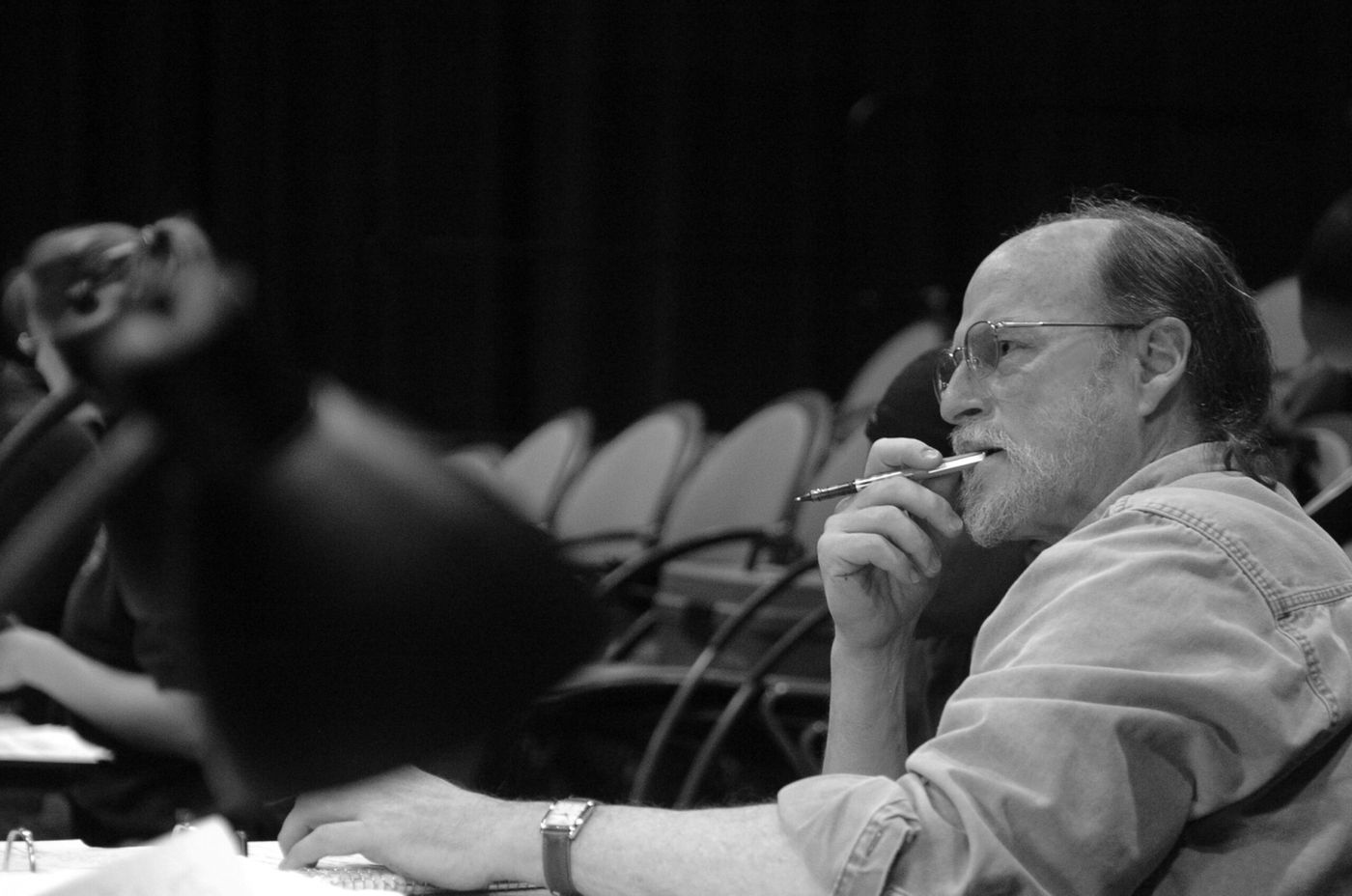
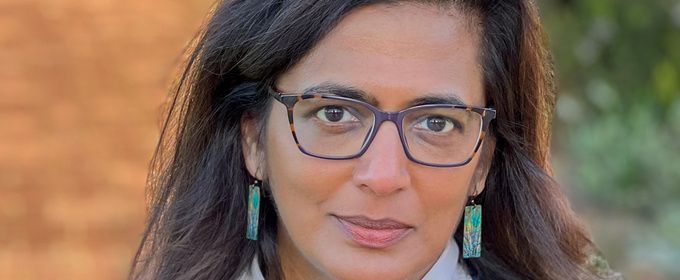
(photo by David Allen)
I believe you go way back with Come From Away. How did it first come into your orbit?
I saw the show in a condensed reading at the National Alliance for Musical Theatre in New York. They have a new works festival every year, and the audience is maybe 300 theater professionals from all over the country, artistic directors and producers, including Broadway producers. Out came this show, and no one really knew what it was or what it was about. About two-thirds of the way through the opening number, I realized that there were tears coming out of my eyes, and it sort of continued that way through the whole show.
I found it immensely beautiful and intense but also funny. And this was just a small cast of actors standing at microphones with scripts. I was thrilled, but also truly overwhelmed and determined that somehow I would get a chance to direct this show. I just instantly knew that. After it was over, I got in line upfront to talk to the authors and say, “We’d like to produce your show at TheatreWorks as soon as possible.” And unfortunately so did everyone else who was in the audience! [laughs] It was this mob scene and they got multiple offers from everywhere, and of course also Broadway development offers, so we would have to wait our turn.
Meanwhile, we developed a relationship with David Hein and Irene Sankoff, the authors. They started coming to TheatreWorks quite often in our New Works Festival and retreats to work on musicals that they were doing, in one case a kind of a re-do of one they’d already had success with in Canada called My Mother’s Lesbian Jewish Wiccan Wedding. They also came just last summer to work on a new piece called Vienna, which is a remarkable new musical that they’re putting a lot of energy into. I think they did the first act of it in our festival, and it was great. Everyone went wild for it and we’re eager to see what the next half of it is going to be like.
Your initial response to Come From Away matches that of so many people, myself included. What do you think it is about this show that brings tears to our eyes? Yes, it takes place in the wake of 9/11, but nothing tragic occurs during the show itself. In fact, quite the opposite.
Well, you tap into what’s worst about humanity bubbling constantly underneath as you’re watching a show about what’s best about humanity. And the contrast of those two things, I think, is why you tear up. At what people can do on the evil side, and what people can do if there are the right people on the good side. I think the emotional response everyone feels is to our potential, and how we too often fall short of it, but how these people in Newfoundland surpassed it.
We just did a run-through yesterday and it was there all over again. I’m trying to take notes and I’m starting to tear up and feeling those feelings and I’m going, “C’mon! You need to know who was supposed to Cross Right on line 6.” [laughs] You know? And “Oh, can’t I just sit back and feel this?” It touches you as a human being in the most profound way. And meanwhile you’re laughing – there’s a lot of funny stuff in it and interesting characters. I thought this was gonna be “Oh, I’ve been there, done that,” but it just wasn’t like that. It seems to be very relevant to the world we’re in today, and very moving as a result.
I had the exact same experience when I saw a community production of it on Maui recently. I went in thinking “Oh, it’ll be fun to see it again,” but I didn’t expect to cry through the whole thing.
[laughs] Yeah, well, “Welcome to the Rock!”
One aspect of this show which I imagine presents a real challenge for the director is the entire cast is onstage for most of the show, with everyone constantly switching between multiple roles. Given all those moving parts, how did you approach the start of the rehearsal process without everything descending into absolute chaos?
Well, it does descend into chaos at times. [laughs] Because, just as you said, it is extremely demanding on the actors. I’ve done so many shows where the actors are playing multiple roles, but here they are constantly onstage and constantly moving, not just between characters but suddenly they have to be in an airplane, suddenly they’re in a bus. There are four bus scenes and three airplane scenes, each one different.
In order to achieve that, these actors have to not just remember who they’re supposed to be and which piece of clothing they’re supposed to have on, but which chair they move from point X to point Y and all of that. It’s just extremely demanding, and in the rehearsal process we started on the first day and acknowledged how hard it was going to be – but on the other hand also acknowledged the duty we had as artists and as a company to make this show everything it could possibly be. There’s just a deep, deep commitment across the board, across all the artists involved, actors and designers and technicians and all that, to do right by this amazing play.
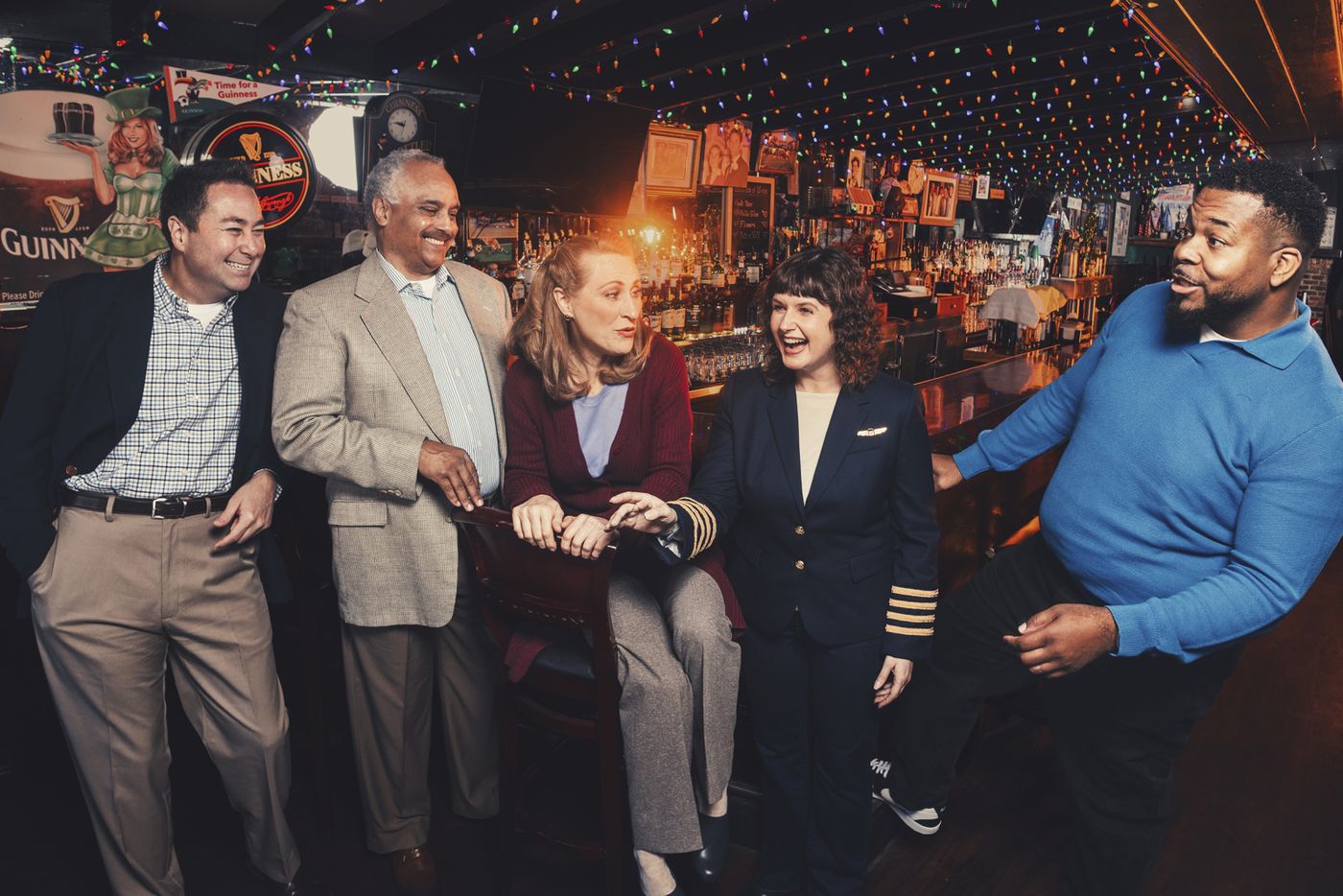
are featured in TheatreWorks Silicon Valley's production of Come From Away
(photo by Tracy Martin)
Your cast is stacked with actors who will be familiar to Bay Area audiences – people like Alison Ewing, Nick Nakashima and Heather Orth, just for starters – and whom you’ve worked with many times before and whose work you know very, very well. Did you already have any of those people in mind when you started the casting process?
Not really. It was an open casting call and some people that I thought might be just right were just slightly not, and others surprised me with how really special they were in each of these roles. Of course, they’re auditioning for at least two different roles, and in some ways the ability to simply do that and make them distinct and honest and truthful and believable worked perfectly.
I have to say I’ve been doing this for so long that I do know a whole lot of actors that have worked successfully at TheatreWorks, so it wasn’t a question of their potential to be in a cast where the relationship of the cast backstage, the honesty and love and care for each other had to be there in order to show that onstage. That’s something I’ve always believed in, and all of this team of actors carry that beautifully. It shows onstage; you just feel how close they are to each other. And suddenly the idea of community, which deep down is what the show is about, is obvious, reflected right there. You can see the love and the joy that the show is carrying in the actual people who are creating it.
Come from Away takes place in tons of disparate locations throughout the town of Gander. How did you approach collaborating with your design team to create a physical environment to contain the show?
You need an extremely flexible space to start with, but on the other hand, you don’t need a lot of additional scenery to make each space totally different. It’s a question of multiple suggestions of space. In the original, and actually in all versions since then that I’m aware of, there are like 12 chairs and a few tables as the basic scenery, and we decided to go with that. No matter how you slice it, it’s hard to come up with a new idea for how to represent an airplane with the people in rows. But I set out to do three different versions of it, cause that’s how many planes there are, and sure enough each one is different, so we’ll see. I have to admit, over the past year thinking about this show that one of the things that haunted me the most was how to do that. And four different buses, also, so there’s a lot of challenges.
But we are not limiting ourselves to, or even trying to be, the Broadway show exactly, in any way. There’s a bit more scenic embellishment in the design, like the now-famous sign on the Gander Airport where all of these planes landed in the wake of the 9/11 tragedy. We decided to use that as a key part of the design. It says “Welcome to Gander,” and I just love the idea of welcome being on everybody’s mind and on everybody’s lips in that community as this immense change in their lives happened for almost a week.
In the costume world, there’s a few things where we go further than we absolutely had to, to add character and discover aspects of character that you wouldn’t expect. There’s an Egyptian Muslim who is discriminated against and has to face up to suspicion and all kinds of things. That was common in the wake of 9/11, unfortunately, and that kind of prejudice continues today. When he gets back home to New York, we’ve already learned in the course of the play that he’s an international chef who travels the world and has his own restaurant. So at the end we now see him in his chef’s clothing and a little bell goes off in your mind that “Oh, wait a minute, I hadn’t really fully embraced how much of a significant person he was in his own community in the United States.”
Little touches like that I think help us see the kinds of prejudice that still ripple across cultures and societies and religions and all of that. The play takes on the fears of a gay couple who are worried about prejudice and exposure and whatever in a foreign country, and of a Black guy who’s afraid he’s going to be ripped off because he’s from an urban environment and is suddenly somewhere else and has to learn to love these people, and he does. It’s a great journey. When he gets to the end of the show back in New York, he has a line “I go down to Ground Zero, which is like the end of the world. It’s literally still burning. My dad asks, ‘Were you okay out where you were stranded?’ How do I tell him that I wasn’t just okay, I was so much better.” [long pause] Sorry! I actually can’t say that out loud without choking up.
That little tiny line has rippled with me for years, and all the more now since I’m directing the play. The idea that anyone could have become a better person in the wake of 9/11 has stuck with me. I feel like, from the very first time I saw the show and every time I’ve seen it since, and especially now, it does make me a better person, make me more aware of the world around me and the potential for accenting the good parts of humanity.
Switching gears a bit, I wanted to get your perspective on the current state of regional theater, which has been really precarious ever since COVID.
Oh, yes.
As an OG of the whole movement, what’s it been like for you to observe what’s been going on from the sidelines? Do you have any words of wisdom to offer?
Well, I think everyone knows that the COVID years drastically damaged all the arts in America, and probably around the world. People stopped going to things because at first they couldn’t, and eventually maybe because they’d grown used to a new way of approaching life – staying home more, doing less, feeling more conservative about how they spend their money, and to a certain extent forgetting about how important the arts are to our well-being. As a result, a lot of theaters closed after COVID, and to say that they’re all better now is totally wrong. Theaters are still struggling with any number of financial problems and finding out what the secrets are to bringing the audience back.
Almost all of the regional theaters in America built audiences gradually over time and went from small to medium to large institutions. Finding a way to bring people back, and finding the material that will bring them back, I think remains a challenge. You’ve probably noticed a huge amount of old shows or longtime hit shows being done all over the country in places where they might not have been done at all before.
I think to a certain extent the jury is out on whether that’s working, but I suspect that it is getting people back to the thrill of live theater vs. any of the other multiple ways of finding art, Netflix and Prime and all that. There’s a difference between a date and a phone call – and we’re a date. That’s the goal. And everyone thought, “Well, three or four years…” but I think it’s gonna be a decade, and there will still be some losses to come, unfortunately. But I do think the joy of live theater will become increasingly popular and we’ll just see if it can overcome the fact that the expenses of producing live theater will continue to grow, which they are.
That’s my overview from, I don’t know, 56 years of doing this.
Yeah, well, you have just a little experience to speak from. [laughs]
There certainly were some big ups and downs over the years for our company, and I’m sure for many of them. But somehow that primitive experience of we’re dancing around the fire instead of sitting around it, however many thousands of years ago, is gonna remain built into us as human beings. I do believe in that, absolutely. One of the virtues of Come From Away is that you quickly realize that the live part of it, seeing human beings being good human beings, being great, funny, attractive, and wild sometimes and sad sometimes, but still human beings that we all could be if we let ourselves be, that’s gonna live with a lot of people who see this show. I’m very confident about that.
And there’s a whole lot of interesting things with this being done now, rather than back then. I’m very eager to see how it works in a student matinee where none of them were even alive when this happened. I realize that those of us who were have a very visceral, internal reaction to that event, and the memories are there. So – we’ll see how the young people respond. I think it’ll still be a very moving experience for them.
It was recently announced that you already have another show lined up at TheatreWorks.
I do!
You’ll be directing Alice, Formerly of Wonderland this coming December in its Northern California premiere. What can you tell me about that show?
Well, it is centered on a woman named Alice Liddell, who was the inspiration for the book Alice in Wonderland when she was a child. Now that she’s a young adult, she is still well known because the book has become incredibly popular, and she’s a little feisty, she’s grown tired of everyone telling her Alice jokes or asking her about things that were in the book. You see her in the Oxford College environment, where her father is a dean, suddenly discovering that the Prince of Wales is coming to the campus and becoming a student there. And, lo and behold, the two of them become closer and closer in the context of the show, all of which happened.
That’s sort of the journey – What’s gonna happen with them? I don’t want to spoil it for you, of course, but the way the story is told is often through music, primarily music of that era, as sung by one of those small men’s musical performing groups which were very common and popular at the time. So you’re suddenly in this truly unusual musical that’s sung a cappella, the whole thing. TheatreWorks did it in our New Works Festival last summer and it was wildly successful, people loved it, so I wasn’t surprised to see it go on the season. Let me tell ya, I was delighted to get the chance to direct it. I’m kind of a history buff, I love period pieces and the challenge of doing a musical where the music is so different and yet so familiar, all at the same time. I think it’s really going to be fun to do.
(header photo of Come From Away cast members by Tracy Martin)
---
Come From Away will perform April 15 – May 10, 2026 at Mountain View Center for the Performing Arts, 500 Castro Street. For more tickets and additional information, visit TheatreWorks.org or call 877-662-8978.

Videos

|
The Still Point: An Immersive Experience SOMArts Cultural Center (7/16-7/25) |
|
The Tragedy of Hamlet, Prince of Denmark SPARC (7/03-7/26) |
|
PRESENT LAUGHTER ORINDA STARLIGHT VILLAGE PLAYERS (7/24-8/15) |
|
Comedy Oakland at Elbo Room Thu July 2 8pm Elbo Room Jack London (7/02-7/02) |
|
Comedy Oakland at Elbo Room Thu July 16 8pm Elbo Room Jack London (7/16-7/16) |

|
Iphigenia in Splott Shotgun Players Ashby Stage (7/25-8/30) |

|
Rock'n the Divide BarmHaus Brewing Co. (6/27-6/27) |
|
Dear San Francisco Club Fugazi (9/16-9/30) |
|
Comedy Oakland at Elbo Room Fri July 24 7:30pm Elbo Room Jack London (7/24-7/24) |

|
JAD Experience presents LUNAE Tara Firma Farms (7/17-7/26) |
| VIEW ALL SHOWS ADD A SHOW | |