


Interview: Migdalia Cruz of MACBETH at Magic Theatre
The award-winning playwright's world premiere adaptation of the Scottish Play runs March 18th to April 5th in San Francisco
When Play On Shakespeare, a resident company of Magic Theatre, initially approached Migdalia Cruz about creating a new translation of one of the Bard’s works, they were thinking perhaps Cymbeline might be a good match for the playwright’s boldly poetic style. What they didn’t know was that Cruz has long been fascinated by Scotland and that Macbeth is her favorite Shakespeare, so in the end the Scottish Play it was. She initially set out to translate it into modern English before deciding to go for a full-on adaptation that retains the essence of Shakespeare and much of his language but also makes the play more accessible. The goal was to provide a visceral, rather than intellectual, experience for contemporary audiences. Her newly envisioned Macbeth has its world premiere production this month at Magic Theatre, the first major project of its 2026 season.
I caught up with Cruz by phone last week from her home base on the East coast, happily far removed from the tech rehearsals she says tend to fill her with a sense of panic. We talked about what drew her to Shakespeare’s Macbeth and her intentions behind this adaptation; the significance of her remaking the Macbeths as a queer female couple; some invaluable lessons she learned from her mentor, legendary playwright Maria Irene Fornés; and how, after having written well over 50 plays, she continues to be so prolific. Based on impressions I’d gathered from the fierceness of her work, I had expected her to be a person of vast imagination and strongly-held convictions, and I wasn’t wrong about that. What I hadn’t quite anticipated was her propensity for laughter. The following conversation has been condensed and lightly edited for clarity.
Are you participating in rehearsals for Macbeth?
No. I went to San Francisco twice for a preliminary workshop and I was there back in December for like a pre-rehearsal rehearsal and did table work with the actors then, but I haven’t been able to go back for rehearsal. I’ll be there for previews and the opening, though.
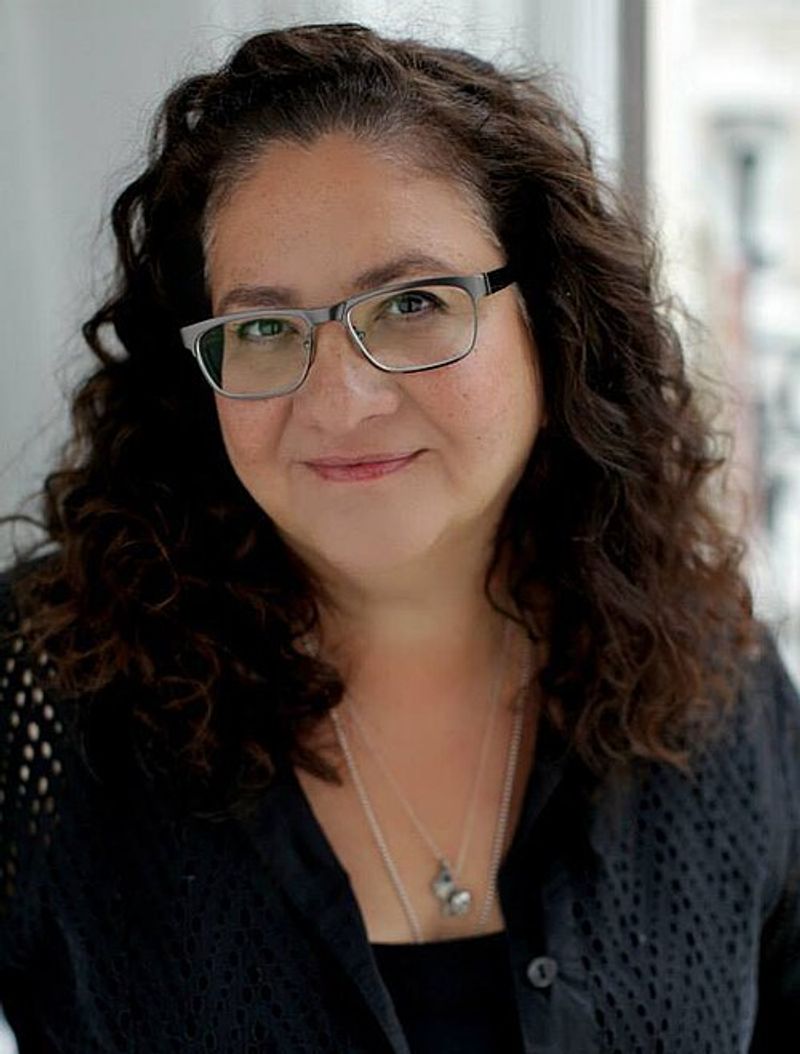
(photo courtesy of Magic Theatre)
I’ve talked to some playwrights who take the approach of “I deliver the script to the director and then I’m done” and others who want be in the rehearsal room every single minute.
For me, it depends on the script and the cast, and how much I feel like I trust in the process that’s happening without me there. I’m pretty trustworthy of Liam, I feel like it’s in good hands, so I’m happy not to be there. Also, it makes me nervous if I’m there too much. I really don’t like tech. Like how do they keep track of all that? I begin to panic for them, if they’re not already panicking themselves, and people lose their tempers. I find it very off-putting. When tech begins, I’m like “Okay, I’m gonna go have a drink at the bar. I’ll see you in three days.” [laughs]
Why Macbeth? What drew you to this specific play to adapt?
Well, Lue Douthit [of Play On Shakespeare] gave me a bunch of plays to react to. First, it was Cymbeline, which I thought was beautiful but too misogynistic for my taste, and then Antony and Cleopatra and I thought, “Hmm, I don’t know, that’s a little racist….” And then she says, “Well, these are the plays that are left. Choose one of these.” I saw that no one had chosen Macbeth and I thought “Well, right on! That’s my play.” I’ve always been sort of obsessed with Scotland. I went there on my junior year abroad and Macbeth is one of those plays that has always stayed with me. It’s my favorite of his plays, I think primarily cause it’s a play that’s about the “other” and what happens when they are denied entrance into society.
And it felt to me that was the most Puerto Rican of all his plays. Being a Nuyorican from the South Bronx, it felt like I really understood the trajectory of the Macbeths. I understand their rage and their sense of loss and their passionate response to being shunned and not allowed to ascend, which is something that is pretty common in this country. So I felt like it was the closest to my own sensibility as a playwright.
How would you describe your version of MacBeth?
Well, I wanted it centered around the witches so in my version they really form the world, and inform the world, rather than just tell you what’s about to happen. They are actually sort of leading the weight of this story and making sure that the world comes to pass in a way that they want it to be. They’re the storytellers, the ones that are forming it and framing it, and I thought that made it very contemporary.
I often want it to be women of color, or women+ of color. Actually, in my podcast, Ms. Peppermint, Monét X-Change and Manila Luzon were the witches. They were fabulous, and I thought “Omigod, this is so perfect.” Cause I could hear the idea that gender is fluid and sexuality is fluid, and how so many people are still so afraid of sex in general, and the sex that people of color have. People like to eroticize women of color, but then they also shun them and don’t give them their due. So I thought in this play I’d like there to be a way for them to ascend, and I feel like I did that by giving them the story really and allowing them to frame all of the events.
I added new dialog for them, but I don’t feel like I’m doing anything that is so crazy and disrespectful. Cause I do want to be really conscious of maintaining Shakespeare’s poetry and his plot, and not destroy anything that was already so beautiful in his work. But I wanted to somehow enhance it and make it accessible for 21st-century ears. Like really think about the sound of the play, can we understand all of the words? Even just changing a word order or a syntax can completely elucidate a sentence. So I really worked in that way to do the translation, like let me see, can I clear it away without causing any harm, but also think about how it can get reframed in this modern way.
Did you retain any of Shakespeare’s lines?
Oh yeah, I would say most of them, except sometimes they’re placed in a way that’s different. For this particular production at the Magic, I’ve compressed some of the language cause we had to cut it down in time and characters, so some speeches that belonged to one character now belong to another character, things like that. I don’t want to say that I’m writing a new play, but it does feel new to me, and I hope it feels new and clear to audiences, too, because of how I did it. You no longer need to carry around a lexicon to understand what Shakespeare was saying. It is in a modern English format that allows you to appreciate it as a living experience, breathing with the actors. I want people to understand that these are human journeys, and reconnect with the humanity of the characters in the play.
Sometimes people are quick to make Lady Macbeth a villain and Macbeth kind of following his wife’s evil ways or something, and I thought, “Well, that’s wrong. That’s not happening. These people are in love.” So I started from the base of the Macbeths being really a tragically childless couple that are in love and want to change the world, but are not allowed to. I actually added a scene (forgive me, Shakespeare!) for Lady Macbeth and one of the witches cause I wanted to show her trajectory as she became suicidal, as she became more and more despondent. Cause you don’t see that. You just see this crazy lady walking up and down the parapets and shouting things, you know sleepwalking. Which is easily, I feel, dismissible in how women can sometimes be easily dismissed when they’re in despair.
I won’t tell you what the scene is, I don’t want to ruin it, I don’t want to spoil the mirth (as Lady Macbeth says), but it’s a place where she gets to speak about what’s happening to her, in an open way, and gets to find out what’s happening in the rest of the world from one of the witches. So it felt like a good addition, and it felt very much like a Migdalia Cruz addition. [laughs] When I read it, I was like “Yeah, that’s my adaptation.” And this is something I’ve also kept thinking about, should I really make it a full-on adaptation, as opposed to a translation. Because the original task was just to do the translations, but the material is so rich you want to really make it your own the more you explore it.
I will readily admit that I often find Shakespeare quite challenging as an audience member, even though I’m very familiar with most of his plays. Even in a production by, say, the Royal Shakespeare Company where the actors supposedly make every intention crystal clear, I can find myself thinking, “Hmmm, I didn’t really get that last line.” Do you know what I mean?
Yeah. Well, the dramaturg I worked with was Ishia Bennison, an actress in London who’s appeared at the RSC and at the Globe. She was part of a company called Northern Broadsides that did Shakespeare in the northern languages of like Hull and Liverpool, which many say were the original languages it was done in. It wasn’t your Mayfair, Laurence Olivier version, which I’m afraid I find many Americans try to emulate. They spoke in their own languages, from their own regions, which gave it its own richness and authenticity, and I felt like that’s what I want from my actors. I want the cast to be primarily people of color and queer people and people who aren’t usually allowed into those classical doors. But not to have them imitate what’s come before, instead to take it on themselves for themselves and come at it in a visceral, as opposed to an intellectual, way.
You mentioned that you felt totally comfortable just turning your play over to your director, Liam Vincent. Had you collaborated with him before?
No, but having done the two workshops with him and the cast was really a gift, with the help of Play On Shakespeare, who contributed in a lot of ways to our voyage here. I worked with Lue Douthit, who originated it and was the original artistic director of the whole program, and she sort of acted as my production dramaturg as far as trying to create this new script that’s going to work for Liam’s production, cause Liam’s setting it in 1970s. I’d left it in 11th-century Scotland, but I also tried to do it so a production can be in the past but also the present or even in the future. I wanted to sort of set it in a liminal space when I wrote it. But Liam wanted to set it in the 1970s and I was like “Cool!” So it’s 1970s Brooklyn, it’s a queer couple, two women, the MacBeths, and Banquo’s also a woman. It’s not women playing men, it’s women playing women. I think the work’s really interesting, because of course a queer couple is still the other in our society. And having it be this tough warrior woman of Macbeth, for me it worked really well.
Groundbreaking playwright Maria Irene Fornés was your mentor for a number of years. How might you hope her influence shows up in your own work?
Well, the big thing Irene taught me from the beginning was that I had to remember to remember, I had to be honest with myself and with my characters, and write really from a visceral place, not from an intellectual place. Don’t write the character you think you should be writing or have them speak the way you think they should be speaking. Allow them to speak for themselves and allow them to go on a journey that is informed by your own journey.
For me, as a Nuyorican from the South Bronx, she encouraged me to remember where I came from and then use those places and memories that I had to ground my characters in the present. Like let them go to the beach where I went, remember the smell of the ocean where I swam, remember the violence that was in my neighborhood and how did that violence transfer to a new place. But not necessarily make them do what I did, just use those places that I knew and things that I knew with my five senses to inform what my characters were going to feel. Really trust in both the specificity of the past that you know and the randomness of the future that befalls your characters.
So I think that’s what Irene taught me. But I mean I studied with her for five years so it took me quite a while to understand those things about my writing and how to bring them back each time I wrote a new play.
Often it’s the simplest concepts that are hardest to really grasp and internalize.
Well, I think what’s hard about it is that people often feel like they have to pretend to be a writer, they have to pretend to have something to say. And you actually have to have something to say when you’re going to be a writer, like you can’t fake that. And we all do have something to say, we all come from somewhere. But the thing is to understand how to mine and extract from it the things that inform our fictional places that we create.
One of the pieces you worked on that involved Fornes, even if you worked on it separately, was Pieces of the Quilt, done at the Magic in 1996. The two of you were among quite an illustrious group of writers who each contributed short plays, sort of a virtual “Who’s Who” of contemporary playwrights at that time – including Edward Albee, David Henry Hwang, Ntozake Shange, Tony Kushner, Lanford Wilson and Philip Kan Gotanda, just for starters.
Yeah, that was wonderful, that was Sean San José’s idea, and it was a tribute to his mother [who’d recently died from AIDS]. At the time, of course, there wasn’t a lot being done about AIDS awareness and memorializing the people that were leaving us so quickly. The 1990s were awful - I think I lost 7 people in that era to AIDS. Sean had this idea that because there was that quilt [the Names Project AIDS Memorial Quilt] going around to different places in the United States, maybe that would be a good way to put a play together. So he invited a whole bunch of us to write a piece. My piece was called “So…” and it was four people who were in different places where they pray – it wasn’t always a church, it was different places – and it was how these different people who are either dying or about to lose a loved one to AIDS, how they would talk to God. The plays were all very different, but that was mine.
As a playwright who has worked quite frequently with regional theaters, what has it been like to observe this period of crisis in that arena basically ever since COVID?
Oh, my god, I don’t even know where to begin to answer that question. What’s happening today, it seems to me, is that all the writers that are being produced are writing plays that have already been done. And it gets frustrating, especially as a veteran playwright, [some would] call me vintage. [laughs] I’m a woman of a certain age and I’ve been producing plays since the 80s, so I’ve seen a lot of change in the theater community, but I’ve also watched a lot of opportunities dry up. And then the people who do get opportunities in regional theater, everyone just suddenly began to play it safe. It’s almost like, “Well, how did we elect Trump?” You know? People decided to play it safe, or some idea in their head that they thought that this was going to bring us money, or give them wealth, all these false ideas we have of what it means to be happy.
But then what the artists I think keep trying to do, especially in smaller theaters, is keep hope alive for change, and also create voices that are different and opinions are that different so that we don’t have to keep on doing the same damn plays over and over again. I just thought “Oh my god, how many times are they gonna do Arthur Miller?!” [laughs] I mean, ya know, god bless him but it feels like there are so many writers to choose from, so many plays, so many voices, so why we do we keep doing the same ones? To me, that feels counterproductive to art.
People aren’t giving themselves the chance to try anything new, to listen to anything new, to see new people onstage, to explore different worlds. It’s like “Let’s do the same one because we knew that worked. Yeah, let’s go back to that one, written in 1965, cause it’s really gonna talk to everybody.” Well, you know, not all plays are made equally and there are some beautiful plays from the past, but maybe it’s time for the future to include more plays than just ones from the past.
I mean, I say that as my Macbeth is about to open, that’s a play from the past. But I think our goal, and really my goal, was to make it something new and have it speak to a new generation, especially young people, who might’ve just turned it off as some kind of weird thing they had to do in high school English class. It’s like understanding poetry - I think it is essential to our society, and that’s what I think is being lost, not just in regional theater, but in all theater. I feel like I don’t get very excited anymore about plays. Occasionally there’ll be one, and it gives me hope, it makes me feel some relief, but it’s sad for me.
Also I keep writing new plays and my new plays aren’t getting done, so you begin to make conclusions about what that means. Does that mean you stop writing? Or you haven’t written the right play? Or has the appetite for something new and different just faded cause people are afraid to make waves, to say anything that’s inflammatory, to do one of my impossible plays? That’s what I think my plays are. I think people look at my plays and go, “Oh, no, we can’t do that. That’s not possible!” [laughs]
And yet you show no signs of slowing down, of the well running dry. What keeps you creating new work?
I think because I still have hope. Even in hopeless times, I see something new or an idea strikes me or I see a turn of phrase and say, “Ooh, I want to write that down.” When I was younger, I used to secretly tape people, like in cafes and things, to try to get real voices. Now, what I’m looking for is to cultivate the same thing, but from my imagination, and I think my worlds have gotten bigger cause I’ve traveled all around the world. So I’m not gonna keep writing about the Bronx, although I know there are people that would like me to stay in the Bronx so I wouldn’t be competing with them or something.
I’m not sure why, it’s probably useless to try to even consider why, but I feel like the reason I write is because I still have things to say. I hope I don’t suddenly get silent cause I feel like that means you’re dying. For me, silence does equal death, and writing is life. It’s believing in people, it’s believing in voice, it’s believing in the act of people holding space in an audience together, living and breathing with an actor who’s on a journey that a writer has blueprinted for them. And all of that together becomes this new life that gets breathed into the world, so it’s an act of hope. You know, that I’ll wake up tomorrow and think “Oh, what am I gonna write today?” It’s also like “What am I going to eat?” [laughs] We all need to be nourished by something and I feel like writing still nourishes me. I’ve written like 65 plays, actually, so it might be time to stop… I don’t know. But it also might be time to write 65 more. I ain’t dead yet.
I’m part of this theater company called The Tent that Tim Sanford and Aimée Hayes are co-artistic directors of. It’s for playwrights who are over 60. We have 50 members, and probably many writers that you know are part of it, everyone from José Rivera to Beth Henley to Octavio Solis. All of us are sort of struggling with this idea of aging and theater and where our careers are or not, and it’s good to be there in that community, we’re having fun. I just turned 67 so I’m trying to come to terms with it. I still feel like I’m 14.
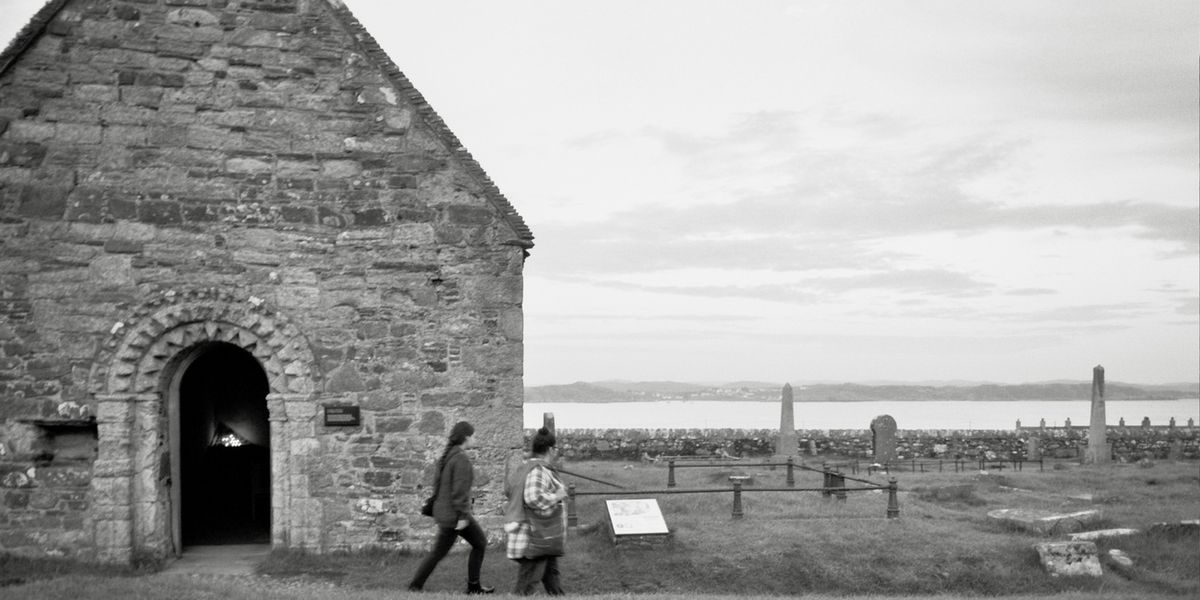
(Header photo of Cruz and her daughter Antonia Cruz-Kent searching for Macbeth’s burial place on the Isle of Iona in the Hebrides is by James M. Kent.)
---
Macbeth will perform from March 18 – April 5, 2026 at the Magic Theatre (Fort Mason Center for Arts & Culture, 2 Marina Boulevard, Landmark Building D, 3rd Floor San Francisco, CA 94123). Tickets are available at https://magictheatre.org/calendar/macbeth.

Weekly top stories - unsubscribe anytime.
|
The Madness of Lady Bright Venue: iMPACt Center for Art & Dance (11/06-11/15) |
|
Gutenberg! The Musical! Hillbarn Theatre (10/08-11/01) |

|
Dream Hou$e City Lights Theater Company (5/13-6/06) |

|
Based on a Totally True Story City Lights Theater Company (1/21-2/14) |

|
Live At the Orinda - 2026/2027 Concert Season Orinda Theatre (9/22-5/23) |

|
The Secret in the Wings Theatre Lunatico (10/10-11/01) |

|
The 2026 GLIDE Holiday Jam: Turn It Up and Turn It Out The Warfield (11/05-11/05) |
|
Bay Area Musical Improv Festival - Friday 8:30PM Show All Out Comedy (10/23-10/23) |
|
|
The Who's Tommy San Jose Center for the Performing Arts (11/17-11/22) |
|
“Inspiración: Music by Women and Nonbinary Composers” Center for New Music (5/15-5/15) |
