


Interview: John Holiday of AKHNATEN at La Opera
Opera's hottest young star talks about breaking out of the box, living freely and authentically, and how he feels connected with the revolutionary pharaoh Akhnaten
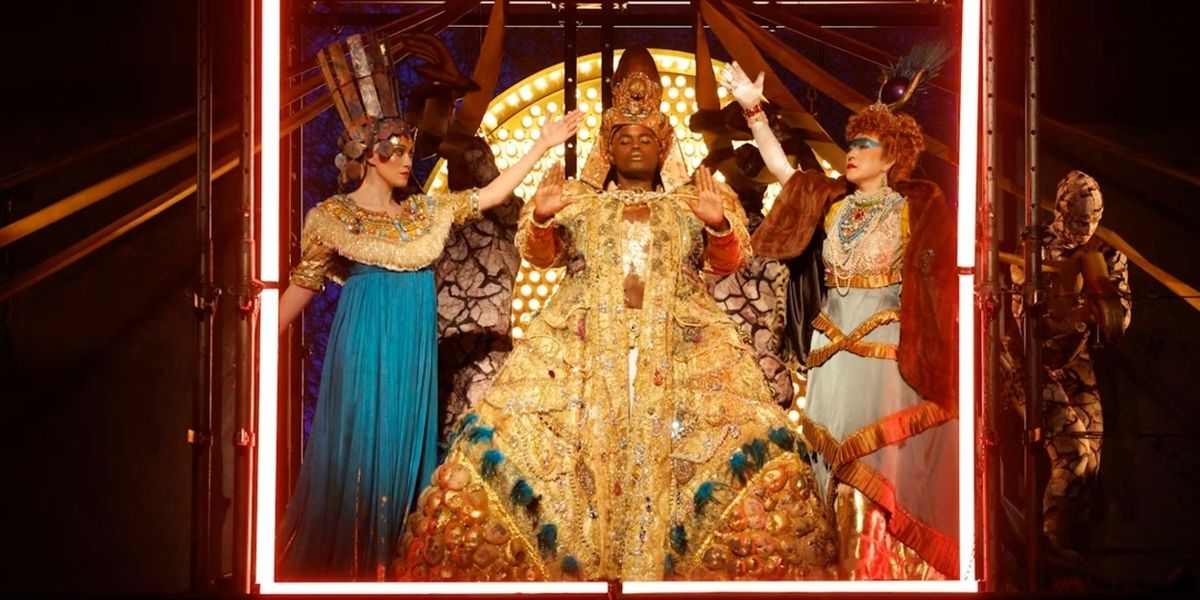
Countertenor John Holiday stars as Akhnaten in LA Opera’s spectacular revival of the acclaimed Philip Glass opera, February 28 through March 22 - and I can’t wait to see it. Holiday’s viscerally gorgeous, sensuously exquisite voice, equally at home in Billie Holiday songs as baroque opera, is a marvel. I talk with John Holiday about his upcoming LA Opera star performance in Akhnaten, his creative process, and his widely anticipated upcoming album Over My Head, releasing this July.
What connected with you about the role of Akhnaten?

2026 production of Akhnaten.
Photo credit: Cory Weaver
I’d love to sing Akhnaten even more, I love this role. I feel like it's become a huge part of who I am since I did it at the Komische Oper Berlin last year. It feels like I feel one with it.
I think the thing that connects me with Akhnaten is how confident he must have been, how bold and fierce. In so many ways, he was thinking outside of the box.
I have this idea that I don’t want to hold myself in any boxes and I know, Akhnaten was the exact same. He was very much so a forward thinker.
When I'm talking to my mentees, I'm always telling them, "Think outside of the box of what you think is possible for you. Don’t allow people to put you in a box. The only box you should have is a box you’re checking for a ballot. Those are the only boxes that should exist."
I don’t want to live in a world where I have to constantly think of a box that somebody has created for me, because I have nothing to do with that, and that has nothing to do with me. I want to live freely. I want to feel liberated. I want to feel love. And I feel that every single day by not living within a box.
There is no boundary for me. If I feel like I can do it, I will do it, or I am going to die trying to do it. That’s always been my thought. I’m going to achieve the goal, one way or another.
I like powerful women, and I like to think that I'm a powerful man. I’ve been raised by such quintessentially powerful Black women.
People when I started doing it, they were like, you shouldn’t be singing jazz, you should stick to this one thing. Well, no. I love jazz, I love gospel, I love R&B. I grew up with it, that’s part of my life. And I would feel that I wasn’t being my authentic self, if I didn’t explore any of those parts of me.
I grew up going to church almost every dang day. Because my grandmother was a musician for our church, and she played at three different churches. And I loved it, because church, in its own way, is theatre, if you think about it -- especially the Black church. I learned so much of who I am from being in church.
I spent Friday night being with my grandmother and her sister, my Aunt Brenda, my Aunt Nell and Ruby and Susie, and they're all teachers, Black teachers of a certain age and time coming through that system. They would all be playing cards, playing Tonk and Bid Whist and things like that, and listening to Johnny Mathis or Johnny Taylor, Marvin Gaye, I mean, Aretha! I love Aretha Franklin.
So how can I be the truest musician or the truest version of myself if I didn't pay homage to all those parts that are within me? So absolutely, I feel that Akhnaten and I have that kind of the symbiotic connection, as I think outside the box and I dare myself daily to do something that nobody else has done.
I don't know of many opera singers who are legitimately singing jazz. I’ve had the honor of working with Brian-Michael Cox, who is one of the quintessential producers and writers of our time, having written for Mary J. Blige, Beyoncé, anybody in the world who that's an artist, Brian-Michael Cox has written for. I've written with him, and when I was writing a lot of pop music, with Drew Scott. I like having this ability to cross genres.
Who are the soul and jazz singers that you find inspiring vocally?

(with So Young Park, at right, as Queen Tye)
in LA Opera's 2026 production of
Akhnaten. Photo credit: Cory Weaver
Ella Fitzgerald, Nina Simone, Mel Tormé , Frank Sinatra, Nat King Cole, Sarah Vaughan. Marvin Gaye for sure, Aretha Franklin. I love The Temptations. I mean, I could keep going, these are people who I grew up listening to.
My favorite singer is not a soul singer or a jazz singer. My favorite singer in the whole wide world is Celine Dion. And I've loved her since I was like 13 years old, she is my all-time favorite. She has no idea who I am, but I know who she is. One day if the galaxies all aligned, one day I hope to meet her. I really do. I mean, I've put it into the universe for a long time, and the universe may not be listening to me. But one day, I hope to meet her. I just want to give her the biggest hug.
For a young boy, she got me through a lot of my life. I feel everything she sings. She sings with her heart, which is what I try to do in everything. I want my heart to be the leader.
I'm always telling my students and my mentees, joy should always be the leader in everything you do. Even in the sad moments, there's joy in releasing the sadness.
I read also that you were inspired by Denyce Graves.
Oh my gosh, Denyce Graves is one of my favorite singers in the whole world. And she is the reason why I'm an opera singer. Had I not seen her, it wouldn't be me, or maybe it would have taken me longer. But you know, what I always think of, is that maybe this was ordained in me before I was born. That God reached out his or her hand to my mom's stomach and said, John will be a singer, you know, he'll sing opera.
But because I saw Denyce Graves, it was more expeditious for me because I saw her. I saw this grand human being walk out onto the stage in 1997 in Houston, Texas at the Jones Hall, and I thought, oh my God, who is that? I want to be like that. And I'm so lucky today to call her one of my dear friends. And we are so similar that it's crazy. I love her so very much, I adore her. And I'm so thankful for her guidance, her being the guide. Without her, I don't think that there would be a me. Or if there were a me, it would have taken me a lot longer to get here.
Have you worked on Broadway? Have you ever thought about working on Broadway?

and Sun-Ly Pierce as Nefertiti
in LA Opera's 2026 production of Akhnaten.
Photo credit: Cory Weaver
I teach musical theater students all the time, but I've never auditioned and done anything on Broadway per se. I've worked with Bill T. Jones, who has done a lot of things on Broadway. And I think the world of Bill and he thinks the world of me. He oftentimes calls me his on-earth angel. And he is certainly that for me.
But I would love to do something on Broadway. I'd love to do Mary Sunshine or something in Chicago.
I have a quote from my high school saying that all the world is a stage. You know, from the Shakespeare, all the world is a stage and we're just all players, and I hope that I can play on every stage. If they'll have me, I'd be there in a heartbeat. All they have to do is ask. I don't know how to do the Broadway audition, I have no idea how to do that, but I know how to sing and I know how to act. Like, dude, I'm ready!
Is your audition process different for opera?
I haven't auditioned for a long time for opera, so I couldn't speak to how the audition process is now. When I first auditioned, you would go into the audition room and you're singing, you have a list of five arias that you've prepared for your panel and you go and audition and you start with one. They pick two, three, or they'll hear all of them.
I don't really audition much now. But I would not be offended if somebody asked me to audition. Of course, I would do it for musical theater and for opera, of course, too. But yeah, nowadays I am more often than not an offer-only person that they're just like, hey, would you like to do this? And I'm like, yeah, sure. And I don't mean that in an egotistical or pretentious way. I hope you can tell that that's not my spirit.
You've also earned it. You have a huge body of work.
You know what? Thank you for that. Because I have certainly worked my behind off, quite literally, to get to where I am in my life now. And I know that I stand on the shoulders of so many giants. As Maya Angelou says, I come as one but I stand as 10,000.
It’s actually surprising seeing you because reading your bio you’ve done so much and yet you look so young. So I know you’ve been pushing yourself.
I have been!
Tell me your process connecting with the music and connecting as an actor, as a performer telling this historical story in the Philip Glass opera Akhnaten?

of LA Opera's 2026 production of Akhnaten
with Vinicius Costa (left) as Aye
and Hyungjin Son (right) as Horemhab.
Photo credit: Cory Weaver
My process is, that in order to become ready for it, I start to become the character on the first day of rehearsal. My favorite actresses are Meryl Streep and Viola Davis. And I love Melissa McCarthy, I love these women, I love Anne Hathaway, I love Sandra Bullock, Angela Bassett, I mean these are women who I adore, their craft, they are so good at it. And what I’ve noticed in their process, from what I can see, is that they become the person from the first day in the rehearsal.
My very first production at LA Opera, I was doing Dido and Aeneas, I was doing the role of the sorceress, and we were doing this crazy wild thing, and I was like, I wonder, what would Meryl do? Instead of what would Jesus do, what would Meryl do? Or what would Viola Davis do?
And how is it a different preparation vocally or a different process you use for Philip Glass from a composer like Puccini or Verdi?
I would say that my preparation for this is the same with anything: wanting to use absolute pristine technique. That is my goal in everything I sing from my baroque music to my jazz, employing really great technique. And I'm really lucky that I got to study with some amazing teachers who helped me get that together along the way.
I don't sing Puccini or Verdi, so I couldn't speak more to that. Traditionally, I would sing more of like Handel or Mozart.
Because your voice is a countertenor, right? It’s a kind of unusual voice for opera.

of LA Opera's 2026 production of Akhnaten.
Photo credit: Cory Weaver
It's unusual in that I think that it's still rare. Right now, I don't see a lot of Handel being done so much in the United States as it is in Europe. It's done in Europe all the time, particularly in Germany where I work a lot. But I don't see it being done like every season here, like it's done every season in Europe. It's done like maybe every two or three seasons in the United States.
I'd like to think that we are past the resurgence part of the countertenor voice that happened in the 90s. There was this resurgence of the countertenor voice, you know, with all these fantastic countertenors whom I held in such high regard. And I think now we're in that place where it's like it's a norm now, but I also think perhaps I'm one of the lucky ones or blessed that I do get to sing so often.
I think that there is a misconception about the kinds of voice in repertoire. I would say actually, more often than not, today, I'm finding a lot of contemporary composers writing for the countertenor voice, which thrills me. I have premiered 4, 6, maybe even 7 brand new works in the opera realm that are all written for a countertenor.
The things that we're seeing out there for countertenors, I think that they're more expansive than they used to be. Now, in relation to other voice types, probably not as much. There's always going to be parts for soprano. There's always going to be a part for tenor, you know.
But I'm one of the ones who feels really lucky that I get included in a lot of the new things.
I don't know how much gender expansiveness has permeated opera the way it has a lot of theater, but I was curious if more mezzo parts or contralto parts might be open to you in gender neutral or genderqueer castings? Or if you think you'll be more set to traditionally written castrati roles or countertenor roles.
I wouldn't probably ever sing a contralto role only the range would probably be too low for me. But that's a very good question, I’ve never been asked that before.
I can't think of anything like gender neutral. I don't think there's such a thing in opera, and perhaps there should be, I just haven't seen it.
I was thinking your voice would also be gorgeous for Carmen. You're also such a great jazz singer. And there's something about the role of Carmen that's always felt very jazz to me in a way, very sensuous.
It is so jazzy, it’s incredible! Oh, I love Carmen. It's so out there, but if anybody ever asked me to do it, I'd do it. Because Porgy and Bess has had such a resurgence, I'd love to sing the Serena or Bess one day. I do love things like Aida or I would love to sing a Tosca, you know, I think that goes just high enough for me that I could sing it.
So let's segue into that -- dream roles for you.
One day, I would love to be Sesto in La clemenza di Tito, I would love to do that, because I always felt that it would fit me.
Do you have an album coming out?
I do have an album coming out! I have an album coming out, July 17 2026, PENTATONE record label. I am joined with my Best Friend and long time collaborator, Kevin J. Miller. More than anything, I hope it heals people, I hope there is healing in it. It’s called Over My Head. I am so looking forward to it coming out.
John Holiday stars as Akhnaten in LA Opera’s spectacular revival of the acclaimed Philip Glass opera, February 28 through March 22. For tickets and more information, click on the button below:
Sign up for all the news on the Fall season, discounts & more...
|
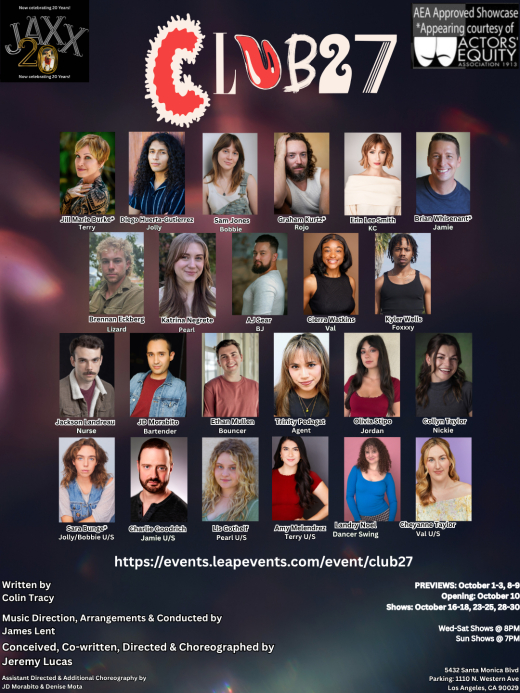
CLUB27 Jaxx Theatre (10/01-10/30) |
|
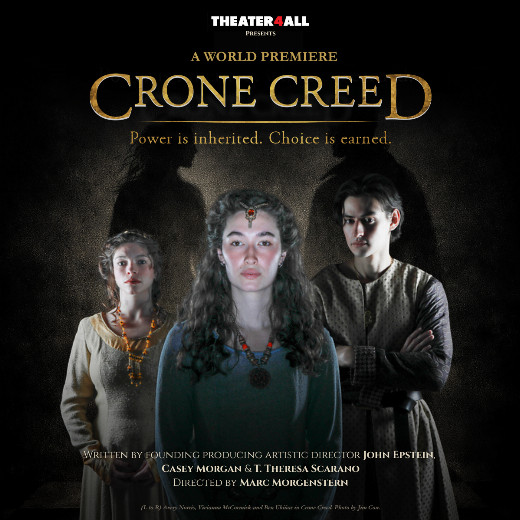
Crone Creed El Portal Theatre (9/30-10/17) |
|
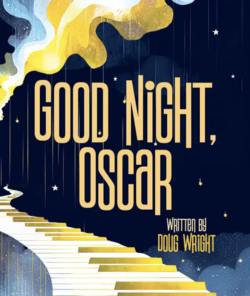
Good Night, Oscar North Coast Repertory (9/16-10/11) |
|
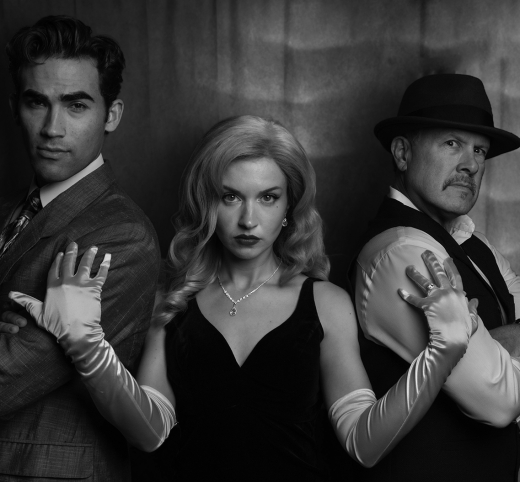
A Killer Night in Studio City Vitello's (9/06-10/31) |
|
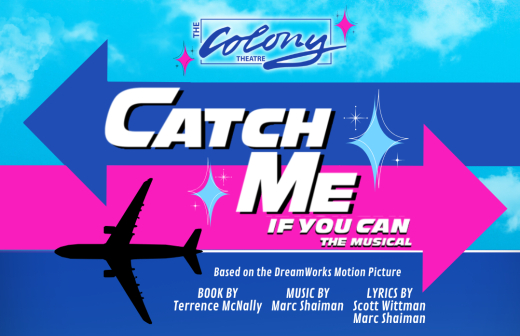
Catch Me If You Can Colony Theatre (9/17-10/18) |
|
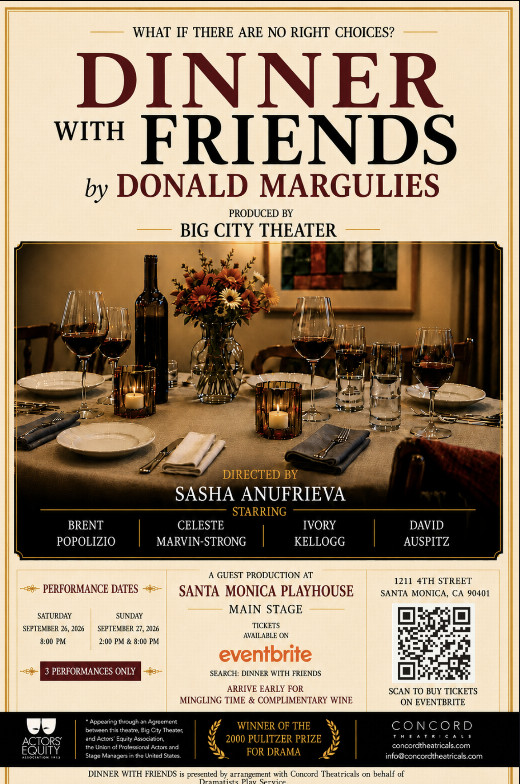
Dinner with Friends Santa Monica Playhouse (9/26-9/27) |
|
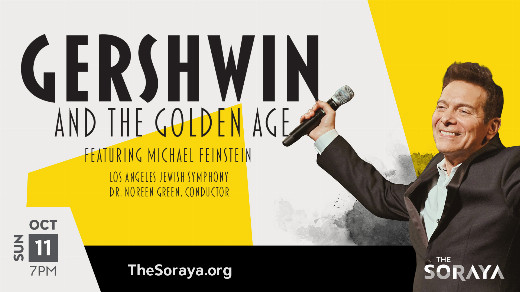
Gershwin and the Golden Age The Soraya (10/11-10/11) |
|
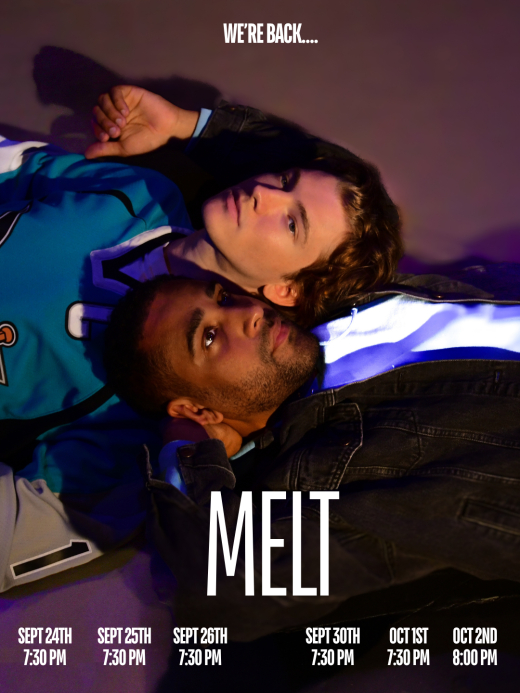
Melt : The Play The Marilyn Theatre at the Lee Strasberg Institute (9/24-10/02) |
|
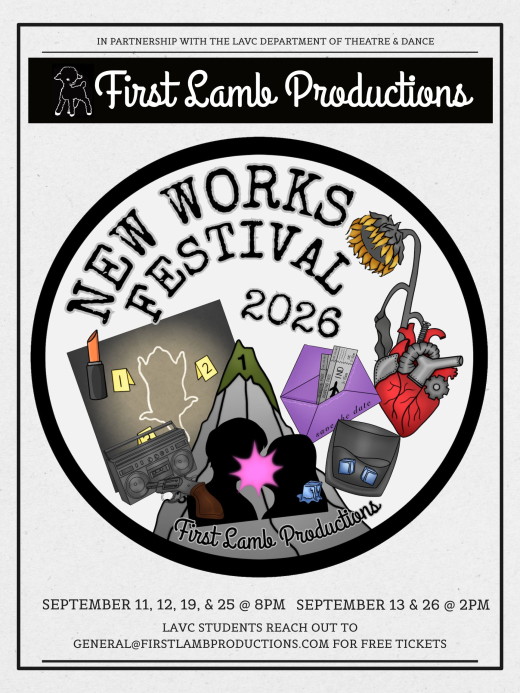
New Works Festival Shoebox Theatre (9/11-9/26) |
|
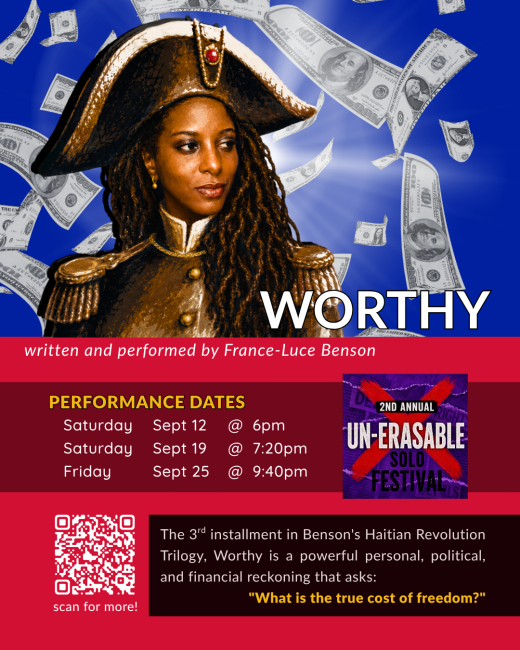
Worthy The Un-Erasable Solo Festival - Willie Agee Playhouse (9/12-9/25) |
