Everything to Know About Yondr Pouches: Why Broadway and Beyond Are Locking Phones
Learn about how they work, where they came from, and more.
 Click for Tickets
As smartphone habits become harder to break, some live events are taking matters into their own hands — quite literally. Enter the Yondr pouch, a locking case that keeps your phone with you, but sealed shut, to prevent recording, texting, and scrolling during performances. The system has been increasingly visible on Broadway and across the live-entertainment industry. Most recently, it is being used in Bess Wohl’s new Broadway play Liberation, which is currently requiring audiences to place phones inside Yondr pouches before entering the theater.
Broadway fans will recognize these pouches as part of a growing trend among performers and venues who want to protect new work, reduce distractions, and embrace a more immersive audience experience. In the case of Liberation, they are used to protect the privacy of the performers- most of whom participate in a lenthy nude scene in Act 2.
But the theatre isn’t alone — musicians, comedians, schools, and even court systems are turning to Yondr to encourage people to put the phone away and be present.
What Is a Yondr Pouch?
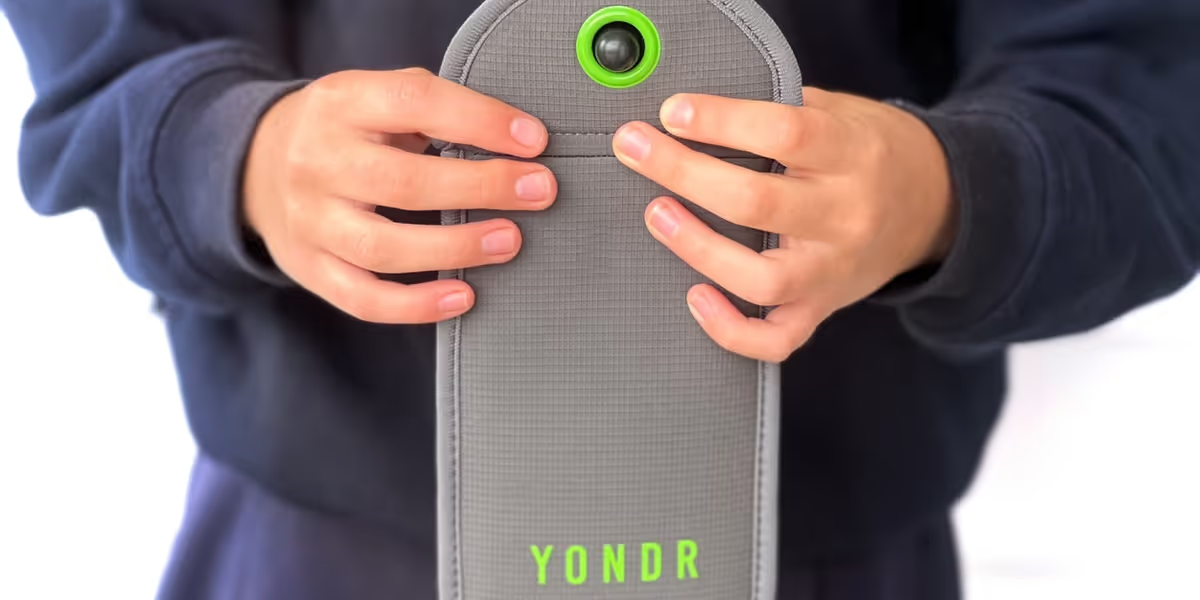
A Yondr pouch is a soft, fabric sleeve with a magnetic lock designed to secure cell-phones and other smart devices. Once locked, your device stays physically on your person — you just can’t open the pouch without a Yondr unlocking base. The goal is a phone-free environment, without fully relinquishing your device.
Why Venues Use Yondr
Protecting Creative Work
For live theatre, comedy, and concerts, unauthorized recording can spoil creative work long before it officially premieres. Performers—especially comedians testing new material—are increasingly vocal about protecting intellectual property from leaks online.
Improving Audience Experience
As live events emphasize presence and shared experience, theatres and artists argue that a no-screens environment reduces distraction. Without the glow of cell phones and the temptation to record, audiences remain focused on the performers and the story unfolding onstage.
Ensuring Safety and Privacy
Certain schools and legal environments use Yondr pouches to prevent unauthorized photos, recordings, and digital communication. For students, it also supports policies encouraging device-free learning periods and healthy social interaction.
How Yondr Pouches Work
-
Arrival & Pouching – Upon entering a Yondr-enabled space, guests place their phone (and often smartwatches) into a pouch handed to them by staff. On Broadway, pouches are distributed as you enter the theatre.
-
Locking the Device – The pouch is sealed using a magnetic locking mechanism. The phone stays physically with the guest, but access is blocked.
-
During the Event – Devices remain locked throughout the event. Emergency use areas—usually in the lobby or designated space—allow guests to unlock their pouch temporarily if needed.
-
Departure & Unlocking – At the end of the event, staff use a base station to open the pouch before guests exit. On Broadway, stations are located immediately outside of the theatre exits.
A Brief History of Yondr
Yondr was founded in 2014 by Graham Dugoni as a response to increasing concern about digital over-exposure and privacy. Dugoni reportedly first conceived the idea after witnessing concert-goers surreptitiously record a stranger at an outdoor music festival.
The pouch gained momentum within the comedy world, soon earning high-profile support from performers like Dave Chappelle and Chris Rock. As theatres and concert venues followed suit, Yondr became a staple at sensitive or exclusive performances—including Broadway shows, film-festival screenings, and live tapings.
Yondr on Broadway
Several Broadway and off-Broadway productions have adopted the Yondr pouch system to enforce a phone-free audience environment:
-
Freestyle Love Supreme: This show required audience members to place their phones in Yondr pouches to prevent distractions and maintain a fully engaged audience experience.
-
Take Me Out (revival): The production required phones to be locked in Yondr pouches to protect the privacy of the perfromers who took part in a nude scene.
-
Liberation: As mentioned, this new Broadway play is using Yondr pouches for its audience to ensure privacy for the artists.