


Review: STOREHOUSE, London
This immense immersive production fails to impress on almost every front.
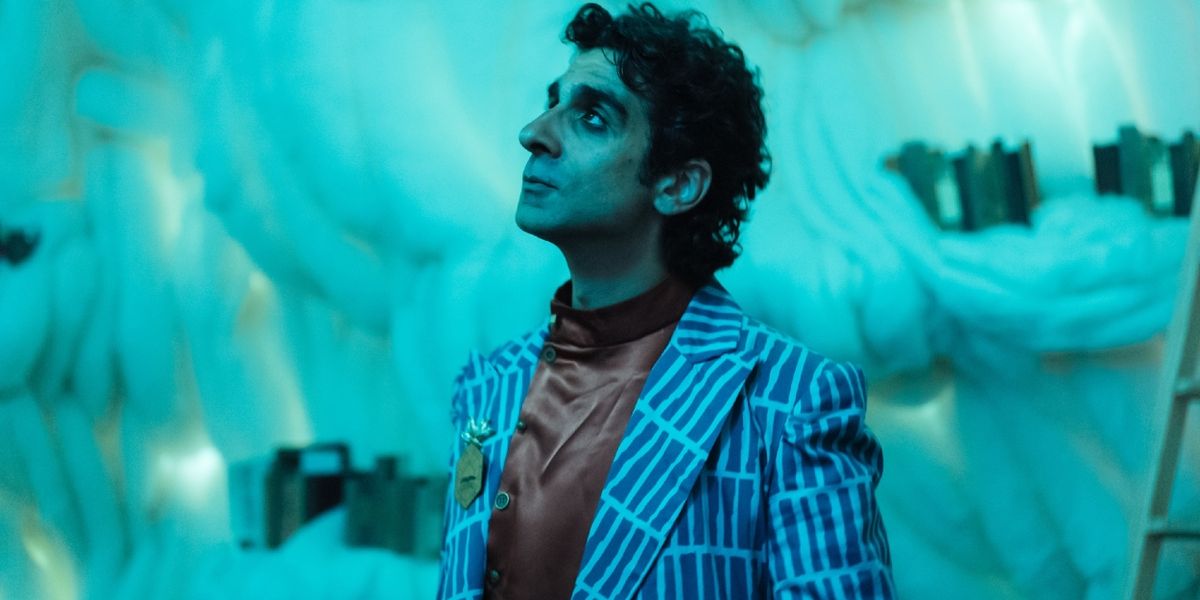
.jpg?format=auto&width=1400) Somewhere in a massive warehouse in Deptford, a collection is being made of every digital artifact since the birth of the internet in 1983. Every blog, every tweet, every DM. This archive called Storehouse is, unsurprisingly, reaching bursting point. A proposed solution called The Great Aggregregation has instead turned into “an epic fail”. We, the audience, are being asked to help resolve this critical situation.
Somewhere in a massive warehouse in Deptford, a collection is being made of every digital artifact since the birth of the internet in 1983. Every blog, every tweet, every DM. This archive called Storehouse is, unsurprisingly, reaching bursting point. A proposed solution called The Great Aggregregation has instead turned into “an epic fail”. We, the audience, are being asked to help resolve this critical situation.
At least that’s the fiction that is being laid out for us as we wade through an immense immersive production conceived by Liana Patarkatsishvili and produced by Sage & Jester.
And behind the fiction, there are some relevant facts. Storehouse’s core theme of disinformation and its use of a building once inhabited by News International both have personal relevance to Patarkatsishvili. Her late father, Georgian billionaire oligarch Badri Patarkatsishvili, was the owner of his country’s only independent radio station Imedi alongside NI owner Rupert Murdoch. After Badri’s death, the authoritarian government under Mikhail Saakashvili appropriated Imedi and in 2010 broadcast a shocking hoax report claiming that the Russians had invaded the country.
This is not her first rodeo when it comes to raising the dangers of disinformation through interactive drama. Illuminated Lies (produced by her Medea company) appeared at the Edinburgh Fringe in 2024 but operated on the other end of the size scale to Storehouse. Audiences of up to five were piled into a transformed black taxi cab parked up in George Square. Inside, as part of a free twenty-minute session, they could explore through a podcast or directly with each other and the taxi driver themes such as fake news, deep fakes and AI.
So is Patarkatsishvili here to exorcise demons from her past again? Possibly. If so, it seems a selfish act considering the impact this production could have on the immersive theatre sector as a whole.
Storehouse is at heart a slow promenade where more of what could technically be called a plot is revealed around each corner. Sparse voiceovers from a quartet of marquee names (Toby Jones, Meera Syal, Billy Howle and Kathryn Hunter) are complemented by live actors including Chris Agha, Dawn Butler and Harriet O’Grady playing Storehouse's bookbinders and stackers. For over forty years, these poor souls have been responsible for bringing order to the chaos of the multimedia mess which surrounds us, reducing the incoming avalanche of content down to their ones and zeroes and then placing them in the books that are scattered around a venue which in terms of size of Punchdrunk’s Cartridge Place.
There are certainly parallels with that company’s last work Viola’s Room as we weave our way from one ornate location to another, each evocatively designed. The tech isn't as high here but Alice Helps’ environments are beautifully enhanced by Ben Donogue’s lighting design. James Bulley’s audio creations - from chunky Eighties electronica to haunting whispers and the ominously loud sound of drips - help build up the atmosphere of a forgotten world on the edge of disaster.
Rocketing from such an intimate experience as Illuminated Lies to something like the 9,000 square metre Storehouse venue suggests that there is no lack of ambition but there is definitely a deficit of vision. In practically every department - not least story, direction, acting - there is an abundance of contradiction and confusion which beggars belief.
Let’s make no mistake here: Storehouse is itself as much a disaster as the world it attempts to portray. It’s a Titanic of a show - filled to the brim with rich talent and the poor victims who have bought a ticket to this travesty - that is heading into an iceberg of critical panning. Design aspects aside (on which much money has been spanked good and hard), everything seems to be frankly terrible. Immersive theatre should transport its audience, slipping them into another time, space or both. The degree to which Storehouse does this is facile and, at times, frankly amateur.
Let’s start with the story. The size of the writers room (Katie Lyons, Tristan Bernays, Sonali Bhattacharyya, Kathryn Bond, Caro Murphy and Rhik Samadder are credited as co-writers alongside story producer, Donnacadh O’Briain) is extravagant but has resulted in not a single narrative of note. Rather, a mishmash of half-baked implausible ideas have emerged which make a farce of the technical underpinnings of the core premise.
Take for example the sheer amount of data supposedly retained somewhere within Storehouse. Former Google CEO Eric Schmidt estimated that, if we took all information generated since the dawn of humanity until 2003, that would come to an estimated five exabytes of data, or 0.5% of a zettabyte. In 2013, that same amount was generated in only two days; in 2025, we are looking at a rough global total data pile of around 149 zettabytes. Are we really meant to believe that all of that information is lying around in the few books we see?
Malformed and stunted ideas are everywhere. Fake news stories are inserted between video clips of the day’s news but are not mentioned again later. We are asked to take photos of ourselves for our lanyards for no discernible purpose. The “data leaks” sound serious but barely get a passing reference after their impact is pointed out.
At one point, the audience is asked to piece together some images while others are chosen by our guides to write down some whispered words emanating from the walls. Does either task ultimately mean anything? No. Do either add to the story in any reasonably rewarding way? Also, no.
Calling the dialogue ham-fisted is an insult to ham. And fists. Much of it seems forced and condescending and wouldn’t feel out of place on a CBeebies science programme. The actors do the best that they can with the material but lack conviction. There’s also a question of who this is all aimed at: the family-friendly Eighties-styled banter in the initial scenes give way to a flotilla of f-bombs in the anti-climactic finale.
This is not a production that needs more work; in the not-unlikely event that an Etch-A-Sketch was used to dream up Storehouse , it should be given a firm shake and the many writers involved should start from a blank slate.
In a sense, it is inevitable that this show will be an attractive proposition for many. Its marketing has been wall-to-wall across culture websites and London. The last time Punchdrunk and Secret Cinema debuted any productions of this scale was way back in 2022 and both have since closed.
The eminent success of this corner of the arts sector has meant the predictable rash of IP-based experiences jumping aboard the immersive bandwagon; this year alone, London has seen the arrival of events based on (deep breath) Jurassic Park, Squid Games, Race Across The World, Knives Out and Minecraft plus not one but two based on the Titanic. And that’s before the doors open on works related to The Traitors, Grease and Elvis in the next month or so.
Given how widely publicised and truly bad Storehouse is, there could be a negative impact on immersive theatre as a whole. It is not impossible to imagine that people new to this genre or those stepping back in after a few years looking for The Next Big Thing will go see this and walk away understandably feeling bemused and short-changed (adult tickets are currently start at £37.50). That would be a shame given how far the likes of Phantom Peak and Bridge Command have gone to push the boundaries of what is possible when the fourth wall is taken away.
The ultimate irony here is that Storehouse's claim to be "one of the most artistically ambitious, large-scale immersive theatre events ever to be staged in the UK" may itself be the biggest piece of misinformation of all.
Storehouse continues until 20 September.
Photo credit: Sage & Jester





Reader Reviews
To post a comment, you must register and login.