


Review: RAGDOLL, Jermyn Street Theatre
An underdeveloped but still thought-provoking addition to the work generated by the #MeToo movement.

In early 1974, American actress Patty Hearst was brutally abducted from her flat in California by the Symbionese Liberation Army, deemed the first far-left terrorist organisation. Faced with the choice of being released or joining the militia, Hearst decided to stay and fight with the dissidents. She was arrested over a year and a half later, after a series of serious felonies that included a bank robbery. Her 35-year sentence was reduced to 7, then pardoned altogether. Inspired by Hearst’s trial, Katherine Moar writes a look at fame and crime for the #MeToo age.
Ragdoll runs across two timelines. A 19-year-old heiress, Holly (Abigail Cruttenden and Katie Matsell), is facing the gavel with her hotshot lawyer, Robert (Nathaniel Parker and Ben Lamb). Four decades later, Robert is being publicly denounced for his own horrid infractions in an article published in The New Yorker. We meet them when “older” Holly is summoned by him after receiving his request for an endorsement. While the project is ultimately too excessively formulaic and predictable for its own sake, it’s steeped in thought-provoking ideas about men’s lingering predatory behaviour, misogyny, guilt, and blame. The fact that these concepts aren’t as developed as they should impairs the play’s points.
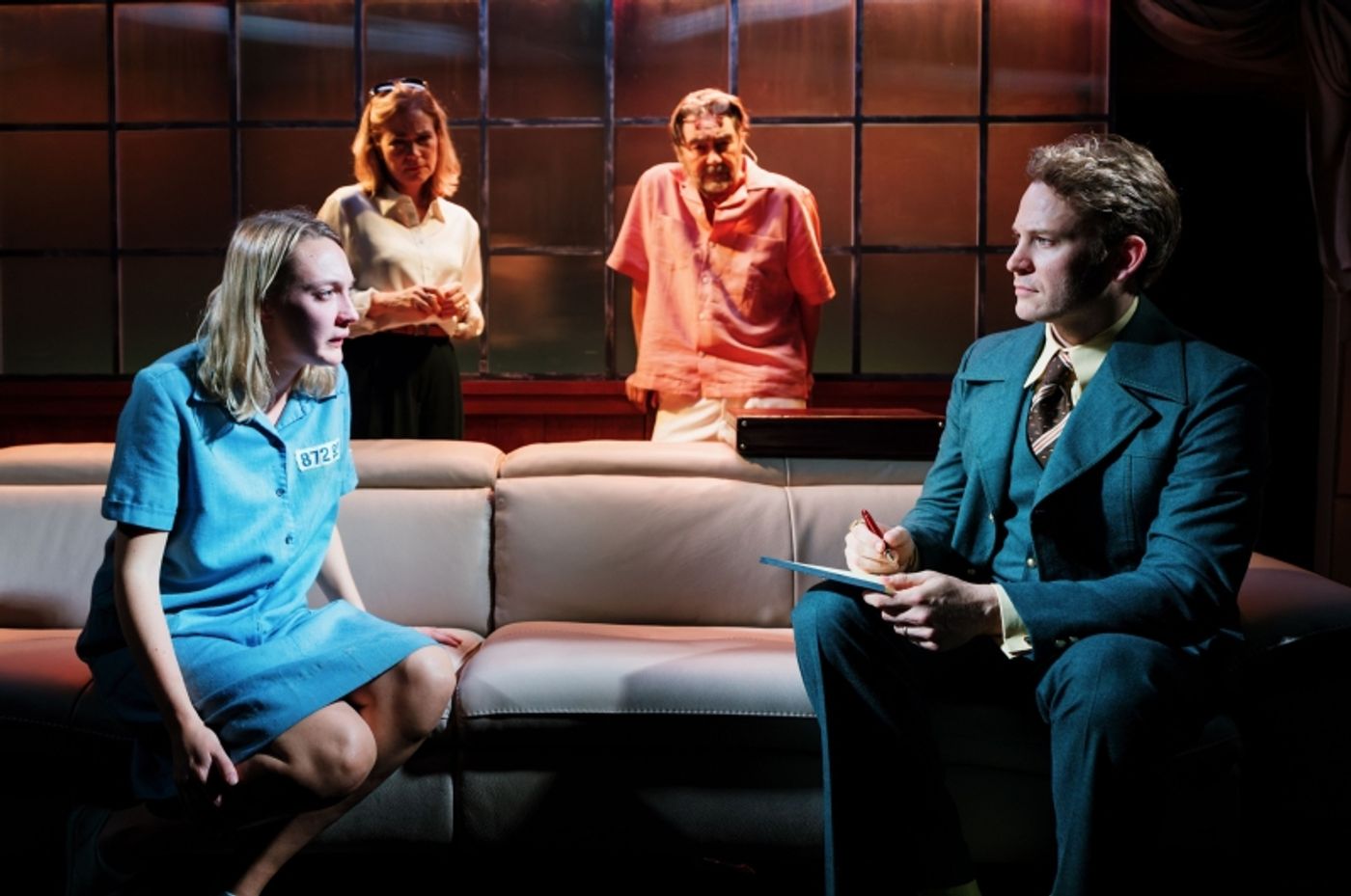
In an age when court trials that involve women (especially famous women) are increasingly sensationalised and mediatised, a piece like Moar’s fits right in. Robert is hypnotised by what her case is giving him – television appearances, parties with celebrated writers, money. Though Robert keeps hinting at Holly’s family and their less than favourable position in the public eye, Moar implies that his actions are entirely to Holly’s detriment. She desperately tries to ring him, wailing and confused while he refuses the calls in cold blood, too busy watching himself on a talk show.
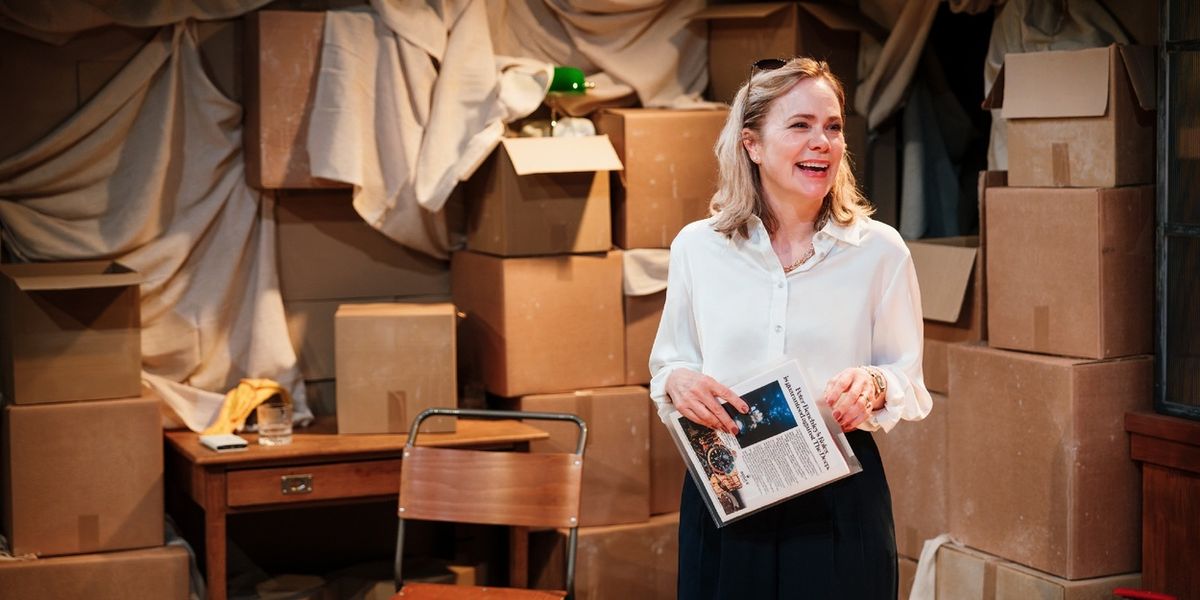
Directed by Josh Seymour and designed by Ceci Calf, the production looks exquisite. Cardboard boxes and dust sheets frame the living room of an expensive loft, while a $50,000-dollar cream leather sofa takes up space like an untouchable idol or an often-addressed elephant. The history shared by Cruttenden and Parker’s older versions of the roles emerges through remarks and jabs, but the play is too short (75-ish minutes straight through) for the text to beat around the bush too much. Even without the script spelling it out, it’s overly easy to predict where the story is going, you only need a minimum amount of sense and knowledge about the world.
%20and%20Abigail%20Cruttenden%20(Holly)%20-%20credit%20Alex%20Brenner.jpg?format=auto&width=1400)
There is one big twist that lives in the grey areas between the supernatural, allegorical, and oneiric levels of writing. It’s not extremely necessary or at all sensible, but it gives the characters an opportunity to come together and give us an acceptable situational denouement. The two couples are impressive in their pairing. Cruttenden and Matsell mirror each other’s physicalities — the first giving a more mature, restrained, and strong rendition of Matsell’s younger self. Parker and Lamb follow suit, with Lamb’s young hot-headedness resulting in Parker’s bursts of vicious rage.
Where Robert puts himself at the centre of Holly’s personal tragedy, she can’t fully see the extent of her wrongdoing. Too impaired by her youth and used to getting out of trouble scot-free, she underestimates the role of her family’s reputation for scandal, while Robert uses it to his advantage to put her down. She internalises the moment he calls her a flat glass of water, and both weaponise their skewed dynamic.
%20and%20Katie%20Matsell%20(The%20Heiress)%20-%20credit%20Alex%20Brenner%20-%20credit%20Alex%20Brenner.jpg?format=auto&width=1400)
At the heart of the piece lies a reflection on the fallout of emotional manipulation and moral bankruptcy, but it lacks the fundamental conviction to make a statement. The resolution sees the pair coming to terms with their own counterparts, but the conversation doesn’t go any further than that. We’re left to assume Robert’s fate to follow the many men who are continuously accused of sexual misconduct, while Holly’s figure remains a controversial pariah. Ragdoll joins the ranks of the works generated by the #MeToo movement, but doesn’t truly add anything unique to it — except perhaps bringing to light a forgotten woman in American media.
Ragdoll runs at Jermyn Street Theatre until 15 November.
Photo Credits: Alex Brenner





Reader Reviews
To post a comment, you must register and login.