


Review: GWENDA'S GARAGE, Southwark Playhouse
This musical chronicling the lives of lesbian mechanics in the 1980s transfers from Sheffield Playhouse
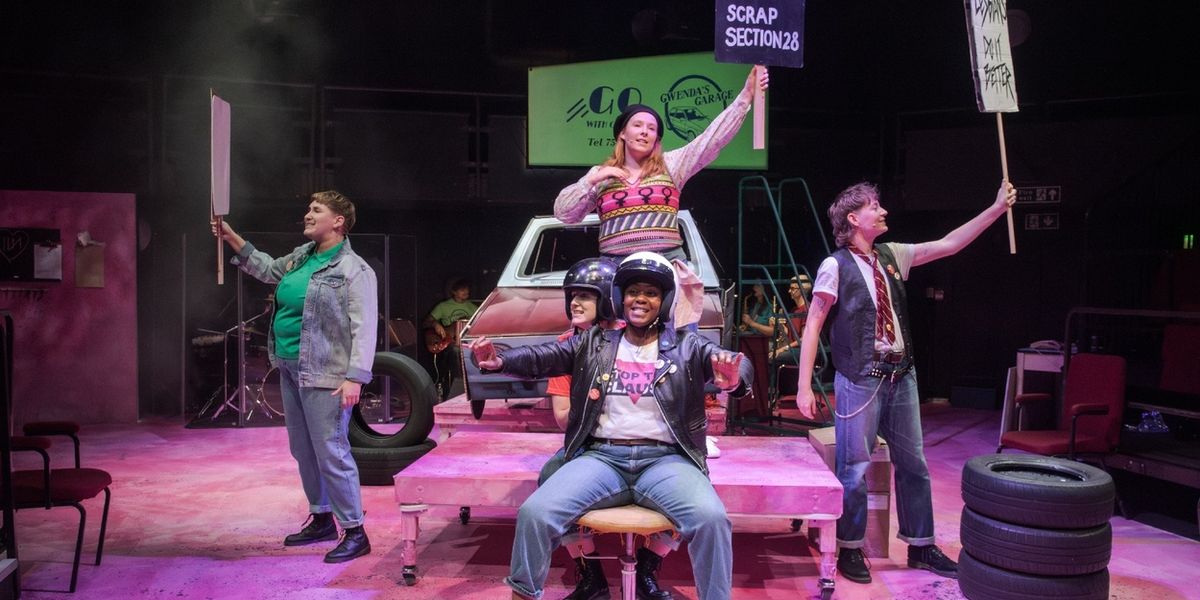
 In Sheffield, the self-proclaimed “lesbian capital of the North”, a revolution is coming. The freedom fighters in question are a group of lesbian mechanics, loosely based on the real life Gwenda’s Garage, a lesbian-owned garage named after pioneering racing driver Gwenda Stewart that became a hub for 1980s feminist activism.
Gwenda’s Garage, a new musical fresh from a hometown run in Sheffield, covers at least the last five years of the Eighties, and touches on second-wave feminism, the decline of industrial Sheffield and above all the fight against Section 28. However, anchoring the national and global issues at play is the real heart of the show, the camaraderie between our five leads, played by an endlessly likeable cast.
There’s lovingly no-nonsense garage owner Carol, mechanics Terry and Bev, in a tumultuous yet affectionate relationship, and chaotic but well-meaning teenage apprentice Dipstick. They’re soon joined by Feona, a middle class married woman from Surrey whose straight-ally-to-queer-awakening pipeline provides an interesting ‘outsider’s perspective’ on the other women’s work (“don’t they have politics down South?” another character asks her at one point).
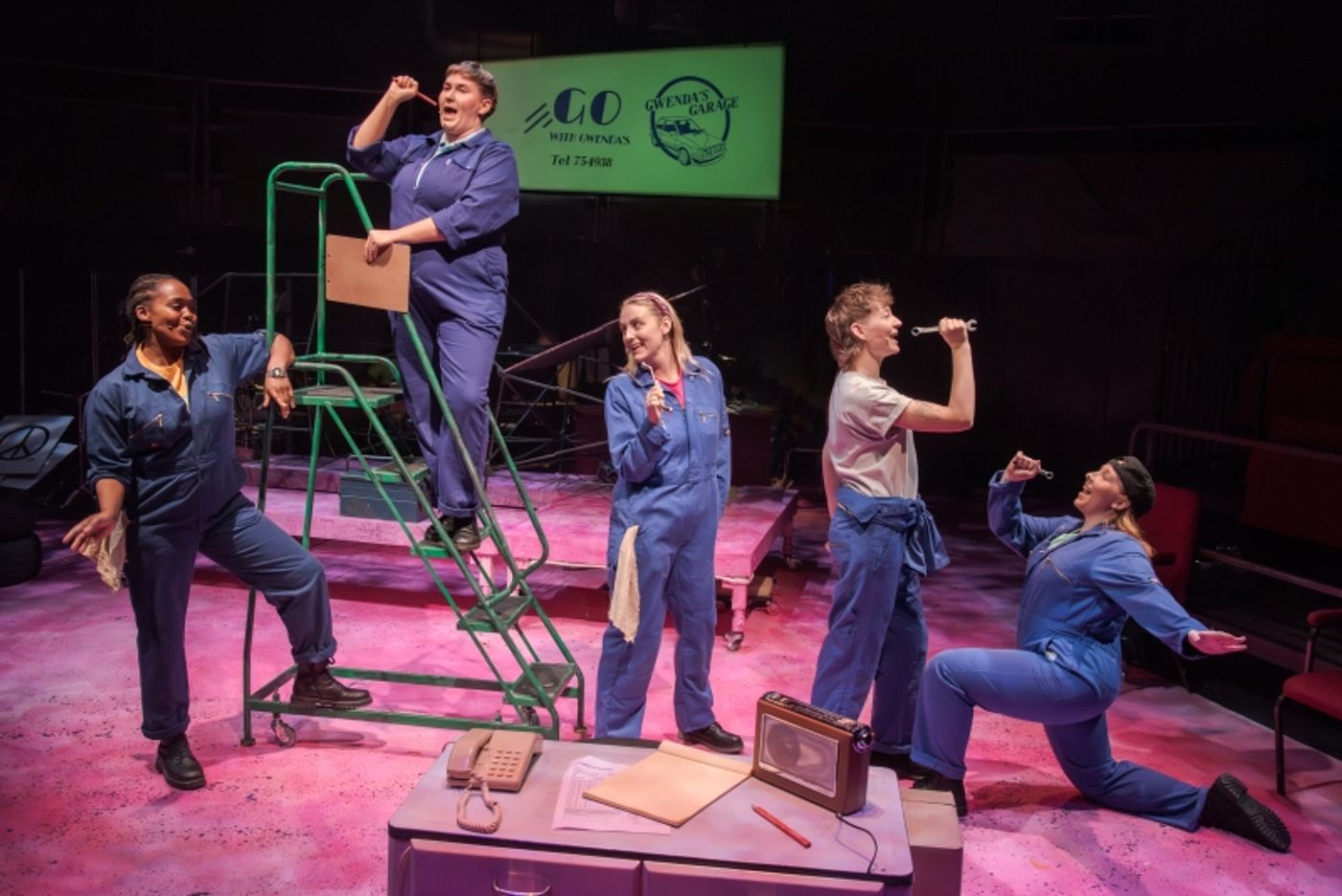
Photo credit: Chris Saunders
Nicky Hallett’s script takes its time developing the various relationships on display here, without sacrificing a healthy dose of playful teasing and ‘if you know, you know’ community in-jokes. In the same way, composer Val Regan’s score balances rousing group numbers inspired by the cheesiest hits of the Eighties with tender portraits of individual characters’ psyches, her conversational lyrics losing none of the spoken dialogue’s wit and chutzpah.
The show’s central conflict is developed quietly, in furtive glances and awkward run-ins: Bev (Nancy Brabin-Platt) desperately wants to foster or adopt children, and must conceal her lesbian identity from local authorities in order to do so, while Terry (Sia Kiwa) in turn rejects monogamy and resents Bev for keeping up the facade.
For this group of women, “the personal is the political” is not just a catchphrase, but a set of compromises they make daily in their relationships. Brabin-Platt and Kiwa play their roles with a nuance that lends dignity to both sides of the dilemma, and their concluding duet is thoughtfully composed and performed.
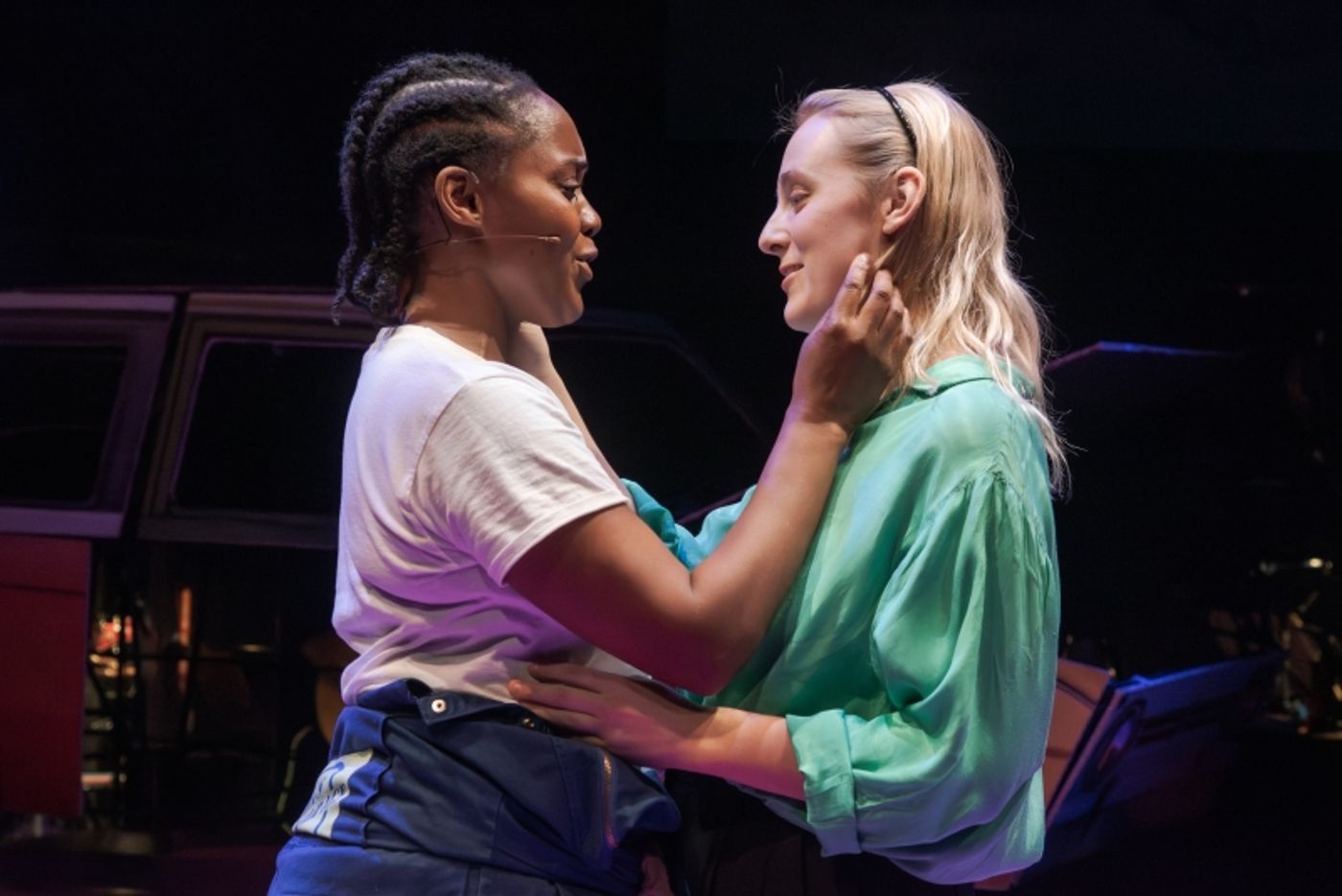
Photo credit: Chris Saunders
For a show that has the personal versus the political as such a central theme, Gwenda’s Garage ironically struggles on occasion balancing those two elements. While Jelena Budimir’s frenetic direction – protest signs hauled on and offstage, constant outfit changes – does create a febrile atmosphere of political organising, sometimes the references to every possible aspect of Thatcher-era British progressivism feel like a box-ticking exercise, rather than a driving force for the drama.
When the characters’ attention becomes focused on preventing Section 28 becoming law, the show additionally suffers from comparison with this summer’s After The Act, the Royal Court’s excellent verbatim drama chronicling the homophobic legislation and the protests against it. While that show elegantly used political soundbites to put queer lives in context, Gwenda’s Garage’s Thatcher impressions and news broadcast snippets feel instead like a clumsily tacked-on history lesson.
The show’s lack of focus becomes worse when certain plot developments force Bev offstage for much of the second act, and the action becomes essentially a string of protests and political events the other women get involved in, without much human-led drama tying them together. A slapstick-infused storyline about Feona trying artificial insemination feels out of step with the rest of the show, and a lengthy Cilla Black impersonation at a fundraiser is a further low point.
The strength of Gwenda’s Garage is in its specificity, its South Yorkshire dialect and its careful creation of characters with motivations that go beyond stereotypes of Northerners, of women and of queer people. There is value in a hyper-local story of ordinary people experiencing extraordinary times, and Hallett, Regan and their cast clearly take much joy in telling it. A less meandering structure would enable all involved to really do these women’s lives justice.
Gwenda's Garage plays at Southwark Playhouse Borough until 29 November
Photo credits: Chris Saunders






Reader Reviews
To post a comment, you must register and login.