


Review: GIUSTINO, Royal Ballet And Opera
The first professional staging of this Handel opera since 1737 comes to the RBO
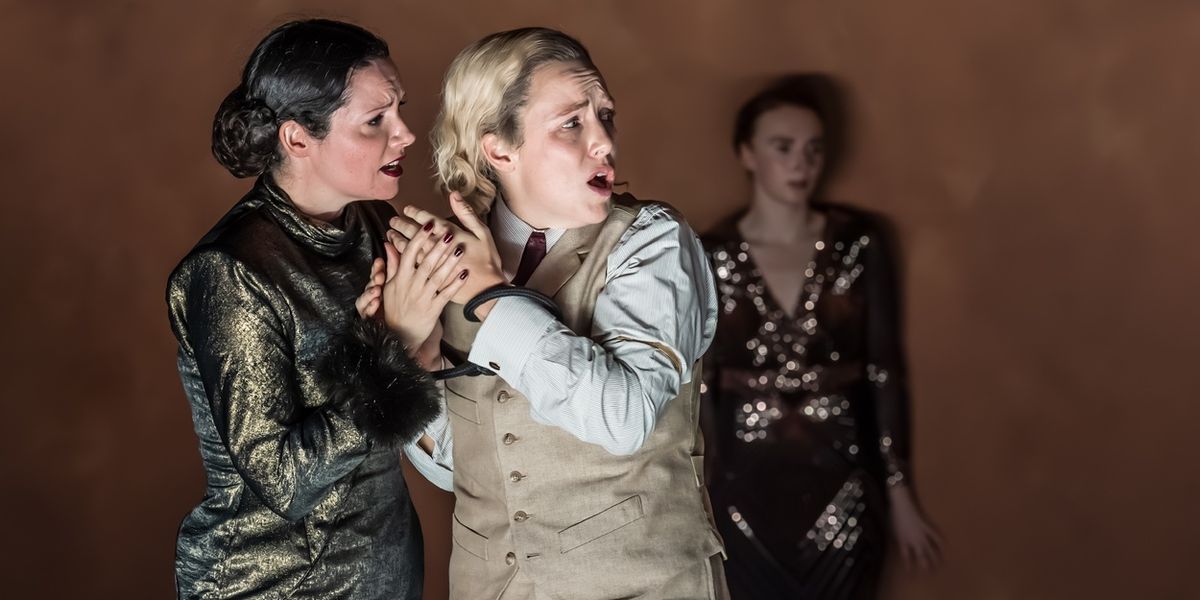
 Not every opera can boast a sea monster, a disembodied voice coming from a mountain, and two brothers rather improbably separated at birth. That’s the kind of elaborate, visually ambitious plotting that made Handel’s Giustino an innovative work of stagecraft for its time, but Joe Hill-Gibbins’ new production (the first UK professional production since 1737) makes a valiant attempt to strip it back.
The set is initially kept simple, a terracotta expanse that makes the RBO’s Linbury Theatre feel much more roomy than it is. This (slightly abridged) version of the libretto reimagines it in two chapters – the peasant would-be emperor Giustino’s “innocence”, and then his “adulthood” – and narrative surtitles guide the audience in an almost Brechtian manner through what to expect in each scene.
This clarity of structure cuts out the noise and allows for a more focused exploration of our central characters: Giustino on his fraught journey to maturity, as well as the Empress Arianna, who’s accused of infidelity with Giustino by the scheming general Amanzio (this is all after she’s been kidnapped and left to die at the hands of a sea monster).
It’s not opera’s most subtle plot, but Hill-Gibbins’s pared-back direction allows these characters some psychological depth. There are some intriguingly parallels between the relationships of our two central couples, and Giustino and Arianna’s husband Anastasio – both castrati roles played by women – both provide effective foils to Arianna’s hypermasculine kidnapper, Vitaliano.
Since the plot moves so fast, though, the seeds of interesting ideas – like the ambiguity of Arianna’s potential feelings towards Giustino – often feel underdeveloped. Hill-Gibbins also seems unsure of what to do with the chorus, a ten-piece ensemble who are dressed like Giustino, but whose man-of-the-people allegiance to him is never properly explored.
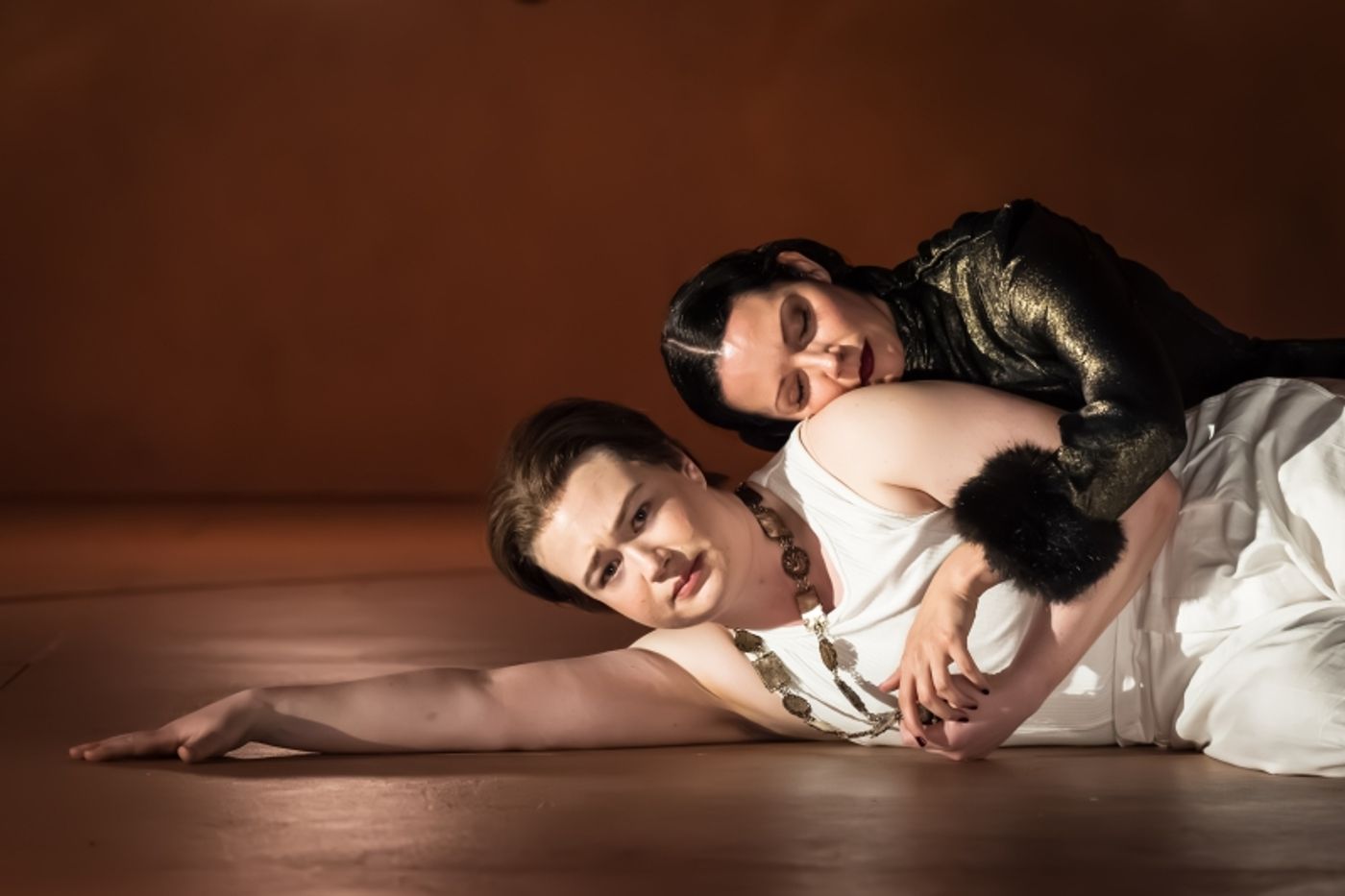
Photo credit: Marc Brenner
Though the staging may be simple, designer Rosanna Vize’s work can be visually distracting. While the Philip Guston-inspired fresco decorating one wall of the set feels like a suitable modernisation of Byzantine aesthetics, the costume inspirations range incohesively from Mafia boss to Berghain attendee. On this latter point, there’s an unfortunate tendency in this production to equate kink-adjacent fashion with villainy (the sea monster and a bear whom Giustino kills early on both wear bondage-inspired gear).
Hill-Gibbins and Vize are also guilty of overusing props. Bizarre additions – a skylight, a set of hanging lanterns pushed and pulled around by the cast, several chairs – are thrown against the wall to see what sticks, and add to the overall sense of incoherence.
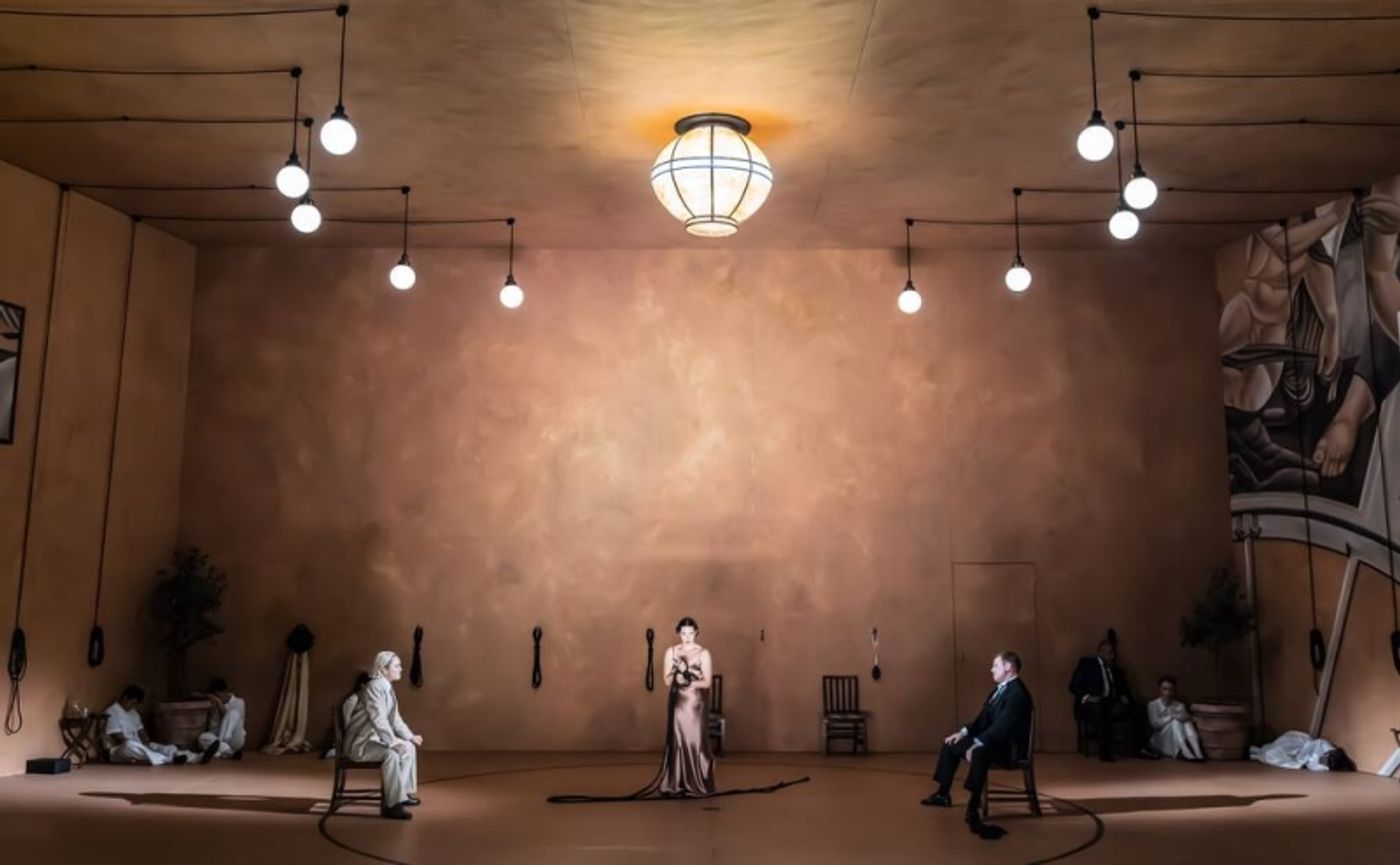
Photo credit: Marc Brenner
Where the direction and design fall flat, the cast step in. Mezzo-soprano Polly Leech is convincing as Giustino’s naivety gives way to political ambition, while Mireille Asselin’s Arianna trembles with fear as she sings, blindfolded, about to face the sea monster. Jake Arditti’s Amanzio, forever grasping for a shred of power, is also a standout for his deftly controlled ululating.
Early music ensemble La Nuova Musica, conducted by David Bates, luxuriates in the variety of Handel’s score, particularly its woodwind section (unusually, there’s an oboe solo in Giustino’s overture), and knows when to ebb and flow along with the drama on stage. A trio of trumpets onstage, heralding Giustino’s various moments of triumph, is a smart, immersive touch.
This is a fine opportunity to hear one of Handel’s lesser known works, and the production does make a case for Giustino to be performed more frequently. However, both director and designer have slightly too many ideas about what the show could be, and what is left is unresolved potential.
Giustino plays at the Royal Ballet and Opera until 18 October
Photo credits: Marc Brenner





Reader Reviews
To post a comment, you must register and login.