


Review: BLOOD WEDDING, Omnibus Theatre
Barney Norris sets his version of the Lorca classic in present day Wiltshire
 Is it the West Country accents? Is it the isolation of rural lives - towns, villages, roads entirely unknown to us cosmopolitans? Is it the vague sense that we hover in a liminal space, both more attached to the soil of England, but also offering glimpses of a ghostly world, death’s dark vale thinly shrouded by the mists above the ponds.
Of course, Federico García Lorca explored this psychological territory long before Jez Butterworth wrote Jerusalem, but Barney Norris’s adaptation of one of the 20th century’s greatest plays, Blood Wedding, captures an element of the hybridity that exists between the two related works.
The otherness of these plays to the eyes, ears and, especially, sensibilities of a townie like me also unites them - I’ve never met people like this! We tend to think of the USA’s sharp divide between liberal urban and conservative rural, but it’s present in England too, sharpened by culture war rhetoric and a party in government now less willing to listen to the special pleading of farmers and landowners.
Mystical stuff rumbles in the background for much of Tricia Thorns’ production, as she continually ratchets up the tension from its mundane start to its epically tragic conclusion.
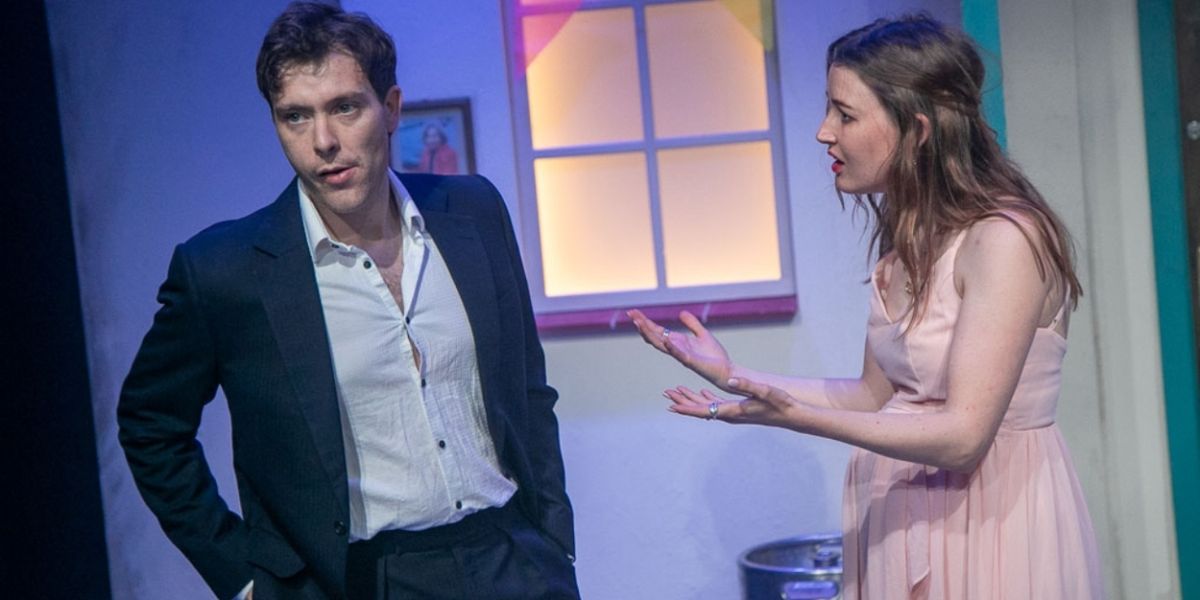
It’s harmless enough in the beginning. Rob and Georgie are scouting a wedding reception venue out in the sticks and their budget stretches only as far as a village hall. Rob’s mother, Helen, is with them, embittered about her own failed marriage and, with a barely concealed lower middle class disdain, jabs disapprovingly at her very young son’s older bride.
Unexpectedly, an old school friend of the bride turns up, Danni, pregnant and pushing a pram. There’s plenty passes unsaid between the women and we soon learn that Georgie is the ex of Danni’s husband, Lee. Meanwhile the old caretaker is somehow always present, quietly grieving a dead daughter and wife, his own birthplace village requisitioned in wartime and off-limits for all but one day each year, his only chance to honour their graves.
Christopher Neenan, in his professional debut, is splendid as Rob, the big dumb lad, all toothy grins and always bringing an unthinking optimistic bonhomie to rival The Inbetweeners’ Neil. Alix Dunmore isn’t given enough to do with Helen, though she delivers a late, touching reconciliation with Esme Lonsdale’s Danni, softening her somewhat one-dimensional uptight harshness in earlier scenes.
The weight of the play is borne by Nell Williams as the damaged bride who carries the appalling realisation that she gambled on the wedding erasing her past life and it hasn’t. In fact, it resurrected it, with Lee back in her eyeline, the man her family forced her to relinquish. Kiefer Moriarty, perfectly cast and doing wonderful accent work, draws on Marlon Brando levels of bad boy charm as the Traveller lad Georgie just can’t quit. Sure he’s Bad News, but you can see why he’s the eye candy that poisons the well. Even if you don’t know the Lorca, your stomach knots with tension as the spiral into disaster tightens and tightens.
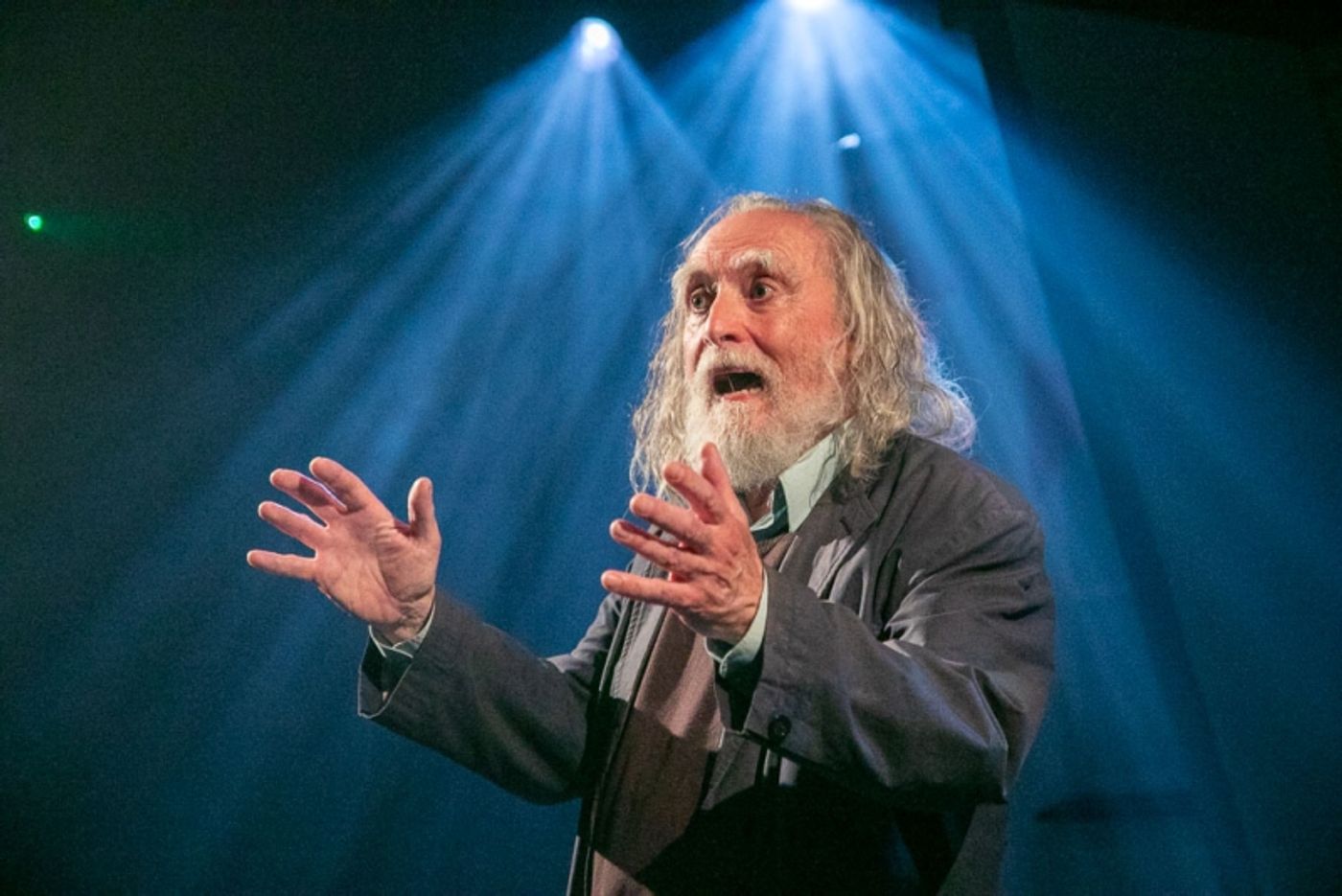
David Fielder plays the ethereal Brian with no little charm of his own and delivers the father figure they’re all missing with a winning light touch. But it’s when he has to take on the author’s ambition to create ‘a new mythology’ for Wiltshire that the play stumbles in its conception and execution of its coup de théâtre. I knew immediately why.
Lorca’s plays are steeped in Catholicism at its most pagan in its rituals, its iconography and its cult of death as salvation. There are references to pagan rites in Norris’s re-interpretation, but it cannot carry crashing tides of history that the Roman church can bring to bear on any story. Checking my phone in the interval, the first story concerned black smoke sighted billowing from the Sistine Chapel’s chimney - no dramatist can allude to anything as theatrical as that, nor much else that has been sent forth from The Holy See over centuries.
As “After Lorca” goes, this Blood Wedding is a fine production - it’s unfair and unproductive to poke away at the differences from the original - and stands proudly on its own two feet. As such it’s a strong addition to the genre of English Pastoral that comes with a bite of psychological terror and Shakespearean tragedy. If it overreaches a little in the last 20 minutes, better to be too ambitious than not ambitious enough. If Lorca himself, shot at 38 years of age, is peeping in from his resting place in that dark vale, I expect he’d approve.
Blood Wedding at the Omnibus Theatre until 24 May
Photo images: Phil Gammon






Reader Reviews
To post a comment, you must register and login.