Interview: 'It Has To Be Fresh”: Director and Choreographer Lynne Hockney on Reviving Sir Peter Hall's Iconic A MIDSUMMER NIGHT'S DREAM at Glyndebourne
'We always forget how massive the show is”
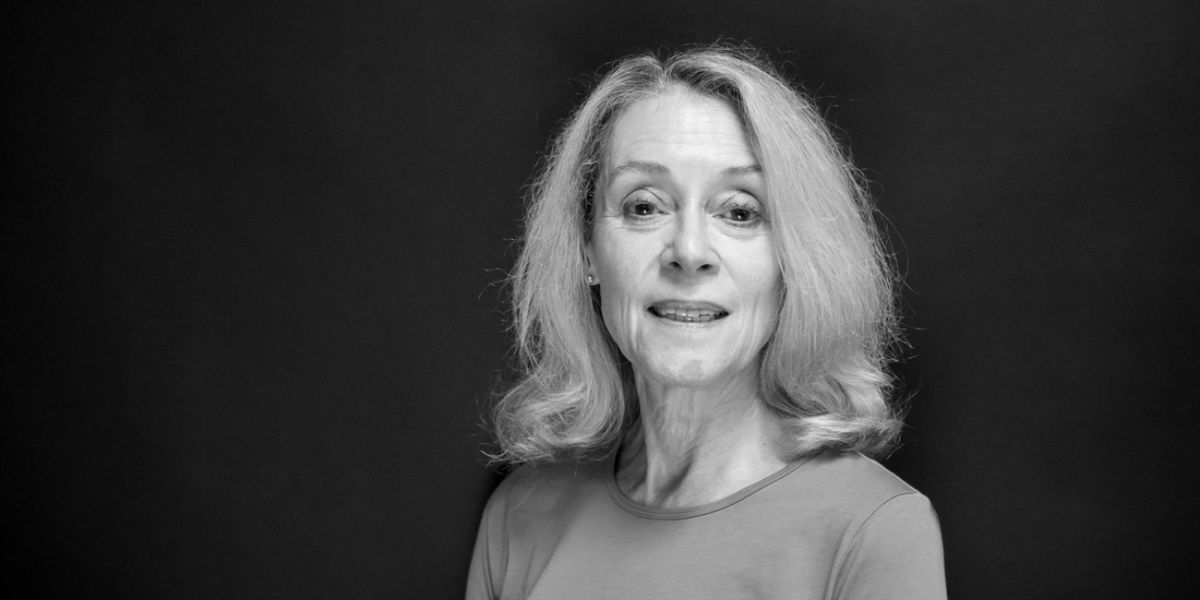
Celebrated choreographer and director Lynne Hockney has been involved in Sir Peter Hall’s iconic version of Benjamin Britten’s A Midsummer Night’s Dream at Glyndebourne since 2001. Now playing for the first time in the venue’s Autumn season, the production has been revived regularly since its premiere in 1981, bringing Shakespeare’s enchanting story of magic and mayhem to life. BroadwayWorld spoke to Hockney about her long association with the production, Sir Peter Hall’s enduring vision and how no one involved in the production is more important than anyone else.
“I think it's a real ensemble piece,” Hockney insists, speaking to me from her home. “Everybody knows that, and that's how it works.” The list of people involved in the production is almost endless. From the fairies; to the rustics; to the répétiteurs; to the children and their chaperones. 'It's a massive show to put on.” she says.
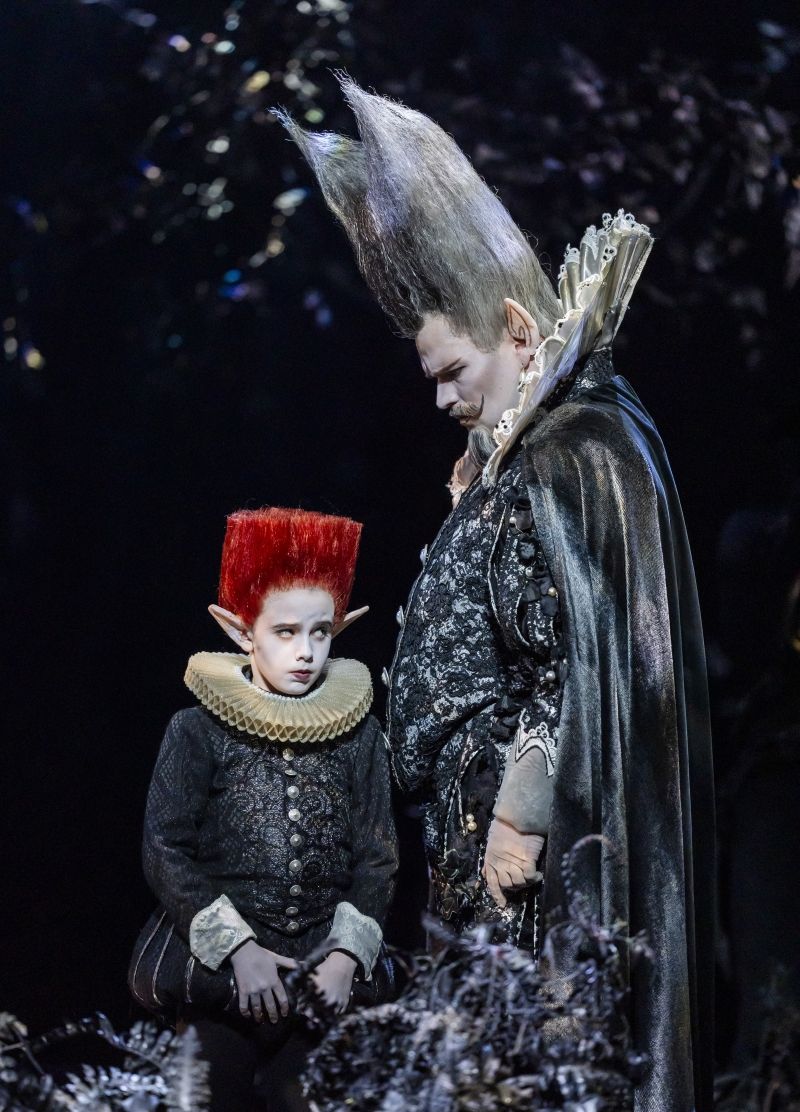
Photo Credit: © Glyndebourne Productions Ltd. Photo: Tristram Kenton
Hockney speaks affectionately about Sir Peter Hall’s involvement and vision for the production. “Hall brought me on in 2001 to redo the choreography. The fairies were getting smooth edged, they were getting [to be] nice fairies. And he was very determined that they were not going to be nice fairies. They had to be hard and mischievous.”
“He was fantastic because he was the great Shakespearean. It was fascinating, listening to him talk. And I remember the first time [in rehearsals], I just listened to him. I sat in all the rehearsals when I wasn't needed. The second time I did it with him, I thought, I'm going to write this down. So I wrote down what he said about each character. His thoughts about each character, his thoughts about the whole thing.” Writing down these elements of Hall’s vision has proved invaluable to Hockney. “When I started to direct it myself, I had the Bible with me,” she smiles.
Hockney says that Hall was incredibly precise about every group of characters and their motivation. The rustics’s performance of their play comes at a point in the composition where the attention of the audience may start to lag, coming it at the two-hour mark. However, Hall was determined to make this element as truthful as possible. ”Do not play it for laughs, about that he was absolutely adamant.” Hockney reveals. “If you play it for laughs, it would just be vulgar. If they play it truthfully, as best as their characters can, then we empathise with them when they go wrong.”
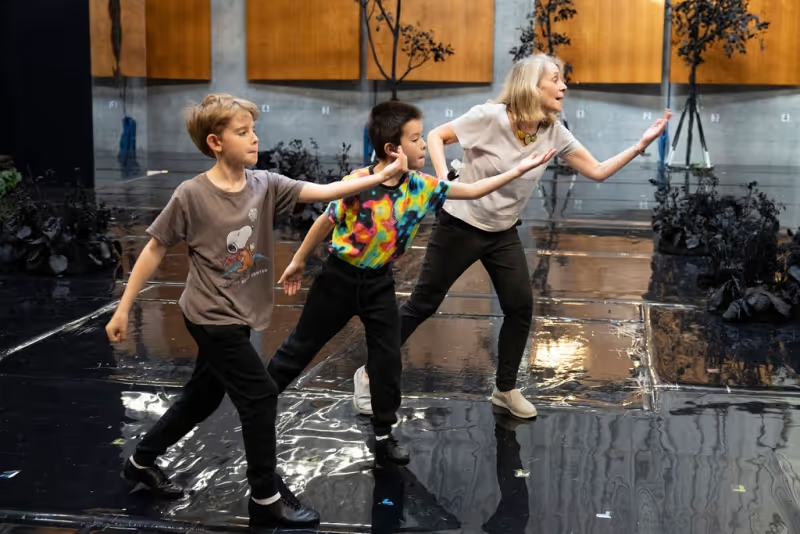
Photo Credit: © Glyndebourne Productions Ltd. Photo: Richard Hubert Smith
Unsurprisingly Hockney has a deep understanding of the complexities in the story. “It’s all beautiful, but not only beautiful, it's cruel as well. The fairies, Tytania and Oberon are immoral, and incredibly selfish. It's all about them. Tytania loves her fairies so long as they're giving her comfort and looking after her. And the same with Oberon and Puck. Peter felt that he was very fond of Puck, but only if he was doing what he was told.”
When asking if the challenges of the production change or remain the same, Hockney reveals that she welcomes change if it is necessary. “Every production changes slightly depending on who's singing it,” she says. “I like to change it- we keep to Peter's concept-that's rock solid, and we evoke him all the time in the rehearsal. But if something doesn't suit or can't be done, then I'll change it. And Peter didn't mind that at all. So, it's still evolves and that's what keeps it fresh. It has to be fresh.”
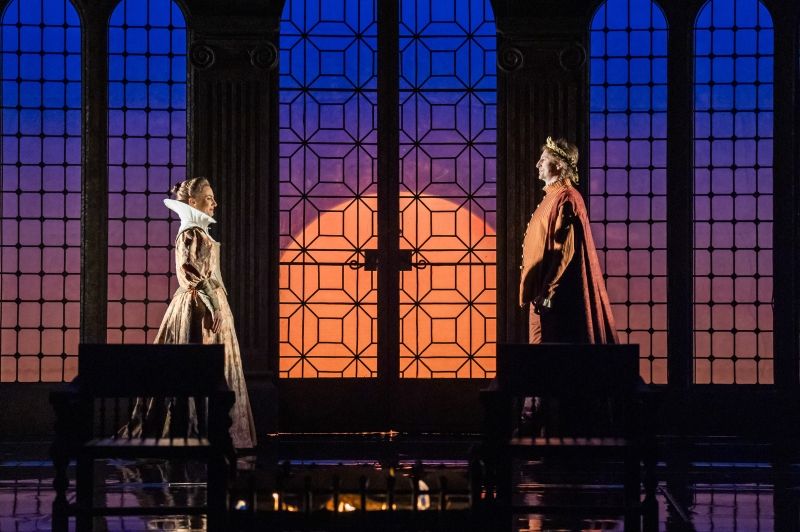
Photo Credit: © Glyndebourne Productions Ltd. Photo: Tristram Kenton
Hockney says that Hall wanted the production to be “as disturbing as it is beautiful. Otherwise, it's only pretty," she explains. "That was that something that Peter really wanted to dig into. That’s always at the forefront of my mind that this is as cruel as it is beautiful.”
Hockney believes that Hall would be delighted that this work has endured, but would be disturbed about the height of the boys who play the fairies “He only wanted the smallest singing fairies, the smallest boys,” Hockney says with a grin. “But try and find small boys now! They're huge. They're big as I am!".
Incredibly, Hockney reveals that most of the production’s props are the original ones dating back to 1981. The unseen effort to get the correct look is monumental. Hockney marvels that all the fairy ears are made individually to each person and every single leaf on the magical forest trees are uncurled using heated hair tongs so the light can reflect off the leaves correctly.
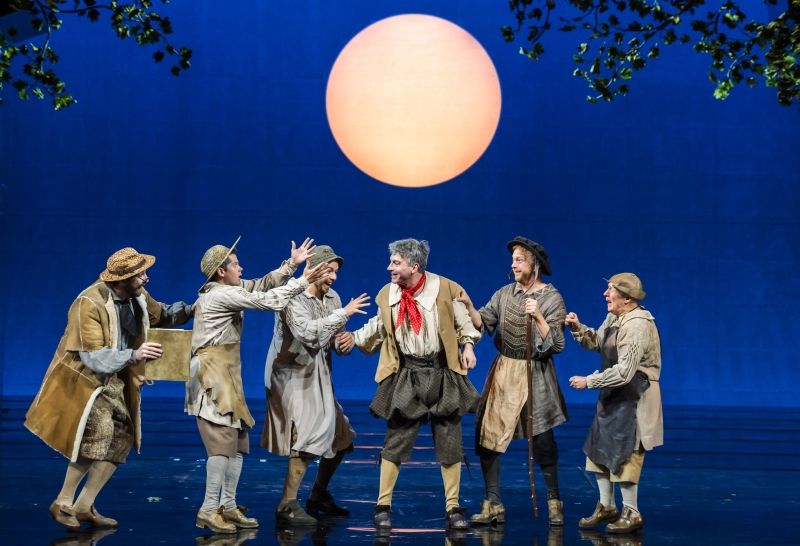
Photo Credit: © Glyndebourne Productions Ltd. Photo: Tristram Kenton
Despite working there for so many years, Hockney remains in thrall to the magic of Glyndebourne as an opera venue. “First of all, it's the most beautiful setting. And it's just a glorious opera house to work in," Hockney explains. Glyndebourne is also unique in its set-up. “Everything is there,“ she says. “We have two massive rehearsal rooms where we can have the actual set in the rehearsal rooms. It's extraordinary to have that. So, we can have the whole set in the rehearsal room, and then we can rehearse on the set and then move it onto the stage.”
Hockney is full of praise for the Glyndebourne stage management. “I think are just the best in the world, because they’re onto everything. They just tie it all together. Without them, we do not have a show.”
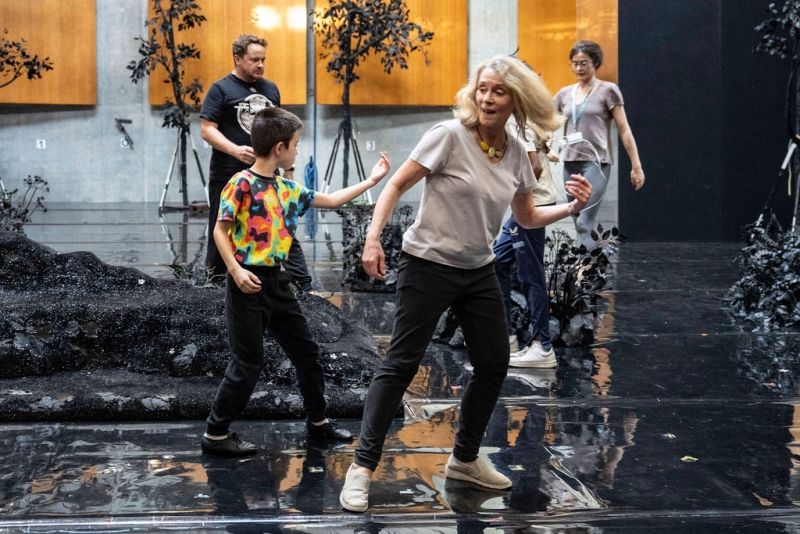
Photo Credit: © Glyndebourne Productions Ltd. Photo: Richard Hubert Smith
“You feel that every aspect of a production is looked after. And everybody is involved in wanting that production to do well. No matter whether it's A Midsummer Night's Dream or any other production I've worked on there. The whole ethos of that house is to make something magical together.”
Hockney notes how those involved feel very protective of the show. “There is a very proprietorial air to it. The crew feel proprietorial, the lighting department, stage management do, it's kind of the golden Glyndebourne production. And as soon as it comes into the house, there's kind of a slightly different atmosphere. Even all the people who drive the minibuses to get people from the station up to the theatre-they even gave me notes about it! I love it because they all feel it's their production, which is rather wonderful. And an added pressure!”
Hockney laughs when asked if she was always a fan of composer Benjamin Britten's work? “No, the first time I did it, in 2001, I listened to it and I went, what the hell is going on with that music?” She smiles. “I couldn't get a handle on it at all. And then I kept listening to it, and now I adore Britten. I understand him.”
During rehearsals, Hockney says that she eats, sleeps, and breathes the production? “I can't think of anything else. I can't do anything else. And we always forget how massive the show is.”
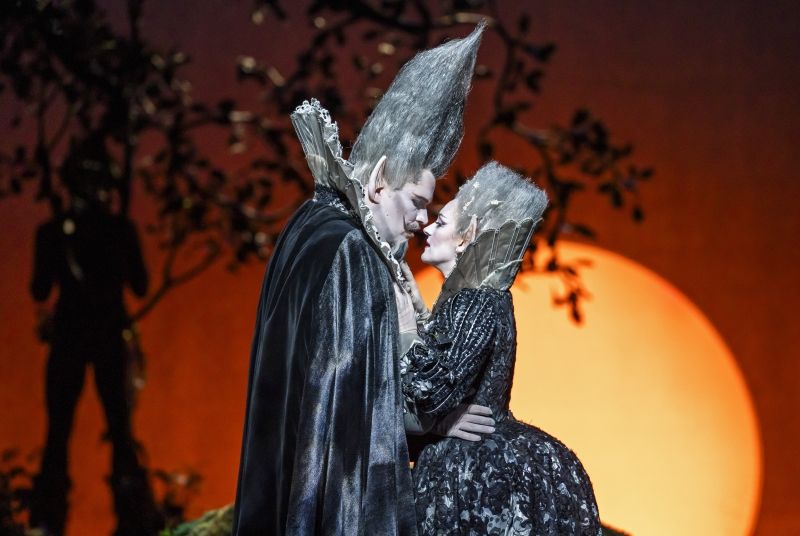
Photo Credit: © Glyndebourne Productions Ltd. Photo: Tristram Kenton
Despite the title of the production, Glyndebourne has chosen to include it in the autumn season this year. Hockney gives credit to Stephen Langridge (Artistic Director of Glyndebourne) for this decision. “He wanted to offer it to another kind of audience,” she tells me. “In the autumn season, we don't have the big picnic, it's just half an hour interval. It's much more relaxed, dress-wise and the seats are cheaper. He wanted to give other people a chance to see this iconic show.”
What does Hockney want audiences to take away when they've seen the show? “I want them to walk out thinking about it for a couple of days, [perhaps] an image comes into their brain the next day and just make some smile or gasp. And that's pretty that's wonderful. Because then we've done something beautiful for them.”
Read our review of the Glyndebourne production of A Midsummer Night’s Dream here.
A Midsummer Night’s Dream is at Glyndebourne until 29 October
Main Photo Credit: Katja Tauberman
Production Photo Credits: © Glyndebourne Productions Ltd. Photo: Tristram Kenton
Rehearsal Photo Credits: © Glyndebourne Productions Ltd. Photo: Richard Hubert Smith
Prefer BroadwayWorld in Google Search?
Add us as a preferred source so our stories show up more often in Top Stories and Google’s AI answers — for you.
Sign up for all the news on the Summer season, discounts & more...
.jpg?format=auto&width=300)
.jpg?format=auto&width=365)