


Interview: Theatre Life with Douglas Sills
The versatile performer on making the iconic role of Tevye in Signature Theatre's production of Fiddler on the Roof his own and more.
.gif)
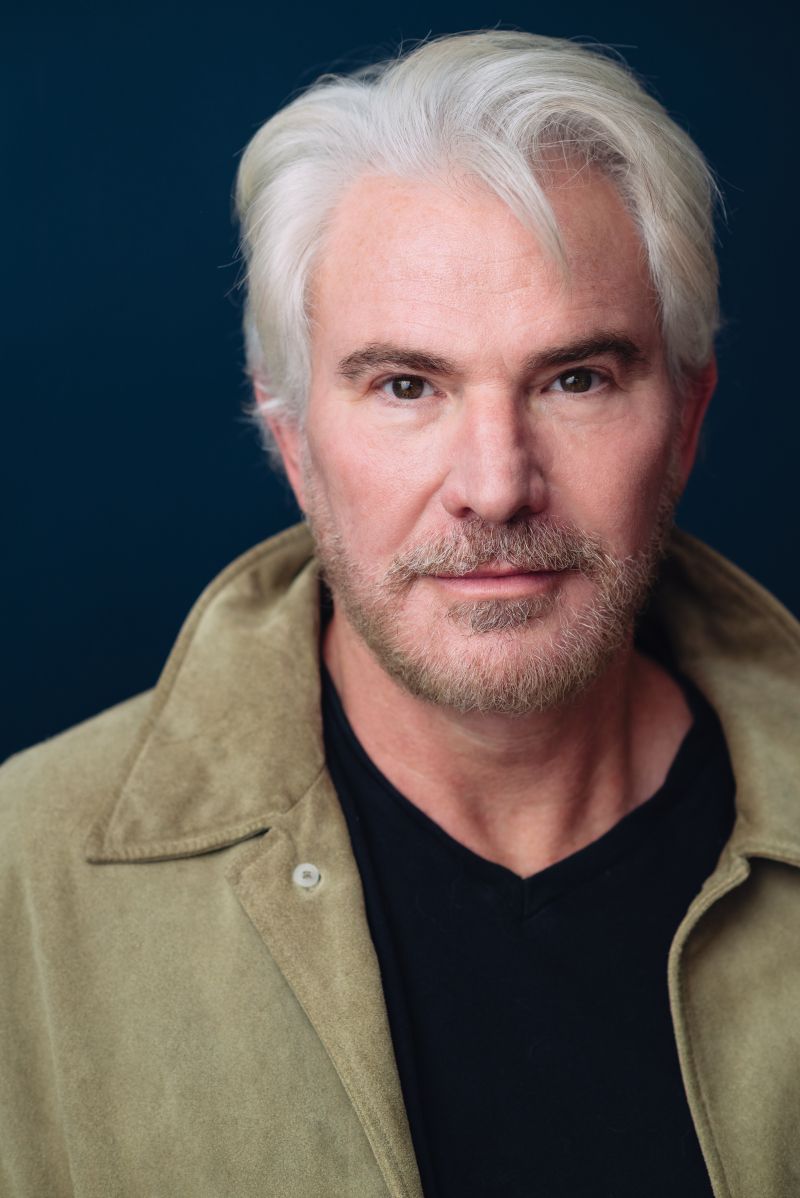
Happy 2026 everyone!!! Today’s subject Douglas Sills is currently living his theatre life onstage at Signature Theatre playing the iconic role of Tevye in Fiddler on the Roof. The brilliantly Joe Calarco directed and reimagined production runs through January 25th in Signature’s MAX space.
Douglas made his Broadway debut in The Scarlet Pimpernel which garnered him very good reviews as well as Tony and Drama Desk Award nominations. Read on for his full experience with the show. There’s a twist you didn’t see coming.
Other New York stage credits include War Paint, Living on Love, Little Shop of Horrors (Drama League Award), Nantucket Sleighride, Mack & Mabel, Hey, Look Me Over, Lady Be Good, Music in the Air, and Carnival at Encores!, and Moonlight and Magnolias at Manhattan Theatre Club.
Regional credits include starring roles at La Jolla Playhouse, Long Wharf, Westport, Kennedy Center, South Coast Rep, Reprise and California Shakespeare Festival. You probably also remember his great performance in Kiss Me Kate here at Shakespeare Theatre Company.
On the small screen Douglas is probably best known for his work on the HBO series The Gilded Age, but he has also appeared in many other tv series and films. Select credits include Law & Order, Ghosts, Christmas on the Square (Netflix), Katy Keene, Chicago Justice, CSI, The Closer, Numb3rs, Will & Grace, Erotic Fire of the Unattainable, and Deuce Bigelow: European Gigolo.
The role of Tevye is probably one of the most famous roles in all musical theatre with some of the biggest names taking on the role over the years. Doulas Sills’ take on the role might not be what you expect, but it’s something you will accept and be wowed by for sure.
Assuming it’s possible to do so, grab your tickets to Fiddler on the Roof at Signature Theatre and see for yourself why Douglas Sills is and always will be one of our greatest modern day musical theatre leading men. The Messiah has come to Shirlington!! (Musical theatre geeks, can you get the reference to a song long gone from the show?)
Douglas Sills is truly living his theatre life to the fullest.
Was performing your first choice for a profession?
In one sense yes, certainly it was a great passion of mine from very early on, but I also dreamed of being an orchestra conductor, …the power I saw in those folks that were doing it. wow. I could feel it. and I think also like a lot of kids, I thought quite a bit about following in my father’s footsteps - into commercial real estate, because everyone seemed to respect him so much. I think and he seemed to enjoy it so much. Also, I loved animals so much all my life and I thought of myself many times over the years as a large animal veterinarian ,working with the big, five elephants cape buffalo, lions, cheetahs, rhinos/hippos, etc. but yes, I think ever since I saw Jerry Orbach in Chicago and Robert Preston in The Music Man and Topol in Fiddler, oh and A Chorus Line,….this was it. Also I’d been seeing my siblings in the summer musical and talent shows at Jewish summer camp in northern Michigan called Tanuga in Kalkaska, not far from the famous Interlochen. I think that’s when I discovered I could sing.
Where did you receive your training?
I think most of us learn on the job, but my very first experience having a private voice lesson was in high school with a beautiful woman named Nina Machus and my first acting classes were at the University of Michigan and then I think the real life-changing hyper focused mature artist training happened at the famous ACT Master’s program in San Francisco. That was a crucible that had an enormous impact on me.
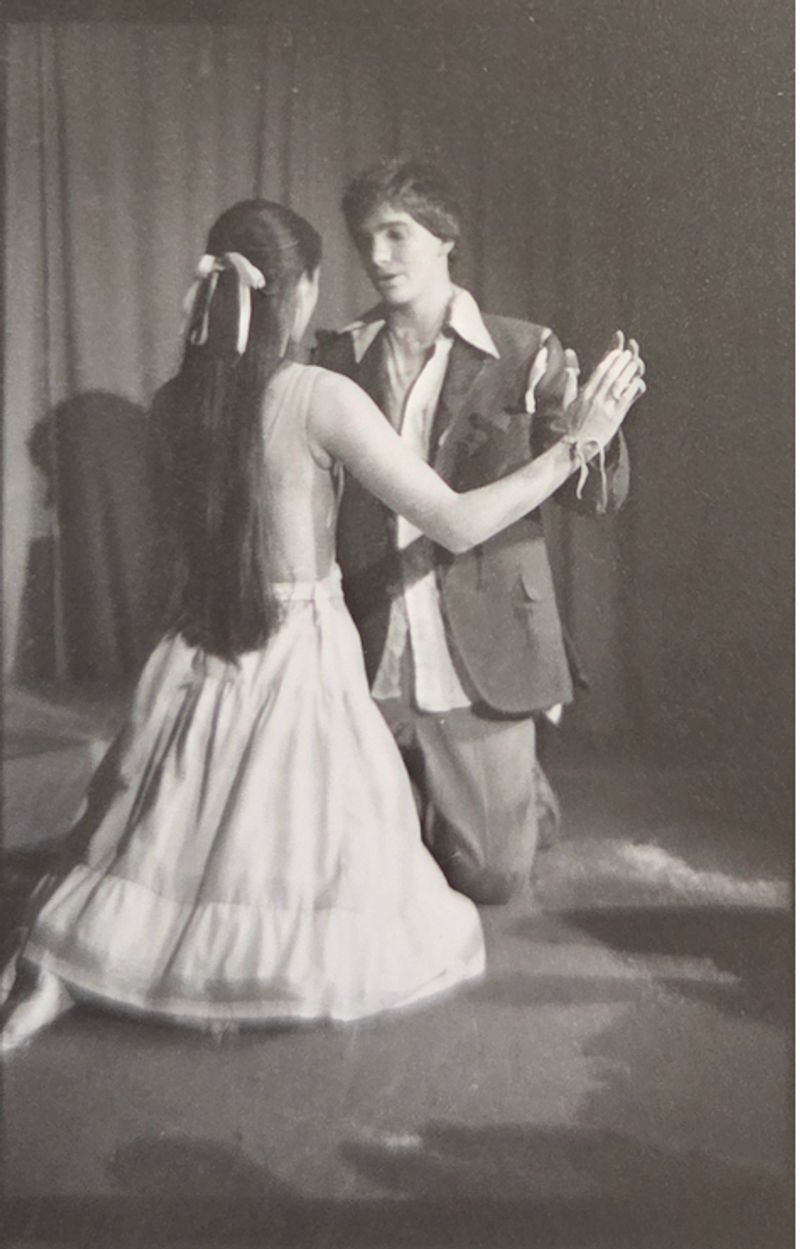
production of The Fantasticks.
Photo courtesy of the artist.
What was your first professional job as a performer?
The first job I got paid for, was as the boy, Matt in The Fantasticks, at a dinner theatre in Southfield, Michigan in the basement of a restaurant called The Sussex House, that had a roast beef special….roast beef is not a quiet meal to eat during a performance! You haven’t lived till you’re singing “Soon Its Gonna Rain” over the sounds of steak knives and ‘pass the steak sauce’ AND the room was ‘L’ shaped! The stage was in the corner of the L, with a big support pole in the middle of the view between audience and stage. Awful and crazy and fun. I was in heaven getting paid to perform. BUT it was kind of like that famous scene in the movie Soap Dish where Kevin Kline is performing Death of a Salesman in a dinner theatre. It was a ridiculous and beautifully sublime and a wonderful first-paid gig.
%20in%20Fiddler%20on%20the%20Roof%20at%20Signature%20Theatre_%20Photo%20by%20Daniel%20Rader.jpg?format=auto&width=800)
of Fiddler on the Roof.
Photo by Daniel Rader.
Can you please tell us about the production concept for Signature Theatre’s current production of Fiddler on the Roof?
Well, most notably, this production is in the round or more accurately in a square, and that makes it an extremely intimate experience for the audience. They become part of the community portrayed on stage. The audience is at many times, partially lit, and even sitting on the stage floor, where we are performing. They can see each other across the playing space as well. They are all very much part of the action, part of the town, as well as onlookers. So, it’s a very unusual way to experience Fiddler. People find it extremely moving and memorable.
The central set piece is a giant ‘dinner table’ so the whole cast and the audience as well begin the show sitting around a large square table at a communal sabbath meal. That table will take many forms over the course of the show. It breaks apart and changes shape and position for every scene. It’s exciting to watch.
Also, there are several aspects of the show which are dealt with in a very realistic fashion, for example the tone and style we employ in the scene work between the actors. yet the set is only suggestive of places and things. there is no actual kitchen, for example, portrayed or town Square. It is an abstract representation of the locations in the piece. Your brain fills in the details of where and what. So those are two very contrasting elements.
And finally, there’s several elements of fantastic realism in the piece inspired by the glorious colorful paintings of Mark Chagall. So, you have the depictions of a very poor harsh labor-intensive life painted in greys and browns…it is contrasted with these surprise appearances of beautiful pastel images with many unexpected flowers and a dream sequence and a painted ceiling. It’s very effective and evocative for people.
%20in%20Fiddler%20on%20the%20Roof%20at%20Signature%20Theatre_%20Photo%20by%20Christopher%20Mueller.jpg?format=auto&width=800)
of Fiddler on the Roof.
Photo by Christopher Mueller.
Your character Tevye is easily one of the most famous in musical theatre. When you were first cast in Signature’s production, what were your thoughts on how you were going to approach the role to make it your own?
The most important thing I was thinking about was the tone and style of the way I imagined we would engage, the way the characters would talk to one another. I was dreaming of a very realistic, intense, sometimes very quiet way of presenting the scene-work, and the songs. More like the way you might see death of a salesman or the cherry orchard and less like we tend to see many musicals enacted… musicals often use a more ‘presentational style’ of performance.
I was inspired by the writing and the setting of the piece, as well as the intimacy of this theatre and the choice of doing it in the round. I was inspired to approach the work and present it in a way I had never seen it done – more ‘realistically’ you might say while still trying to be true to the comedy and the high stakes in every scene which do take a different kind of presentational energy sometimes.
I was definitely very very aware of the tremendous impact other wonderful actors have had with this role, and they are embedded very deeply in my spirit. People like Zero Mostel and Topol had tremendous impact. These were towering performances, and so many wonderful actors have made their mark on this role. This aspect of things was not lost on me. It was something to work through. How would I find my own version? I think I have and continue to do that.
I didn’t have the answers when I started. I just thought I would bring all the tools to bear that I worked on for my entire career and try to create the scene-work from the ground up, with no preconceived notions about the scenes or the play. Treat it like a new straight play and treat the songs like monologues using all the “givens” that the script provides and the result can’t help but be rich, and worth watching. I hoped and guessed.
You starred in The Scarlet Pimpernel on Broadway. Well into the show’s run, it was retooled with a new director, and I think some new songs as well. Can you please talk about that experience?
It was magnificent and exhausting, impactful, and life changing. It was a new piece that did not have an out-of-town tryout and so we were creating it all for the first time, with no real chance to work out the bugs, in New York on Broadway. That’s a scary thing. While I felt very ready for the experience and I had been waiting and dreaming of it all my life…it was in fact a debut for me. That created a whole other level of stress and pressure. I was essentially an unknown to many in the Broadway community. That brings a lot of “OK, who is this guy? How did he get in here in such a big debut role? Show me. Prove it.”
The work was exciting and very challenging. There was a whole new standard of portraying a hero from the 18th century who has an alternate identity who also has to be a passionate romantic lover but also has to have tremendous comedic chops. There are very few if any roles like that I can think of.
And the music was enormous and heroic to sing. Big and high tessitura. It demanded a real knowledge of period movement and style. It was extremely demanding in every way.
I believe I sort of shrink-wrapped the portrayal around myself, around my strengths and what I enjoyed about performing and storytelling. I found the play very ripe for comedy, more so I think than the creators had imagined. And I think the comedic elements of the show were enormous and very successful.
I made lifelong friends, and the experience changed my life, and certainly changed the trajectory of my career. The press was extremely complementary to me. Unfortunately, not so much to the show itself in the first go around. That of course, created a whole different set of pressures for me to do all the press I could, to fan the flames for those who were seeing the show and loving it and using the internet to stoke enthusiasm for it. To be sure, my castmates knew that I valued them above all else.
And then came the circumstances where a new producer came along and wanted to buy the show and retool many of the basic elements of it, but wanted me to stay on and re-create a lot of what I had done in the first version, but to do that with a new director, and a new book, and some new songs and new actors in the other lead roles. I could write a book.
Many people might know you from your work on HBO’s The Gilded Age, but you have also appeared in several other tv series and in films as well. Having worked in multiple disciplines of entertainment, does performing in live theatre still give you the most satisfaction as a performer?
Oh yeah. I would guess that most performers would tell you that the stage is really the performers medium. Television is the producer and the editor’s medium, and film is more than director’s medium along with the editor. So yes, we have the most fun the most control the most input in the most satisfaction working on stage. That is to say that there isn’t a great deal to enjoy and learn about working with the camera. There are things you can do as evidenced by our “Tradition” PR reel.
%2C%20Amie%20Bermowitz%20(Golde)%2C%20and%20the%20cast%20of%20Fiddler%20on%20the%20Roof%20at%20Signature%20Theatre_%20Photo%20by%20Daniel%20Rader.jpg?format=auto&width=800)
Signature Theatre's production of Fiddler on the Roof.
Photo by Daniel Rader.
Why do you think Fiddler on the Roof still resonates with audiences after all these years?
You know, I don’t think I have anything, smart or clever to add to the tomes that’ve already been expressed about this important, beautifully written, well written, much beloved piece, which bears the adjectives classic for excellent reasons.
It’s fantastically specific, and so it is somehow universal because of its specificity. Its lean writing and the voices are clear, distinct and unique. The story is compelling. The stakes are very high. The construction of the work is mature and sophisticated in how the action plays out in each scene. And the music is delicious as are the orchestrations. There aren’t big problems with the piece. Theatre teachers, lovers, and professionals all like to say that it’s perfect, It’s solid as a rock and beautifully tender and engaging.
After Fiddler on the Roof closes at the end of January, what does 2026 hold in store for you workwise?
I’d like to rest up a bit. This role is demanding physically, but also emotionally, and psychologically. It takes it all out of me, especially 8 times a week with 5-show weekends.
I have a side gig that I enjoy doing that needs some attention which pays the bills when I’m not in something, and then I go back to work on The Gilded Age!
Special thanks to Signature Theatre's Publicist and Marketing Manager Zachary Flick for his assistance in coordinating this interview.
Theatre Life logo designed by Kevin Laughon.
Prefer BroadwayWorld in Google Search?
Add us as a preferred source so our stories show up more often in Top Stories and Google’s AI answers — for you.
Sign up for all the news on the Fall season, discounts & more...
|
Brian Henson's Puppet Up! Lincoln Theatre (9/30-9/30) |
|
GARBO: EL ACTOR QUE SAVÓ AL MUNDO (Garbo: The Actor Who Saved The World) GALA Hispanic Theatre (9/03-9/27) |

|
Mr. Burns: A Post-Electric Play Clarice Smith Performing Arts Center (10/09-10/18) |
|
Special Event: ARTS By George!: Jeff Goldblum and the Mildred Snitzer Orchestra Center for the Arts (10/03-10/03) |

|
The Second-Best School Shooting NextStop Theatre (9/17-10/11) |

|
Coming to America: An Immigrant Cabaret ExPats Theatre (9/30-10/18) |

|
Some Like It Hot Bernard Family Theatre, Olney Theatre Center (9/18-11/08) |
|
Stonewall's Bust The Writers Center (10/09-10/25) |
|
Dracula's Midnight Masquerade George C. Marshall's Dodona Manor (10/16-11/01) PHOTOS VIDEOS |
|
Million Dollar Quartet Olney Theatre Center (6/30-8/22) |
